Butterfly rash: Symptoms, Causes, and Treatment — Complete Patient Guide

A butterfly rash usually affects both cheeks and the bridge of the nose. Lupus is an important cause, but it is not the only explanation.
Key Takeaways
- A butterfly rash usually affects both cheeks and the bridge of the nose.
- Lupus is an important cause, but it is not the only explanation.
- Doctors diagnose the cause by combining skin findings, symptoms, medical history, and sometimes blood tests or a skin biopsy.
- Treatment depends on the underlying condition and may include sun protection, skin care changes, and prescription medicines.
- Medical review is especially important if the rash comes with joint pain, fatigue, fever, mouth sores, or worsening after sun exposure.
Butterfly rash is a red or pink rash that spreads across both cheeks and the bridge of the nose, creating a butterfly-shaped pattern. It is commonly associated with lupus, but it can also appear with rosacea, sun sensitivity, skin irritation, and other medical conditions, so proper evaluation matters.
Overview: what butterfly rash means
Butterfly rash is a descriptive term for a facial rash that appears over both cheeks and the bridge of the nose. Because of its shape, it is also called a malar rash. The skin may look pink, red, slightly swollen, flat, or mildly raised, and in some people it may feel warm, tight, itchy, or sensitive.
Many people first hear about butterfly rash in connection with lupus, an autoimmune disease that can affect the skin, joints, kidneys, and other organs. That association is important, but butterfly rash is not a diagnosis by itself. It is a visible sign that can happen for several reasons, including rosacea, seborrheic dermatitis, contact dermatitis, sun reaction, infection, or inflammatory skin disease.
One clue that helps doctors is the pattern. A classic butterfly rash crosses the cheeks and the bridge of the nose, often while sparing the folds beside the nostrils. Even so, appearance alone cannot confirm the cause. The most reliable approach is to look at the rash together with other symptoms, medical history, and any triggers such as sunlight, skin products, or recent illness.
What butterfly rash looks and feels like
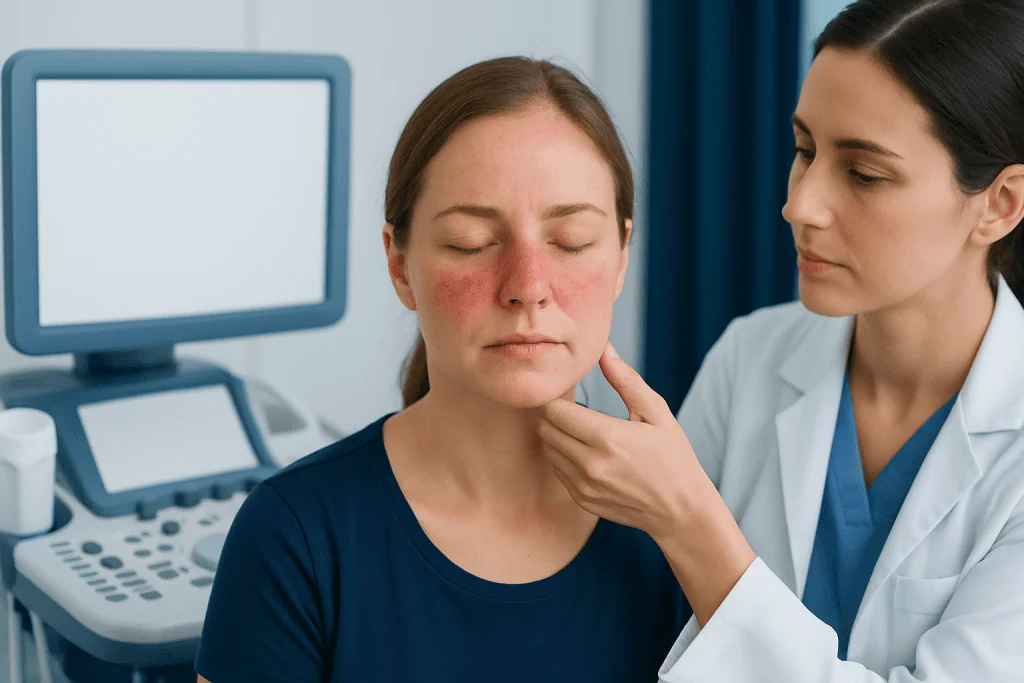
A butterfly rash usually forms a fairly symmetrical pattern on the face. The color may range from faint pink to deeper red or violaceous tones depending on skin tone and the cause. In lighter skin it can appear bright red, while in darker skin it may look more purple, brown-red, or darker than the surrounding skin.
The rash may be smooth or slightly scaly. Some people notice dryness, mild swelling, burning, or stinging rather than pain. Others have no discomfort at all and mainly notice a sudden change in skin color. In lupus, the rash is often triggered or worsened by sun exposure. In rosacea, flushing and visible facial blood vessels may be more prominent.
Features that can help distinguish possible causes include:
- Lupus-related malar rash: often sun-sensitive, may spare the folds next to the nose, and may occur with fatigue, joint pain, fever, or mouth sores.
- Rosacea: tends to cause flushing, burning, visible tiny blood vessels, and sometimes acne-like bumps.
- Contact or irritant dermatitis: may itch more, start after a new cream, cleanser, or cosmetic, and can extend beyond the classic butterfly area.
- Seborrheic dermatitis: often causes greasy scale around the nose, eyebrows, scalp, or ears.
Because facial rashes can overlap in appearance, a person should avoid self-diagnosing based on photos alone. A clinician may need to evaluate the skin directly, especially if the rash keeps returning.
Common causes and risk factors

The best-known cause of butterfly rash is lupus, especially systemic lupus erythematosus or cutaneous lupus. In lupus, the immune system becomes overactive and can inflame the skin. Sunlight is a frequent trigger, and the rash may appear after time outdoors even when the exposure seems limited.
However, there are many non-lupus causes. Rosacea is a common one, especially in adults who have frequent flushing or sensitivity to heat, spicy food, alcohol, or skin products. Eczema, seborrheic dermatitis, allergic reactions, and irritation from cosmetics or topical treatments can also create a butterfly-like facial pattern. Some viral illnesses and inflammatory conditions may temporarily cause facial redness as well.
Risk factors depend on the underlying condition. They may include family history of autoimmune disease, female sex, sun sensitivity, fair or reactive skin, use of irritating skin products, and a personal history of inflammatory skin disease. Certain medicines can also make skin more sensitive to sunlight, which may bring out or worsen a facial rash.
When lupus is suspected, doctors also consider symptoms beyond the skin. These can include joint stiffness, unusual fatigue, hair loss, chest pain with deep breathing, swelling in the legs, or changes in urine. Butterfly rash alone does not prove a systemic disease, but when it appears alongside these symptoms, further assessment becomes more important.
How doctors diagnose the cause
Diagnosis starts with a careful history and skin examination. A doctor will ask when the rash began, whether it comes and goes, what it feels like, and whether it worsens with sun exposure, heat, stress, cosmetics, or new medications. They will also ask about symptoms elsewhere in the body, such as joint pain, fever, mouth ulcers, hair thinning, or ongoing fatigue.
The skin exam focuses on the exact distribution and texture of the rash. Doctors may look for scale, acne-like bumps, visible blood vessels, scalp changes, or rashes on other sun-exposed areas. They may also look for signs that point to a related condition, such as rashes on the hands, photosensitivity, or inflammatory changes elsewhere on the body.
If lupus or another autoimmune disorder is possible, blood tests may be recommended. These can include tests for inflammation and autoantibodies such as antinuclear antibodies, along with kidney and blood count checks. When the diagnosis remains uncertain, a dermatologist may suggest a skin biopsy, which means taking a very small sample to examine under a microscope. This can help separate lupus-related rash from eczema, rosacea, or other inflammatory skin conditions.
Depending on the findings, a person may be referred for dermatology evaluation or, if systemic symptoms are present, to a rheumatology team. The goal is not only to name the rash but to understand whether it reflects a skin-limited problem or a broader health condition.
Treatment options for butterfly rash
Treatment depends on the underlying cause, so there is no single medicine that works for every butterfly rash. In general, management aims to reduce inflammation, protect the skin barrier, and avoid known triggers. Sun protection is central in many cases, especially when lupus or photosensitivity is suspected.
If lupus is the cause, treatment may include prescription creams or ointments and, in some patients, systemic medicines recommended by a specialist. When rosacea is responsible, doctors may suggest gentle skin care, trigger avoidance, and medicines that reduce inflammation or flushing. If irritation or allergy is suspected, the first step is often stopping the triggering product and simplifying the skin routine.
Helpful treatment approaches may include:
- Daily broad-spectrum sunscreen and physical sun protection such as hats
- Fragrance-free cleansers and moisturizers for sensitive skin
- Prescription anti-inflammatory creams when advised by a doctor
- Targeted care for underlying conditions such as skin disease treatment or rheumatology care
- Avoiding harsh scrubs, strong acids, or unprescribed steroid creams on the face
People should be cautious with home remedies and over-the-counter products marketed for redness. Some can sting, disrupt the skin barrier, or mask an evolving medical problem. A treatment plan is safest when it is matched to the specific diagnosis.
Prevention and self-care
Not every cause of butterfly rash can be prevented, but everyday habits can lower the chance of flare-ups. The most important step for many people is protecting the face from ultraviolet light. This includes using broad-spectrum sunscreen, reapplying it as directed, and wearing a wide-brimmed hat when outdoors. Sunlight through car windows or on cloudy days can still affect photosensitive skin.
A simple, gentle skin care routine is often helpful. Washing with lukewarm water, using a mild cleanser, and applying a non-irritating moisturizer can support the skin barrier. It is usually better to avoid frequent product changes, abrasive exfoliants, and highly fragranced products when the skin is inflamed.
Keeping a symptom diary may also help. Noting when the rash appears and what happened beforehand can reveal patterns linked to sunlight, heat, alcohol, spicy foods, emotional stress, infection, or cosmetics. This is especially useful in conditions such as rosacea, where triggers vary from person to person.
If the rash is linked to lupus or another chronic inflammatory illness, regular follow-up matters even when the skin seems better. Ongoing care helps monitor the condition, review medicines, and check for signs that other organs may be involved.
When to seek medical care
A new butterfly rash should be assessed if it lasts more than a few days, keeps returning, or does not improve with gentle skin care and sun protection. Medical review is also important if the rash appears after a new medicine, cosmetic, or skin treatment, since an allergic or irritant reaction may need specific advice.
More urgent assessment is appropriate when the rash comes with symptoms that suggest a broader illness. These include fever, joint pain or swelling, chest pain, shortness of breath, marked fatigue, mouth sores, unusual hair loss, swelling in the legs, or changes in urine. These symptoms do not always mean lupus, but they do deserve prompt medical attention.
It is also wise to seek care if the rash is severe, painful, blistering, infected, or affecting confidence and daily life. A dermatologist or other qualified clinician can help clarify the cause and reduce unnecessary trial and error. For international patients who need coordinated assessment, Acibadem International’s multidisciplinary specialists in JCI-accredited hospitals diagnose and treat facial rashes and related autoimmune or dermatologic conditions.
Frequently asked questions
Is a butterfly rash always lupus?
No. Lupus is a well-known cause of butterfly rash, but similar facial redness can also happen with rosacea, dermatitis, sun sensitivity, and skin irritation. The pattern can suggest a diagnosis, but it cannot confirm it without a medical assessment.
What is the difference between butterfly rash and rosacea?
Butterfly rash describes the shape and location of a facial rash, while rosacea is a specific skin condition that can sometimes create a similar pattern. Rosacea often causes flushing, burning, visible blood vessels, and acne-like bumps. Lupus-related rash is more often linked to sun sensitivity and may occur with symptoms outside the skin.
Can butterfly rash come and go?
Yes. Some people notice flare-ups after sun exposure, heat, stress, certain skin products, or illness. Intermittent symptoms are one reason a symptom diary and photos can be helpful for a doctor during evaluation.
How is butterfly rash diagnosed?
Doctors diagnose it by examining the skin and asking about triggers, medical history, and symptoms in the rest of the body. Depending on the findings, they may order blood tests or a skin biopsy. The aim is to identify the underlying cause rather than treat all facial rashes the same way.
What should be avoided if someone has a butterfly rash?
It is generally best to avoid excessive sun exposure, harsh exfoliants, fragranced products, and any cosmetics or creams that seem to trigger irritation. People should also avoid using strong medicated creams on the face unless a doctor recommends them. Gentle skin care is usually the safest starting point.
Can butterfly rash be treated at home?
Basic self-care such as sunscreen, gentle cleansing, and stopping irritating products may help mild cases. However, home care may not be enough if the rash persists, recurs, or is linked to lupus or another inflammatory condition. A clinician can guide treatment based on the exact cause.
References
- American Academy of Dermatology
- National Institute of Arthritis and Musculoskeletal and Skin Diseases
- Mayo Clinic
- MedlinePlus
- National Health Service
This article is for general information only and is not a substitute for professional medical advice. Please consult a qualified doctor about your individual situation.
Explore treatments in Turkey — costs, top hospitals & a free quote
JCI-accredited · board-certified surgeons · reply within 24h
Add us as a Preferred Source to see more of our trusted health content across Google Search, AI Overviews and Discover.

More from the Health Library

Navel: A Complete Medical Overview

Intercostal Muscles: What Patients Need to Know

Nipple Shield: What Patients Need to Know

Heart Attack: A Complete Medical Overview

Relapse: An Evidence-Based Guide for Patients