Can an EKG Determine a Heart Attack?

An EKG can provide urgent evidence of a heart attack, especially when it shows characteristic ST-segment elevation. A normal or unclear EKG does not always exclude a heart attack, particularly early after symptoms begin.
Key Takeaways
- An EKG can provide urgent evidence of a heart attack, especially when it shows characteristic ST-segment elevation.
- A normal or unclear EKG does not always exclude a heart attack, particularly early after symptoms begin.
- Blood tests for troponin and repeat EKGs are commonly used to confirm or rule out heart muscle injury.
- Chest discomfort, shortness of breath, sweating, nausea, or sudden weakness need urgent medical assessment when they are new or unexplained.
- Some non-heart conditions can cause chest symptoms or EKG changes, so a clinician must interpret results in context.
An electrocardiogram (EKG or ECG) can quickly identify electrical patterns that strongly suggest certain heart attacks, but it cannot rule out every heart attack by itself. Doctors interpret the EKG alongside symptoms, repeated recordings, blood tests such as troponin, and sometimes heart imaging or coronary artery testing.
Can an EKG determine a heart attack?
Can EKG determine heart attack? An EKG can show changes that strongly indicate a heart attack and helps clinicians act quickly, but it does not diagnose every heart attack on its own. A normal EKG is reassuring in many situations, yet some heart attacks produce subtle, delayed, or no clear changes on the first recording.
Many episodes of chest discomfort are not caused by a heart attack. Muscle strain, indigestion, anxiety, respiratory infections, and other conditions can cause similar symptoms. However, new, persistent, severe, or unexplained symptoms should never be self-diagnosed, because timely assessment is important when a heart problem is possible.
An EKG, also called an electrocardiogram or ECG, records the heart’s electrical activity through small sensors placed on the skin. It is painless, takes only a few minutes, and is often one of the first tests performed when someone has symptoms that could be related to the heart.
What an EKG can and cannot show
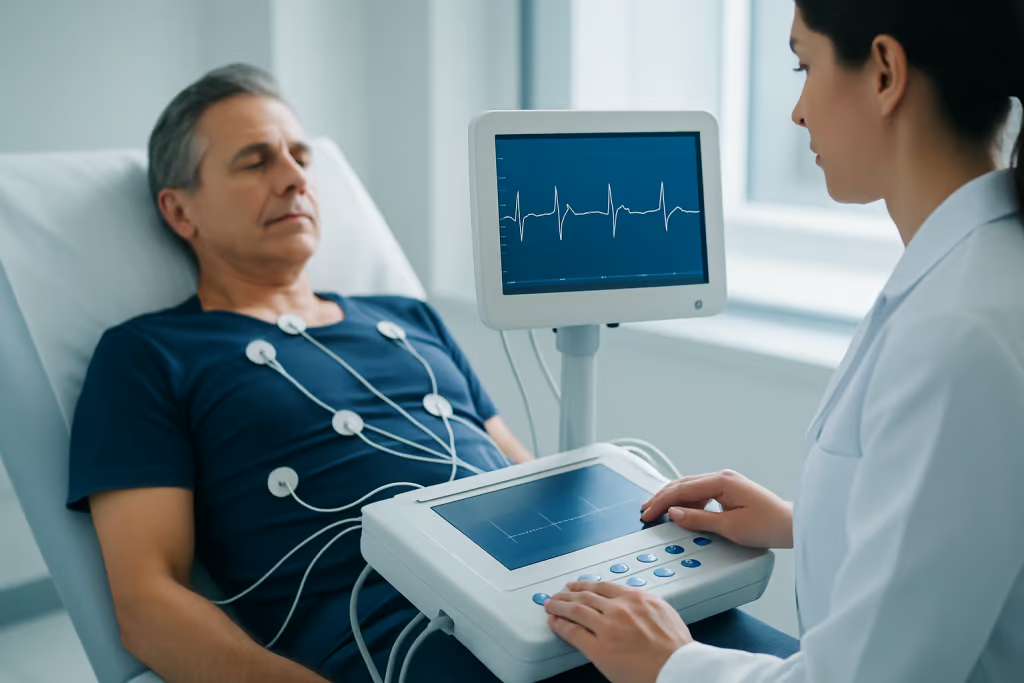
During a heart attack, blood flow through a coronary artery is reduced or blocked, injuring heart muscle. This injury can alter the heart’s electrical signals. Certain findings, particularly ST-segment elevation in an appropriate clinical setting, can indicate an acute artery blockage requiring emergency treatment.
Other EKG patterns may suggest reduced blood flow to the heart, a previous heart attack, an abnormal rhythm, or another cardiac condition. These changes are important clues, but they are not always specific to a heart attack. For example, inflammation around the heart, electrolyte abnormalities, some medicines, and longstanding heart changes may affect the tracing.
Some heart attacks, including many non-ST-elevation myocardial infarctions (NSTEMIs), may have only mild or nonspecific EKG changes. In other cases, an EKG taken early in the course of symptoms may initially appear normal. This is why clinicians may repeat the EKG over time and compare it with earlier recordings when available.
A person’s symptoms, medical history, examination findings, and risk factors all affect how an EKG result is interpreted. The test is most useful as part of an urgent, structured clinical assessment rather than as a stand-alone answer.
Symptoms that may need urgent assessment

Heart attack symptoms can vary substantially. The most familiar symptom is pressure, squeezing, heaviness, tightness, or pain in the center or left side of the chest. It may last more than a few minutes, return after easing, or occur with physical activity or emotional stress.
Discomfort may spread to the arm, shoulder, back, neck, jaw, or upper abdomen. Other possible symptoms include shortness of breath, cold sweating, nausea, vomiting, light-headedness, unusual fatigue, or a sense of impending faintness. Women, older adults, and people with diabetes may be more likely to have less typical symptoms, such as breathlessness, fatigue, indigestion-like discomfort, or back pain.
Not every symptom indicates a heart attack, and symptoms do not always follow a textbook pattern. A clinician can evaluate symptoms such as chest pain alongside EKG findings and other tests to identify the cause safely.
- New chest pressure or discomfort that is severe, persistent, or recurrent should be assessed urgently.
- Symptoms accompanied by breathlessness, fainting, sweating, or nausea require particular attention.
- People with known heart disease or risk factors should seek medical advice promptly for new concerning symptoms.
How doctors confirm or rule out a heart attack
Emergency clinicians begin by assessing the timing and nature of symptoms, medical history, medicines, cardiovascular risk factors, vital signs, and physical examination findings. An EKG is often performed quickly and may be repeated, especially if symptoms continue or the first result is unclear.
Blood tests measuring cardiac troponin are central to diagnosis. Troponin is a protein released into the bloodstream when heart muscle cells are injured. Doctors commonly measure it more than once over several hours because levels may not rise immediately after symptoms begin. The pattern of change is as important as a single result.
Additional tests depend on the situation. An echocardiogram can assess heart pumping and look for areas of muscle that are not moving normally. Coronary angiography may be needed when doctors suspect a significant blockage and need to view the coronary arteries directly.
Clinicians also consider other urgent causes of chest symptoms, including lung conditions, blood clots, inflammation, aortic disease, and digestive problems. This broad approach helps ensure the treatment matches the underlying cause rather than relying on one test alone.
Why a normal EKG can still require follow-up
A normal EKG does not always mean that the heart is entirely unaffected. If symptoms began recently, electrical changes may not yet be visible. A blockage can also involve an area of the heart that is harder to detect on a standard EKG, or the heart attack may be the type that does not produce classic ST-segment elevation.
For this reason, medical teams may observe a person, repeat EKGs, and obtain serial troponin tests even after an initially reassuring tracing. The appropriate timeframe depends on the symptoms, risk level, examination, and local clinical protocols.
Conversely, an abnormal EKG does not automatically prove a new heart attack. Previous heart injury, thickened heart muscle, bundle branch block, fast rhythms, and technical factors can change the tracing. Comparing the EKG with prior results and reviewing the whole clinical picture is essential.
People should not try to interpret a printed EKG at home or delay care because a wearable device, personal monitor, or previous test seemed normal. Consumer devices can sometimes identify rhythm concerns, but they do not replace emergency evaluation for possible heart attack symptoms.
Treatment after suspected or confirmed heart attack
Treatment is guided by the type of heart attack, the EKG findings, test results, time since symptoms began, and the person’s overall health. When an acute coronary artery blockage is suspected, restoring blood flow quickly is a priority. This may involve urgent catheter-based treatment, including angioplasty and stent placement, where appropriate.
Medical treatment may include medicines that reduce clotting, relieve cardiac workload, manage cholesterol, or control blood pressure. The exact medicines and timing must be selected by the treating team, since benefits and risks differ among individuals.
After a heart attack, follow-up care commonly addresses rehabilitation, activity progression, medication adherence, smoking cessation, nutrition, diabetes management, sleep, and emotional wellbeing. Cardiac rehabilitation can provide supervised education and exercise planning for eligible patients.
At Acibadem International, multidisciplinary specialists in JCI-accredited hospitals can evaluate and treat heart conditions for international patients, with care plans based on individual clinical needs.
When to seek medical care
Emergency medical care is appropriate for chest pressure, tightness, pain, or other possible heart attack symptoms that are new, severe, persistent, worsening, or associated with shortness of breath, sweating, fainting, nausea, or pain spreading to the arm, jaw, back, or shoulder. It is safer to call local emergency services than to drive oneself, particularly when symptoms are ongoing.
Urgent assessment is also sensible when symptoms are milder but unexplained, recurrent, or triggered by exertion, especially in people with high blood pressure, diabetes, high cholesterol, smoking exposure, kidney disease, a family history of early heart disease, or known coronary artery disease.
For symptoms that have resolved and do not appear urgent, a clinician can help determine whether outpatient testing is needed. Prevention remains important: not smoking, staying physically active within individual ability, eating a heart-supportive diet, managing stress, and treating blood pressure, cholesterol, and diabetes can lower cardiovascular risk over time.
Frequently asked questions
Can a normal EKG rule out a heart attack?
No. A normal EKG can be reassuring, but it cannot rule out every heart attack, especially if testing is done soon after symptoms begin or if changes are subtle. Doctors may repeat the EKG and order serial troponin blood tests to assess for heart muscle injury.
How quickly does an EKG show a heart attack?
An EKG may show characteristic changes immediately when a major coronary artery blockage is present. In other cases, changes can be subtle, intermittent, or delayed. Repeating the test can provide important additional information.
What blood test confirms a heart attack?
Troponin is the principal blood test used to identify heart muscle injury. Doctors usually check it more than once to look for a rise or fall over time and interpret it with symptoms, EKG findings, and other clinical information.
Can anxiety cause chest pain and EKG changes?
Anxiety can cause chest tightness, palpitations, breathlessness, and other symptoms that may feel similar to a heart problem. It may also affect heart rate, but it should not be assumed to be the cause of new or concerning chest symptoms until a clinician has evaluated other possibilities.
What is the difference between an EKG and an echocardiogram?
An EKG records the heart's electrical activity and can identify rhythm abnormalities or patterns suggesting reduced blood flow or injury. An echocardiogram uses ultrasound to show the heart's structure, pumping function, valves, and movement of the heart muscle.
Should someone with chest pain wait for an EKG appointment?
No, not if the pain is new, severe, persistent, or accompanied by symptoms such as breathlessness, sweating, fainting, nausea, or spreading pain. In these situations, emergency medical services should be contacted promptly rather than waiting for a routine appointment.
References
- American Heart Association
- American College of Cardiology
- National Heart, Lung, and Blood Institute
- European Society of Cardiology
- Mayo Clinic
This article is for general information only and is not a substitute for professional medical advice. Please consult a qualified doctor about your individual situation.
Heart care in Turkey — expert evaluation and treatment
JCI-accredited · board-certified surgeons · reply within 24h
Add us as a Preferred Source to see more of our trusted health content across Google Search, AI Overviews and Discover.