Can Cancer Be Identified With a Blood Test?

A blood test alone usually cannot confirm most cancers. Cancer blood tests may detect tumor markers, abnormal blood cells, or cancer-related DNA.
Key Takeaways
- A blood test alone usually cannot confirm most cancers.
- Cancer blood tests may detect tumor markers, abnormal blood cells, or cancer-related DNA.
- Results need to be interpreted with symptoms, examination findings, imaging, and often biopsy.
- Some blood cancers are first detected through blood testing, but many solid tumors are not.
- Blood tests are often most useful for monitoring treatment response or checking for recurrence.
Blood tests can play an important role in cancer care, but they usually cannot diagnose most cancers on their own. They are often used alongside imaging, physical examination, and tissue biopsy to assess risk, guide next steps, and monitor treatment.
Overview
The short answer to the question, “Can cancer be identified with a blood test?” is: sometimes, but not usually by blood test alone. Blood tests can reveal clues that suggest cancer may be present, and in some cases they can detect substances made by cancer cells or changes in the blood caused by cancer. However, for many cancers, especially solid tumors, a blood test is only one part of a larger diagnostic process.
Doctors often use blood tests to look for abnormalities such as low or high blood cell counts, unusual protein levels, or tumor markers. Newer tests may also look for tiny fragments of tumor DNA in the bloodstream, sometimes called liquid biopsy. These tools can be helpful, but they do not replace a full medical evaluation.
In most situations, cancer diagnosis depends on combining several types of information. This may include a person’s symptoms, medical history, physical examination, imaging tests, and sometimes a biopsy, in which a sample of tissue is examined under a microscope. Blood tests are valuable because they can support decision-making, but they rarely provide the complete answer on their own.
What Blood Tests Can Show
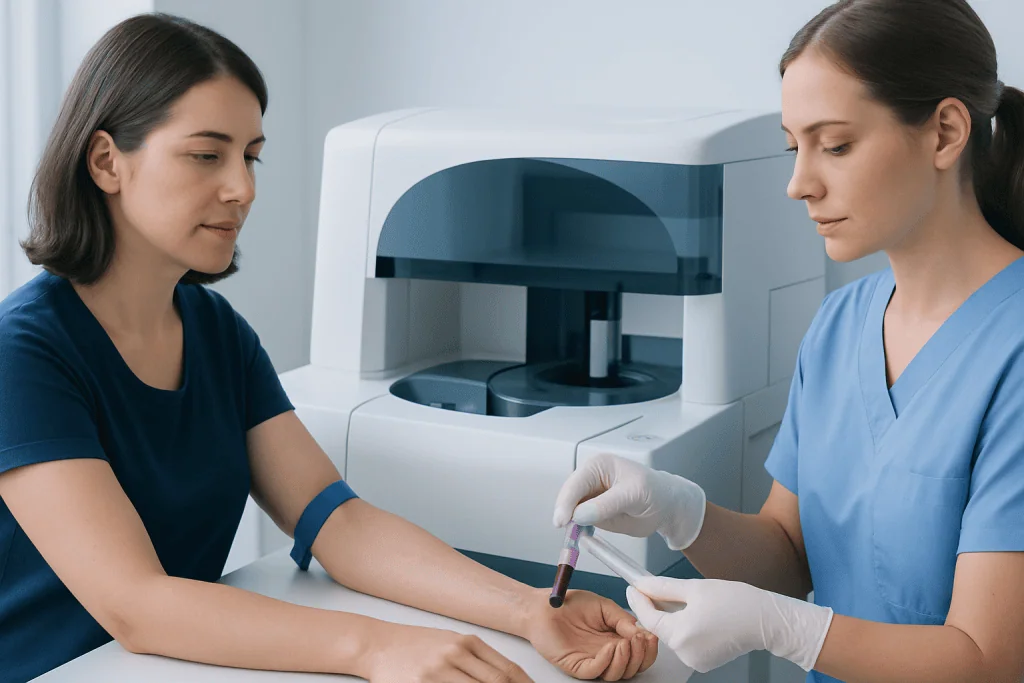
Different blood tests provide different kinds of information. A complete blood count, often called a CBC, measures red blood cells, white blood cells, and platelets. Abnormal results may suggest blood cancers such as leukemia or lymphoma, or they may reflect bleeding, infection, inflammation, or another non-cancer condition.
Other blood tests measure chemicals, enzymes, or proteins in the blood. These can show how organs such as the liver or kidneys are functioning and whether there may be effects from cancer or other illnesses. Some tests look for tumor markers, which are substances that may be made by cancer cells or by the body in response to cancer.
Examples of tumor markers include PSA, CA-125, CEA, and AFP. These markers can be useful in certain situations, but they are not perfect screening tools. Levels can rise for reasons other than cancer, and some people with cancer may have normal levels. That is why doctors interpret them carefully and usually together with other findings.
More advanced blood-based testing may include circulating tumor DNA or circulating tumor cells. These tests are sometimes used to help guide treatment choices, look for specific mutations, or monitor for recurrence. They are promising tools, but their role depends on the type of cancer and the clinical situation.
Which Cancers May Be Detected Through Blood Tests

Blood tests are especially important in diagnosing or raising suspicion for certain blood cancers. Leukemia, for example, may first be suspected when a blood count shows very high or very low white blood cells, anemia, or low platelets. Further testing is then needed to confirm the diagnosis and classify the disease accurately.
For lymphomas and multiple myeloma, blood tests may also show abnormalities that prompt more investigation, although diagnosis often still requires imaging, bone marrow testing, or tissue biopsy. In this way, blood work may be the first clue rather than the final proof.
For solid tumors such as breast, colon, lung, or pancreatic cancer, a blood test alone usually cannot establish the diagnosis. A person may have normal routine blood work even when a tumor is present. In these cases, imaging and biopsy remain central parts of the diagnostic process. People who need further testing for lung cancer or colon cancer are commonly evaluated with scans and tissue sampling rather than relying only on blood results.
Some screening-related blood tests exist for selected situations, but they must be used carefully. A result that is abnormal does not necessarily mean cancer is present, and a normal result does not always rule it out. This is why cancer screening recommendations are based on age, risk factors, family history, and the specific cancer being considered.
Limits of Blood Tests for Cancer
Blood tests have important limitations. One of the biggest is that many cancers do not release enough measurable material into the bloodstream to be detected, especially in early stages. Even when they do, the same blood test result may appear in non-cancerous conditions such as infection, inflammation, liver disease, hormonal changes, or benign growths.
Another challenge is false-positive and false-negative results. A false-positive means the test suggests cancer when none is present, which can lead to stress and more testing. A false-negative means the test appears normal even though cancer exists, which may delay diagnosis if symptoms are overlooked.
Because of these limits, doctors usually avoid making a cancer diagnosis based only on blood work. Instead, blood tests are used to help answer specific questions: Is there a reason to investigate further? Is a treatment affecting the blood or organs? Is there evidence the cancer is responding or returning?
This balanced approach helps reduce unnecessary worry while making sure significant findings are not ignored. It also explains why no single blood test can serve as a universal test for all cancers at this time.
How Doctors Confirm a Cancer Diagnosis
If a blood test raises concern, doctors usually recommend more targeted evaluation. This may start with repeat blood work, a physical examination, and a review of personal and family history. Imaging tests such as ultrasound, mammography, CT, MRI, or PET scans may then be used to locate any abnormal area.
In many cases, the most reliable way to confirm cancer is a biopsy. During a biopsy, doctors remove a small sample of tissue or cells and have it examined in a laboratory. This helps identify whether cancer is present, what type it is, and sometimes how aggressive it appears. For many solid tumors, tissue diagnosis remains the gold standard.
Additional laboratory analysis may look for genetic or molecular features of the tumor. These results can help guide treatment, especially in cancers where targeted therapies or personalized plans are available. Depending on the situation, doctors may also use biopsy procedures and PET-CT imaging as part of the diagnostic pathway.
When the blood itself is the main area of concern, further tests may include a blood smear, flow cytometry, bone marrow examination, or specialized molecular studies. The goal is not only to detect cancer, but to define it accurately so that treatment can be chosen appropriately.
When Blood Tests Are Most Useful in Cancer Care
Even when blood tests cannot confirm cancer by themselves, they are often very useful before, during, and after treatment. They help doctors assess overall health, check whether organs are functioning well enough for therapy, and detect side effects such as anemia or low white blood cells.
Tumor markers can sometimes be used to monitor whether treatment is working or whether a cancer may be coming back. This is especially helpful when compared over time rather than interpreted as a single isolated number. A changing trend may provide more information than one result alone.
Liquid biopsy is an area of growing interest. In selected cancers, it may help identify mutations that can guide treatment decisions or reveal signs of residual disease after therapy. However, it is not suitable in every case and is usually chosen for specific clinical reasons rather than routine use for everyone.
Patients with known or suspected leukemia may especially benefit from repeated blood testing, since these diseases directly affect blood cells. In broader cancer care, blood tests are best understood as one part of a coordinated plan that may also include medical oncology care and imaging follow-up.
What Patients Should Do if They Are Worried
People should consider speaking with a doctor if they have persistent symptoms such as unexplained weight loss, unusual fatigue, ongoing pain, a new lump, changes in bowel or bladder habits, unexplained bleeding, or a cough that does not improve. These symptoms do not always mean cancer, but they deserve proper assessment if they continue or worsen.
It is also sensible to seek medical advice for a strong family history of cancer or known inherited cancer risk. A doctor can decide whether screening, genetic counseling, imaging, or laboratory tests are appropriate. Self-ordering tumor marker tests without guidance is usually not helpful because the results can be difficult to interpret and may cause unnecessary concern.
For general health, people can lower overall cancer risk by avoiding tobacco, limiting alcohol, staying physically active, maintaining a healthy weight, protecting skin from excess sun, and keeping up with recommended screening. Screening tests such as colonoscopy, mammography, cervical screening, or low-dose CT for selected high-risk smokers remain more established than broad blood testing for many cancers.
When evaluation is needed, a multidisciplinary team can help decide which tests are most appropriate. Near the end of the diagnostic journey, some patients may benefit from specialized cancer centers; Acibadem International’s multidisciplinary specialists and JCI-accredited hospitals diagnose and treat cancer for international patients using evidence-based approaches.
Frequently asked questions
Can a routine blood test detect cancer?
A routine blood test may show abnormalities that make doctors investigate further, but it usually cannot diagnose cancer by itself. Many non-cancer conditions can also change blood test results.
What is a liquid biopsy?
A liquid biopsy is a blood test that looks for cancer-related material, such as fragments of tumor DNA, in the bloodstream. In some situations, it can help guide treatment or monitor disease, but it does not replace tissue biopsy in many cases.
Are tumor markers enough to confirm cancer?
No, tumor markers alone are usually not enough to confirm cancer. They can be helpful in specific situations, but levels may be high for non-cancer reasons or normal even when cancer is present.
Which cancers are most likely to show up in blood tests?
Blood cancers such as leukemia are more likely to first appear through abnormal blood tests. Many solid tumors, such as breast or colon cancer, usually need imaging and biopsy for diagnosis.
If a blood test is normal, does that rule out cancer?
No, a normal blood test does not completely rule out cancer. Some cancers do not cause clear blood abnormalities, especially early on.
When should someone ask a doctor about cancer testing?
A person should speak with a doctor if they have ongoing symptoms, a new unexplained lump, unusual bleeding, or a strong family history of cancer. A doctor can recommend the right next steps based on age, risk factors, and symptoms.
References
- World Health Organization
- American Cancer Society
- National Cancer Institute
- Centers for Disease Control and Prevention
- National Comprehensive Cancer Network
This article is for general information only and is not a substitute for professional medical advice. Please consult a qualified doctor about your individual situation.
Oncology care in Turkey — second opinion and treatment plan
JCI-accredited · board-certified surgeons · reply within 24h
Add us as a Preferred Source to see more of our trusted health content across Google Search, AI Overviews and Discover.