Can I Wear Contacts in an MRI: Preparation, Procedure and Results
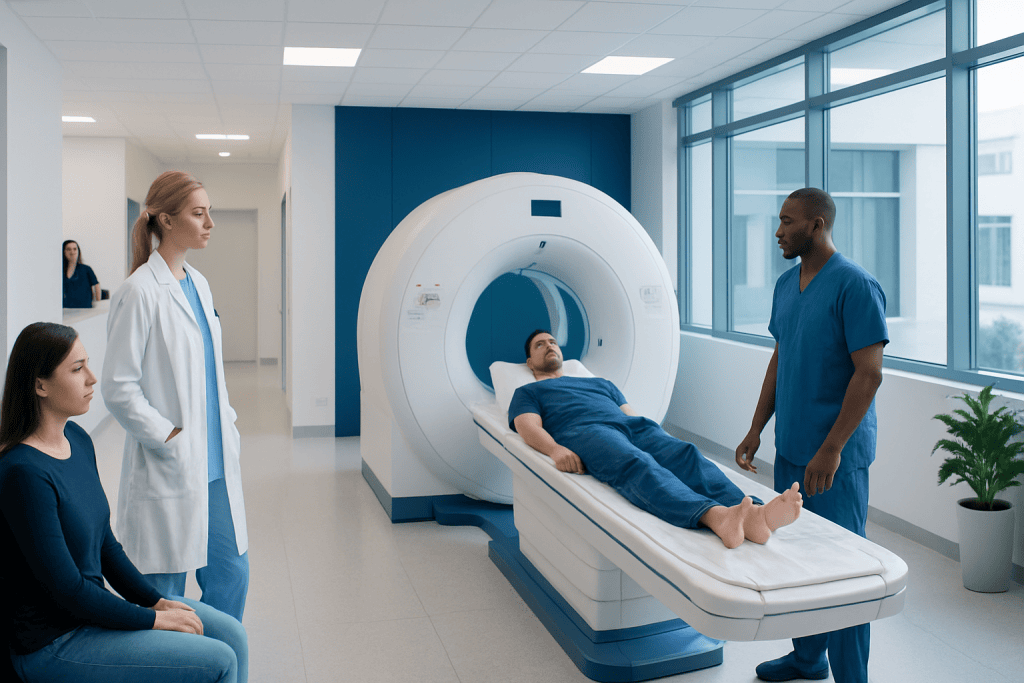
Most patients are asked to remove contact lenses before an MRI, particularly cosmetic or colored lenses. Some contact lenses, eye cosmetics and lens cases may contain pigments or particles that are not suitable for the MRI environment.
Key Takeaways
- Most patients are asked to remove contact lenses before an MRI, particularly cosmetic or colored lenses.
- Some contact lenses, eye cosmetics and lens cases may contain pigments or particles that are not suitable for the MRI environment.
- MRI staff should know about every implanted device, metal fragment, surgery and medical condition before the scan.
- Rings and other jewelry should be removed whenever possible; staff can assess what to do if an item cannot be removed.
- Most people can return to normal activities immediately after a standard MRI without sedation.
Can I wear contacts in an MRI? In most cases, patients should remove contact lenses before an MRI unless the radiology team specifically confirms that the lenses are safe to keep in. MRI safety screening is individualized, so informing staff about all eye products, implants and prior eye procedures is essential.
Overview: Can I Wear Contacts in an MRI?
Can I wear contacts in an MRI? Usually, patients are asked to remove contact lenses before entering the MRI scan room unless the imaging team says they may remain in place. This precaution is especially important for colored, cosmetic or decorative lenses, as some may contain pigments or materials that can interact with the MRI environment or cause eye discomfort.
MRI, or magnetic resonance imaging, creates detailed pictures using a powerful magnet, radiofrequency energy and a computer. It does not use ionizing radiation. Because the magnetic field is very strong, MRI safety depends on careful screening for metal, electronic devices, certain implants, medications delivered through patches, and items worn on or in the body.
Rules can differ according to the type of scan, the MRI system, the lenses being worn and a person’s medical history. The safest approach is to bring glasses and a contact lens case, tell the technologist about the lenses at check-in, and follow the instructions given by the MRI department.
How MRI Works and Why Preparation Matters
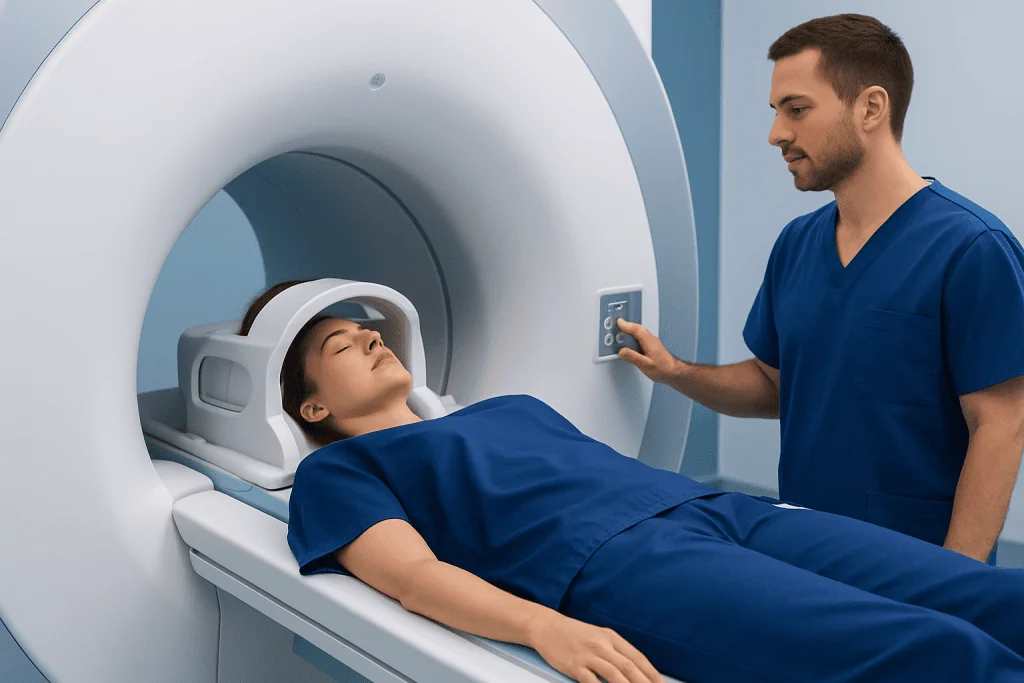
During an MRI, the body is positioned inside or alongside a scanner containing a strong magnet. Radiofrequency pulses temporarily affect hydrogen atoms in body tissues, and the scanner detects signals released as those atoms return to their usual state. A computer turns these signals into detailed images that help clinicians assess organs, blood vessels, joints, the brain, spine and many other structures.
The MRI magnet is active at all times in many facilities. Ferromagnetic objects can move suddenly toward the scanner, while some implanted or electronic devices can be affected by the magnetic field or radiofrequency energy. Other materials may not be dangerous but can distort images, making the examination less useful.
Preparation is therefore not simply administrative. The screening questionnaire helps the radiology team decide whether MRI is suitable, whether special scanning conditions are needed, or whether another imaging test may be more appropriate. Patients should answer each question accurately, even if a surgery, injury or implanted device occurred many years ago.
MRI may be used to investigate symptoms or monitor known conditions affecting the nervous system, musculoskeletal system, abdomen, pelvis, heart or blood vessels. Depending on the clinical question, a clinician may also discuss related imaging or care pathways such as brain tumor assessment or multiple sclerosis evaluation where applicable.
Can I Leave My Contacts in During an MRI?

It is best not to assume that contacts can stay in during an MRI. Many imaging centers routinely ask patients to remove all contact lenses, even clear prescription lenses, before scanning. This avoids uncertainty about lens pigments, decorative components, retained debris or irritation from keeping lenses in while lying still with the eyes closed or partially closed.
Colored and cosmetic lenses deserve particular attention. Some products may contain metallic pigments or other additives that are not obvious to the wearer. Although a problem is uncommon, MRI staff may prefer removal because heating, movement, discomfort or image interference could occur if unsuitable materials are present.
Patients who cannot easily remove their lenses, do not have a storage case, have recently had eye surgery, or use therapeutic lenses should tell staff before the appointment. The radiologist or MRI safety team can advise on the safest plan. They may confirm that the lenses can remain, arrange for their removal, or modify the plan if needed.
Glasses must be removed before entering the scanner room. Patients may normally wear them until the final preparation stage, and should bring a case to keep them safe. If vision support is needed after the scan, staff can help ensure glasses are available before the patient leaves the department.
Candidacy and MRI Safety Screening
Most people can have an MRI safely, but each examination requires screening. Before the appointment, patients should report any pacemaker, implanted defibrillator, cochlear implant, neurostimulator, insulin pump, infusion device, aneurysm clip, artificial joint, vascular stent, surgical clip, bullet or shrapnel injury, or prior surgery. Many modern devices are MRI-conditional, meaning they can be scanned only under specific conditions.
People should also mention pregnancy, kidney disease, allergies or previous reactions to MRI contrast material, and a history of working with metal. Tiny metal fragments can occasionally enter the eye during grinding, welding or similar work; an additional eye X-ray may be needed before MRI if there is concern about a retained fragment.
Claustrophobia, severe pain, difficulty lying flat and inability to remain still are also important to discuss beforehand. The department may offer practical support such as communication throughout the scan, positioning aids, music where available, or clinician-prescribed sedation when appropriate. Sedation changes preparation and travel arrangements because the patient will need a responsible adult to accompany them home.
- Bring implant cards, device information and relevant surgical records when available.
- Tell staff about tattoos, permanent makeup, medication patches and wearable glucose-monitoring devices.
- Do not bring loose metal objects into the MRI room unless staff have checked them.
What If I Can't Get My Rings Off for an MRI?
Patients should remove rings, watches, earrings, necklaces, piercings and other jewelry before an MRI whenever possible. Jewelry can be attracted by the magnet, may warm during the scan, and can create artifacts that reduce image quality. A ring may be particularly relevant during imaging of the hand, wrist, arm, head or upper body.
If a ring cannot be removed because of swelling, arthritis, injury or another reason, patients should not force it off or delay telling the team. The MRI technologist will assess the item and consult the radiologist or MRI safety specialist if necessary. Depending on the material, location of the scan and local safety policy, the examination may be adapted, postponed until the ring can be removed, or another imaging approach may be considered.
It is helpful to try removing rings at home before leaving for the appointment, especially in the morning before normal daytime swelling develops. However, patients should avoid harmful methods that could injure the skin or finger. If the ring is tight, painful, associated with discoloration or numbness, urgent medical assessment may be needed independently of the MRI appointment.
Do I Have to Wash My Hair Before an MRI?
Most people do not need to wash their hair before an MRI. However, patients should arrive without hair accessories such as clips, pins, barrettes, hair extensions with metal attachments, or wigs that may contain metal. It is also wise to avoid products that may contain metallic particles, including some dry shampoos, hair fibers, sprays, glitter products or cosmetic root concealers.
For a head or neck MRI, the department may provide more specific instructions about makeup, hair products and removable dental items. Some cosmetics, particularly products with shimmer or metallic pigments, may cause image artifacts or rarely lead to warmth or tingling. Patients should follow the instructions from their imaging center, which may recommend arriving with clean, product-free hair and minimal makeup.
Hair washing is not usually a medical requirement, and it does not change how the MRI scanner works. The practical goal is to avoid uncertain materials and ensure any head coil or positioning equipment fits comfortably. If a patient uses a wig, hairpiece, topical scalp treatment or medical covering, they should contact the MRI department in advance for personalized guidance.
What to Do the Night Before an MRI?
The night before an MRI, patients should review their appointment instructions and complete any screening forms carefully. They should gather identification, referral information, prior imaging records if requested, implant documentation, a list of medicines and their glasses or contact lens case. Wearing comfortable clothing without metal fasteners can make changing easier, although many centers provide a gown.
For a routine MRI without sedation, people can usually eat, drink and take regular medications as directed by their clinician. Instructions may differ for scans involving sedation, anesthesia, contrast material or specific abdominal examinations. In those situations, the imaging center’s fasting and medication guidance should take priority over general advice.
Patients should plan to arrive early enough for safety screening and removal of personal items. They should arrange transportation if sedation is planned and should discuss any concern about anxiety, pain or claustrophobia before the day of the scan. This gives the clinical team time to recommend an appropriate approach rather than having to cancel or rush the examination.
If contrast-enhanced imaging has been requested, the clinician may ask about kidney health, prior contrast reactions and relevant laboratory results. Contrast is not needed for every MRI; when it is recommended, it can improve visibility of inflammation, blood vessels or certain abnormalities.
Step-by-Step Procedure, Results and Recovery
After check-in, a technologist reviews the safety questionnaire and asks the patient to remove contacts when advised, along with jewelry, hearing aids, removable dental appliances, medication patches and other items. The patient changes into appropriate clothing and is positioned on a padded table. A specialized receiver, often called a coil, may be placed around the body part being examined.
The table moves into the scanner, and the technologist operates the machine from a nearby control room while maintaining two-way communication. The scan produces loud tapping or knocking sounds, so earplugs or headphones are provided. Remaining still is important because movement can blur images. Some examinations include an injection of contrast material through a vein.
A standard MRI is painless, though the confined space, noise or need to stay still can be uncomfortable for some people. Scan duration varies according to the body area and number of image sequences. Once images are complete, the patient can usually get dressed and return to normal activities immediately if no sedative was used.
Results are interpreted by a radiologist and sent to the referring clinician, who explains what the findings mean in the context of symptoms and medical history. If sedation was used, recovery observation is needed, and driving, alcohol and important decisions should be avoided for the period advised by the care team. Acibadem International’s multidisciplinary specialists and JCI-accredited hospitals support MRI evaluation and related care for international patients.
Benefits, Risks and When to Seek Medical Care
MRI can provide highly detailed images of soft tissues without using X-rays. It may help clinicians identify injuries, inflammation, infections, changes in blood flow and many other causes of symptoms. Its limitations include the need to lie still, possible discomfort in enclosed spaces, and safety restrictions for some devices or materials.
Serious MRI-related complications are uncommon when proper screening is completed. Potential concerns include problems involving unrecognized metal or non-compatible implanted devices, skin irritation from some patches or cosmetics, anxiety, and uncommon reactions to contrast material. Patients should immediately use the call button or alert staff if they feel burning, pain, dizziness, shortness of breath, swelling, itching or intense anxiety during the examination.
When to seek medical care: seek urgent medical help for sudden vision loss, severe eye pain, facial swelling, trouble breathing, chest pain, new weakness, confusion, or other severe symptoms, rather than waiting for a scheduled MRI. Contact the ordering clinician or MRI department promptly if there has been a recent surgery, newly placed implant, possible metal injury to the eye, pregnancy, kidney problem, or a prior reaction to contrast that was not included in the screening form.
For non-urgent questions about contacts, jewelry, hair products, fasting or medicines, patients should call the imaging center before traveling to the appointment. The MRI team can provide instructions based on the planned scan and the patient’s individual needs.
Frequently asked questions
Can I wear contact lenses for a brain MRI?
Many MRI centers ask patients to remove contact lenses before a brain MRI, especially colored or cosmetic lenses. The safest choice is to bring glasses and a lens case, then follow the instructions of the MRI technologist or radiology team.
Are colored contact lenses safe in an MRI?
Colored or cosmetic contact lenses may contain pigments or materials that require additional caution in an MRI environment. Patients should remove them unless the MRI team has specifically confirmed that they can stay in.
Can I wear makeup during an MRI?
It is often best to wear little or no makeup, particularly for a head or neck MRI. Some cosmetics can contain metallic particles that may affect image quality or cause discomfort, so the imaging center may ask patients to remove makeup before scanning.
What happens if I accidentally wear jewelry into the MRI room?
Patients should tell staff immediately and should not try to enter the scanner room with jewelry. MRI personnel are trained to remove and assess items safely before the scan begins.
Can I eat before an MRI?
For many routine MRI examinations, patients may eat and drink normally. However, fasting may be required for certain scans or if sedation or anesthesia is planned, so appointment-specific instructions should always be followed.
How long does it take to get MRI results?
Timing varies by imaging center, urgency and the complexity of the scan. A radiologist reviews the images and sends a report to the referring clinician, who discusses the findings and any next steps with the patient.
References
- Radiological Society of North America
- American College of Radiology
- U.S. Food and Drug Administration
- National Institute of Biomedical Imaging and Bioengineering
This article is for general information only and is not a substitute for professional medical advice. Please consult a qualified doctor about your individual situation.
Explore treatments in Turkey — costs, top hospitals & a free quote
JCI-accredited · board-certified surgeons · reply within 24h
Add us as a Preferred Source to see more of our trusted health content across Google Search, AI Overviews and Discover.