Can Men Get Breast Cancer? Symptoms and Risk Factors

Men can get breast cancer, even though it is rare compared with breast cancer in women. A new lump, nipple changes, or discharge should be assessed by a doctor.
Key Takeaways
- Men can get breast cancer, even though it is rare compared with breast cancer in women.
- A new lump, nipple changes, or discharge should be assessed by a doctor.
- Risk factors include older age, family history, inherited gene changes, radiation exposure, and certain hormone-related conditions.
- Diagnosis usually involves a clinical exam, imaging, and a biopsy to confirm the cause of a breast change.
- Treatment may include surgery, radiation therapy, hormone therapy, chemotherapy, or targeted treatments depending on the cancer type and stage.
Male breast cancer is uncommon, but it can happen and should not be overlooked. Knowing the symptoms and risk factors can help men seek medical advice early and receive timely care.
Overview
Male breast cancer is a cancer that starts in breast tissue in men. Although men have much less breast tissue than women, the cells in that tissue can still develop cancer. Because many people do not realize this is possible, symptoms may be ignored or mistaken for a harmless problem at first.
Most cases are found in older men, but it can occur at different ages. The most common type begins in the milk ducts beneath the nipple area. Since the amount of breast tissue in men is limited, changes are often noticed as a lump or nipple change rather than a larger mass deeper in the breast.
Early recognition matters. When male breast cancer is identified promptly, treatment planning can begin sooner and options may be more straightforward. Any persistent breast change in a man deserves medical attention, even if it turns out not to be cancer.
Symptoms of Male Breast Cancer
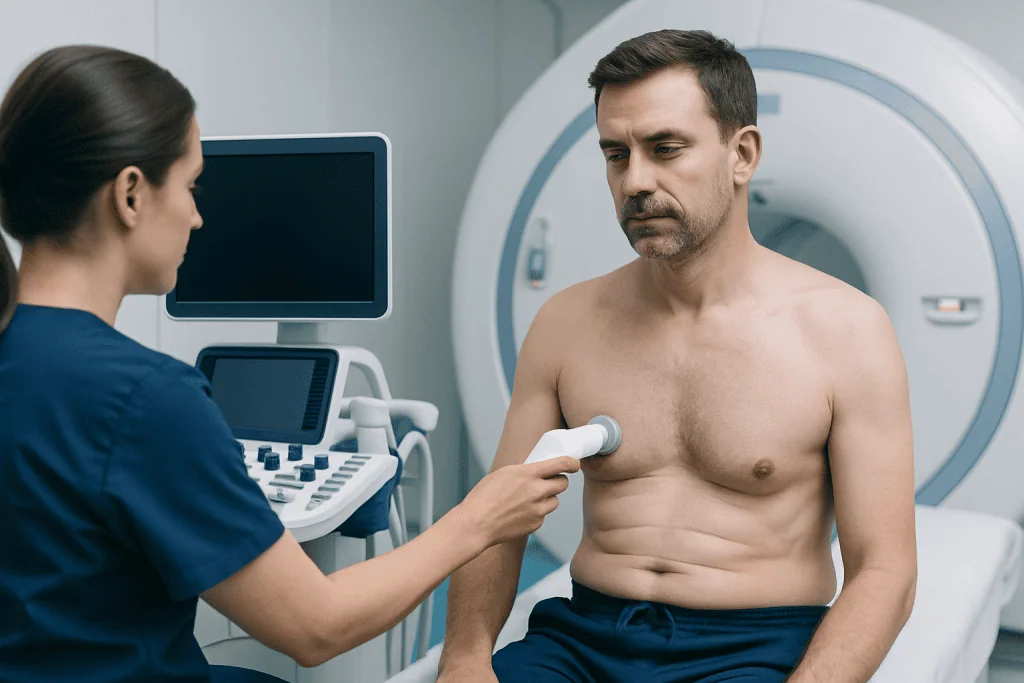
The most common symptom of male breast cancer is a lump in the breast area, often close to the nipple. It is usually firm and painless, though some men may notice tenderness. A lump does not always mean cancer, but it should always be checked by a healthcare professional.
Other symptoms can involve the nipple or skin. The nipple may turn inward, develop scaling or crusting, or produce discharge. The skin over the area may become thicker, dimpled, red, or ulcerated. Some men also notice swelling in the breast or a change in shape on one side.
If the cancer has spread to nearby lymph nodes, there may be swelling or a lump in the armpit. Not every symptom points to cancer, and benign causes such as infection, enlarged breast tissue, or cyst-like changes can also occur. Still, a new or unexplained breast symptom in a man should not be dismissed.
- Firm lump under or near the nipple
- Nipple inversion or change in position
- Nipple discharge, including bloody discharge
- Skin dimpling, redness, scaling, or sores
- Swelling in the breast or underarm area
Causes and Risk Factors

Male breast cancer develops when breast cells grow abnormally and form a tumor. In many cases, the exact reason this starts is not clear. However, certain factors can increase risk by affecting DNA in cells or changing the body’s hormone balance.
Age is one of the strongest risk factors, with most cases diagnosed later in life. A family history of breast cancer can also raise risk, especially if close relatives have had breast or ovarian cancer. Inherited genetic changes, particularly in the BRCA2 gene and sometimes BRCA1, are important risk factors in men.
Hormone-related conditions can contribute as well. Men with higher estrogen exposure, liver disease, obesity, Klinefelter syndrome, or some testicular conditions may have a greater risk. Previous radiation therapy to the chest can also increase the chance of developing breast cancer years later. Having risk factors does not mean a man will definitely develop cancer, but it may justify greater awareness or genetic counseling.
- Older age
- Family history of breast or ovarian cancer
- Inherited gene changes such as BRCA2
- Obesity and hormone imbalance
- Klinefelter syndrome
- Liver disease
- Testicular injury, undescended testicles, or testicular surgery
- Past chest radiation exposure
How Male Breast Cancer Is Diagnosed
Diagnosis begins with a medical history and physical examination. The doctor will ask when the change was first noticed, whether it has changed over time, and whether there is pain, discharge, or a family history of cancer. During the exam, the breast, nipple, and underarm area are assessed carefully.
Imaging tests are often used to look more closely at the breast tissue. These may include mammography and ultrasound. Imaging helps identify whether a lump looks suspicious and whether there are enlarged lymph nodes or other changes that need further evaluation.
A biopsy is needed to confirm whether cancer is present. In this procedure, a small tissue sample is removed and examined under a microscope. If cancer is found, additional tests may look at hormone receptors and other features that help guide treatment. In some patients, genetic testing may also be recommended, especially when there is a strong family history or a diagnosis at a younger age.
Treatment Options
Treatment for male breast cancer depends on the type of cancer, its size, whether it has spread, and the patient’s overall health. Surgery is often the main treatment. Because male breast tissue is limited, many men have an operation to remove the breast tissue and often some nearby lymph nodes. This may be discussed as breast cancer treatment within a personalized care plan.
Other treatments may be recommended before or after surgery. Radiation therapy can help reduce the risk of cancer returning in the chest wall or lymph node areas. Hormone therapy is commonly used because many male breast cancers are hormone receptor-positive, meaning the cancer cells grow in response to hormones.
Some patients may also need chemotherapy or radiation therapy depending on the stage and biology of the tumor. In certain situations, targeted or newer drug therapies may be considered. Treatment decisions are individualized, and men benefit from care planned by a multidisciplinary team that includes oncology, surgery, radiology, and pathology specialists.
Prevention and Self-Care
There is no guaranteed way to prevent male breast cancer, but some steps may help support overall health and awareness. Maintaining a healthy weight, limiting alcohol, staying physically active, and managing chronic health conditions may be beneficial for general cancer prevention. These steps do not eliminate risk, but they can support long-term wellbeing.
Men who have a strong family history of breast, ovarian, pancreatic, or prostate cancer may benefit from discussing genetic counseling with a doctor. If an inherited mutation is identified, screening plans and family risk discussions can become clearer. Being informed about risk can help men seek care sooner if symptoms develop.
Self-awareness is especially important. Men do not need routine self-exams in a rigid way, but they should become familiar with their normal chest and nipple area. Any new lump, skin change, or nipple discharge that persists should be evaluated. For men diagnosed with related conditions such as gynecomastia, it is still important to report any new or unusual changes rather than assuming they are benign.
When to See a Doctor
A man should see a doctor if he notices a new breast lump, persistent nipple or skin change, nipple discharge, or swelling in the armpit. While many breast changes are not cancer, only a proper medical assessment can determine the cause. Waiting for symptoms to go away on their own may delay diagnosis.
Prompt evaluation is especially important for men with a strong family history of breast cancer or known inherited gene mutations. A doctor can decide whether imaging, biopsy, or referral to a specialist is needed. If cancer is diagnosed, earlier treatment often means more options and a clearer plan.
Men seeking expert assessment may be cared for by multidisciplinary specialists. Acibadem International’s JCI-accredited hospitals diagnose and treat male breast cancer for international patients, with coordinated support across imaging, surgery, medical oncology, and follow-up care.
Frequently asked questions
Can men really get breast cancer?
Yes. Men have a small amount of breast tissue, and cancer can develop in that tissue. Although it is much less common than breast cancer in women, it is a real condition and should be taken seriously.
What does a male breast cancer lump feel like?
It is often described as a firm lump under or near the nipple and is usually painless. However, breast cancer can feel different from person to person, so any new lump should be examined by a doctor.
Is breast pain in men a sign of cancer?
Breast pain alone is not the most common sign of male breast cancer. Many non-cancerous conditions can cause discomfort, but pain together with a lump, nipple change, or discharge should be assessed promptly.
Who is at higher risk for male breast cancer?
Risk is higher in older men, those with a family history of breast cancer, and those with inherited gene changes such as BRCA2. Obesity, hormone-related conditions, liver disease, chest radiation, and Klinefelter syndrome can also increase risk.
How is male breast cancer confirmed?
Doctors usually start with a physical exam and imaging such as mammography or ultrasound. A biopsy is then used to confirm the diagnosis by examining tissue under a microscope.
Is male breast cancer treatable?
Yes. Treatment often includes surgery and may also include hormone therapy, radiation therapy, chemotherapy, or targeted treatments depending on the cancer. Outcomes are generally better when the condition is diagnosed early.
References
- World Health Organization
- American Cancer Society
- National Cancer Institute
- Centers for Disease Control and Prevention
- National Comprehensive Cancer Network
This article is for general information only and is not a substitute for professional medical advice. Please consult a qualified doctor about your individual situation.
Breast Cancer in Turkey — costs, top hospitals & a free quote
JCI-accredited · board-certified surgeons · reply within 24h
Add us as a Preferred Source to see more of our trusted health content across Google Search, AI Overviews and Discover.

Medical Oncology Department
Medical treatment of cancer with chemotherapy, immunotherapy and targeted therapies under a multidisciplinary tumor board.
60 specialists in this unit