Cancer: Diagnosis, Outlook, and Modern Treatment Approaches
Cancer begins when abnormal cells grow out of control and may spread to other parts of the body. Early diagnosis can improve treatment choices and may lead to better outcomes for many cancers.
Key Takeaways
- Cancer begins when abnormal cells grow out of control and may spread to other parts of the body.
- Early diagnosis can improve treatment choices and may lead to better outcomes for many cancers.
- Modern cancer care may include surgery, chemotherapy, radiation therapy, targeted therapy, immunotherapy, or combinations of these.
- A person’s outlook depends on the cancer type, stage, tumor biology, response to treatment, and overall health.
- Persistent warning signs such as unexplained weight loss, unusual bleeding, a new lump, or lasting fatigue should be assessed by a doctor.
Cancer is not a single disease but a broad group of conditions in which abnormal cells grow uncontrollably and may invade nearby tissues or spread elsewhere in the body. Diagnosis, outlook, and treatment vary widely by cancer type and stage, but modern care often combines imaging, laboratory testing, surgery, medicines, and supportive care to create an individualized plan.
Overview: what cancer is and how it is approached
Cancer is a general term for diseases in which some cells begin to grow abnormally, ignore the body’s usual control signals, and survive when they should not. Over time, these cells can form a mass called a tumor, invade nearby tissues, or travel through the blood or lymphatic system to other organs. Not all tumors are cancerous, and some cancers, such as many blood cancers, do not form a solid tumor.
Because cancer includes many different diseases, there is no single pathway for diagnosis or treatment. Doctors usually begin by identifying where the cancer started, how far it has spread, and specific features of the cancer cells. This detailed assessment helps guide a care plan that is tailored to the individual rather than using the same treatment for everyone.
Modern oncology care increasingly combines several methods. A patient may need imaging, biopsy, laboratory studies, and genetic or molecular testing before treatment begins. Depending on the findings, care may include oncology treatment, radiation therapy, surgery, or supportive therapies designed to help maintain strength and quality of life during treatment.
Possible signs and symptoms of cancer
Cancer symptoms vary greatly depending on the type, location, and stage of disease. Some cancers cause no symptoms at first and are found during routine screening or imaging done for another reason. Others lead to localized symptoms, such as a breast lump, changes in bowel habits, persistent cough, difficulty swallowing, or a sore that does not heal.
General symptoms may include unexplained weight loss, unusual fatigue, fever, night sweats, loss of appetite, or pain that persists without a clear cause. Some people notice skin changes, abnormal bleeding, frequent infections, or swollen lymph nodes. These signs do not always mean cancer, but they do deserve medical attention if they continue or worsen.
It can help to think of symptoms in patterns rather than isolated events. A brief cough after a viral illness may be harmless, but a cough that lasts for weeks, especially with blood, chest pain, or shortness of breath, should be evaluated. In the same way, constipation after travel may be temporary, but ongoing changes in bowel habits, anemia, or rectal bleeding should be discussed with a doctor.
- New lump or thickening anywhere in the body
- Unusual bleeding or discharge
- Persistent cough or hoarseness
- Changes in bowel or bladder habits
- Unexplained weight loss or fatigue
- A mole or skin lesion that changes in size, shape, or color
How cancer develops: causes and risk factors
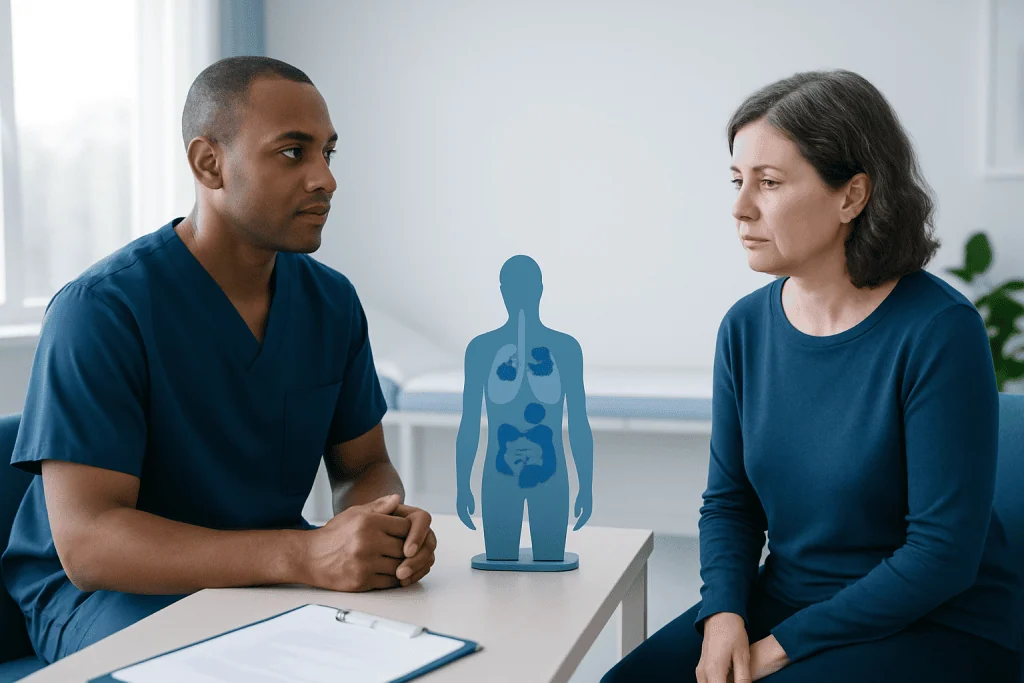
Cancer develops when genetic changes build up inside cells. These changes may affect genes that regulate growth, repair DNA damage, or trigger normal cell death. Some mutations happen by chance as cells divide, while others are linked to environmental exposures or inherited tendencies. Usually, cancer arises through a combination of factors rather than one single cause.
Known risk factors include increasing age, tobacco use, heavy alcohol use, certain infections, ultraviolet radiation, some workplace or environmental exposures, obesity, physical inactivity, and a family history of certain cancers. Long-term inflammation and hormonal factors may also contribute in some cases. Still, having a risk factor does not mean a person will definitely develop cancer, and some people develop cancer without any obvious risk factors.
Inherited cancer syndromes are an important but relatively small part of the overall picture. If several close relatives have had the same or related cancers, or if cancer appears at an unusually young age, doctors may suggest genetic counseling. Understanding inherited risk can help guide screening and prevention. For people being evaluated for a specific diagnosis such as breast cancer or lung cancer, personal and family history are especially important parts of assessment.
Diagnosis and staging: how doctors confirm cancer
A cancer diagnosis typically begins with a medical history and physical examination, followed by targeted testing. Blood tests can provide useful clues, but in most cases they cannot confirm cancer on their own. Imaging studies such as ultrasound, mammography, CT, MRI, or PET scans help doctors locate suspicious areas and understand their size and relationship to nearby structures.
In many situations, a biopsy is the key step because it allows a pathologist to examine tissue under a microscope. The biopsy may be done with a needle, an endoscope, or surgery, depending on the location of the abnormality. Pathology can identify the cancer type, how abnormal the cells appear, and other features that may influence treatment choices.
Once cancer is confirmed, doctors determine the stage. Staging describes how large the cancer is, whether lymph nodes are involved, and whether it has spread to distant organs. This information is essential because stage strongly influences the likely outlook and the most appropriate treatment plan. In some cancers, molecular profiling or biomarker testing is also used to help match treatment to the tumor’s biology, especially when considering systemic cancer treatment.
Treatment options in modern cancer care
Cancer treatment is individualized. The main goals may be to cure the disease, control its growth, reduce symptoms, or support comfort and quality of life. The right plan depends on the cancer type, stage, molecular characteristics, symptoms, and the patient’s general health and preferences. Multidisciplinary teams often include medical oncologists, surgeons, radiation oncologists, radiologists, pathologists, and supportive care specialists.
Surgery is commonly used when a tumor can be removed safely and may be curative for some early-stage cancers. Radiation therapy uses high-energy beams to destroy cancer cells in a focused area and may be given before surgery, after surgery, or as a primary treatment. Drug therapies include chemotherapy, hormone therapy, targeted therapy, and immunotherapy. Some people receive a single treatment type, while others benefit from a combination given in sequence or together.
Supportive care is also a core part of treatment, not a separate issue. Managing pain, nausea, fatigue, nutrition, sleep, and emotional stress can help people tolerate treatment better and maintain daily function. Rehabilitation, fertility counseling when appropriate, and help with practical concerns may also be included. For selected patients, cancer surgery may be part of a broader plan that also includes systemic therapy and follow-up monitoring.
Follow-up after treatment is important because it helps doctors assess response, watch for recurrence, and manage long-term effects. The schedule may involve physical exams, imaging, blood tests, and symptom review at intervals based on the specific cancer. People with diagnoses such as colon cancer may also need ongoing surveillance to detect new or returning disease as early as possible.
Outlook and living with cancer
A person’s outlook with cancer depends on several factors, including the type of cancer, stage at diagnosis, tumor biology, age, overall health, and how well the disease responds to treatment. For some cancers, early-stage disease can be treated successfully with curative intent. For others, treatment may focus on long-term control, symptom relief, and preserving quality of life. These differences explain why broad statements about cancer can be misleading.
Today, many people live longer with cancer than in the past because of earlier detection, better imaging, more precise surgery, improved radiation planning, and treatments targeted to specific tumor features. Even so, the experience can be physically and emotionally demanding. It is common to have questions about work, family life, exercise, sexual health, sleep, and mental wellbeing during and after treatment.
Clear communication with the care team can make the process more manageable. Patients often benefit from asking about treatment goals, expected side effects, warning signs to watch for, and the plan for follow-up. Near the end of the care pathway, Acibadem International’s multidisciplinary specialists in JCI-accredited hospitals diagnose and treat cancer for international patients, with care plans based on the specific diagnosis and individual needs.
Prevention, screening, and self-care
Not all cancers can be prevented, but healthy habits can reduce risk. Avoiding tobacco is one of the most important steps. Other helpful measures include limiting alcohol, protecting the skin from excessive sun exposure, staying physically active, maintaining a healthy weight, and following a balanced eating pattern. Vaccination against certain infections, such as human papillomavirus and hepatitis B, can also lower the risk of some cancers.
Screening is different from diagnosis. Screening looks for cancer or precancerous changes before symptoms appear, while diagnostic testing investigates a concerning sign or abnormal result. Recommended screening depends on age, sex, personal history, family history, and other risk factors. Examples may include mammography, cervical screening, colon cancer screening, and low-dose CT for some people at high risk of lung cancer.
Self-care matters during and after treatment as well. People may benefit from regular meals, hydration, light physical activity as tolerated, symptom tracking, and support from family, friends, or counselors. It is also wise to discuss supplements or alternative therapies with a doctor before use, since some products can interfere with treatment or increase side effects.
When to seek medical care
Medical advice should be sought promptly if a person notices symptoms that are unusual, persistent, or progressively worsening. Examples include a new lump, unexplained bleeding, difficulty swallowing, blood in the stool or urine, a lasting cough, or unintentional weight loss. Many of these symptoms are caused by conditions other than cancer, but timely evaluation is still important.
People receiving cancer treatment should also contact their care team if they develop fever, worsening shortness of breath, severe pain, dehydration, confusion, or inability to eat or drink. These symptoms may reflect treatment side effects, infection, or disease-related complications that need attention. Urgent medical care is especially important if there is chest pain, sudden weakness, heavy bleeding, or any rapidly changing symptom.
If there is a strong family history of cancer, early discussion with a qualified doctor can help determine whether screening should start sooner or whether genetic counseling is appropriate. Seeking medical care does not mean assuming the worst; it means giving symptoms the careful evaluation they deserve.
Frequently asked questions
Is cancer one disease or many different diseases?
Cancer is a broad term for many different diseases that share one main feature: abnormal cells grow out of control. Each cancer type behaves differently, so diagnosis, treatment, and outlook can vary widely.
Can cancer be cured?
Some cancers can be cured, especially when they are found early and treated effectively. In other cases, treatment may control the disease for a long time, relieve symptoms, and help maintain quality of life.
Does a biopsy always mean cancer is present?
No. A biopsy is a way to examine tissue more closely when imaging or symptoms raise concern. Many biopsies show noncancerous conditions such as inflammation, benign growths, or other changes.
What is the difference between stage and grade in cancer?
Stage describes how much cancer is in the body and whether it has spread. Grade refers to how abnormal the cancer cells look under a microscope and may give clues about how quickly the cancer could grow.
Are all cancers treated with chemotherapy?
No. Some cancers are treated mainly with surgery or radiation therapy, while others may need chemotherapy, immunotherapy, targeted therapy, hormone therapy, or a combination. The choice depends on the specific cancer and the individual patient.
Can a person have cancer without symptoms?
Yes. Some cancers do not cause noticeable symptoms in the early stages and are found during screening or tests done for another reason. That is one reason recommended screening can be valuable for certain groups.
When should someone worry that a symptom could be cancer?
A person should arrange medical evaluation if a symptom is persistent, unexplained, or getting worse over time. Warning signs such as unusual bleeding, a new lump, lasting cough, or unexplained weight loss deserve professional assessment, even though they often have noncancerous causes.
References
- World Health Organization
- National Cancer Institute
- American Cancer Society
- National Comprehensive Cancer Network
- Centers for Disease Control and Prevention
This article is for general information only and is not a substitute for professional medical advice. Please consult a qualified doctor about your individual situation.
Oncology care in Turkey — second opinion and treatment plan
JCI-accredited · board-certified surgeons · reply within 24h
Add us as a Preferred Source to see more of our trusted health content across Google Search, AI Overviews and Discover.