Cancer screening Before & After: What Realistic Results Look Like
Cancer screening is a process: a risk assessment before the test, the test itself, and follow-up guided by the result. A normal result is reassuring but does not rule out all cancers, and an abnormal result usually means further testing rather than a diagnosis. Anyone with symptoms should see a doctor directly instead of waiting for routine screening.
Key Takeaways
- Screening looks for cancer or precancerous changes before symptoms develop; it is not the same as a diagnostic test for a known problem.
- A normal result lowers the likelihood of finding cancer at that time but does not eliminate future risk or replace attention to new symptoms.
- An abnormal screening result is relatively common and may reflect a benign change, a technical issue, or a finding that needs clarification.
- The next step after an abnormal result may be repeat testing, imaging, laboratory testing, or a biopsy, depending on the screening type.
- The most appropriate screening plan depends on age, sex, family history, lifestyle exposures, health conditions, and previous results.
- People should seek medical assessment promptly for persistent or concerning symptoms, even if a recent screening test was normal.
You booked the test, you had the test, and now you are waiting. That wait is often the hardest part.
Cancer screening before and after involves more than having a test: it includes assessing personal risk, completing the appropriate screening examination, understanding the result, and arranging follow-up when needed. A normal screening result can be reassuring, while an abnormal result commonly leads to further testing and does not automatically mean cancer.
Cancer Screening Before and After: What to Expect
Cancer screening before and after is best understood as a planned process rather than a single test. Before screening, a clinician reviews the person’s age, medical history, family history, and possible risk factors to decide which tests are appropriate. After screening, the result helps guide the next step: routine repeat screening, short-term follow-up, or additional evaluation.
It helps to know what screening can and cannot do. It can find some cancers early, when treatment may be simpler or more effective, and some tests can identify precancerous changes that can be removed or monitored. But screening cannot prevent or detect every cancer, and a screening test by itself does not confirm a diagnosis.
For people planning a broader preventive review, cancer screening and personalized checkup planning can help organize evidence-based tests according to individual risk. The aim is not to search for every possible disease, but to use appropriate tests at appropriate intervals.
How Screening Works and Who May Benefit
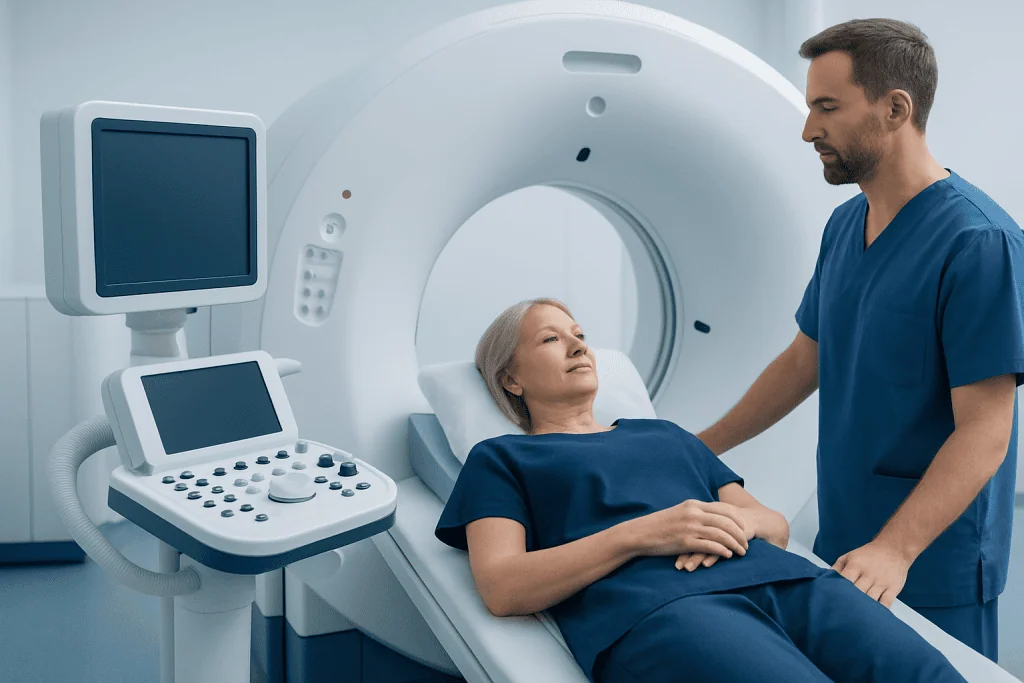
Screening is offered to people who do not have symptoms suggestive of a particular cancer. Depending on the person and the cancer type, it may involve imaging, laboratory tests, endoscopic procedures, or collection of cells or tissue. Common population screening programs may include breast, cervical, colorectal, lung, and prostate cancer screening in selected groups, although recommendations vary by country and individual risk.
Candidacy is based on more than age alone. A strong family history of cancer, a known inherited cancer predisposition, previous precancerous findings, tobacco exposure, certain chronic infections, or prior radiation treatment may change when screening begins and which tests are considered. Conversely, screening may not be beneficial when a person has major health limitations that would make follow-up tests or treatment unsuitable.
A clinician can explain whether standard screening intervals apply or whether a more individualized plan is needed. People with symptoms should not wait for routine screening; they need diagnostic assessment targeted to the symptom.
- Average-risk adults often follow age-based national screening recommendations.
- Higher-risk individuals may start earlier, have tests more often, or need specialized surveillance.
- Previous normal results do not necessarily change the need for future screening at the recommended interval.
Before the Appointment: Preparation and Questions to Ask
Preparation depends on the test. Some screening examinations require no special steps, while others may involve avoiding certain products, providing a stool sample, fasting, completing bowel preparation, or discussing medicines that affect bleeding risk. The screening center should give you clear instructions in advance. Follow them closely, because preparation can affect test accuracy.
Before the appointment, people should gather relevant information, including prior screening reports, pathology results, imaging discs when available, family cancer history, current medicines, allergies, and pregnancy status. Sharing previous results helps the clinical team compare changes over time and avoid unnecessary repeat testing.
Useful questions include: What does this test screen for? What can it miss? What preparation is needed? When and how will results be communicated? What follow-up may be needed if the result is unclear or abnormal? Knowing the answers ahead of time takes away a lot of the guesswork.
Step by Step: During and Immediately After Screening
Most screening visits begin with confirmation of medical information, consent, and a brief check for factors that could affect the test. The procedure then varies. Imaging-based tests may involve positioning and brief image acquisition; cervical screening collects cells from the cervix; stool-based colorectal tests are completed at home; and endoscopic screening involves examination of the bowel with a flexible camera, usually with sedation.
Many tests are brief and allow the person to return to usual activities straight away. Procedures involving sedation may require a responsible adult to accompany the patient home, and driving or important decisions should be avoided until the effects have worn off. A care team will explain any specific restrictions before discharge.
Results may be available on the same day for some tests, but others require laboratory or radiology review and may take longer. A result may be reported as normal, abnormal, inconclusive, or requiring comparison with earlier examinations. These terms describe what was seen on the test; they do not always indicate cancer.
After Screening: Realistic Results and Follow-Up Pathways
A normal result means that the test did not identify a concerning finding at that time. This is reassuring, but it is not a lifetime guarantee and does not rule out every cancer. Tests have limits, cancers can develop between screening rounds, and some cancers are not covered by routine screening. Continuing the recommended schedule and reporting new symptoms remain important.
An abnormal result means that further clarification is needed. For example, an image may show a small area that requires another view, a stool test may detect blood from a non-cancer cause, or a cell test may show changes that need closer assessment. Follow-up might involve repeat screening, diagnostic imaging, endoscopy, a specialist consultation, or a biopsy. Most abnormal screening results do not become a cancer diagnosis, but timely follow-up is essential.
An inconclusive or inadequate result may occur when a sample is insufficient, preparation was incomplete, or an image was difficult to interpret. Repeating the test is often the most useful next step. People should ask when follow-up should occur and ensure they understand who will communicate the final plan.
In a realistic example, a person may have an abnormal mammogram requiring additional images, then receive a benign result and return to routine screening. Another person may have a colorectal screening test that leads to colonoscopy and removal of a precancerous polyp. These different outcomes show why screening results should be interpreted within the full follow-up pathway rather than viewed as simply positive or negative.
Benefits, Limitations, and Possible Risks
The central benefit of appropriate screening is the opportunity to detect certain cancers or precancerous changes before symptoms appear. Earlier identification can expand treatment choices and may improve outcomes for some cancers. Screening also provides an opportunity to discuss modifiable risks such as smoking, alcohol use, physical activity, diet, vaccination, and family history.
Screening also has limitations. A false-positive result suggests a possible problem when cancer is not present, which can cause worry and lead to further tests. A false-negative result misses a cancer or fails to identify it at that time. Some slow-growing abnormalities may never have caused illness, yet their discovery can lead to additional procedures; this is called overdiagnosis.
Risks vary by test and may include temporary discomfort, radiation exposure from some imaging tests, bleeding or perforation with invasive procedures, reactions to sedation, or anxiety while awaiting results. These risks are generally considered alongside the expected benefit for the individual’s risk profile. A clinician can help weigh these factors when choosing a screening strategy.
When to Seek Medical Care
Routine screening is not designed to evaluate persistent symptoms. A person should arrange medical care promptly if they notice a new lump, unexplained bleeding, blood in urine or stool, persistent changes in bowel habits, a cough that does not settle, coughing up blood, unexplained weight loss, ongoing pain, difficulty swallowing, or a skin lesion that changes in size, shape, color, or sensation.
These symptoms can have many non-cancer causes, and having them does not mean cancer is present. Still, they deserve a look, especially when they persist, get worse, or have no clear explanation. A recent normal screening result should not delay a symptom-focused medical review.
At Acibadem International, our multidisciplinary specialists and JCI-accredited hospitals look after international patients who need cancer screening follow-up, diagnostic evaluation, or coordinated treatment planning. Whatever comes next, decide it with a qualified doctor who has read your history and your test results.
Frequently asked questions
What does cancer screening before and after mean?
Before screening, a clinician considers personal risk factors and selects an appropriate test. After screening, the result is reviewed and used to plan routine repeat testing or any necessary follow-up. The full process is more informative than the test alone.
Does an abnormal cancer screening result mean cancer?
No. An abnormal result means that something needs to be checked more closely. It may be caused by a benign condition, a temporary change, or a technical issue, although additional testing is important to clarify the finding.
How long does it take to get cancer screening results?
Timing depends on the type of test and whether laboratory analysis or specialist image review is required. Some findings are discussed on the day of testing, while others take days or longer. The screening provider should explain how and when results will be shared.
Can cancer be present after a normal screening result?
Yes, although a normal result is reassuring. No screening test detects every cancer, and cancer can develop after testing. New or persistent symptoms should always be discussed with a clinician, even after a recent normal screen.
What happens if further testing is recommended?
The next step depends on the original test and the finding. It may include repeat testing, more detailed imaging, an endoscopic examination, or a biopsy. The purpose is to determine whether the finding is harmless, needs monitoring, or requires treatment.
Do all adults need the same cancer screening tests?
No. Screening recommendations differ according to age, sex, family history, genetic risk, tobacco exposure, medical history, and local guidelines. A clinician can help create a screening plan that matches the individual’s circumstances.
This article is for general information only and is not a substitute for professional medical advice. Please consult a qualified doctor about your individual situation.
Oncology care in Turkey — second opinion and treatment plan
7 JCI-accredited hospitals · board-certified surgeons · reply within 24h
Add us as a Preferred Source to see more of our trusted health content across Google Search, AI Overviews and Discover.

Medically reviewed by the Acıbadem International Medical Board — August 24, 2026
See our medical review board →
References (2)
- Cancer Screening Overview (PDQ) - NCI — www.cancer.gov
- NHS: Cancer screening — www.nhs.uk
Radiation Oncology Specialists at Acibadem

Prof. Dr. Evrim Kadriye Tezcanlı
Radiation Oncology
Prof. Dr. Faysal Dane
Medical Oncology
Prof. Dr. Fulya Ağaoğlu
Radiation Oncology
Assoc. Prof. Dr. Fuzuli Tuğrul
Radiation Oncology
Prof. Dr. Gamze Uğurluer Sümer
Radiation OncologyMore from the Health Library

Vanishing Twin Syndrome: Symptoms, Causes, and Treatment Options
Adenopathy Lymphadenopathy: Symptoms, Causes, and Treatment Options
Peritoneal Cancer: Early Signs, Risk Factors, and How It Is Treated
Intra-Arterial Chemotherapy Delivers Drugs to the Tumor’s Artery

Tourette Syndrome: Symptoms, Causes, and Treatment Options