Cancer Stages Explained: What Stage Means and Why It Matters

Cancer stage describes the size and spread of a cancer at diagnosis. Staging helps guide treatment choices, estimate prognosis, and compare treatment results.
Key Takeaways
- Cancer stage describes the size and spread of a cancer at diagnosis.
- Staging helps guide treatment choices, estimate prognosis, and compare treatment results.
- Many solid tumors are staged from 0 to 4, often using the TNM system.
- A higher stage does not always mean the same outlook across different cancer types.
- Stage may be based on scans, biopsy, surgery, and other test results.
- Patients can ask their care team how stage affects treatment goals and next steps.
Cancer staging describes how much cancer is in the body, where it is located, and whether it has spread. Understanding stage helps patients and doctors choose treatment, discuss outlook, and plan follow-up with greater clarity.
Overview: What cancer stage means
Cancer stage is a way of describing how much cancer is present in the body. It usually refers to the size of the original tumor, whether nearby lymph nodes are involved, and whether the cancer has spread to other organs. Staging gives the medical team a common language for planning care and helps patients understand the condition more clearly.
For many cancers, stage is written as a number from 0 to 4. In general, lower stages mean the cancer is smaller or more limited to one area, while higher stages mean it is more advanced or has spread farther. However, stage does not tell the whole story. The type of cancer, where it started, how it looks under the microscope, and certain laboratory or genetic features can also strongly affect treatment and outlook.
Not every cancer is staged in exactly the same way. Many solid tumors, such as breast, lung, or colon cancer, follow a formal staging system. Some blood cancers, including leukemia, use different classification systems because they do not form a single tumor in the same way. Even when the word stage is used, its meaning can differ by cancer type.
Understanding staging can make appointments feel less overwhelming. It helps patients ask focused questions, such as whether the cancer is localized, whether it has reached lymph nodes, and how stage changes treatment options. Clear information about stage is often one of the first steps toward a well-organized treatment plan.
How doctors stage cancer
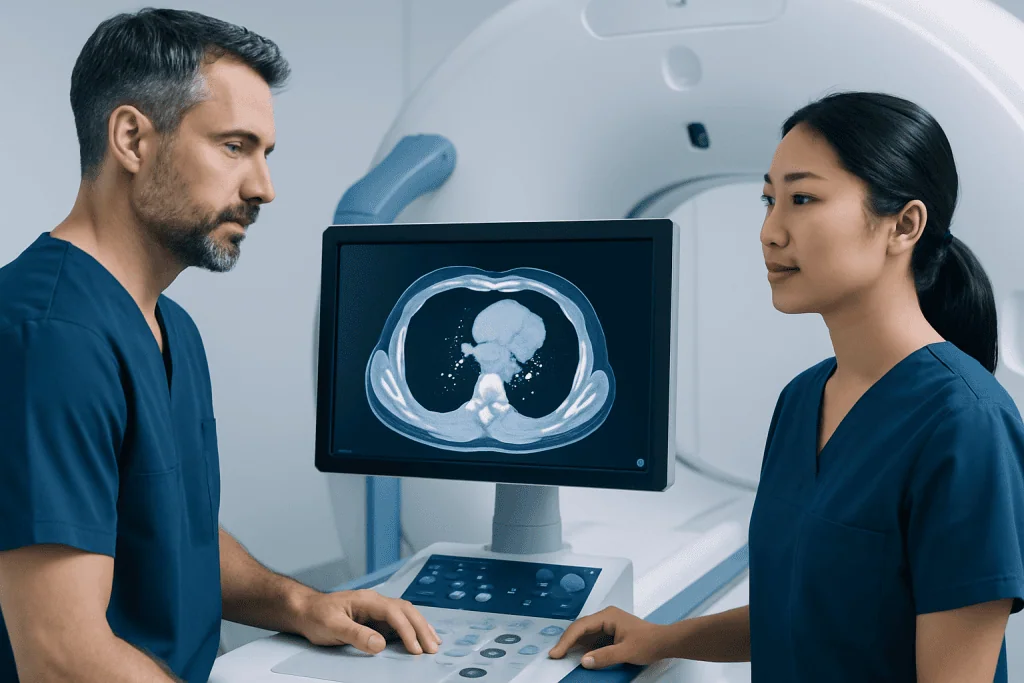
Doctors use several sources of information to determine stage. This often begins with a physical examination and a careful review of symptoms and medical history. Imaging tests such as ultrasound, CT, MRI, or PET scans may show the size of a tumor and whether it appears to have spread.
A biopsy is usually essential because it confirms that a suspicious area is cancer. Tissue from the biopsy can also provide details about the cancer’s subtype, grade, and other biological features. In some cases, blood tests or tumor markers may add useful information, although they are usually not enough on their own to determine stage.
Some cancers are given a clinical stage before treatment begins. This stage is based on what doctors can learn from examination, imaging, biopsy, and other non-surgical tests. If surgery is performed, the removed tissue may give more precise information, leading to a pathologic stage. Pathologic staging can show exactly how deep the tumor has grown and whether cancer cells are present in lymph nodes or nearby tissues.
Stage can occasionally change over time if new information becomes available or if the cancer returns after treatment. Still, the stage at diagnosis remains important because it helps interpret earlier treatment decisions and research data. Patients may also hear additional terms such as recurrent, progressive, or metastatic disease, which describe how the cancer behaves after diagnosis.
The TNM system and stages 0 to 4
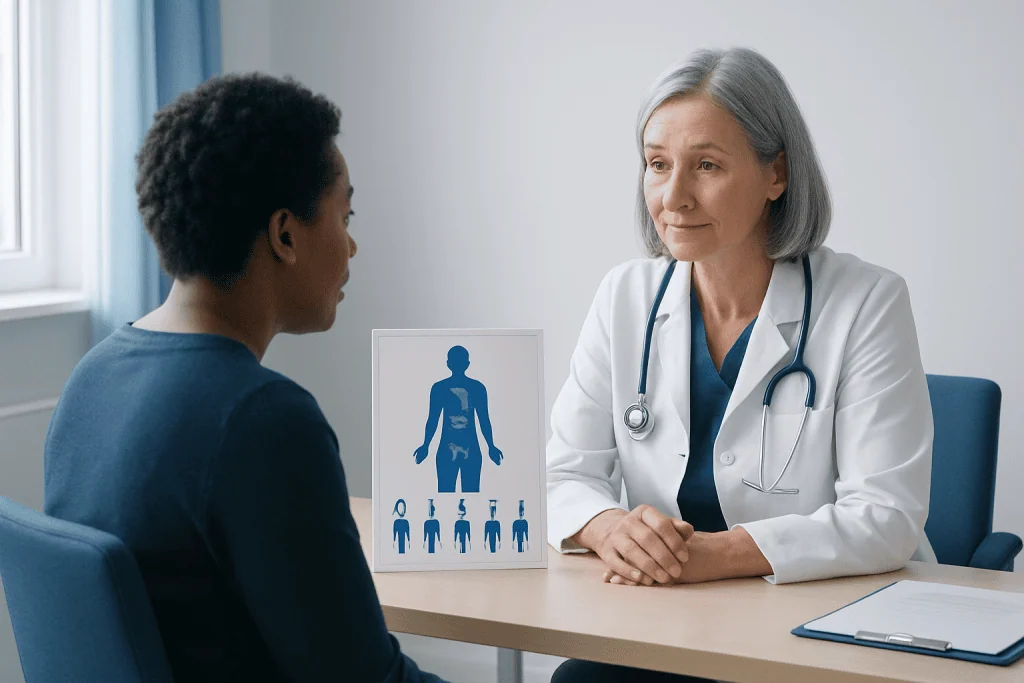
One of the most widely used methods for staging solid tumors is the TNM system. In this system, T describes the primary tumor, including its size or extent. N refers to whether nearby lymph nodes contain cancer cells. M indicates whether the cancer has metastasized, meaning it has spread to distant parts of the body.
Each letter is followed by a number or symbol that gives more detail. For example, a larger T number may mean a bigger tumor or one that has grown into nearby structures. A higher N value may indicate more lymph node involvement. M0 usually means no distant spread is detected, while M1 means distant spread is present.
These TNM findings are then often grouped into an overall stage from 0 to 4. Stage 0 usually means abnormal cells are limited to where they started and have not invaded deeper tissue; this is sometimes called carcinoma in situ. Stages 1 to 3 usually describe increasing size, deeper local growth, or lymph node involvement. Stage 4 generally means the cancer has spread to distant organs, although the exact definition can vary by cancer type.
It is helpful to remember that the same number does not carry the same meaning for every cancer. Stage 2 breast cancer and stage 2 colon cancer are not directly comparable. Staging systems are tailored to the behavior of each disease, including related conditions such as breast cancer or lung cancer.
Why stage matters for treatment and prognosis
Stage is one of the main factors doctors use when recommending treatment. A localized cancer may sometimes be treated with surgery, radiation therapy, or both. When cancer has spread more widely, treatment may focus more on medicines that travel throughout the body, such as chemotherapy, targeted therapy, immunotherapy, or hormone therapy, depending on the cancer type.
Staging also helps estimate prognosis, which means the likely course of the illness over time. In general, cancers found at an earlier stage are more likely to be treated successfully. Still, prognosis depends on more than stage alone. Age, general health, tumor biology, response to treatment, and access to timely care can all influence outcomes.
Another reason stage matters is that it helps doctors compare results across hospitals and research studies. Clinical trials often enroll patients with a specific stage so researchers can test treatments fairly. This makes staging valuable not only for individual treatment planning but also for improving cancer care overall.
For patients, knowing the stage can support practical decisions as well. It may shape the timing of treatment, the need for a second opinion, the expected length of therapy, and the type of follow-up care needed afterward. A good discussion with the oncology team can turn stage information into a clear, manageable plan.
Limits of staging: what stage does not tell you
Although staging is very important, it is not a complete picture of cancer. Two people with the same stage may still have different treatment plans or different responses to therapy. This is because cancers differ in grade, molecular profile, growth pattern, and sensitivity to treatment.
Modern cancer care often uses biomarkers and genetic testing alongside stage. These tests can show whether a tumor has specific mutations, proteins, or receptors that may affect treatment choices. In some cancers, these biological features are nearly as important as stage when deciding on therapy.
Stage also does not fully describe how a person feels day to day. Symptoms, pain, nutrition, emotional well-being, and other medical conditions all matter. A treatment plan should consider the whole person, not only the stage written in a report.
Patients sometimes worry that a high stage automatically means there is no effective treatment. That is not always true. Many advanced cancers can still be treated in ways that control disease, relieve symptoms, and improve quality of life for meaningful periods of time. In some situations, even metastatic cancer may respond very well to modern therapies.
Questions patients can ask after a staging diagnosis
After hearing a stage, many patients are unsure what to ask next. It can help to write down questions before the appointment or bring a family member or friend for support. Asking for plain-language explanations is appropriate and often useful.
Helpful questions may include:
- What is the exact stage of the cancer, and how was it determined?
- Does the stage include lymph nodes or spread to other organs?
- Is this a clinical stage or a pathologic stage?
- What other factors, such as grade or biomarkers, affect treatment?
- What are the main treatment goals at this stage?
- Should a second opinion or additional testing be considered?
Patients may also ask how soon treatment should begin and what to expect during the first few weeks. Understanding whether the aim is cure, long-term control, or symptom relief can make decisions feel more grounded. It is also reasonable to ask whether care may include medical oncology, radiation therapy, or cancer surgery as part of a combined plan.
Clear communication can reduce uncertainty. If information feels confusing, asking the doctor to repeat key points or explain them in a different way can be very helpful. Many cancer centers also provide nurse educators, patient navigators, or written summaries to support understanding.
When to seek specialist care and follow-up
Anyone diagnosed with cancer should be evaluated by a qualified oncology team. Specialist input is especially important when the stage is uncertain, treatment options are complex, or the cancer type is uncommon. A multidisciplinary approach may include surgeons, medical oncologists, radiation oncologists, radiologists, pathologists, and supportive care professionals working together.
Follow-up remains important after staging and throughout treatment. Additional scans or tests may be needed to confirm the stage, assess response to therapy, or monitor for recurrence. Patients should contact their doctor promptly if new symptoms appear, such as unexplained pain, breathing problems, significant weight loss, or sudden neurological changes.
Emotional support is also part of good cancer care. Learning the stage can feel stressful even when treatment options are available. Counseling, support groups, nutrition guidance, and rehabilitation services may help patients cope more comfortably during and after treatment.
For people seeking care across borders, coordinated services can make diagnosis and treatment more manageable. Near the end of the care journey, some patients choose centers such as Acibadem International, where multidisciplinary specialists in JCI-accredited hospitals diagnose and treat cancer for international patients, including conditions such as colon cancer.
Frequently asked questions
What does stage 4 cancer mean?
Stage 4 usually means the cancer has spread to distant parts of the body, a process called metastasis. The exact meaning depends on the cancer type, and treatment may still be effective in controlling the disease, relieving symptoms, and sometimes shrinking tumors significantly.
Is a higher cancer stage always worse?
A higher stage often means the cancer is more advanced, but it does not tell the whole story. Outlook also depends on the cancer type, tumor biology, overall health, and how well the cancer responds to treatment.
Can cancer stage change after surgery?
Yes. A clinical stage is often assigned before treatment based on scans and biopsy results, but surgery can provide more detailed information. This may lead to a pathologic stage that is more precise.
Do all cancers use stages 0 to 4?
No. Many solid tumors use numbered stages, but some cancers use different systems. Blood cancers such as leukemia, lymphoma, and myeloma may be classified in other ways that better reflect how those diseases behave.
What is the difference between grade and stage?
Stage describes where the cancer is, how large it is, and whether it has spread. Grade describes how abnormal the cancer cells look under a microscope and can give clues about how quickly the cancer may grow.
Why do doctors need imaging tests if a biopsy already confirmed cancer?
A biopsy confirms that cancer is present, but it may not show the full extent of disease in the body. Imaging tests help doctors see the tumor's size, nearby structures, lymph nodes, and possible spread, which are all important for staging.
References
- World Health Organization
- National Cancer Institute
- American Cancer Society
- Union for International Cancer Control
- American Society of Clinical Oncology
This article is for general information only and is not a substitute for professional medical advice. Please consult a qualified doctor about your individual situation.
Oncology care in Turkey — second opinion and treatment plan
JCI-accredited · board-certified surgeons · reply within 24h
Add us as a Preferred Source to see more of our trusted health content across Google Search, AI Overviews and Discover.