Capsule Endoscopy: Swallowable Camera Test for the Digestive Tract

Capsule endoscopy uses a tiny swallowed camera to capture images of the digestive tract. It is most often used to examine the small intestine for bleeding, inflammation, polyps, or other abnormalities.
Key Takeaways
- Capsule endoscopy uses a tiny swallowed camera to capture images of the digestive tract.
- It is most often used to examine the small intestine for bleeding, inflammation, polyps, or other abnormalities.
- The test does not usually require sedation, and most people can continue normal daily activities during recording.
- A doctor may recommend a patency capsule first if there is concern about narrowing or blockage in the bowel.
- Capsule endoscopy can support diagnosis, but it does not allow tissue biopsy or treatment during the same test.
- Medical advice is important if the capsule does not pass, or if symptoms such as severe abdominal pain, vomiting, or trouble swallowing occur.
Capsule endoscopy is a noninvasive test that uses a pill-sized camera to take pictures of the digestive tract as it moves naturally through the body. It is especially useful for examining the small intestine, an area that can be hard to reach with standard endoscopy.
Overview of Capsule Endoscopy
Capsule endoscopy is a diagnostic test in which a person swallows a small capsule containing a miniature camera, light source, battery, and transmitter. As the capsule travels through the digestive tract, it takes many images and sends them to a recording device worn on the body. A specialist later reviews these images to look for signs of disease or abnormalities.
This technology is particularly valuable for viewing the small intestine, also called the small bowel. The small intestine is long and winding, and parts of it are difficult to examine fully with conventional upper endoscopy or colonoscopy. Capsule endoscopy helps fill this gap by providing a detailed visual assessment of areas that may otherwise be hard to reach.
Unlike traditional endoscopic procedures, capsule endoscopy usually does not require sedation or insertion of a long flexible scope through the mouth or rectum. For many patients, this makes it a more comfortable and convenient option. Even so, it is still a medical test that should be chosen carefully based on symptoms, history, and a doctor’s judgment.
Why Doctors Recommend It
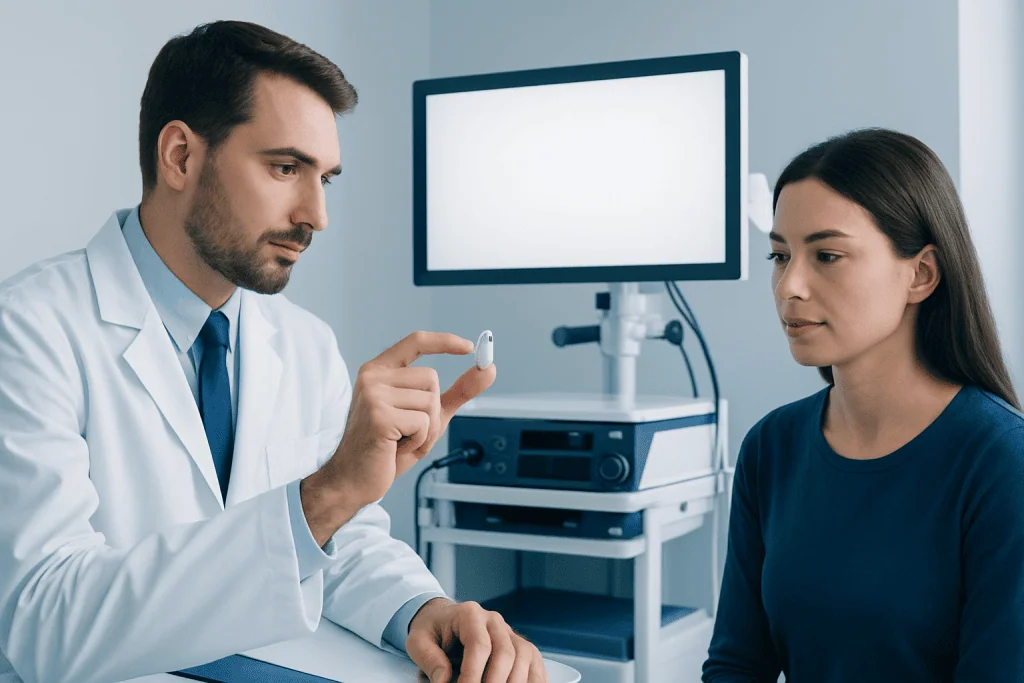
Doctors most often recommend capsule endoscopy when they need more information about symptoms or test results that suggest a problem in the small intestine. One common reason is unexplained gastrointestinal bleeding, especially when standard tests have not found the source. Capsule endoscopy may help identify tiny bleeding vessels, ulcers, or other changes that are not easy to detect by other methods.
It may also be used to look for inflammation related to Crohn’s disease, investigate ongoing iron deficiency anemia, assess possible small bowel tumors or polyps, or monitor certain inherited conditions that affect the digestive tract. In some cases, it can help evaluate persistent abdominal pain or chronic diarrhea when other causes remain unclear.
Capsule endoscopy is not always the first test a person needs. Depending on the situation, a doctor may begin with blood tests, stool tests, imaging studies, or procedures such as endoscopy or colonoscopy. The choice depends on the person’s symptoms, age, medical history, and whether the suspected problem is more likely to be in the upper digestive tract, colon, or small intestine.
How the Test Works and What to Expect
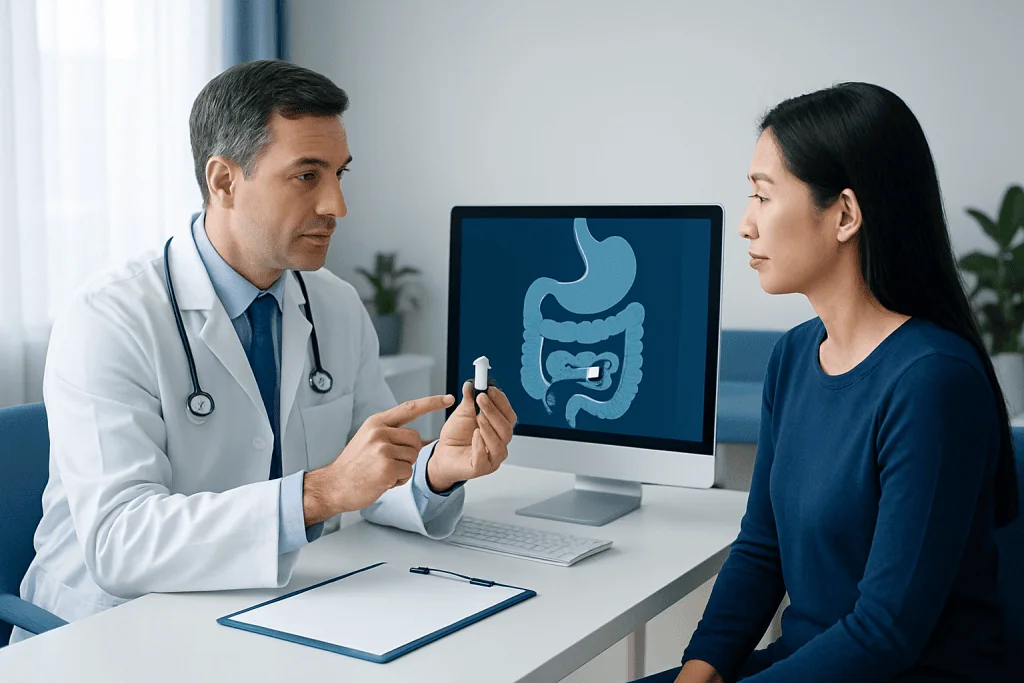
Before the procedure, patients usually receive instructions about diet and bowel preparation. In many centers, this includes fasting for a period of time and sometimes using a bowel-cleansing preparation so the camera can capture clearer images. Following the preparation instructions closely can improve the quality of the test.
On the day of the examination, sensors may be placed on the abdomen or the patient may wear a special belt or recorder. The capsule is then swallowed with water. Once activated, it begins taking pictures as it moves naturally through the esophagus, stomach, and small intestine. Most people do not feel the capsule moving inside the body.
During the recording period, which often lasts several hours, patients are usually able to walk, sit, and do light daily activities. Eating and drinking may be restricted for part of the day, based on the care team’s instructions. After the recording is complete, the equipment is returned, and the capsule usually passes naturally in the stool within a day or two, though it may sometimes take longer.
Because the capsule is disposable, it is generally not retrieved. The images are downloaded and reviewed by a gastroenterologist or another trained specialist. Results may not be available immediately, because careful review of thousands of images takes time.
Benefits and Limitations
One of the main benefits of capsule endoscopy is that it is minimally invasive. It does not usually require anesthesia or sedation, and it can provide valuable images of the small intestine without the discomfort associated with more invasive procedures. For many people, this makes the experience easier and less disruptive than some other digestive tests.
Capsule endoscopy can detect abnormalities such as bleeding, ulcers, inflamed areas, polyps, and suspicious lesions. It can be especially helpful when symptoms continue but standard investigations have not provided a clear answer. In this way, it can guide further evaluation and help doctors decide on the most appropriate next steps, which may include gastroenterology evaluation or targeted procedures.
At the same time, capsule endoscopy has important limitations. It is a diagnostic imaging test only, which means it cannot take biopsies, remove polyps, stop bleeding, or deliver treatment during the examination. If the capsule identifies an abnormal area, another procedure may still be needed to confirm the diagnosis or provide therapy.
Image quality can also be affected by bowel contents, rapid transit, or incomplete passage through the intestine before the battery runs out. In addition, the camera moves passively with the bowel rather than being steered directly by the doctor. For these reasons, capsule endoscopy is often part of a broader diagnostic plan rather than a stand-alone answer.
Risks, Safety, and Who May Not Be Suitable
Capsule endoscopy is generally considered safe, but it is not suitable for everyone. The main concern is capsule retention, which means the capsule becomes stuck in a narrowed area of the digestive tract instead of passing naturally. This risk is higher in people with known or suspected bowel strictures, certain tumors, previous abdominal surgery, radiation-related narrowing, or active inflammatory bowel disease.
If there is concern about a blockage or narrowing, the doctor may recommend imaging beforehand or use a patency capsule. A patency capsule is a dissolvable test capsule designed to check whether the digestive tract is open enough for the camera capsule to pass safely. This step can reduce the risk of retention in selected patients.
People with difficulty swallowing may need special assessment before the test. In some situations, the capsule can be placed directly into the stomach using an endoscopic technique rather than swallowed. Patients should also tell their doctor about implanted medical devices, pregnancy, prior bowel obstruction, and any symptoms such as severe bloating, vomiting, or significant abdominal pain.
Although uncommon, medical attention is important if the capsule does not pass, or if symptoms develop after swallowing it. Warning signs include worsening abdominal pain, vomiting, fever, or inability to eat and drink comfortably. A qualified clinician can advise whether observation, imaging, or removal is needed.
How Results Are Interpreted
After the procedure, a specialist reviews the recorded images in sequence. They look for findings such as fresh or old blood, erosions, ulcers, inflamed tissue, swollen folds, vascular abnormalities, polyps, or masses. The report usually describes where in the digestive tract the abnormality appears and whether the study was complete.
Normal results can be reassuring, but they do not always rule out every digestive problem. Some abnormalities may be intermittent, very small, or outside the areas best examined by capsule endoscopy. If symptoms continue, the doctor may still recommend more testing, repeat evaluation, or follow-up over time.
When the capsule shows a possible problem, the next step depends on the finding. A doctor may suggest biopsy or treatment through procedures such as advanced endoscopic intervention when appropriate, standard endoscopy, colonoscopy, imaging scans, or laboratory evaluation. Inflammatory changes may also prompt assessment for related conditions such as ulcerative colitis or other gastrointestinal disorders, depending on the overall pattern and symptoms.
Preparation, Aftercare, and When to See a Doctor
Good preparation helps capsule endoscopy work well. Patients should carefully follow fasting and bowel preparation instructions and ask questions in advance if anything is unclear. They should also provide a complete medication and medical history, especially regarding swallowing problems, prior bowel surgery, inflammatory bowel disease, or possible obstruction.
After swallowing the capsule, most people can resume light daily activities while avoiding anything the care team has restricted. They should follow guidance on when to drink fluids, eat meals, and return the recording equipment. Watching for passage of the capsule may be recommended in some cases, though not everyone will notice it.
Patients should contact a doctor promptly if they develop severe abdominal pain, repeated vomiting, chest discomfort, trouble swallowing, fever, or signs that the capsule may not have passed. Ongoing symptoms such as unexplained bleeding, black stools, persistent anemia, or chronic diarrhea also deserve medical evaluation, even if a previous test was normal.
Near the end of the care pathway, patients may benefit from coordinated specialist review to decide whether further testing or treatment is needed. Acibadem International’s multidisciplinary specialists and JCI-accredited hospitals diagnose and treat digestive conditions for international patients, including those who may need advanced follow-up after capsule endoscopy.
Frequently asked questions
Is capsule endoscopy painful?
Capsule endoscopy is usually not painful. Most people simply swallow the capsule with water and do not feel it moving through the digestive tract. The external sensors or recorder may feel unfamiliar, but they are generally well tolerated.
How long does capsule endoscopy take?
The recording phase usually lasts several hours, often around a full day’s testing period depending on the device and protocol. The capsule itself commonly passes naturally within one to two days, although this can vary. Reviewing the images takes additional time, so results are often not immediate.
Can capsule endoscopy replace regular endoscopy or colonoscopy?
Not completely. Capsule endoscopy is very useful for imaging the small intestine, but it cannot take biopsies or perform treatment. Standard endoscopy or colonoscopy may still be needed to confirm findings, collect tissue samples, or treat a problem.
Who should not have capsule endoscopy?
People with suspected bowel blockage, significant narrowing, or certain swallowing problems may not be suitable without further assessment. A doctor may recommend imaging or a patency capsule first. Suitability should always be decided based on the person’s symptoms and medical history.
What happens if the capsule gets stuck?
This is uncommon, but it can happen in people with strictures or other narrowing in the digestive tract. If retention is suspected, the doctor may use imaging to locate the capsule and decide whether observation, medication, endoscopic removal, or surgery is needed. Prompt medical advice is important if pain, vomiting, or bloating occurs.
Do patients need special preparation before the test?
Yes, most patients need to fast beforehand and may also need bowel preparation so the images are clearer. Instructions vary by center and by the reason for testing. Following the preparation plan carefully can improve the accuracy of the examination.
References
- World Gastroenterology Organisation
- American College of Gastroenterology
- National Institute of Diabetes and Digestive and Kidney Diseases
- European Society of Gastrointestinal Endoscopy
This article is for general information only and is not a substitute for professional medical advice. Please consult a qualified doctor about your individual situation.
Persistent digestive symptoms? Get evaluated in Turkey
JCI-accredited · board-certified surgeons · reply within 24h
Add us as a Preferred Source to see more of our trusted health content across Google Search, AI Overviews and Discover.

More from the Health Library



Related Specialists

Dr. Demet Alagöz
Pediatrics
Dr. Ömercan Yağız Öksüz
Aesthetic Plastic & Reconstructive Surgery
Assoc. Prof. Dr. Özlem Akgün Doğan
Pediatric Genetic Diseases
Dr. Yasemin Kural
Dermatology