Cardiac ablation in Turkey: Hospitals, Safety & What to Expect

Cardiac ablation is most often considered for arrhythmias such as atrial fibrillation, atrial flutter and supraventricular tachycardia. The procedure uses heat, cold or another energy source to create small controlled scars that interrupt abnormal electrical signals.
Key Takeaways
- Cardiac ablation is most often considered for arrhythmias such as atrial fibrillation, atrial flutter and supraventricular tachycardia.
- The procedure uses heat, cold or another energy source to create small controlled scars that interrupt abnormal electrical signals.
- Pre-procedure testing and medication planning are essential, particularly for people taking blood-thinning medicines.
- Most patients go home the same day or after an overnight stay, but recovery and rhythm monitoring continue for weeks to months.
- Ablation has potential benefits and risks, so suitability should be decided with a cardiac electrophysiologist.
Cardiac ablation in Turkey is a catheter-based procedure used to treat selected abnormal heart rhythms by targeting the small areas of heart tissue that trigger or sustain them. Safety depends on appropriate assessment, an experienced electrophysiology team, hospital standards, and an individualized plan for recovery and follow-up.
Overview: Cardiac Ablation in Turkey
Cardiac ablation in Turkey is available for people with certain heart rhythm disorders, also called arrhythmias. The treatment is usually performed in a cardiac catheterization laboratory by a cardiologist with specialist training in electrophysiology, the field focused on the heart’s electrical system. It is not open-heart surgery: thin flexible tubes called catheters are generally guided through a blood vessel to the heart.
For international patients, choosing where to have ablation should involve more than travel planning. A suitable centre should be able to review prior records, confirm the diagnosis, explain whether ablation is appropriate, provide anaesthesia and emergency support, and arrange clear follow-up after travel. Cardiac ablation treatment may be considered after a detailed consultation rather than solely on the basis of symptoms or an ECG result from abroad.
Hospitals accredited by Joint Commission International (JCI) are assessed against internationally recognised standards for patient safety and quality processes. Accreditation is one helpful factor when assessing a hospital, but patients should also ask about the electrophysiology team’s experience with their specific arrhythmia, available imaging and monitoring, and how complications and follow-up care are managed.
How Cardiac Ablation Works
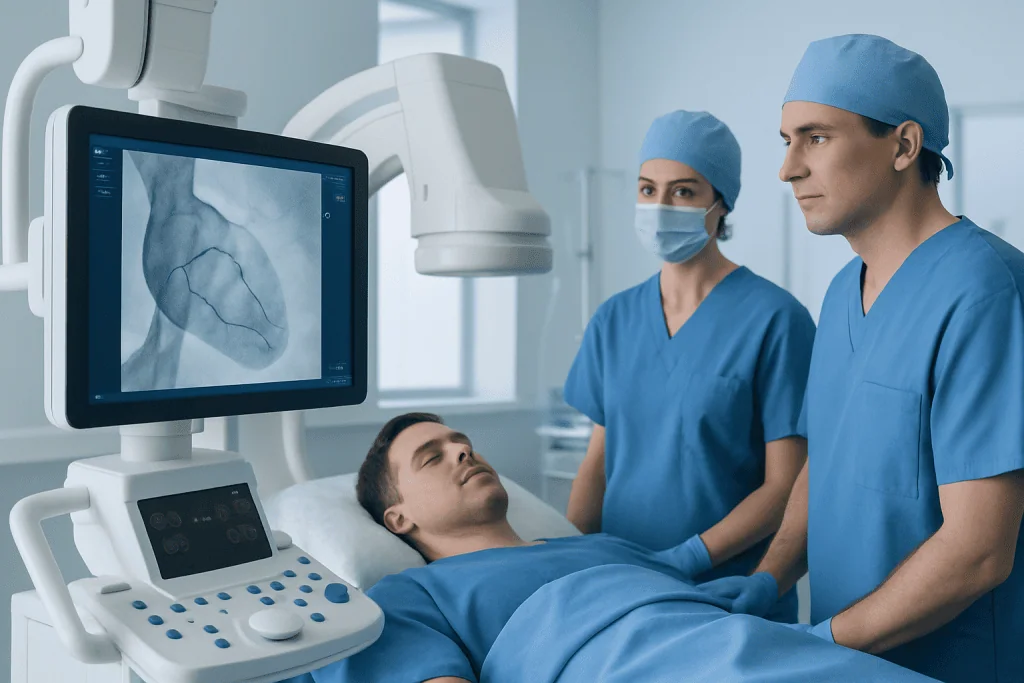
The heart normally beats through electrical signals that follow an organized pathway. In an arrhythmia, signals may start in the wrong location, travel around a circular pathway, or become disorganized. During an electrophysiology study, catheters record electrical activity inside the heart. This helps the team identify the areas involved in the abnormal rhythm.
Once the target is identified, the doctor may use radiofrequency energy, which applies controlled heat, or cryoablation, which applies controlled freezing. Other technologies may be used in selected situations. These methods create small, purposeful areas of scar tissue. Scar tissue does not conduct electricity normally, so it can block or isolate signals causing the rhythm problem.
The aim differs according to the arrhythmia. For example, ablation for supraventricular tachycardia may target a specific extra pathway or circuit. Atrial fibrillation procedures commonly focus on electrically isolating the pulmonary veins, while ventricular arrhythmia procedures can require more detailed mapping. Atrial fibrillation is one of the common conditions for which a specialist may discuss ablation, although medication and other approaches can also be appropriate.
Who May Be a Candidate

Cardiac ablation may be offered when an arrhythmia causes troublesome symptoms, affects heart function, continues despite medication, or when a person cannot tolerate rhythm-control medicines. Symptoms can include palpitations, breathlessness, fatigue, dizziness, chest discomfort or fainting. Some people have few symptoms but still need assessment because of the type of arrhythmia or its potential effects on the heart.
Suitability depends on the exact rhythm diagnosis, symptom pattern, medical history, heart structure and personal goals. A cardiologist may review ECGs, Holter or event monitor recordings, echocardiogram results, blood tests, medication lists and relevant scans. People who have had a stroke, have valve disease, heart failure, kidney disease, sleep apnoea or other complex conditions may require additional planning.
Ablation is not automatically the best first treatment for every patient. In some cases, observation, lifestyle measures, medicine, cardioversion or treatment of an underlying cause may be more suitable. For atrial fibrillation, decisions about blood-thinning medication are made separately from decisions about ablation; a successful procedure does not necessarily mean anticoagulation can be stopped.
- Bring prior ECGs, rhythm-monitor reports, imaging and procedure records where possible.
- Provide an up-to-date list of medicines, allergies and previous reactions to anaesthesia or contrast agents.
- Discuss pregnancy, planned pregnancy, implanted cardiac devices and any history of bleeding or blood clots.
What Happens Before, During and After the Procedure
Before the procedure, the team confirms the treatment plan and gives instructions about eating, drinking and medicines. Some medicines may need to be continued, adjusted or temporarily paused, but patients should never make these changes without direct medical advice. Blood tests, imaging and heart rhythm monitoring may be repeated. Depending on the type of ablation, a transoesophageal echocardiogram or other imaging may be used to check for blood clots before the procedure.
On the day, the patient is connected to heart rhythm, blood pressure and oxygen monitors. Sedation, local anaesthetic or general anaesthesia may be used depending on the procedure and individual needs. Catheters are commonly inserted through veins in the groin, though other access sites can occasionally be needed. The specialist maps the heart’s electrical signals, delivers the selected ablation energy and then tests whether the targeted rhythm pathway has been interrupted.
Procedure length varies widely. Some simpler ablations may take a relatively short time, while complex atrial fibrillation or ventricular arrhythmia ablations can take longer. Afterwards, catheters are removed and pressure or a closure device is used at the access site. The patient rests while the team monitors heart rhythm, blood pressure, pain and signs of bleeding.
For people travelling to Turkey, the care pathway should include a pre-travel review, coordination of tests and medication instructions, local accommodation appropriate for the planned observation period, and written discharge information in a language the patient understands. Travel home should be agreed with the treating team, taking account of recovery, access-site healing and the need for early follow-up.
Recovery Timeline and Follow-Up
Many patients are discharged on the same day or after one night in hospital, but the length of stay depends on the arrhythmia treated, the procedure performed and the person’s health. Mild bruising, tenderness or a small lump at the groin access site can occur. Temporary tiredness, occasional palpitations or brief irregular beats may also happen during early recovery.
Most people can walk soon after the required period of bed rest and gradually return to light daily activity within several days. Heavy lifting, intense exercise and strenuous activity are usually avoided for a short period to allow the catheter entry site to heal. The treating team gives individualized guidance on bathing, driving, work, exercise, medications and air travel.
Rhythm healing is not always immediate. Following some ablations, particularly for atrial fibrillation, irregular rhythms may occur during an early healing period and do not always mean the procedure has failed. Follow-up can include clinic review, ECGs, wearable or ambulatory rhythm monitoring, and coordination with the patient’s cardiologist at home. Keeping follow-up appointments is an important part of care.
Benefits, Risks and Safety Considerations
Potential benefits of ablation include fewer arrhythmia episodes, reduced symptoms, improved ability to take part in daily life, and less reliance on certain rhythm-control medicines. For some arrhythmias, ablation can be highly effective. However, outcomes vary according to the rhythm type, underlying heart condition, duration of the arrhythmia and the individual procedure.
All invasive heart procedures carry risks. These can include bleeding, bruising, infection, blood-vessel injury, blood clots, reaction to sedation or anaesthesia, and recurrence of the arrhythmia. Less common but serious complications vary by procedure and may include damage to heart tissue or nearby structures, fluid around the heart, stroke or the need for urgent treatment. The electrophysiology team should explain the risks relevant to the planned procedure and the safeguards used to reduce them.
Safety planning includes careful selection of patients, appropriate anticoagulation management, imaging when needed, sterile catheter-laboratory practice, continuous monitoring and access to specialised emergency services. A patient should feel comfortable asking who will perform the procedure, what type of ablation is proposed, whether repeat treatment may be needed, and what follow-up support is available after returning home.
When to Seek Medical Care
Urgent medical assessment is needed for chest pain, severe shortness of breath, fainting, new weakness or trouble speaking, persistent fast heartbeat with significant symptoms, or heavy bleeding from a catheter access site. After ablation, sudden worsening pain, marked swelling in the groin, fever, fainting or severe breathlessness should also be assessed promptly.
Less urgent but important reasons to contact the treating team include increasing redness, warmth or drainage at the access site, palpitations that are prolonged or more severe than expected, new medication side effects, or uncertainty about restarting normal activities. Patients should follow the discharge instructions they receive and seek local emergency care if they are unable to reach their treatment centre.
Acibadem International’s multidisciplinary specialists and JCI-accredited hospitals can assess and treat heart rhythm disorders for international patients, with care planning that includes evaluation, treatment and follow-up arrangements. A consultation with a qualified electrophysiologist can help determine whether catheter ablation is suitable and what preparation is needed.
Frequently asked questions
Is cardiac ablation in Turkey safe?
Cardiac ablation can be performed safely when it is clinically appropriate and delivered by an experienced electrophysiology team in a hospital equipped for cardiac procedures and emergencies. Every procedure has risks, so safety also depends on a thorough pre-procedure assessment, medication planning and follow-up.
How long does cardiac ablation take?
The duration varies with the type and complexity of the arrhythmia. Some procedures are shorter, while ablation for atrial fibrillation or complex ventricular rhythms may take several hours, including preparation and recovery time.
Is cardiac ablation painful?
The access site is numbed, and sedation or general anaesthesia may be used depending on the procedure. Patients may feel pressure at the catheter site or brief sensations during parts of the procedure, but the care team monitors comfort closely.
How long should an international patient stay in Turkey after ablation?
The recommended stay depends on the procedure type, recovery progress and the need for early follow-up. The treating team should advise on discharge, nearby accommodation and when air travel is appropriate before travel arrangements are finalized.
Can an arrhythmia return after cardiac ablation?
Yes. Some people have recurrent symptoms or documented arrhythmia after ablation, and a repeat procedure may occasionally be considered. Early irregular beats can occur during healing, especially after atrial fibrillation ablation, so follow-up monitoring is important.
Will cardiac ablation stop the need for blood thinners?
Not necessarily. The decision to continue or stop blood-thinning medicine depends on an individual’s stroke risk and medical history, not only on whether ablation appears successful. Patients should only change anticoagulant treatment under the direction of their cardiologist.
References
- European Society of Cardiology
- American Heart Association
- Heart Rhythm Society
- National Heart, Lung, and Blood Institute
This article is for general information only and is not a substitute for professional medical advice. Please consult a qualified doctor about your individual situation.
Heart care in Turkey — expert evaluation and treatment
JCI-accredited · board-certified surgeons · reply within 24h
Add us as a Preferred Source to see more of our trusted health content across Google Search, AI Overviews and Discover.