Cardiac Arrest: What Patients Need to Know
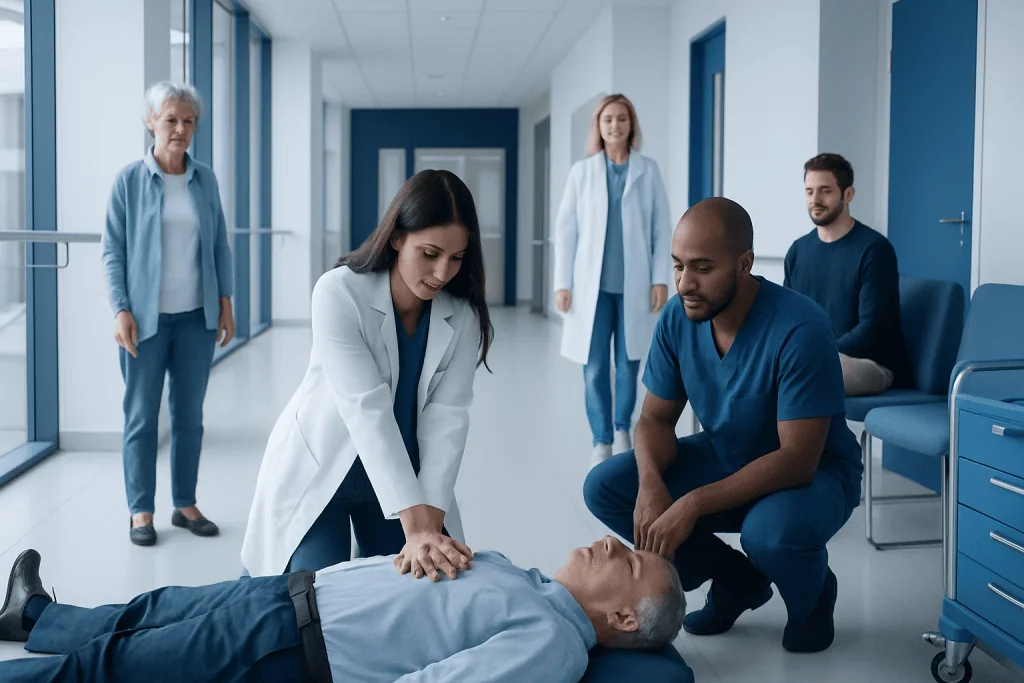
Cardiac arrest is different from a heart attack, although a heart attack can trigger cardiac arrest. The main warning signs at the moment of arrest are sudden collapse, unresponsiveness, and no normal breathing.
Key Takeaways
- Cardiac arrest is different from a heart attack, although a heart attack can trigger cardiac arrest.
- The main warning signs at the moment of arrest are sudden collapse, unresponsiveness, and no normal breathing.
- Immediate CPR and rapid use of an AED are the most important first steps before hospital care.
- Common causes include dangerous heart rhythm problems, coronary artery disease, cardiomyopathy, and severe electrolyte disturbances.
- People who survive cardiac arrest usually need hospital evaluation to find the cause and prevent it from happening again.
Cardiac arrest is a medical emergency in which the heart suddenly stops pumping blood effectively, causing collapse, loss of consciousness, and absent or abnormal breathing. Fast recognition, calling emergency services, starting CPR, and using an AED if available can save life and reduce the risk of brain injury.
Overview: what cardiac arrest means
Cardiac arrest is the sudden stopping of the heart’s effective pumping action. When this happens, blood flow to the brain and other organs falls abruptly, and the person quickly becomes unconscious. Without immediate treatment, cardiac arrest is usually fatal within minutes.
Many people confuse cardiac arrest with a heart attack, but they are not the same. A heart attack happens when blood flow to part of the heart muscle is blocked. Cardiac arrest is an electrical or pumping failure of the heart. A heart attack can lead to cardiac arrest, but cardiac arrest can also happen for other reasons, including inherited rhythm disorders, heart muscle disease, severe lack of oxygen, or major electrolyte problems.
Because cardiac arrest begins suddenly, the first minutes matter most. Survival depends on a rapid chain of actions: recognizing the emergency, calling for help, starting chest compressions, and using an automated external defibrillator (AED) if one is available. Hospital treatment then focuses on restoring circulation, protecting the brain, and finding the cause.
How cardiac arrest happens in the body
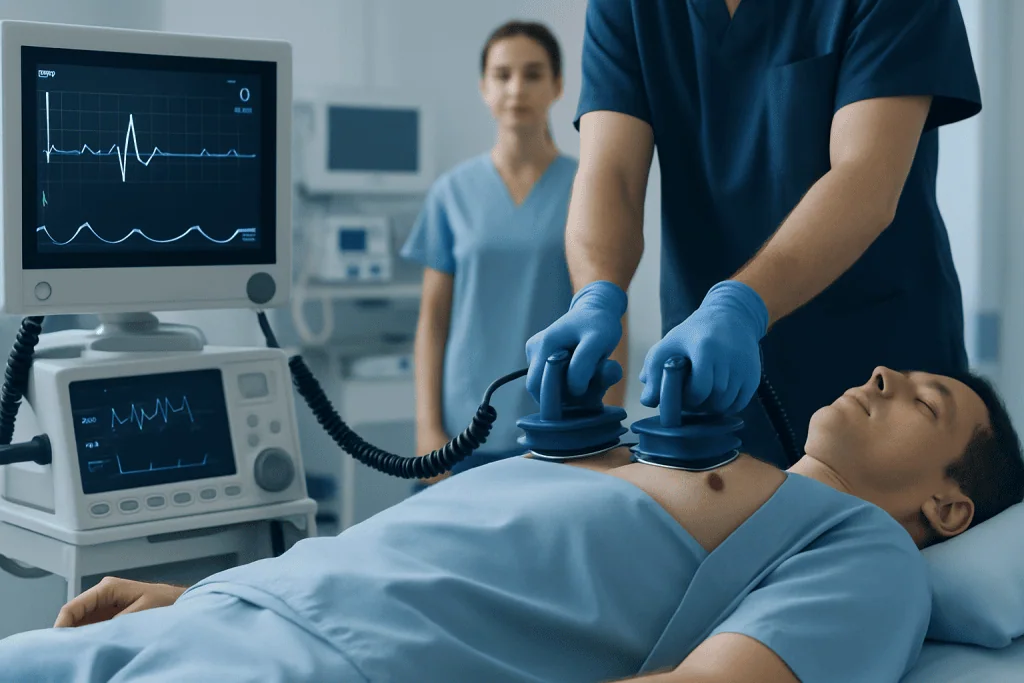
In many cases, cardiac arrest starts with an abnormal heart rhythm, also called an arrhythmia. The most dangerous rhythms, such as ventricular fibrillation and pulseless ventricular tachycardia, prevent the heart from pumping blood forward in a coordinated way. Instead of a strong heartbeat, the heart may quiver or beat too fast to be effective.
Not every cardiac arrest is caused by the same rhythm. Some people develop asystole, where there is no meaningful electrical activity, or pulseless electrical activity, where electrical signals are present but the heart does not pump enough blood. These patterns are often linked to severe illness, major blood loss, lack of oxygen, or other critical problems.
This is why cardiac arrest is both a heart emergency and a whole-body emergency. The lack of circulation can injure the brain very quickly. Even when the heart is restarted, doctors must still look for the underlying trigger and support the lungs, kidneys, and nervous system during recovery.
Symptoms and warning signs

The classic signs of cardiac arrest are sudden collapse, unresponsiveness, and absent breathing or only gasping breaths. The person may have no detectable pulse. This is an emergency that requires immediate action, even if the cause is not yet known.
Sometimes there are warning symptoms in the minutes, hours, or days before an arrest, but not always. Possible warning signs may include chest discomfort, shortness of breath, unexplained fainting, palpitations, marked weakness, or sudden dizziness. These symptoms do not always mean cardiac arrest will occur, but they should not be ignored, especially in someone with known heart disease.
Fainting during exercise, repeated blackouts, or a family history of sudden unexplained death may suggest an inherited rhythm disorder or structural heart disease. Conditions such as arrhythmia or heart failure can increase risk in some people, making early medical evaluation especially important.
- Sudden collapse
- No response when spoken to or shaken
- No normal breathing or only gasping
- No pulse, if someone trained checks for one
- Possible preceding chest pain, palpitations, or fainting
Causes and risk factors
The most common cause of cardiac arrest in adults is an underlying heart problem, especially coronary artery disease. Reduced blood supply to the heart muscle can trigger unstable rhythms. Other important causes include cardiomyopathy, heart failure, inflammation of the heart, congenital heart disease, and scarring from a previous heart attack.
Electrical conditions that affect the heart’s rhythm can also cause sudden arrest, sometimes in people with otherwise normal heart structure. Examples include long QT syndrome, Brugada syndrome, and other inherited channel disorders. Severe electrolyte imbalances, drug toxicity, major trauma, drowning, suffocation, blood clots in the lungs, and severe infections may also lead to cardiac arrest.
Risk factors include older age, smoking, high blood pressure, diabetes, high cholesterol, obesity, sleep apnea, stimulant drug use, and a family history of sudden cardiac death. However, younger people can also be affected, especially if they have inherited conditions or undiagnosed heart muscle disease. In some patients, doctors may later identify related problems such as coronary artery disease during the work-up after resuscitation.
What to do immediately: emergency response and first aid
If a person suddenly collapses and is unresponsive with no normal breathing, emergency services should be called right away. If another person is present, one person should call for help and get an AED while the other starts CPR. If the rescuer is alone with an adult, calling emergency services and activating speakerphone can allow CPR instructions to begin immediately.
Hands-only CPR is appropriate for most bystanders. This means pushing hard and fast in the center of the chest until trained help arrives or an AED is ready to use. An AED can analyze the rhythm and, in some cases, deliver a shock that can restart an effective heartbeat. Voice prompts on the device guide the user step by step.
For trained responders and healthcare teams, treatment may also include rescue breathing, advanced airway support, medications, and management of reversible causes. After circulation returns, urgent hospital care is needed. Depending on the cause, specialists may use tests or procedures such as coronary angiography to look for blocked arteries or an electrophysiology study to investigate serious rhythm problems.
Diagnosis after survival and hospital evaluation
When a person survives cardiac arrest, doctors focus on two goals: stabilizing the body and finding out why the arrest happened. Early tests usually include an electrocardiogram, blood tests, chest imaging, and continuous heart monitoring. Doctors also assess for heart attack, infection, electrolyte imbalance, medication effects, and breathing problems.
Further evaluation may include echocardiography to check the heart’s structure and pumping function, stress testing in selected patients, cardiac MRI, or coronary imaging. If an inherited condition is suspected, family history and sometimes genetic evaluation may be discussed. The pattern of the arrest rhythm and the circumstances of the event often help guide this investigation.
Brain function and recovery also need careful monitoring after resuscitation. Intensive care teams may use temperature management, ventilation support, and neurological assessment to protect the brain while the body stabilizes. The diagnostic process can take time, but it is important because prevention depends on understanding the most likely cause.
Treatment options and long-term prevention
Treatment after cardiac arrest depends on the cause. If a heart attack or major coronary blockage triggered the event, urgent procedures to restore blood flow may be needed. Patients may receive medicines to support blood pressure, control rhythm, prevent clotting, or treat heart failure, depending on the situation.
Some people benefit from procedures to prevent dangerous rhythms from coming back. These may include ICD implantation for people at high risk of recurrent life-threatening arrhythmias, or cardiac ablation for certain rhythm disorders. If a reversible cause is found, treatment focuses on correcting that cause, such as managing electrolyte problems, stopping a harmful drug, or treating a lung clot.
Recovery does not end at hospital discharge. Cardiac rehabilitation, follow-up with cardiology, medication review, and lifestyle measures all play a role. Stopping smoking, controlling blood pressure and diabetes, staying physically active within a doctor’s advice, treating sleep apnea, and eating a heart-healthy diet can lower future risk. Near the end of recovery planning, some patients may also discuss family screening if an inherited disorder is suspected.
For international patients who need evaluation or ongoing care, Acibadem International’s multidisciplinary specialists and JCI-accredited hospitals diagnose and treat cardiac conditions using coordinated emergency, cardiology, and intensive care services.
When to seek medical care
Cardiac arrest itself always requires emergency medical care immediately. If someone collapses, is not responding, and is not breathing normally, emergency services should be called at once, CPR should begin, and an AED should be used if available. Waiting to see if the person recovers on their own can be dangerous.
Medical care is also important for symptoms that may happen before an arrest. Urgent evaluation is needed for chest pain, unexplained fainting, severe shortness of breath, a racing or irregular heartbeat with dizziness, or sudden weakness that feels unusual. These symptoms can have many causes, but some are linked to serious heart problems.
People with a family history of sudden cardiac death, known inherited rhythm disorders, previous heart attack, heart failure, or repeated fainting episodes should discuss their risk with a qualified doctor. Early assessment can identify conditions that may be treatable before an emergency happens.
Frequently asked questions
Is cardiac arrest the same as a heart attack?
No. A heart attack is a blockage of blood flow to the heart muscle, while cardiac arrest is a sudden failure of the heart to pump blood effectively. A heart attack can cause cardiac arrest, but the two terms are not interchangeable.
Can a person survive cardiac arrest?
Yes, survival is possible, especially when CPR starts quickly and an AED is used early if needed. Recovery depends on how long the brain and organs went without enough blood flow and on the cause of the arrest.
What should a bystander do first during cardiac arrest?
The first step is to call emergency services or ask someone nearby to call. Then start chest compressions right away and use an AED as soon as one is available, following the device prompts.
Are there warning signs before cardiac arrest?
Sometimes there are, but not always. Possible warning symptoms include chest pain, fainting, shortness of breath, palpitations, or sudden dizziness, and these should be checked by a doctor, especially in people with heart disease.
Who is at higher risk of cardiac arrest?
People with coronary artery disease, heart failure, prior heart attack, inherited rhythm disorders, or cardiomyopathy have a higher risk. Smoking, high blood pressure, diabetes, and a family history of sudden death can also raise risk.
Can cardiac arrest be prevented?
Not every case can be prevented, but risk can often be reduced. Managing heart disease, controlling blood pressure and diabetes, avoiding tobacco, treating rhythm disorders, and following up regularly with a doctor are important steps.
References
- American Heart Association
- National Heart, Lung, and Blood Institute
- European Society of Cardiology
- Mayo Clinic
- MedlinePlus
This article is for general information only and is not a substitute for professional medical advice. Please consult a qualified doctor about your individual situation.
Heart care in Turkey — expert evaluation and treatment
JCI-accredited · board-certified surgeons · reply within 24h
Add us as a Preferred Source to see more of our trusted health content across Google Search, AI Overviews and Discover.
Check your numbers in seconds
BMI, calories, due date, blood pressure and 30+ more clinical calculators — free, instant, doctor-reviewed ranges.