Cardiac Tamponade: An Evidence-Based Guide for Patients

Cardiac tamponade happens when pressure from fluid in the sac around the heart interferes with normal heart filling. Common warning signs include shortness of breath, chest discomfort, weakness, rapid heartbeat, and low blood pressure.
Key Takeaways
- Cardiac tamponade happens when pressure from fluid in the sac around the heart interferes with normal heart filling.
- Common warning signs include shortness of breath, chest discomfort, weakness, rapid heartbeat, and low blood pressure.
- It often develops from a pericardial effusion caused by infection, cancer, injury, recent heart procedures, kidney failure, or autoimmune disease.
- Diagnosis usually combines a physical exam with urgent imaging, especially echocardiography.
- Treatment focuses on removing the fluid and addressing the underlying cause as quickly as possible.
Cardiac tamponade is a life-threatening condition in which fluid builds up around the heart and prevents it from filling and pumping properly. Prompt medical care can relieve the pressure, treat the cause, and help protect heart function.
Overview: what cardiac tamponade means
Cardiac tamponade is a serious condition in which fluid, blood, or sometimes pus collects in the sac that surrounds the heart, called the pericardium. As pressure builds in this space, the heart cannot expand normally between beats. That reduced filling means less blood is pumped to the body, which can quickly become dangerous without urgent treatment.
Many patients first hear the term after being told they have a pericardial effusion, which means fluid around the heart. Not every pericardial effusion causes tamponade. The key difference is pressure: tamponade occurs when the amount or speed of fluid buildup is enough to impair heart function.
Cardiac tamponade can happen suddenly, such as after chest trauma or a heart procedure, or it can develop more gradually over days to weeks. The symptoms and urgency often depend not only on how much fluid is present, but also on how quickly it accumulates. Even a relatively small amount of fluid can cause tamponade if it builds up rapidly.
How fluid around the heart affects the body
The heart sits inside a thin, flexible sac. Normally, this sac contains only a small amount of lubricating fluid. When extra fluid collects, the pericardium may stretch somewhat, but it has limits. Once the pressure in this space rises enough, the heart chambers, especially the right side, begin to collapse during filling.
This reduced filling lowers the amount of blood the heart can pump with each beat. In response, the body tries to compensate by increasing the heart rate and tightening blood vessels. A person may then feel lightheaded, weak, short of breath, or unusually tired. If the pressure continues to rise, blood pressure may drop, oxygen delivery may decrease, and shock can occur.
This process explains why cardiac tamponade is treated as a medical emergency. The problem is not just the presence of fluid, but the mechanical effect of that pressure on circulation. Relieving the pressure often leads to rapid improvement, but the underlying cause still needs careful evaluation and treatment.
Symptoms and warning signs

Symptoms of cardiac tamponade can vary from subtle to severe. Some people notice gradually worsening breathlessness, trouble lying flat, chest pressure, or a sense that their heart is racing. Others develop sudden weakness, anxiety, confusion, or fainting if blood flow drops quickly.
Common symptoms and signs may include:
- Shortness of breath, especially with activity or when lying down
- Chest pain, pressure, or discomfort
- Rapid heartbeat or palpitations
- Lightheadedness, dizziness, or fainting
- Weakness, fatigue, or restlessness
- Low blood pressure
- Swelling in the legs or abdomen in some cases
Doctors may also find clues during examination, such as distended neck veins, muffled heart sounds, or changes in blood pressure during breathing. However, these classic findings are not always present. Because symptoms can overlap with other heart and lung problems, new or worsening symptoms should be assessed promptly rather than self-diagnosed.
Patients who already know they have pericarditis or fluid around the heart should be especially alert to worsening breathing difficulty, chest discomfort, or faintness. These changes may suggest rising pressure and the need for urgent reassessment.
Causes and risk factors
Cardiac tamponade usually develops when an underlying condition leads to pericardial effusion or bleeding into the pericardial space. The cause may be obvious, such as recent trauma, or it may require more testing to identify. In some patients, more than one factor is involved.
Common causes include inflammation of the pericardium, infections, cancer, kidney failure, autoimmune disease, and complications after heart surgery or catheter-based procedures. Blunt or penetrating chest injury can also cause rapid bleeding around the heart. In people taking blood thinners, bleeding risk may be higher in certain situations.
Other possible causes include:
- Recent heart attack or rupture of heart tissue after severe damage
- Spread of cancer to the pericardium
- Tuberculosis or viral infection in some regions and patients
- Radiation therapy to the chest
- Hypothyroidism in selected cases
- Complications of aortic disease or invasive procedures
When cardiac tamponade is suspected, doctors do not wait for every test result before acting. Stabilization and diagnosis often happen at the same time, because the priority is preserving circulation while also finding and treating the root cause.
How doctors diagnose cardiac tamponade
Diagnosis begins with symptoms, vital signs, and physical examination, but imaging is central. Doctors often suspect tamponade when a patient has low blood pressure, a fast heart rate, shortness of breath, and evidence of fluid around the heart. An electrocardiogram and chest X-ray may provide supporting clues, but neither can confirm tamponade on its own.
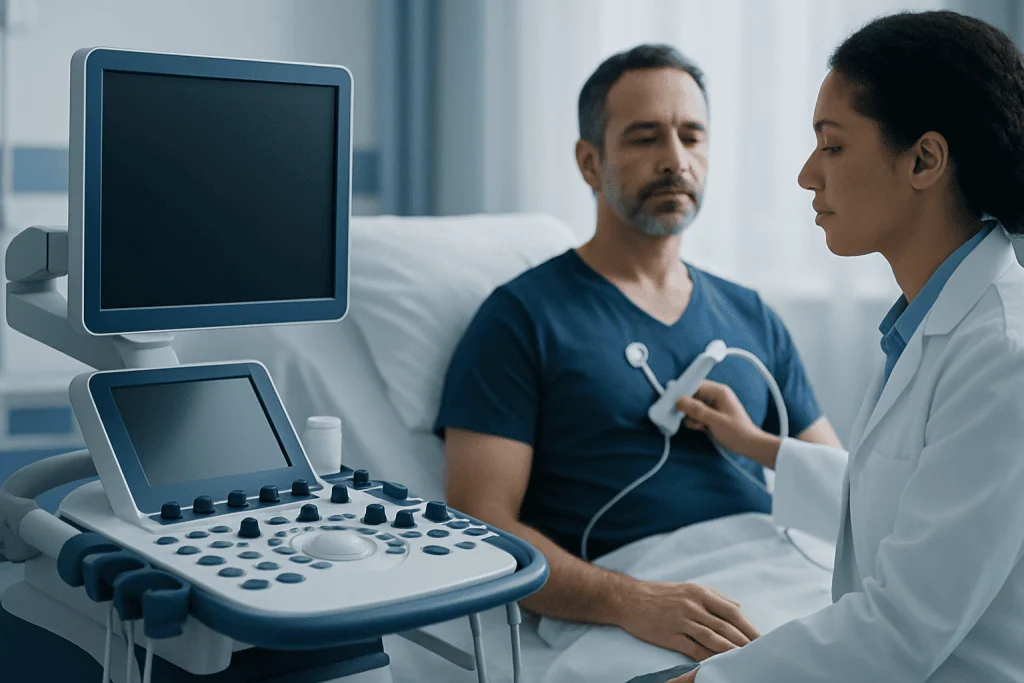
The most important test is usually echocardiography, an ultrasound of the heart. It can show the amount of fluid, whether the heart chambers are being compressed, and how blood flow changes with breathing. This makes it the fastest and most useful tool for guiding urgent care. If needed, hospital teams may also use CT or other imaging to evaluate related conditions.
Blood tests can help identify infection, inflammation, kidney dysfunction, thyroid disease, or signs of heart strain. If fluid is removed, the sample may be tested for infection, cancer cells, or other causes. Diagnosis therefore includes two parts: confirming that pressure is affecting the heart and determining why the fluid accumulated in the first place.
Because cardiac tamponade can deteriorate quickly, people with concerning symptoms are usually assessed in an emergency setting. Monitoring of blood pressure, oxygen levels, and heart rhythm helps clinicians decide how urgently drainage is needed.
Treatment options and emergency care
The main goal of treatment is to relieve pressure on the heart and restore effective circulation. Doctors may first give oxygen, intravenous fluids, and careful monitoring while preparing for definitive treatment. However, supportive care alone is not enough if true tamponade is present; the fluid usually needs to be drained.
The most common emergency procedure is pericardiocentesis, in which a doctor uses a needle and catheter to remove fluid from the pericardial space, often with imaging guidance. This can rapidly improve symptoms and blood pressure. In some cases, a drain is left in place temporarily to prevent re-accumulation while the team evaluates the cause.
Some patients need surgery rather than needle drainage, especially if the fluid is thick, recurrent, caused by trauma, or associated with bleeding that must be controlled. Surgical options may include creating a window in the pericardium or more extensive treatment depending on the situation. If the underlying problem involves structural heart disease, related treatment may also be required, sometimes including cardiovascular surgery.
After the emergency has passed, treatment turns to the underlying cause. This may involve anti-inflammatory medicines for pericardial inflammation, antibiotics for bacterial infection, cancer-directed therapy, dialysis support in kidney failure, or adjustment of blood-thinning medication. People with recurring fluid buildup may need longer-term follow-up with cardiology care to monitor heart function and prevent complications.
Recovery, prevention, and self-care
Recovery depends on how quickly tamponade was treated and what caused it. Many people feel noticeably better once the pressure on the heart is relieved, but close follow-up is still important. Doctors may repeat echocardiography to make sure fluid does not return and to confirm that the heart is functioning well.
There is no single way to prevent all cases of cardiac tamponade because it is a complication of many different illnesses. Prevention focuses on managing the underlying risks. This may include following treatment for pericarditis, cancer, kidney disease, or autoimmune disease; attending follow-up appointments after heart procedures; and seeking timely care after chest injury or sudden new symptoms.
Helpful self-care measures after treatment may include:
- Taking prescribed medicines exactly as directed
- Keeping follow-up imaging and specialist visits
- Reporting new shortness of breath, chest discomfort, or swelling promptly
- Discussing blood thinners and bleeding risks with a doctor
- Avoiding strenuous activity until a clinician says it is safe
Near the end of recovery, patients often want to know whether normal activities can resume. The answer varies by cause and overall heart health. A doctor can advise when exercise, travel, work, and other daily activities are appropriate again based on symptoms, examination, and repeat imaging. Acibadem International’s multidisciplinary specialists in JCI-accredited hospitals diagnose and treat cardiac conditions for international patients when advanced evaluation is needed.
When to seek medical care
Immediate medical care is needed for symptoms that could suggest cardiac tamponade or another emergency heart problem. A person should seek urgent help for severe shortness of breath, chest pain, fainting, confusion, bluish lips, or sudden marked weakness. These symptoms should not be watched at home, especially in someone with known fluid around the heart, recent heart surgery, chest trauma, or cancer.
Prompt medical review is also important for less dramatic but worsening symptoms, such as increasing breathlessness, a racing heartbeat, trouble lying flat, swelling, or dizziness. People who have recently had a cardiac procedure, are receiving treatment for pericarditis, or have a known pericardial effusion should contact their doctor quickly if symptoms change.
Even though cardiac tamponade is uncommon, it is one of the reasons doctors take fluid around the heart seriously. Early evaluation can identify whether symptoms are due to tamponade, another heart condition, or a non-cardiac cause. Timely assessment improves the chance of effective treatment and safer recovery.
Frequently asked questions
Is cardiac tamponade the same as pericardial effusion?
No. Pericardial effusion means there is extra fluid in the sac around the heart, while cardiac tamponade means that the fluid is causing enough pressure to interfere with the heart’s pumping. An effusion can be mild and stable, but tamponade requires urgent medical attention.
Can cardiac tamponade happen suddenly?
Yes. It can develop very quickly after trauma, bleeding, or a complication of a heart procedure. It can also appear more gradually when fluid builds up over time, which is why changing symptoms should be evaluated promptly.
What are the first symptoms of cardiac tamponade?
Early symptoms may include shortness of breath, chest pressure, a fast heartbeat, dizziness, and unusual fatigue. Some people feel worse when lying down or notice that symptoms are steadily getting worse over hours or days.
How is cardiac tamponade treated?
Treatment usually involves urgent drainage of the fluid around the heart so the heart can fill normally again. Doctors then investigate and treat the cause, such as infection, inflammation, kidney disease, injury, or cancer.
Is cardiac tamponade always fatal?
No, but it is a medical emergency that can become life-threatening without prompt treatment. Outcomes are often much better when the condition is recognized early and managed quickly by an experienced medical team.
Can cardiac tamponade come back after treatment?
It can, especially if the underlying cause remains active or the fluid tends to re-accumulate. Follow-up care, repeat imaging, and treatment of the root problem help reduce the risk of recurrence.
This article is for general information only and is not a substitute for professional medical advice. Please consult a qualified doctor about your individual situation.
Heart care in Turkey — expert evaluation and treatment
JCI-accredited · board-certified surgeons · reply within 24h
Add us as a Preferred Source to see more of our trusted health content across Google Search, AI Overviews and Discover.
Check your numbers in seconds
BMI, calories, due date, blood pressure and 30+ more clinical calculators — free, instant, doctor-reviewed ranges.

More from the Health Library

Skene’s Gland Cyst: A Complete Medical Overview

Cardiovascular Exercise for Fat Loss: What Patients Need to Know
What is eczema? A Doctor-Reviewed Answer

Fermented Drinks: What Patients Need to Know

Allergy Eye Drops: An Evidence-Based Guide for Patients