Care for Fractured Foot — Explained by Medical Evidence, Not Myths

A painful, swollen foot after an injury may be fractured even if the person can still walk on it. Early protection, elevation, and medical assessment help prevent further displacement and guide the right treatment.
Key Takeaways
- A painful, swollen foot after an injury may be fractured even if the person can still walk on it.
- Early protection, elevation, and medical assessment help prevent further displacement and guide the right treatment.
- Many stable foot fractures are treated without surgery, using a stiff-soled shoe, walking boot, cast, or other immobilization.
- Weight-bearing instructions vary by fracture and should be followed carefully rather than based on pain alone.
- Return to sport, running, or demanding work should be gradual and guided by healing, symptoms, and clinical advice.
Care for a fractured foot starts with protecting the injury, avoiding unnecessary weight-bearing, and obtaining a medical assessment to identify the fracture and confirm whether the bones are well aligned. Most foot fractures heal with appropriate support and follow-up, but the treatment plan depends on the bone involved, fracture pattern, skin condition, circulation, and a person’s overall health.
Overview: What Evidence-Based Care Involves
Care for a fractured foot means more than resting until pain improves. The immediate priorities are to protect the foot from further injury, reduce swelling, and arrange a clinical assessment. A clinician can determine whether there is a fracture, which bone is affected, whether the bone fragments remain aligned, and whether the injury needs immobilization, reduction, surgery, or specialist follow-up.
The foot contains 26 bones, including the toes, metatarsals in the middle of the foot, and tarsal bones closer to the ankle. Fractures can range from a small, stable crack to a more complex injury affecting joints or the arch of the foot. This is why a similar-looking injury may require very different care in different people.
A common myth is that a person cannot have a fracture if they can move their toes or take a few steps. In reality, some people can walk with certain foot fractures, especially early after the injury. Pain, bruising, swelling, tenderness over a specific bone, and difficulty bearing weight all deserve attention after a significant twist, fall, crush injury, or impact.
First Steps After a Possible Foot Fracture
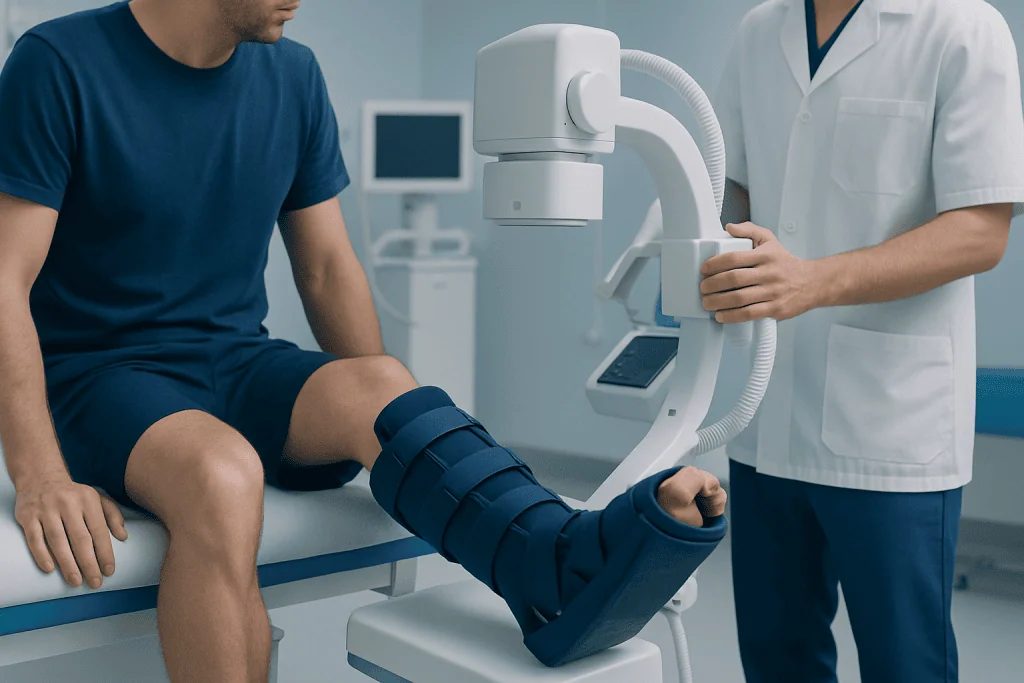
Until the foot has been assessed, it is sensible to stop the activity that caused the injury and avoid putting weight through the foot unless a clinician has said it is safe. If walking is necessary, using support such as crutches or another mobility aid may reduce stress on the injured area. The foot should not be forcefully stretched, “tested,” or manipulated in an attempt to put it back into place.
Resting with the foot elevated above heart level when practical can help limit swelling. A cold pack wrapped in a cloth may be applied for short periods to relieve pain and swelling; it should not be placed directly on the skin. A loose elastic bandage may sometimes provide comfort, but it must not feel tight or cause numbness, tingling, coolness, or color change in the toes.
Over-the-counter pain relief may be appropriate for some people, but the choice depends on medical history, allergies, kidney or liver disease, stomach conditions, blood-thinning medicines, pregnancy, and other factors. A pharmacist or doctor can advise on safe options. Avoid alcohol and activities that could increase the chance of another fall while the foot is painful or unstable.
- Remove rings from toes or restrictive footwear before swelling increases, if this can be done without forcing the foot.
- Keep any splint, boot, or temporary support dry and in place unless a healthcare professional advises otherwise.
- Do not drive if pain, a cast or boot, or limited movement prevents safe control of the vehicle.
How Foot Fractures Are Diagnosed
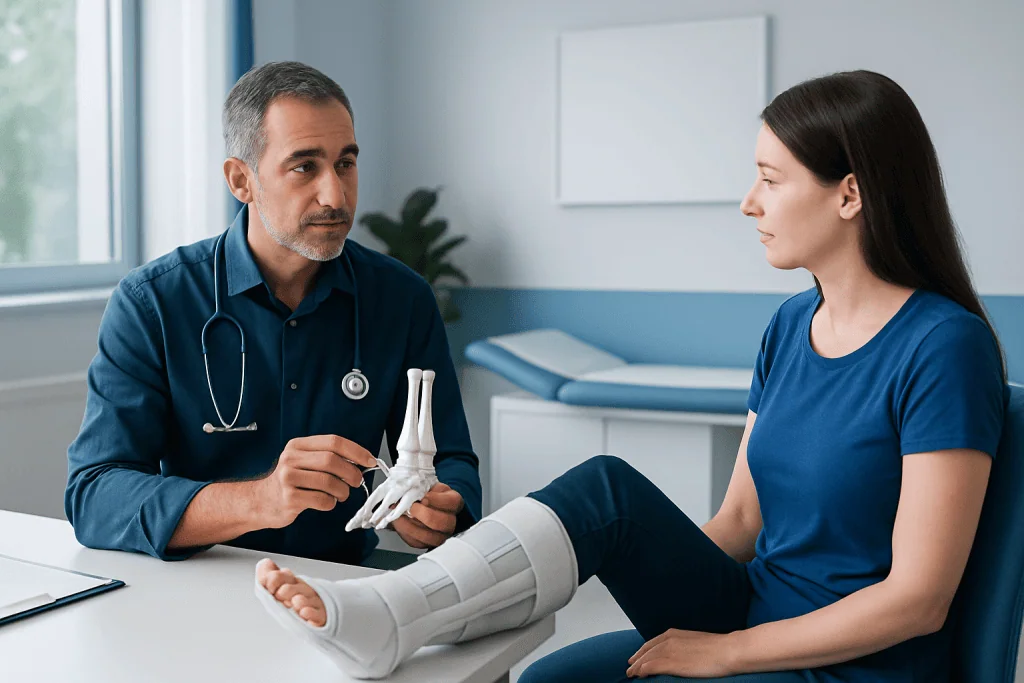
Diagnosis begins with a history of how the injury happened and an examination of the foot, ankle, skin, nerves, and circulation. The clinician will look for deformity, bruising, swelling, pinpoint tenderness, open wounds, and signs that the foot’s blood supply or sensation may be affected. They will also consider medical conditions that can influence bone health or healing.
X-rays are commonly used to identify a fracture and assess alignment. However, an early X-ray may not always show a stress fracture or a subtle injury. If symptoms and examination findings still suggest a fracture, repeat X-rays, magnetic resonance imaging (MRI), or computed tomography (CT) may be considered. CT can be particularly useful when a fracture involves joints or the middle of the foot.
Not every painful foot injury is a fracture. Sprains, tendon injuries, bruises, and joint dislocations can cause similar symptoms. Conversely, a fracture can occur with relatively minor trauma in people with osteoporosis or other conditions affecting bone strength. Accurate diagnosis helps avoid both unnecessary restriction and a premature return to activities that could worsen an injury.
Treatment Depends on the Fracture Pattern
Many uncomplicated fractures of the toes or metatarsals heal without an operation. Treatment may involve buddy taping for selected toe fractures, a rigid or stiff-soled shoe, a removable walking boot, a cast, or a splint. The aim is to keep the bone in a suitable position while it heals and to make daily movement safer and more comfortable.
Some fractures need more active treatment. If bone fragments are displaced, a joint surface is involved, the fracture is unstable, or the injury affects the midfoot, a clinician may need to realign the bone. This may be done without surgery in some cases, while others require fixation with pins, screws, plates, or other methods. Open fractures, in which bone or deeper tissue communicates with a skin wound, require urgent specialist care because of infection risk.
Instructions about weight-bearing are individual. Some stable injuries allow protected weight-bearing in a boot, while others require a period of no weight-bearing. Pain relief alone is not a reliable guide: walking too soon on certain fractures can delay healing or alter alignment. Follow-up appointments and, when needed, repeat imaging allow the care team to monitor progress and adjust the plan.
Healing, Mobility, and Return to Activity
Bone healing takes time, and recovery is not the same for every fracture. Pain and swelling often improve before the bone has regained full strength. Factors such as fracture location, severity, blood supply, smoking, diabetes, nutrition, age, infection, and adherence to weight-bearing advice can affect healing time.
During recovery, the toes and joints that are not restricted may be gently moved if the treating clinician permits this. Once the fracture is stable enough, exercises can help restore ankle and foot motion, strength, balance, and normal walking mechanics. Physical therapy may be useful after more serious injuries, prolonged immobilization, surgery, or when pain and stiffness persist.
A gradual return is safer than trying to “push through” pain. People should generally resume everyday walking before progressing to impact exercise, running, jumping, or field sports. New or increasing pain, swelling that does not settle after activity, limping, or loss of function can mean the activity level is advancing too quickly and should be discussed with the treating clinician.
Prevention and Self-Care During Recovery
Although accidents cannot always be prevented, well-fitting shoes, clear walking areas, adequate lighting, and sport-specific protective footwear can reduce some risks. People who play sports benefit from gradually increasing training loads, allowing recovery time, and replacing worn footwear. Sudden increases in running, marching, or high-impact exercise can contribute to stress fractures.
Nutrition supports overall bone health. A balanced diet with adequate protein, calcium, vitamin D, and other nutrients is important, although supplements are not automatically needed for everyone. A doctor may recommend assessment for osteoporosis or other causes of low bone strength when a fracture occurs after minimal force, when fractures recur, or when there are other risk factors.
Smoking and nicotine exposure can impair bone healing, so stopping is beneficial during recovery and beyond. People with diabetes should pay particular attention to skin care, swelling, sensation changes, and blood glucose management, as diabetes can increase the risk of foot complications. Keeping follow-up appointments is an important part of self-care, even if symptoms seem to be improving.
When to Seek Medical Care
Medical care should be sought promptly for significant foot pain, swelling, bruising, or difficulty walking after an injury, especially when there is tenderness directly over a bone. Assessment is also important when pain began gradually during repetitive activity and does not improve with rest, as this may indicate a stress fracture.
Urgent evaluation is needed if the foot appears misshapen, there is a deep cut or visible bone, the toes are pale, blue, cold, numb, or increasingly painful, or the person cannot safely move around. A crush injury, severe swelling, or pain that seems much greater than expected also warrants urgent assessment. These symptoms can indicate a more serious injury requiring timely treatment.
During recovery, contact the care team if a cast or boot feels excessively tight, causes rubbing or skin breakdown, becomes damaged, or is associated with worsening numbness, tingling, fever, drainage, or increasing redness. Acibadem International’s multidisciplinary specialists and JCI-accredited hospitals can assess and treat foot fractures for international patients when specialist orthopedic care is needed.
Frequently asked questions
Can a person walk on a fractured foot?
Some people can walk on a fractured foot, particularly with certain stable fractures, but this does not mean the injury is minor. Walking can worsen some fractures or affect bone alignment. A clinician should advise whether weight-bearing is safe and whether a boot, cast, crutches, or another support is needed.
How can someone tell if a foot is fractured or sprained?
Both injuries can cause pain, swelling, bruising, and difficulty walking, so symptoms alone cannot always distinguish them. Localized bone tenderness, deformity, and pain with weight-bearing may raise concern for fracture. Clinical examination and imaging, usually X-rays, are often needed for confirmation.
Should a fractured foot be iced?
A cold pack wrapped in a cloth may help reduce discomfort and swelling soon after an injury. It should be used for short periods and should not be applied directly to the skin. Ice is supportive care and does not replace medical evaluation or immobilization when a fracture is suspected.
How long does a fractured foot take to heal?
Healing time varies with the bone involved, fracture pattern, treatment, and individual health factors. Many uncomplicated fractures improve over several weeks, while more complex injuries may take longer and require rehabilitation. The treating clinician can give a more individualized estimate based on follow-up examinations and imaging.
Does every fractured foot need surgery?
No. Many foot fractures heal well with immobilization and appropriate activity modification. Surgery may be recommended when a fracture is displaced, unstable, involves an important joint, affects the midfoot, or is open. The decision is based on the specific injury rather than pain level alone.
What should be avoided during foot fracture recovery?
People should avoid weight-bearing or impact activities beyond the limits set by their clinician. They should also avoid removing a prescribed immobilizer, altering a cast, or returning to sport simply because pain has improved. Smoking and nicotine use should be avoided because they can interfere with bone healing.
References
- American Academy of Orthopaedic Surgeons
- American College of Foot and Ankle Surgeons
- National Institute of Arthritis and Musculoskeletal and Skin Diseases
- National Health Service
- Mayo Clinic
This article is for general information only and is not a substitute for professional medical advice. Please consult a qualified doctor about your individual situation.
Joint and spine care in Turkey — expert assessment & treatment
JCI-accredited · board-certified surgeons · reply within 24h
Add us as a Preferred Source to see more of our trusted health content across Google Search, AI Overviews and Discover.