Carotid Artery Stenosis: Symptoms, Causes, and Treatment Options

Carotid artery stenosis is most often caused by plaque buildup in the carotid arteries. It may cause no symptoms, but it can increase the risk of transient ischemic attack and stroke.
Key Takeaways
- Carotid artery stenosis is most often caused by plaque buildup in the carotid arteries.
- It may cause no symptoms, but it can increase the risk of transient ischemic attack and stroke.
- Diagnosis commonly involves physical examination and imaging tests such as carotid ultrasound.
- Treatment depends on how severe the narrowing is and whether symptoms are present.
- Controlling blood pressure, cholesterol, diabetes, and smoking can lower future stroke risk.
Carotid artery stenosis is a narrowing of the carotid arteries, usually caused by atherosclerosis, that can reduce blood flow to the brain and increase the risk of stroke. Many people have no symptoms until a transient ischemic attack or stroke occurs, which is why timely assessment and treatment are important.
Overview
Carotid artery stenosis means narrowing of one or both carotid arteries, the major blood vessels on each side of the neck that carry oxygen-rich blood to the brain. The most common reason for this narrowing is atherosclerosis, a gradual buildup of fatty deposits, cholesterol, and inflammatory material inside the artery wall.
This condition matters because plaque can limit blood flow or become unstable. Small pieces of plaque or blood clot may break away and travel to the brain, where they can block a smaller artery and cause a transient ischemic attack (TIA) or stroke. For many people, the narrowing develops silently over time.
Carotid artery stenosis is closely related to other forms of cardiovascular disease. A person with plaque in the carotid arteries may also have atherosclerosis affecting the heart, legs, or other arteries, so evaluation often includes a broader look at vascular health.
Symptoms and early warning signs
Many people with carotid artery stenosis have no symptoms at all. In some cases, the first sign is a TIA, sometimes called a mini-stroke, or a full stroke. These events happen when blood flow to part of the brain is interrupted for a short time or longer.
Warning signs can appear suddenly and may include weakness or numbness on one side of the face or body, trouble speaking or understanding speech, sudden vision loss in one eye, dizziness, loss of balance, or severe confusion. Even if symptoms last only a few minutes and then improve, they should be treated as urgent.
During an examination, a doctor may hear a bruit, an abnormal whooshing sound over the carotid artery caused by turbulent blood flow. However, a bruit does not confirm the diagnosis, and its absence does not rule carotid stenosis out. Imaging is needed to understand whether narrowing is present and how severe it is.
- Sudden facial droop
- Arm or leg weakness, especially on one side
- New speech difficulty
- Brief or sudden vision loss
- Sudden trouble walking or coordinating movements
Why it happens and who is at risk

The leading cause of carotid artery stenosis is atherosclerosis. Over many years, plaque forms in the artery lining, making the channel narrower and less flexible. This process is influenced by both lifestyle and medical conditions that affect blood vessels.
Important risk factors include increasing age, smoking, high blood pressure, high cholesterol, diabetes, obesity, physical inactivity, and a family history of vascular disease. People who already have coronary artery disease, peripheral artery disease, or a history of stroke or TIA may also be more likely to have carotid narrowing.
Less commonly, carotid stenosis may be related to other causes such as prior neck radiation, fibromuscular dysplasia, or injury to the artery wall. In practice, doctors focus not only on the degree of narrowing but also on the person’s overall risk of stroke and cardiovascular disease.
Because carotid atherosclerosis often reflects disease elsewhere in the body, doctors may also consider whether there are signs of coronary artery disease or peripheral artery disease as part of a complete vascular assessment.
How carotid artery stenosis is diagnosed
Diagnosis begins with a medical history and physical examination. The doctor asks about past neurologic symptoms, stroke risk factors, smoking history, heart disease, and current medicines. A neurologic examination helps check strength, speech, sensation, and coordination.
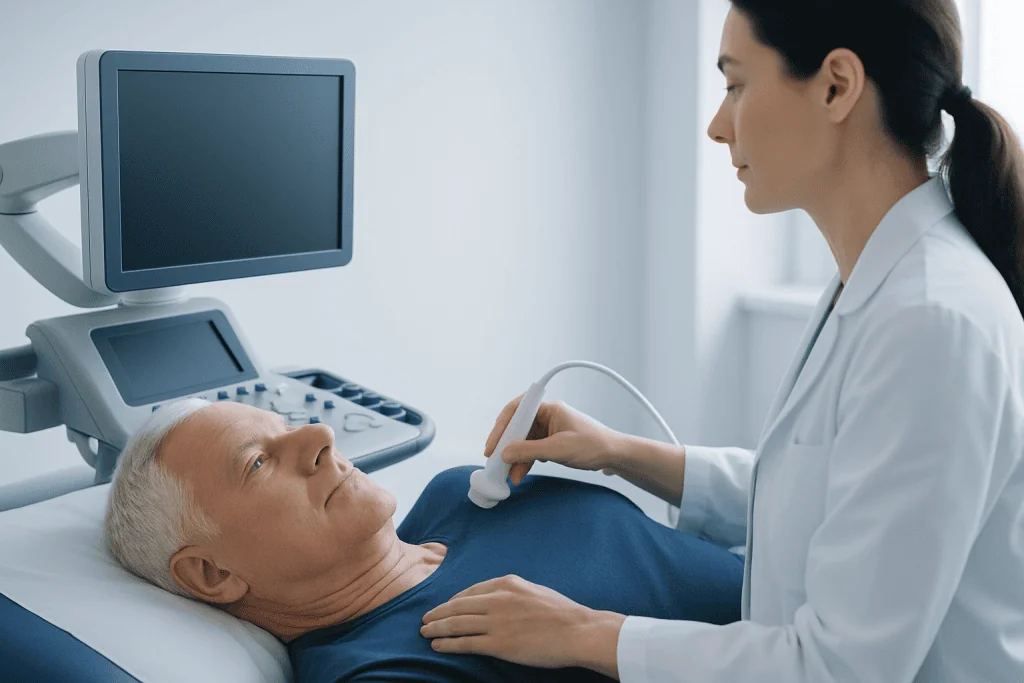
The most common first test is a carotid duplex ultrasound. This noninvasive scan uses sound waves to show blood flow and estimate the degree of narrowing. It is often the preferred initial study because it is widely available and does not involve radiation.
If more detail is needed, doctors may request CT angiography or MR angiography to visualize the arteries more clearly. In selected cases, catheter angiography is used when planning treatment or when noninvasive tests do not give a clear answer. These tests help determine how severe the stenosis is and whether there are high-risk plaque features.
Doctors also distinguish between symptomatic and asymptomatic carotid stenosis. This difference is important because a patient who has had a recent TIA or stroke from the affected artery may benefit from a different treatment approach than someone whose narrowing was found incidentally during testing.
Treatment options and stroke prevention
Treatment for carotid artery stenosis depends on how narrow the artery is, whether symptoms have occurred, the patient’s age and general health, and the balance of benefits and risks. For many people, the foundation of care is medical management aimed at preventing stroke and slowing plaque progression.
Medical treatment often includes antiplatelet therapy, cholesterol-lowering medication such as a statin, careful blood pressure control, and diabetes management when needed. Lifestyle measures are equally important: stopping smoking, maintaining a heart-healthy diet, staying physically active, and achieving a healthy weight can all reduce vascular risk.
When stenosis is significant, especially if it has caused symptoms, a procedure may be recommended. One option is carotid endarterectomy, an operation to remove plaque from the artery. Another option in selected patients is carotid artery stenting, which uses a stent to help keep the artery open.
The best choice is individualized. Some people benefit most from optimized medical therapy alone, while others may be candidates for a revascularization procedure after careful review by vascular surgery, neurology, cardiology, and radiology teams. In complex situations, doctors also evaluate related stroke conditions such as stroke risk and recovery needs.
Living with carotid stenosis: prevention and self-care
Carotid artery stenosis can often be managed successfully with long-term risk reduction. Patients are usually advised to keep regular follow-up appointments so that blood pressure, cholesterol, blood sugar, and symptoms can be reviewed over time. Follow-up imaging may be recommended in some cases to monitor the artery.
Daily habits make a meaningful difference. A diet centered on vegetables, fruit, whole grains, legumes, fish, and unsaturated fats can support vascular health. Regular exercise, if approved by a doctor, helps improve circulation and supports blood pressure, weight, and glucose control.
Smoking cessation is one of the most important steps for anyone with carotid disease. Taking prescribed medicines consistently is also essential, because medicines lower the chance of clot formation and help stabilize plaque, even when a person feels well.
Patients should know the warning signs of TIA and stroke and seek urgent help if they appear. Near the end of care planning, some people may choose consultation at centers with multidisciplinary stroke and vascular expertise; Acibadem International’s JCI-accredited hospitals provide diagnosis and treatment for international patients, including advanced stroke treatment when needed.
When to seek medical care
Immediate medical attention is needed for any possible TIA or stroke symptoms, even if they improve quickly. Sudden weakness, numbness, speech difficulty, vision loss, severe imbalance, or confusion should be treated as an emergency because prompt treatment can reduce brain injury and guide stroke prevention.
A non-emergency medical appointment is appropriate if a person has vascular risk factors such as smoking, diabetes, high blood pressure, high cholesterol, or known atherosclerosis elsewhere in the body. Evaluation may also be advised if a doctor hears a carotid bruit or if imaging done for another reason suggests carotid narrowing.
Anyone previously diagnosed with carotid artery stenosis should contact their doctor if symptoms change, medicines are causing side effects, or there are questions about monitoring and procedure options. Shared decision-making is especially important when considering surgery or stenting, because treatment should reflect individual stroke risk and overall health.
Frequently asked questions
Is carotid artery stenosis the same as a blocked artery?
Not exactly. Carotid artery stenosis means the artery is narrowed, usually by plaque buildup, but blood may still be flowing through it. The degree of narrowing can range from mild to severe, and complete blockage is a different situation that requires individual assessment.
Can carotid artery stenosis cause symptoms before a stroke?
Yes, but many people have no symptoms until a TIA or stroke occurs. When symptoms do happen, they usually appear suddenly and may include weakness on one side, speech difficulty, or brief vision loss in one eye.
How serious is carotid artery stenosis?
It can be serious because it raises the risk of TIA and stroke. The level of concern depends on how severe the narrowing is, whether symptoms have occurred, and what other risk factors a person has.
Can carotid artery stenosis be treated without surgery?
Yes. Many patients are treated with medicines and lifestyle changes to lower stroke risk, especially if the narrowing is not severe or if there are no symptoms. Doctors decide whether a procedure is needed based on imaging findings and the individual clinical picture.
What is the difference between carotid endarterectomy and carotid stenting?
Carotid endarterectomy is an operation that removes plaque from inside the artery. Carotid stenting is a less invasive procedure that places a small mesh tube to help keep the artery open. The best option depends on anatomy, symptom history, age, and overall health.
Can carotid artery stenosis be prevented?
Not all cases can be prevented, but the risk can often be reduced. Avoiding smoking, controlling blood pressure and cholesterol, managing diabetes, exercising regularly, and following a heart-healthy diet all support healthier arteries.
References
- American Heart Association
- National Institute of Neurological Disorders and Stroke
- Society for Vascular Surgery
- National Institute for Health and Care Excellence
- Centers for Disease Control and Prevention
This article is for general information only and is not a substitute for professional medical advice. Please consult a qualified doctor about your individual situation.
Explore treatments in Turkey — costs, top hospitals & a free quote
JCI-accredited · board-certified surgeons · reply within 24h
Add us as a Preferred Source to see more of our trusted health content across Google Search, AI Overviews and Discover.
Check your numbers in seconds
BMI, calories, due date, blood pressure and 30+ more clinical calculators — free, instant, doctor-reviewed ranges.