Casgevy Gene Therapy: How It Works, Results and What to Expect

Casgevy edits a patient’s own blood stem cells to increase fetal hemoglobin, which can reduce sickling or improve anemia. Treatment is a multi-step process involving stem-cell collection, laboratory gene editing, chemotherapy conditioning and reinfusion of edited cells.
Key Takeaways
- Casgevy edits a patient’s own blood stem cells to increase fetal hemoglobin, which can reduce sickling or improve anemia.
- Treatment is a multi-step process involving stem-cell collection, laboratory gene editing, chemotherapy conditioning and reinfusion of edited cells.
- It is intended for carefully selected patients and is delivered only at specialist treatment centers with stem-cell transplant expertise.
- Clinical studies showed many treated participants became free from severe vaso-occlusive crises or no longer needed regular red blood cell transfusions during follow-up.
- Short-term risks are largely related to stem-cell mobilization, apheresis and chemotherapy; long-term monitoring is essential.
- Costs vary substantially by country, health system and care requirements, and should be discussed directly with an authorized treatment center and insurer.
Casgevy gene therapy is an individualized treatment that uses CRISPR/Cas9 gene editing in a person’s own blood-forming stem cells. It is approved in some countries for eligible people with severe sickle cell disease or transfusion-dependent beta thalassemia, but it involves chemotherapy conditioning, hospitalization and long-term follow-up.
Casgevy Gene Therapy: the answer in brief
Casgevy gene therapy is a one-time, personalized gene-editing treatment for certain people with severe sickle cell disease or transfusion-dependent beta thalassemia. It uses CRISPR/Cas9 technology to modify a person’s own blood-forming stem cells outside the body, then returns those cells after preparation with chemotherapy.
The goal is to help the body produce more fetal hemoglobin, a form of hemoglobin that is naturally high before birth and can compensate for abnormal adult hemoglobin. For some eligible patients, this may prevent severe vaso-occlusive crises or remove the ongoing need for regular blood transfusions; however, it is an intensive procedure with important risks and a prolonged recovery period.
Casgevy is not the same as a donor stem-cell transplant. Because the edited cells come from the patient, there is no need to find a matched donor and there is no donor-versus-recipient immune reaction called graft-versus-host disease. Nevertheless, the treatment requires the same level of careful planning, specialist expertise and follow-up used in advanced blood and transplant care.
What type of drug is CASGEVY?
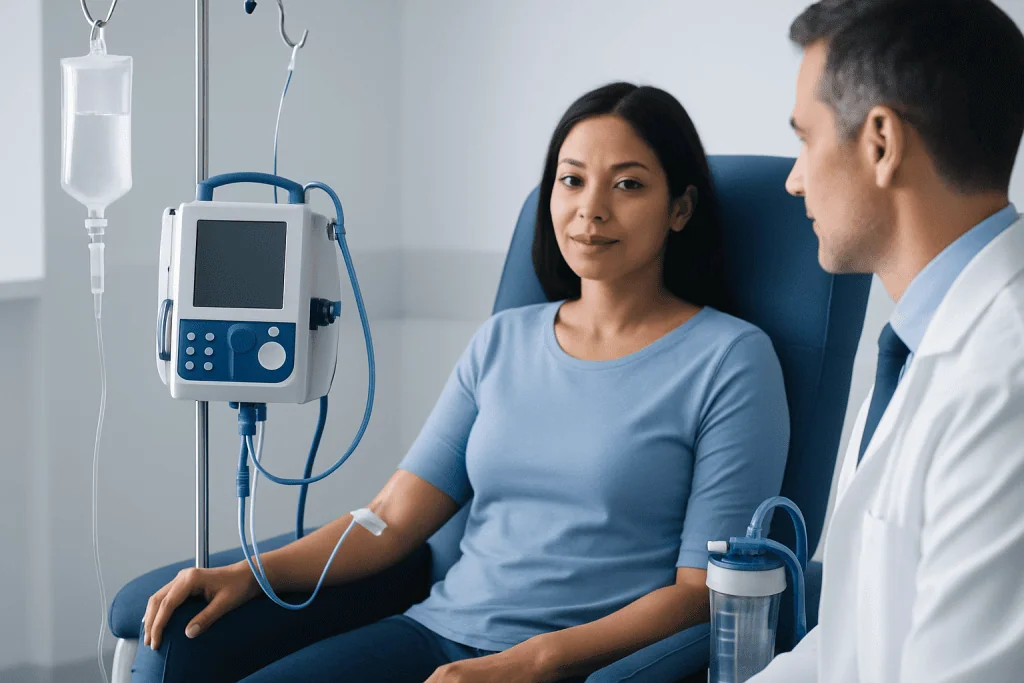
CASGEVY is an autologous cell-based gene therapy. “Autologous” means that the cells used for treatment are collected from the same person who will receive them. It is not a tablet, injection or conventional medicine that can be given repeatedly in a clinic.
The treatment uses CRISPR/Cas9 gene editing, sometimes described as a molecular tool that can make a targeted change in DNA. In Casgevy, the edit reduces activity of a genetic switch known as BCL11A in blood-forming stem cells. This switch normally helps turn down fetal hemoglobin production after birth.
By lowering BCL11A activity in red blood cell precursors, the edited cells can produce more fetal hemoglobin. In sickle cell disease, fetal hemoglobin can reduce the tendency of red blood cells to sickle and block blood flow. In beta thalassemia, it can help improve the imbalance in hemoglobin production that contributes to severe anemia.
Regulatory approvals, age requirements and eligibility criteria differ between countries. A hematology team should confirm whether Casgevy is authorized and appropriate for an individual’s diagnosis, disease severity and health circumstances.
How Casgevy works and who may be a candidate

Casgevy begins with hematopoietic stem cells, the cells in bone marrow that make red blood cells, white blood cells and platelets. Stem cells are collected from the bloodstream, edited in a specialized laboratory, checked under strict quality standards and stored until the patient is ready for infusion.
People with sickle cell disease may be considered when they have recurrent, severe vaso-occlusive crises despite appropriate care. People with transfusion-dependent beta thalassemia may be considered when they require regular red blood cell transfusions. The exact definition of eligibility depends on local authorization and the treating center’s assessment.
Assessment is comprehensive. Specialists review the person’s disease history, transfusion history, organ function, infection screening, current medicines, reproductive plans and ability to complete lengthy treatment and monitoring. They also discuss established and emerging options for the underlying conditions, including sickle cell anemia and beta thalassemia.
Casgevy may not be suitable for everyone. Significant organ disease, uncontrolled infection, pregnancy, inability to tolerate conditioning chemotherapy or other individual factors can affect whether treatment can proceed. Decisions should be made jointly with an experienced hematology, transplant and fertility-care team.
Casgevy procedure: step by step
1. Pre-treatment evaluation and planning. The team confirms diagnosis and eligibility, performs blood tests and organ assessments, reviews medications and develops a supportive-care plan. Fertility preservation should be discussed before conditioning chemotherapy because treatment may affect ovarian or testicular function.
2. Stem-cell mobilization and collection. Medicines are used to move blood-forming stem cells from the bone marrow into the bloodstream. The cells are then collected through a procedure called apheresis, in which blood passes through a machine that separates and retains needed cells before the remaining blood components are returned to the body. Some patients may need more than one collection session.
3. Laboratory editing. The collected stem cells are sent to a specialized manufacturing facility, where they are edited using CRISPR/Cas9. The final cell product undergoes testing before it is released for the patient’s treatment. During this waiting period, usual disease-specific supportive care continues under the hematology team’s direction.
4. Conditioning and infusion. Before the edited cells are returned, high-intensity chemotherapy is given to make space in the bone marrow. The edited cells are infused into a vein, similarly to a stem-cell infusion. The cells then travel to the bone marrow, where they are expected to establish blood formation over time. This is a complex form of stem cell transplantation using the patient’s own edited cells.
Recovery timeline, possible benefits and risks
After infusion, patients usually remain in hospital while their blood counts are low and the infused cells begin to engraft, meaning they start producing new blood cells. This period can take weeks. The exact timeline varies, and recovery outside hospital continues for months as energy, blood counts and immune function gradually improve.
Clinical trials supporting authorization found that many participants with sickle cell disease had no severe vaso-occlusive crises for at least 12 consecutive months during the study assessment period. Many participants with transfusion-dependent beta thalassemia achieved transfusion independence for at least 12 consecutive months. Individual outcomes can differ, and long-term durability continues to be monitored.
The most significant immediate risks are primarily associated with conditioning chemotherapy and the period of low blood counts. These may include infection, fever, bleeding, anemia, nausea, vomiting, mouth sores, hair loss, fatigue and the need for transfusions or other supportive treatment. Hospital teams monitor patients closely and treat complications promptly.
Conditioning chemotherapy can cause infertility and may affect organs. There are also uncertainties inherent in long-term gene-editing treatments, so ongoing follow-up is required for years. The care team will explain known risks, alternatives and the monitoring plan in a way that supports informed decision-making.
How many people have been treated with CASGEVY?
The number of people treated with Casgevy changes as the therapy becomes available in more authorized centers and countries. At the time of its initial approvals, the main evidence came from relatively small clinical studies rather than the large patient populations typically seen with long-established medicines.
For this reason, it is most accurate to view the available evidence as promising but still developing. Regulatory agencies require long-term follow-up to better understand how durable the benefits are and to identify uncommon or late effects that may not appear during shorter clinical trials.
A treating center can provide the most current information about local experience, availability and follow-up arrangements. Patients should be cautious about comparing individual results because disease severity, prior treatment history, organ health and access to supportive care can all influence outcomes.
Why is CASGEVY so expensive?
Casgevy is resource-intensive because it is made individually for each patient. The process includes stem-cell collection, specialized laboratory gene editing and manufacturing, detailed product testing, chemotherapy conditioning, inpatient transplant-level care, blood products, infection prevention and long-term monitoring.
It is also a highly specialized therapy for uncommon inherited blood disorders, with complex logistics and a limited number of qualified treatment centers. These factors contribute to the overall cost of care, which is broader than the price of the cell product itself.
Financial responsibility depends on the country, regulatory setting, insurer or public health system, hospital arrangements and medical needs during recovery. A transplant center’s financial counseling and international patient services teams can help patients understand authorization requirements and anticipated categories of expense without assuming coverage.
How much does CASGEVY treatment cost?
There is no single worldwide Casgevy treatment cost. List prices, negotiated payment arrangements, insurance coverage and public funding differ by country, while the total cost can also include assessments, fertility preservation, hospital admission, chemotherapy, transfusions, medicines, management of complications and long-term follow-up.
Patients should request an individualized financial discussion from an authorized treatment center before making travel or treatment decisions. It is important to ask what is included in an estimate, which services may be billed separately, what insurance pre-authorization is needed and how unexpected complications are handled.
Cost should be considered alongside clinical suitability, safety, access to emergency care and the ability to attend years of follow-up appointments. A therapy should not be chosen on price alone; the hematology and transplant team can help clarify whether it is a medically appropriate option.
When to seek medical care
Anyone with sickle cell disease who develops chest pain, difficulty breathing, fever, severe or unusual pain, confusion, weakness, fainting, a new severe headache or symptoms of stroke should seek urgent medical assessment. People with beta thalassemia should seek prompt care for fever, breathing difficulty, marked weakness, chest symptoms, severe abdominal pain or other sudden changes in health.
People considering Casgevy should arrange a non-urgent consultation with a hematologist or a specialist center if they experience recurrent severe crises, depend on regular transfusions or want to discuss advanced treatment options. They should not stop disease-modifying medication, transfusion programs or iron-chelation treatment without medical guidance.
Care is usually coordinated by hematology, transplant medicine, nursing, infectious-disease, fertility and psychosocial support professionals. Acibadem International’s multidisciplinary specialists and JCI-accredited hospitals can assess and treat eligible international patients through coordinated advanced hematology and transplant care.
Frequently asked questions
Is Casgevy a cure for sickle cell disease?
Casgevy is designed to address the underlying blood-cell problem by increasing fetal hemoglobin production, and many study participants had major clinical benefit. However, “cure” can be difficult to define, and long-term outcomes are still being monitored. A hematology team can explain what results may be realistic for an individual.
Does Casgevy use a donor?
No. Casgevy uses the patient’s own blood-forming stem cells, which are collected, edited and reinfused. This avoids the need for a matched donor and avoids graft-versus-host disease, but chemotherapy conditioning is still required.
How long does Casgevy treatment take?
The entire process typically takes months, from initial evaluation and stem-cell collection through manufacturing, hospital treatment and recovery. The inpatient phase after conditioning and infusion may last several weeks. Long-term follow-up continues for years.
Can Casgevy affect fertility?
Yes. The chemotherapy used to prepare the bone marrow can reduce fertility or cause infertility. Fertility preservation options should be discussed with a reproductive specialist before treatment begins.
Is Casgevy available for children?
Eligibility depends on the country’s regulatory authorization, including the approved age range, and on the child’s individual clinical assessment. Pediatric patients require care from specialists experienced in inherited blood disorders and stem-cell transplantation. Families should ask an authorized treatment center about locally applicable criteria.
Will a person still need blood transfusions after Casgevy?
People with transfusion-dependent beta thalassemia may become independent of regular transfusions after successful treatment, but outcomes vary. Transfusions may still be needed during the treatment process and recovery. The care team monitors blood counts and determines transfusion needs individually.
References
- U.S. Food and Drug Administration
- European Medicines Agency
- National Institutes of Health
- Centers for Disease Control and Prevention
- World Health Organization
This article is for general information only and is not a substitute for professional medical advice. Please consult a qualified doctor about your individual situation.
Oncology care in Turkey — second opinion and treatment plan
JCI-accredited · board-certified surgeons · reply within 24h
Add us as a Preferred Source to see more of our trusted health content across Google Search, AI Overviews and Discover.