Occupational Therapy Hand Exercises Pdf: How It Works, Results and What to Expect

Hand exercises are not one-size-fits-all; the safest plan is individualized after assessment. Occupational therapy focuses on practical hand use for daily activities, work, self-care and hobbies.
Key Takeaways
- Hand exercises are not one-size-fits-all; the safest plan is individualized after assessment.
- Occupational therapy focuses on practical hand use for daily activities, work, self-care and hobbies.
- Exercise programs may target mobility, tendon glide, strength, coordination, sensation or swelling control.
- Pain that is sharp, worsening or accompanied by new swelling, numbness or color change should be reviewed promptly.
- Consistent, correctly performed short sessions are generally more helpful than forceful or excessive exercise.
An occupational therapy hand exercises PDF can be a useful home reference, but exercises should be selected and progressed by a qualified occupational therapist or hand therapist. The right program depends on the diagnosis, stage of healing, pain level and functional goals.
Overview: What an Occupational Therapy Hand Exercises PDF Is
An occupational therapy hand exercises PDF is usually a written or illustrated home program created to support hand rehabilitation. It may include instructions for moving the fingers, thumb and wrist; improving grip; reducing stiffness; or practicing tasks needed for everyday life. It is most useful when it has been provided or reviewed by an occupational therapist, especially one trained in hand therapy.
Although online hand exercise sheets can be informative, they cannot replace an assessment. The same movement may be helpful after one injury but inappropriate after another. For example, a recently repaired tendon, a healing fracture, inflammatory arthritis and nerve compression each require different precautions and timelines.
Occupational therapy takes a function-focused approach. Rather than measuring recovery only by strength, the therapist considers what the person needs and wants to do, such as dressing, preparing meals, using a keyboard, opening containers, caring for a child or returning to a specific job or sport.
How Occupational Therapy Hand Exercises Work
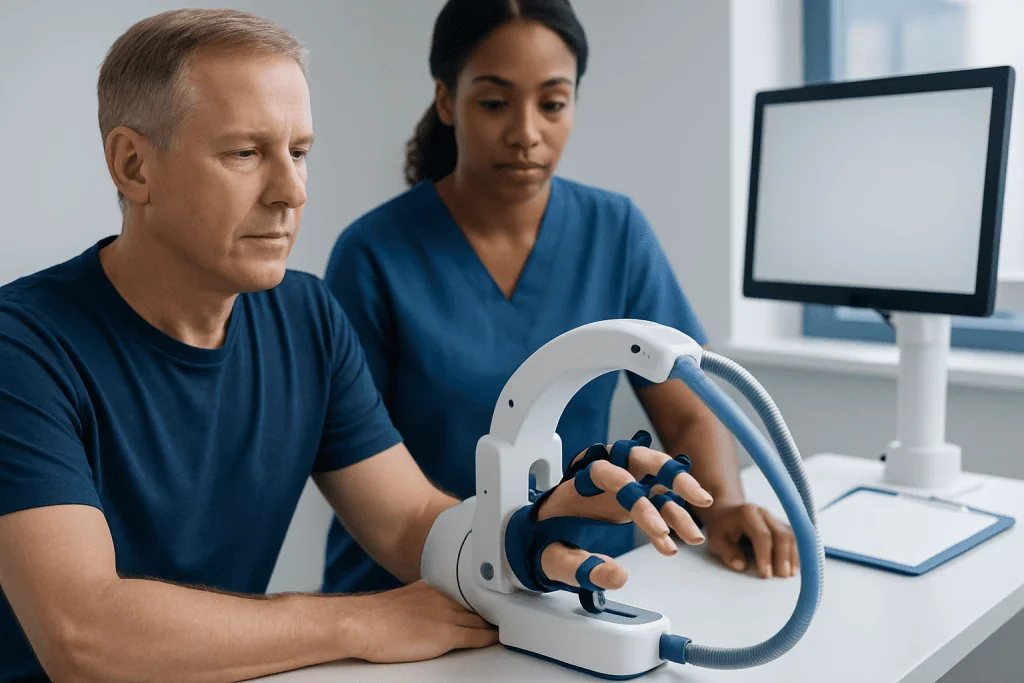
Hand exercise programs aim to restore the best possible balance of motion, strength, coordination and comfort while protecting healing tissues. Depending on the condition, a therapist may prescribe active range-of-motion exercises, gentle stretching, tendon-gliding movements, strengthening with light resistance, dexterity practice, sensory re-education or techniques to manage swelling and scar sensitivity.
Therapy commonly starts with a detailed evaluation. This may include observing hand use, measuring joint movement, checking pinch and grip where appropriate, assessing sensation, and discussing symptoms and daily limitations. The therapist then sets realistic goals and chooses exercises that match the person’s healing stage.
A PDF may show positions and repetitions, but the quality of movement matters as much as the number completed. The therapist may correct compensatory movements, such as lifting the shoulder instead of moving the wrist, or gripping too tightly during a fine-motor task. These adjustments help make practice safer and more effective.
- Mobility exercises help address stiffness and support joint movement.
- Tendon-gliding exercises encourage smooth finger motion when clinically appropriate.
- Strengthening supports gripping, pinching and load tolerance after adequate healing.
- Functional practice connects exercises to meaningful daily tasks.
Who May Benefit and Who Needs Extra Caution

Occupational therapy hand exercises may be recommended after hand or wrist injury, surgery, a fracture, tendon or ligament condition, arthritis, nerve-related symptoms, stroke or another neurological condition. They can also help people whose work or hobbies place repeated demands on the hands. A clinician determines whether exercises are appropriate and which movements should be avoided.
People recovering from surgery should use only the program approved by their surgical and therapy teams. Protective splints, restrictions on lifting, and limits on specific finger or wrist movements may be essential during early healing. Beginning strengthening or stretching too soon can place stress on repaired structures.
Extra caution is needed for severe pain, marked swelling, active infection, an unstable fracture, a newly injured tendon, reduced circulation or significant loss of sensation. Individuals with diabetes, inflammatory joint disease or neurological disorders may also need a program adjusted for their skin health, fatigue, sensation and rate of recovery.
Persistent tingling, nighttime numbness and hand weakness can occur with conditions such as carpal tunnel syndrome. Exercises may be part of conservative care, but new or progressive nerve symptoms should be assessed rather than managed with a generic download alone.
What to Expect: Assessment, Exercise Training and Follow-Up
Occupational therapy is a guided rehabilitation process rather than a single procedure. At the first visit, the therapist asks about symptoms, medical history, hand dominance, work demands, previous treatment and the activities affected. They may compare both hands and assess movement, swelling, strength, coordination, sensation and skin or scar condition.
The therapist then explains the working diagnosis or the reason for referral, agrees on goals and teaches an initial set of exercises. Demonstration and supervised practice are important because even simple movements can be performed incorrectly. The person may receive a printed or digital occupational therapy hand exercises PDF with clear instructions, pictures and individualized precautions.
At follow-up appointments, the program is reviewed and progressed based on symptoms and function. A therapist may add manual techniques, splinting, adaptive equipment, scar management, work modifications or task-specific training when indicated. Progress is rarely perfectly linear; temporary stiffness or fatigue can occur as activity levels increase.
For people needing specialist rehabilitation after injury, surgery or a condition affecting hand function, occupational therapy can provide an individualized plan that links clinical recovery with meaningful daily activities.
Recovery Timeline, Benefits and Possible Risks
The recovery timeline depends on the underlying problem. Mild overuse symptoms may improve over weeks with activity changes and a suitable exercise plan, while recovery after fracture, tendon repair, complex trauma or nerve injury may take months. The treating clinician can provide the most reliable timeline because healing restrictions differ substantially between conditions.
Potential benefits include improved comfort with movement, reduced stiffness, better hand coordination, increased confidence with daily tasks and a gradual return to valued activities. Exercises may also help prevent avoidable loss of movement during recovery, provided they are appropriately timed and performed.
Exercises should not cause sharp pain, a major symptom flare that lasts, or increasing swelling. Overstretching, exercising through significant pain, using resistance too early or ignoring splint instructions can delay recovery. A therapist may advise temporary modifications if symptoms increase after a session.
Useful safety signals include checking for swelling, skin irritation, changes in finger color or temperature, numbness and reduced movement. Any sudden loss of function, severe pain or concerns after surgery should be reported to the treating team promptly.
Using a Hand Exercise Program Safely at Home
A home program works best when it is simple, specific and integrated into the day. The therapist may recommend short practice sessions at planned times, with rest between sessions. Keeping the PDF in a visible place or using a reminder can support consistency without turning rehabilitation into an exhausting routine.
Before exercising, follow any advice about heat, cold, splints, wound care or swelling control. Use the posture and movement demonstrated by the therapist, move at a controlled pace and stop if pain becomes sharp or unusual. A mild stretch or muscle effort can be expected in some programs, but symptoms should settle as advised by the clinician.
It can help to record what was completed, what symptoms occurred and which activities remain difficult. This information allows the therapist to refine the program. Household tools, resistance bands, putty or grip devices should only be used if they are suitable for the person’s diagnosis and stage of healing.
Healthy hand habits can also reduce strain: vary repetitive tasks, take regular movement breaks, use ergonomic tools where possible and avoid prolonged forceful gripping. These measures are supportive but do not replace evaluation for ongoing pain or loss of function.
When to Seek Medical Care
Medical assessment is recommended for hand or wrist pain that persists, limits daily activities, follows an injury, or is associated with weakness, numbness or reduced range of movement. A clinician can identify whether the problem involves bone, tendon, ligament, joint, nerve or another structure and decide whether imaging, splinting, medication, therapy or another treatment is needed.
Urgent care is appropriate after a serious injury, visible deformity, an inability to move a finger, severe swelling, a cold or pale hand, rapidly worsening numbness, fever with redness or drainage, or severe pain after surgery. These symptoms may need prompt examination.
Hand stiffness and pain can also be related to joint conditions. People with swollen, painful or persistently stiff joints may benefit from evaluation for rheumatoid arthritis or other inflammatory causes, rather than relying solely on exercises.
Acibadem International’s multidisciplinary specialists and JCI-accredited hospitals can assess hand problems and coordinate rehabilitation for international patients when appropriate.
Frequently asked questions
Can a free occupational therapy hand exercises PDF replace a therapist?
No. A general PDF may explain common movements, but it cannot identify the cause of symptoms or account for surgical precautions, healing stage and individual hand function. It is safest to use a hand exercise sheet that has been selected or reviewed by a qualified clinician.
How often should hand exercises be done?
The appropriate frequency depends on the diagnosis and the type of exercise. Some mobility exercises are performed in short, regular sessions, while strengthening may need rest days. The treating therapist should provide the schedule because too much exercise can irritate healing tissues.
Should hand exercises hurt?
Exercises should not produce sharp, severe or worsening pain. Mild stretching or temporary muscle fatigue may occur, depending on the plan. Stop the exercise and contact a healthcare professional if pain, swelling, numbness or weakness increases.
How long does occupational therapy for the hand take?
The length of therapy varies widely. It may involve a few visits for a mild problem or a longer rehabilitation plan after surgery, fracture, nerve injury or complex hand trauma. Progress is reviewed over time and goals are adjusted as function improves.
Are hand grip strengtheners safe for everyone?
No. Grip devices can be helpful at the right stage of recovery, but may aggravate some tendon, joint, nerve or post-operative conditions. A therapist can advise whether strengthening is suitable and what level of resistance is appropriate.
What is the difference between occupational therapy and physical therapy for hand rehabilitation?
Both professions may contribute to rehabilitation, depending on local practice and clinician training. Occupational therapy often emphasizes practical hand use in self-care, work and daily activities, while physical therapy may also address movement, strength and broader upper-limb function. Hand therapists may come from either professional background and have additional specialist expertise.
References
- American Society of Hand Therapists
- American Occupational Therapy Association
- American Academy of Orthopaedic Surgeons
- National Institute of Arthritis and Musculoskeletal and Skin Diseases
This article is for general information only and is not a substitute for professional medical advice. Please consult a qualified doctor about your individual situation.
Explore treatments in Turkey — costs, top hospitals & a free quote
JCI-accredited · board-certified surgeons · reply within 24h
Add us as a Preferred Source to see more of our trusted health content across Google Search, AI Overviews and Discover.