Cat Cow Stretch — Explained by Medical Evidence, Not Myths
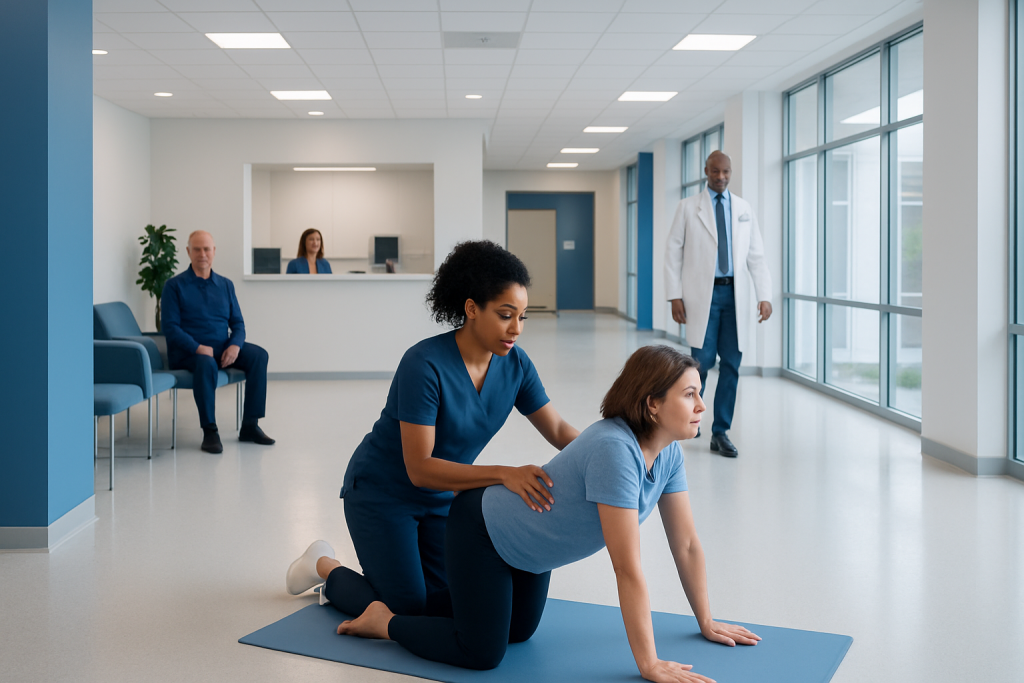
Cat cow stretch is a controlled spinal mobility exercise, not a treatment for every cause of back or neck pain. It may help reduce stiffness, improve movement awareness, and prepare the body for activity when performed slowly and comfortably.
Key Takeaways
- Cat cow stretch is a controlled spinal mobility exercise, not a treatment for every cause of back or neck pain.
- It may help reduce stiffness, improve movement awareness, and prepare the body for activity when performed slowly and comfortably.
- Good technique matters more than deep range of motion; the movement should be smooth, pain-free, and coordinated with breathing.
- People with acute pain, nerve symptoms, recent injury, or certain spinal conditions may need medical advice before starting.
- Regular movement, posture variety, and strengthening are usually more important for long-term back health than one stretch alone.
Cat cow stretch is a gentle movement that takes the spine through flexion and extension, often used to reduce stiffness and improve mobility. Medical evidence supports it as a low-impact exercise for body awareness, warm-up, and comfort, but it is not a cure for back pain and should be adapted to the individual.
What the cat cow stretch really does
The cat cow stretch is a gentle, repeated movement usually performed on hands and knees. It alternates between rounding the back and then extending it, moving the spine through flexion and extension in a controlled way. In practical terms, it is best understood as a mobility and body-awareness exercise rather than a dramatic “realignment” technique or a cure for pain.
Medical evidence around exercise for musculoskeletal health suggests that gentle spinal movement can help some people feel less stiff, especially after long periods of sitting or inactivity. The benefit often comes from restoring comfortable motion, increasing awareness of posture and breathing, and helping muscles around the trunk move in a coordinated way. This is different from common myths that a single stretch can “fix” posture permanently or place every vertebra back into an ideal position.
For many healthy adults, cat cow stretch can be a useful warm-up before exercise, a movement break during the day, or part of a broader plan for back comfort. It is most helpful when it is done calmly, within a comfortable range, and combined with other habits such as regular walking, strengthening, and changing positions often.
How it may help the body
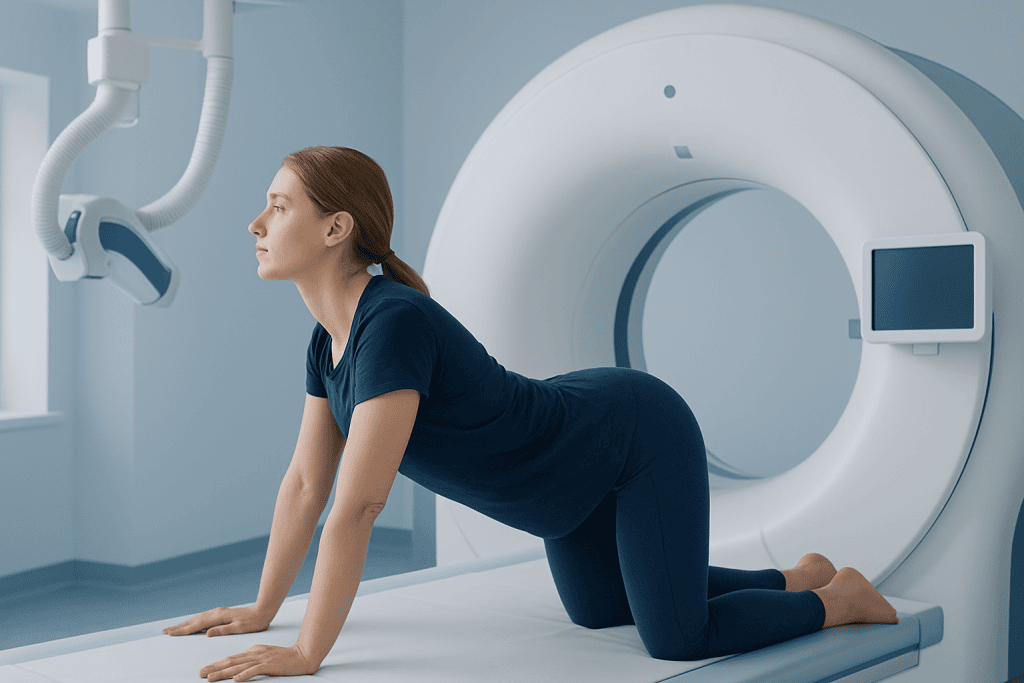
The main potential benefit of cat cow stretch is improved spinal mobility. Many people notice that the back, neck, and shoulders feel less rigid after a few slow repetitions. This may be especially helpful in the morning or after desk work, travel, or other activities that keep the body in one position for a long time.
The exercise may also support coordination between breathing and movement. Inhaling during gentle extension and exhaling during gentle rounding can encourage relaxation and improve awareness of how the rib cage, pelvis, and trunk move together. For some people, this can reduce a sense of tension even when it does not change the underlying cause of discomfort.
Another advantage is that cat cow stretch is adaptable. Range of motion can be kept very small, and hand, knee, or wrist position can be modified. When used as part of a broader rehabilitation plan, clinicians may include spinal mobility work alongside core stabilization, flexibility training, and evaluation for problems such as herniated disc or other causes of persistent symptoms.
What medical evidence says—and what it does not
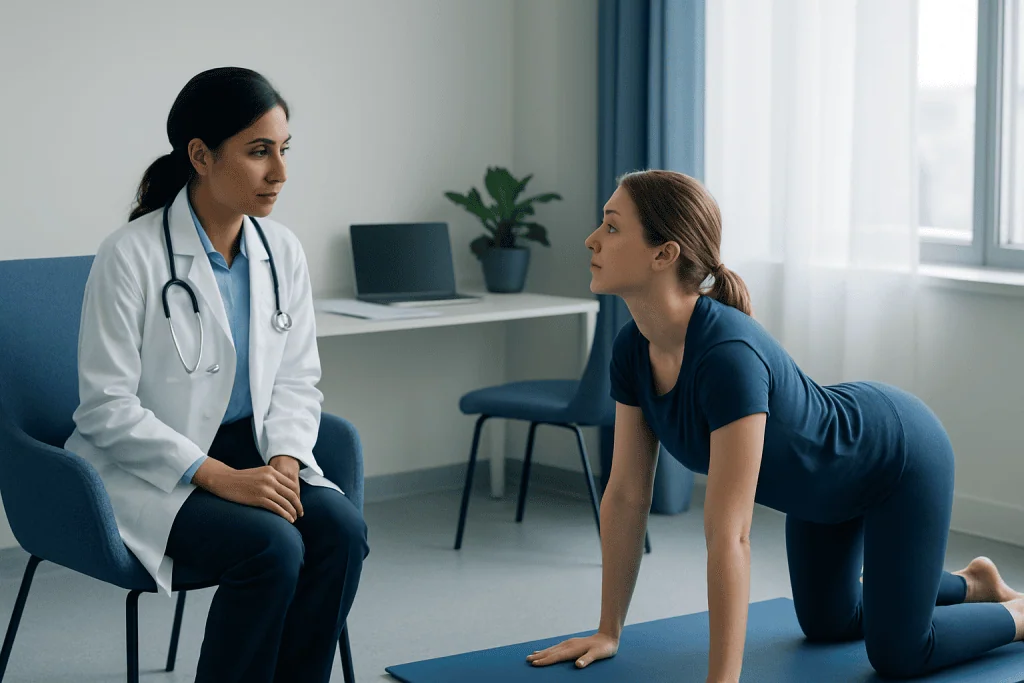
Research on back pain and exercise consistently shows that gentle movement is often better than prolonged rest for many common, non-serious episodes of mechanical back discomfort. Exercises that improve mobility and encourage normal activity can be useful, and cat cow stretch fits into that category. However, studies usually evaluate exercise programs as a whole rather than proving that one specific movement is superior for everyone.
That means cat cow stretch has a reasonable, evidence-informed role, but expectations should stay realistic. It may reduce stiffness, improve comfort, and help prepare the body for movement, yet it does not treat infection, fracture, inflammatory disease, severe nerve compression, or structural problems on its own. It should also not be viewed as a way to “detox,” “release trapped toxins,” or permanently correct posture after a few repetitions.
If someone has ongoing back or neck pain, assessment may be needed to identify contributing factors such as muscle strain, posture habits, reduced conditioning, joint irritation, or disc-related problems. In those cases, a clinician may recommend a more complete plan that can include exercise therapy, physical therapy and rehabilitation, and imaging or specialist evaluation when appropriate.
How to do cat cow stretch safely
To perform the movement, a person usually starts on hands and knees with the hands under the shoulders and knees under the hips. The neck stays relaxed and the abdomen gently engaged rather than hanging completely loose. From there, the spine slowly rounds upward in the “cat” phase, then moves into a gentle arch in the “cow” phase, with the motion flowing from the pelvis through the middle back to the neck.
Breathing can help set the pace. Many people find it comfortable to exhale while rounding the back and inhale while opening the chest and extending the spine. The exact breathing pattern matters less than keeping it steady and avoiding strain, breath-holding, or pushing into discomfort.
Several technique points improve safety:
- Move slowly instead of forcing a deep stretch.
- Keep the motion pain-free or close to pain-free.
- Avoid collapsing heavily into the shoulders or lower back.
- Use padding under the knees if needed.
- If wrists are sensitive, try fists, forearms, or an elevated support.
In many cases, five to ten gentle repetitions are enough. More is not always better. If symptoms worsen during or after the exercise, it is sensible to stop and seek advice rather than continuing through pain.
Who should be cautious or modify it
Although cat cow stretch is low impact, it is not ideal for every person in every situation. People with a recent fall, severe osteoporosis, acute spinal injury, fever with back pain, or suspected fracture should avoid self-directed stretching until they have been assessed. The same caution applies to new numbness, weakness, loss of bladder or bowel control, or pain that radiates strongly down an arm or leg.
Wrist, knee, shoulder, or neck problems can also make the standard hands-and-knees position uncomfortable. In those cases, a clinician or therapist may suggest seated or standing versions, smaller movements, or different exercises altogether. For people with diagnosed conditions such as significant disc disease, spinal stenosis, or inflammatory back conditions, the direction of movement that feels better can vary from person to person.
Pregnant individuals, older adults, and people recovering from surgery may still be able to use modified spinal mobility exercises, but they should follow advice tailored to their needs. If pain has become frequent or is interfering with sleep, work, or daily activities, further evaluation may be more useful than adding more stretching. Depending on the symptoms, doctors may investigate issues affecting the spine and surrounding nerves, muscles, and joints.
How to fit it into a healthy back routine
Cat cow stretch is usually most useful as one small part of a broader routine. For long-term back health, evidence generally supports regular physical activity, gradual strengthening, maintaining flexibility, and reducing long periods of immobility. A few gentle spinal movements can prepare the body for these activities, but they work best when combined with overall conditioning.
Simple examples include walking, hip mobility work, trunk-strengthening exercises, and posture variation throughout the day. People who sit for work may benefit from standing up regularly, adjusting workstation setup, and taking short movement breaks. These habits often matter more than trying to find a single “best” stretch.
If a person has recurring symptoms, structured guidance can be helpful. A rehabilitation plan may combine mobility exercises with strengthening and education about pacing and movement. In some situations, clinicians may also consider orthopedic rehabilitation or targeted evaluation to understand whether the discomfort is muscular, joint-related, nerve-related, or linked to another condition.
When to seek medical care
Medical care is worth seeking if back or neck pain is severe, follows an injury, or does not improve over time. Evaluation is also important if pain is accompanied by numbness, tingling, weakness, unexplained weight loss, fever, or pain that is worse at night. These symptoms do not always mean a serious problem, but they should not be ignored.
A doctor should also be consulted if cat cow stretch or other home exercises repeatedly make symptoms worse. Persistent stiffness, limited movement, or pain that spreads into the arms or legs may need a more specific diagnosis. Depending on the findings, treatment can range from exercise guidance and medication advice to imaging, specialist consultation, or therapies such as pain management.
For international patients who need assessment for spinal or musculoskeletal symptoms, Acibadem International’s multidisciplinary specialists and JCI-accredited hospitals provide diagnosis and treatment planning based on the individual’s condition and goals.
Frequently asked questions
Is cat cow stretch good for back pain?
Cat cow stretch may help some people with mild stiffness or mechanical back discomfort because it encourages gentle spinal movement. However, it is not a cure for all back pain, and it may not be suitable if symptoms are severe, radiating, or linked to an injury.
How often should someone do cat cow stretch?
Many people use it once or twice a day or as a short movement break after sitting. A small number of slow, comfortable repetitions is usually enough, and frequency should be adjusted if symptoms increase.
Can cat cow stretch improve posture?
It can improve awareness of spinal movement and reduce stiffness, which may help a person feel more upright and comfortable. Still, long-term posture changes usually depend more on strength, endurance, ergonomic habits, and regular activity than on one stretch alone.
Should the movement be done if it causes pain?
No exercise should be forced through significant pain. Mild stretching or movement awareness can be acceptable, but sharp, worsening, or radiating pain is a reason to stop and seek medical advice.
Are there alternatives for people with wrist or knee discomfort?
Yes. The movement can often be modified by using padding under the knees, placing the hands on an elevated surface, or performing a seated or standing version. A physical therapist can suggest options that reduce joint stress while keeping the motion gentle.
Is cat cow stretch safe during pregnancy?
It is often used in modified form during pregnancy, especially when comfort and range are adjusted to the individual. Because needs vary, pregnant individuals should ask their maternity clinician or physiotherapist what is appropriate for their stage of pregnancy and symptoms.
References
- World Health Organization
- National Institute for Health and Care Excellence
- American Academy of Orthopaedic Surgeons
- National Institute of Neurological Disorders and Stroke
- American Physical Therapy Association
This article is for general information only and is not a substitute for professional medical advice. Please consult a qualified doctor about your individual situation.
Joint and spine care in Turkey — expert assessment & treatment
JCI-accredited · board-certified surgeons · reply within 24h
Add us as a Preferred Source to see more of our trusted health content across Google Search, AI Overviews and Discover.