Celebrities with Eye Surgery: Procedure, Recovery and Results

Many claims about celebrity eye surgery are speculative because personal medical information is private. Blepharoplasty reshapes or removes excess eyelid skin and, when appropriate, fat; it may be cosmetic or performed to improve a blocked visual field.
Key Takeaways
- Many claims about celebrity eye surgery are speculative because personal medical information is private.
- Blepharoplasty reshapes or removes excess eyelid skin and, when appropriate, fat; it may be cosmetic or performed to improve a blocked visual field.
- Laser vision correction changes the cornea to reduce dependence on glasses or contact lenses, while cataract surgery replaces a cloudy lens.
- Recovery after eyelid surgery commonly involves temporary swelling and bruising; final refinement takes longer than early healing.
- A careful consultation, realistic goals and appropriate follow-up are central to safety and satisfactory results.
Celebrities with eye surgery are often discussed online, yet reliable confirmation of a specific procedure is uncommon. Eyelid surgery, cataract surgery and laser vision correction can address different medical or cosmetic concerns, and each requires an individual assessment by a qualified eye or plastic surgery specialist.
Overview: why celebrity eye surgery stories need context
Stories about celebrities with eye surgery can make eye procedures seem simple to identify from photographs. In reality, appearance can change for many reasons, including makeup, lighting, aging, weight changes, illness, allergies, styling and image editing. Unless a person has publicly confirmed a procedure, it is not possible to accurately determine whether they have had surgery or which operation they received.
What eye surgery do celebrities get? The answer depends on the concern. Some people choose eyelid surgery, called blepharoplasty, to reduce loose upper-lid skin or lower-lid bags. Others may have laser vision correction, cataract surgery, tear-duct procedures or surgery for medical eyelid conditions. The appropriate option is determined by eye health, facial anatomy, vision needs and personal goals—not by a public figure’s appearance.
For anyone considering celeb eye surgery trends, the safest approach is to focus on the procedure’s medical purpose, likely recovery and limitations. A consultation can clarify whether a concern comes from the eyelid skin, brow position, dry eye, lens changes or another eye condition requiring a different type of care.
What eye surgery did Taylor Swift get?
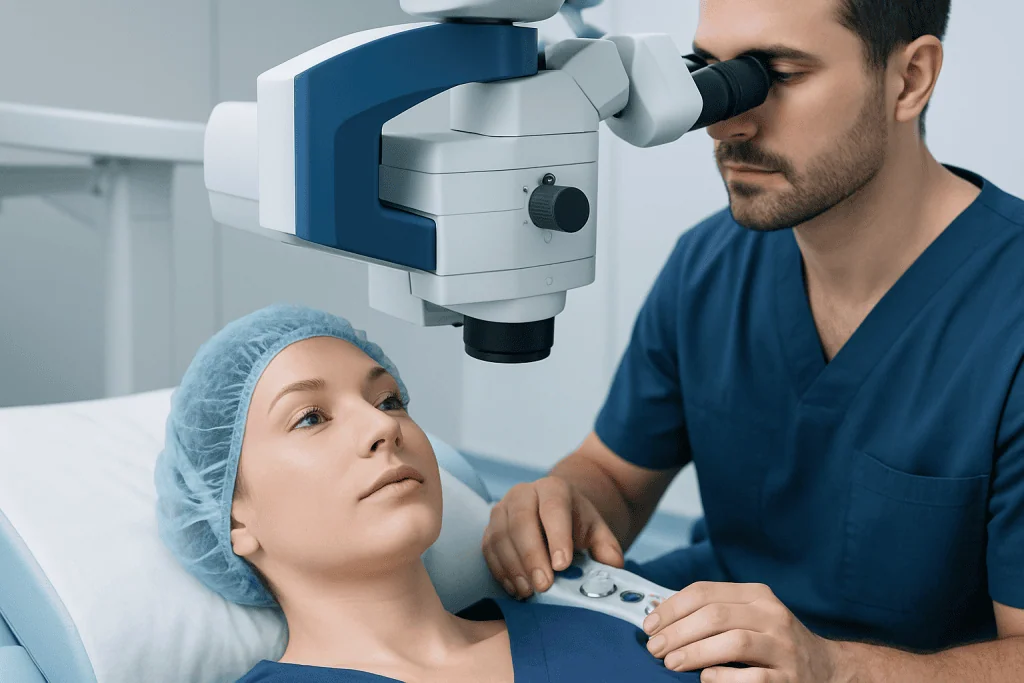
There is no reliable, publicly confirmed medical information establishing that Taylor Swift has had a particular eye surgery. Online comparisons of images cannot diagnose a procedure and should not be treated as evidence of a person’s private health history.
This illustrates a wider limitation in discussions about celebrities with eye surgery: visual observations do not distinguish between blepharoplasty, makeup techniques, changes in expression, photography conditions or natural changes over time. Responsible medical information should avoid presenting unverified claims as fact.
People seeking information about eyelid changes can instead ask a specialist about their own symptoms and goals. An examination can assess whether eyelid tissue affects the visual field, whether dry eye is present and whether treatment should be cosmetic, functional or nonsurgical.
How blepharoplasty works and who may be a candidate

Blepharoplasty is eyelid surgery that can be performed on the upper eyelids, lower eyelids or both. In upper blepharoplasty, the surgeon usually makes an incision within the natural eyelid crease and removes or repositions selected skin and fat. In lower blepharoplasty, the approach may be through an incision beneath the lashes or inside the eyelid, depending on the anatomy and treatment plan.
Suitable candidates are generally in good overall health, have realistic expectations and have stable eye health. People may seek surgery because excess upper-lid skin creates heaviness or obstructs the upper visual field, or because lower-lid bags and skin laxity are bothersome. A detailed assessment should include vision, eyelid position, brow position, tear production, contact lens use and a history of eye surgery.
Blepharoplasty is not always the best solution for tired-looking eyes. A low brow, ptosis (drooping of the eyelid margin), dry eye disease or changes around the mid-face may need a different plan. In selected patients, specialist assessment for blepharoplasty helps determine whether eyelid surgery is appropriate and whether it is intended for functional, cosmetic or combined reasons.
Other eye procedures are designed for different needs. For example, laser refractive surgery may reduce reliance on glasses, while cataract surgery treats lens clouding that affects vision. These operations should not be considered interchangeable with eyelid surgery.
Step by step: procedure, recovery timeline, benefits and risks
Before surgery, the clinician reviews medical conditions, medicines, previous eye treatment and expectations. Measurements and photographs may be used for surgical planning. The procedure is commonly performed with local anesthetic and sedation or, in some circumstances, general anesthesia. Incisions are carefully closed, and patients usually return home the same day when outpatient treatment is suitable.
During the first days after blepharoplasty, swelling, bruising, tightness, mild discomfort, watery eyes or temporary blurred vision can occur. Cool compresses, head elevation, prescribed eye care and avoiding strenuous activity can support early healing. Many people feel comfortable returning to light daily activities after roughly one to two weeks, although visible bruising and swelling vary substantially.
Healing continues over several weeks to months. Incision lines usually become less noticeable gradually, and final contour changes may take time to settle. Follow-up appointments are important, particularly if there is persistent irritation, asymmetry, dryness or concern about healing.
Potential benefits include a clearer upper visual field when excess skin was obstructive, a less heavy eyelid feeling and a refreshed eyelid contour. Risks include bleeding, infection, visible scarring, uneven healing, changes in eyelid position, dry or irritated eyes, difficulty fully closing the eyes and, rarely, vision-threatening complications. An experienced surgeon discusses these risks in relation to the individual patient and explains how they can be reduced.
Which celebrities have had bad blepharoplasty?
It is not appropriate or medically reliable to label named celebrities as having had “bad blepharoplasty” based on photographs, media reporting or social media discussion. Most public speculation cannot confirm whether surgery occurred, what technique was used, whether there were pre-existing facial features or whether an image accurately reflects the person’s appearance.
In clinical terms, an unsatisfactory eyelid surgery result may involve concerns such as noticeable asymmetry, excessive skin removal, lower-lid retraction, a hollow appearance, persistent dry eye symptoms or dissatisfaction with the aesthetic outcome. These concerns do not necessarily mean that a procedure was performed poorly; healing variation, anatomy and the limits of surgery can all contribute.
Choosing a qualified surgeon and sharing a complete eye history are important safeguards. Patients should discuss photographs that represent realistic goals, ask how existing dry eye or previous eye surgery may affect planning, and understand that revision surgery is not always advisable or necessary.
What is the downside of blepharoplasty?
The main downside of blepharoplasty is that it is surgery, so it involves recovery time and cannot guarantee a particular aesthetic result. Early swelling, bruising and temporary changes in comfort or vision can affect work, social plans and routine activities. The procedure also does not stop natural facial aging.
For some people, dry eye symptoms can worsen temporarily or persist, especially when there was dry eye before surgery. Removing too much tissue or altering eyelid support can affect eyelid closure or position. That is why an assessment by a clinician familiar with eye-surface health and eyelid anatomy is especially important for people with dry eye, thyroid eye disease, previous laser vision correction or prior eyelid surgery.
There can also be emotional downsides when expectations are based on edited images or someone else’s result. The aim should be an outcome that fits the individual’s anatomy and supports eye comfort and function. A surgeon may recommend observation, non-surgical care or another procedure when blepharoplasty is unlikely to meet the patient’s needs.
Did Brad Pitt get eye surgery?
There is no basis for confirming a specific eye surgery for Brad Pitt without a clear public statement from him or an authorized medical source. Images from different years are not enough to determine whether an individual has had blepharoplasty, laser vision correction or any other procedure.
Questions such as this are understandable because the eye area changes noticeably with expression and age. However, a medical conclusion cannot be drawn from public photographs. Eye surgery should be discussed in terms of a person’s own diagnosis, vision and eye comfort rather than inferred celebrity treatment.
For individuals concerned about changing eyelids or vision, a comprehensive eye examination can identify treatable causes. This may include checking visual acuity, refraction, eye pressure, the cornea and lens, eyelid position and the tear film.
When to seek medical care
Prompt medical assessment is needed for sudden vision loss, a new curtain or shadow in vision, severe eye pain, marked redness, flashes with a sudden increase in floaters, eye injury, chemical exposure, or severe headache with visual symptoms. These symptoms may indicate an urgent eye problem and should not be attributed to fatigue or cosmetic concerns.
After eyelid surgery, patients should contact their surgical team urgently for severe or increasing pain, rapidly worsening swelling, significant bleeding, fever, pus-like discharge, inability to close the eye, new double vision or any reduction in vision. Follow the postoperative instructions provided by the treating team, as individual guidance can differ.
Non-urgent consultation is appropriate for persistent eyelid heaviness, recurrent irritation, dry eye symptoms, concern about eyelid drooping or gradual changes in vision. Acibadem International’s multidisciplinary specialists and JCI-accredited hospitals assess and treat eyelid and eye-health concerns for international patients, with care tailored to clinical findings and individual needs.
Frequently asked questions
Are celebrities with eye surgery usually having blepharoplasty?
Not necessarily. Blepharoplasty is one possible procedure, but people may also have laser vision correction, cataract surgery or treatment for medical eye conditions. Unless the individual confirms treatment, it is not possible to know which procedure, if any, was performed.
How long does recovery from blepharoplasty take?
Swelling and bruising are usually most noticeable during the first several days and can take one to two weeks to improve enough for many social and work activities. Subtle swelling and scar maturation can continue for weeks or months. Recovery varies with the procedure, individual healing and whether upper or lower eyelids were treated.
Does blepharoplasty improve vision?
Upper blepharoplasty may improve the upper visual field when excess eyelid skin physically blocks vision. It does not correct refractive errors such as short-sightedness, long-sightedness or astigmatism. An eye examination can establish whether vision changes are related to the eyelids or another cause.
Can blepharoplasty cause dry eyes?
Temporary dryness, irritation or watering can occur after eyelid surgery. People with pre-existing dry eye, contact lens intolerance, thyroid eye disease or previous eye procedures may require especially careful assessment. Persistent or worsening symptoms should be reviewed by the treating clinician.
What should a person ask at an eyelid surgery consultation?
Useful questions include whether the concern is caused by eyelid skin, fat, brow position or eyelid drooping; what outcome is realistic; and how existing eye conditions affect risk. Patients should also ask about the recovery plan, follow-up visits, warning signs and alternatives to surgery.
Is blepharoplasty permanent?
The tissue removed or repositioned does not return in the same way, but the face and eyelids continue to age naturally. Skin laxity, brow descent and changes in facial volume may develop over time. Results therefore tend to be long-lasting but are not a permanent pause in aging.
References
- American Academy of Ophthalmology
- American Society of Plastic Surgeons
- National Eye Institute
- Mayo Clinic
This article is for general information only and is not a substitute for professional medical advice. Please consult a qualified doctor about your individual situation.
Eye Surgery in Turkey — costs, top hospitals & a free quote
JCI-accredited · board-certified surgeons · reply within 24h
Add us as a Preferred Source to see more of our trusted health content across Google Search, AI Overviews and Discover.

Ophthalmology
Comprehensive eye care from laser vision correction to retina, cornea and cataract surgery.
75 specialists in this unit