Cell Therapy Gmp Manufacturing: How It Works, Results and What to Expect

GMP means Good Manufacturing Practice, a quality system designed to ensure cell therapies are consistently made and controlled. Manufacturing may use a patient’s own cells or cells from a donor, depending on the treatment and clinical indication.
Key Takeaways
- GMP means Good Manufacturing Practice, a quality system designed to ensure cell therapies are consistently made and controlled.
- Manufacturing may use a patient’s own cells or cells from a donor, depending on the treatment and clinical indication.
- Testing for identity, purity, sterility, viability and potency helps determine whether a cell therapy batch can be released for clinical use.
- Not every stem cell or cell-based intervention is proven, regulated or appropriate for every condition.
- The cost of cell therapy manufacturing varies widely and should be discussed directly with the treating center and insurer where applicable.
Cell therapy GMP manufacturing is the regulated process used to collect, prepare, test, store and release living-cell treatments under strict quality controls. It is essential because cell therapies are complex, individualized products whose safety and intended activity depend on reliable manufacturing at every stage.
Overview: What Is Cell Therapy GMP Manufacturing?
Cell therapy GMP manufacturing is the carefully controlled process used to make cell-based treatments for patients according to Good Manufacturing Practice standards. These standards guide how cells are collected, processed, expanded or modified when needed, tested, stored and delivered for treatment. The aim is to ensure that each product meets predefined requirements for quality, safety and intended function before it reaches a patient.
Unlike many conventional medicines, cell therapies contain living cells. Some use cells collected from the person receiving treatment, called autologous therapy. Others use cells from a screened donor, called allogeneic therapy. Because living cells can be affected by handling, temperature, timing and contamination, manufacturing quality is a central part of treatment safety.
Cell therapies are used in selected areas of medicine, including hematology, transplantation, cancer care and certain clinical trials. Whether a particular therapy is established treatment, available only in a trial, or not supported by sufficient evidence depends on the condition, the product and local regulatory approval.
How Does Cell Therapy Manufacturing Work?
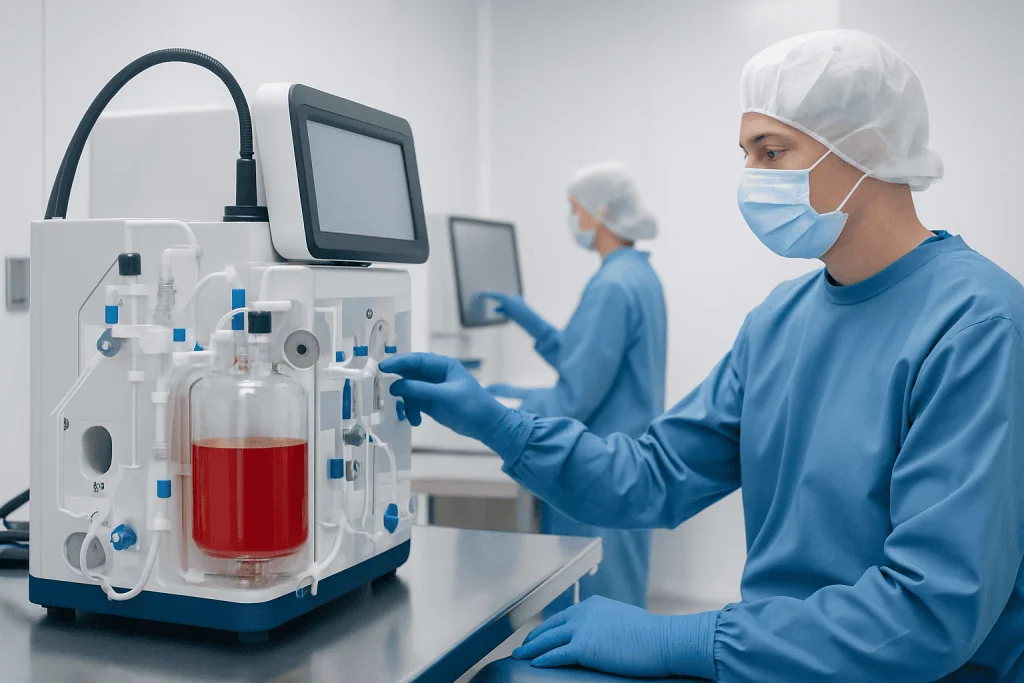
Cell therapy manufacturing begins with a clearly identified source of cells. Depending on the therapy, these may come from blood, bone marrow, tissue or a healthy donor. The collection process follows defined procedures for donor or patient identification, consent, infection screening, labeling and transport to reduce the risk of error and protect the starting material.
In a specialized GMP facility, trained staff process the cells in controlled cleanroom environments. Steps may include separating target cells, activating them, growing their number, freezing them for storage, or modifying them for a specific therapeutic purpose. For some cancer treatments, a patient’s immune cells may be modified in a laboratory before being returned to the patient as part of a planned treatment pathway.
Throughout production, records connect the cell material to the correct patient or donor. Quality-control testing assesses key features such as cell identity, viability, purity, microbiological safety and potency. Only products that meet the required release criteria can be authorized by the responsible quality team for clinical administration.
Manufacturing is not a single laboratory event; it is an end-to-end system. It includes supplier qualification, equipment maintenance, staff training, validated transport, documentation, deviation investigation and monitoring after release. This traceability is especially important for personalized therapies, where one patient’s cells must never be confused with another’s.
What Are the 5 P's in GMP Good Manufacturing Processes?

A commonly used educational framework for GMP highlights five core areas, often called the 5 P’s: people, premises, processes, products and paperwork. Although terminology can vary between organizations, these areas help explain how a quality system prevents avoidable errors and supports consistent production.
- People: appropriately trained, qualified staff who follow hygiene, safety and operational procedures.
- Premises: suitable cleanrooms and controlled environments designed to limit contamination and support safe workflow.
- Processes: written, validated procedures that are performed consistently and reviewed when changes occur.
- Products: correctly identified materials and final cell products that meet established specifications before use.
- Paperwork: complete, accurate documentation showing what was done, by whom, when and with what result.
For cell therapy, these principles are closely connected. A reliable process depends on trained teams, appropriate laboratory conditions, controlled materials and complete records. Documentation is not merely administrative: it allows the care team and quality personnel to trace a product’s history and investigate unexpected findings.
Who May Be a Candidate for a Cell Therapy?
Candidacy is determined by the medical condition, the evidence supporting a particular therapy, treatment goals and the person’s overall health. Some cell therapies are standard care for specific blood disorders, cancers or transplant-related conditions. Others remain investigational and may only be available through ethically approved clinical trials.
Before treatment, the clinical team may review diagnosis, disease stage, previous therapies, blood tests, organ function, infection status and medicines. They also consider whether cells can be safely collected, whether a donor is needed and whether the person can tolerate preparatory treatment or monitoring. The exact assessment differs considerably between therapies.
A responsible discussion should include realistic benefits, known risks, uncertainties and alternatives. Patients should be cautious about clinics that promote broad stem cell treatments for unrelated conditions without clear regulatory status, meaningful scientific evidence or condition-specific medical evaluation. A qualified specialist can explain whether an option is established, experimental or unsuitable.
Cell Therapy Treatment: Step by Step
The patient experience varies by therapy, but the pathway commonly starts with specialist assessment and informed consent. If the treatment uses the patient’s cells, collection may involve a blood-based procedure or another clinically appropriate method. Donor-derived products require donor selection and screening. Cells are then transported under controlled conditions to the GMP manufacturing facility.
During manufacturing, the cells are processed and tested. This period may take days to weeks, depending on the product and whether cells require expansion, genetic modification, extensive testing or cryopreservation. A treatment schedule is coordinated around manufacturing timelines, clinical need and the availability of a product that passes release testing.
Some therapies require preparation before infusion, such as chemotherapy, immune suppression or other supportive care. The cells are administered in a hospital or outpatient setting according to the treatment protocol. Staff monitor the patient during and after administration, with the intensity of observation based on the therapy and the person’s risk profile.
For people exploring advanced cellular treatments, stem cell therapy should be discussed with a specialist who can explain the intended indication, the evidence base and appropriate follow-up. In complex cases, care may involve hematology, oncology, immunology, transplantation, pathology, pharmacy and intensive-care teams.
Benefits, Risks and Recovery Timeline
The potential benefit of a cell therapy depends on the specific product and disease. In established settings, cell-based treatments may restore blood-forming cells, support immune recovery, replace damaged cells or help target disease through immune mechanisms. However, outcomes are not the same for every patient, and treatment may not be appropriate or effective in all situations.
Risks can arise from the underlying illness, cell collection, preparatory medicines, infusion and the biological behavior of the therapy. Depending on the treatment, possible concerns include infection, fever, allergic or infusion reactions, low blood counts, immune complications, organ effects and treatment failure. Manufacturing controls lower the risk of contamination or product mix-up, but cannot remove all clinical risks.
Recovery also varies. Some people return home after brief observation, while others require prolonged hospital monitoring, particularly after intensive conditioning therapy or transplantation. Follow-up may include physical examinations, blood tests, infection prevention measures and monitoring for delayed effects. The treating team provides individualized guidance about activity, medicines, nutrition and warning symptoms.
For therapies involving blood and marrow recovery, bone marrow transplantation may be part of the wider treatment discussion. Patients should ask their team what recovery milestones are expected in their individual plan and whom to contact outside routine clinic hours.
How Much Does It Cost to Manufacture a Cell Therapy Treatment?
There is no single cost for manufacturing a cell therapy treatment. Expenses can vary substantially based on whether the product is made from a patient’s own cells or donor cells, the complexity of processing, laboratory testing, storage, transport, regulatory requirements and the scale of production. Individualized products are often more resource-intensive because each batch is made and tested for one person.
Manufacturing cost is only one part of the overall care pathway. Hospital care, cell collection, preparatory treatment, infusion, medicines, laboratory monitoring, management of complications and follow-up can also contribute to the total financial impact. Coverage and payment arrangements depend on the country, healthcare system, insurer, approval status and indication.
Patients considering treatment should request a clear, written explanation of expected medical services and financial responsibilities from the treating provider. It is important to distinguish between an established therapy with defined care pathways and an unproven intervention marketed directly to consumers. Cost alone does not indicate quality, effectiveness or suitability.
When to Seek Medical Care
Anyone considering a cell therapy should seek medical advice from an appropriately qualified specialist before arranging treatment. Prompt medical assessment is particularly important if a person has cancer, a blood disorder, immune suppression, severe organ disease, a history of transplant or symptoms that may require urgent conventional treatment.
After cell collection, conditioning treatment or cell infusion, patients should contact their treatment team urgently for fever, chills, breathing difficulty, chest pain, confusion, severe weakness, persistent vomiting, unusual bleeding, a spreading rash or any rapidly worsening symptom. The care team will explain which symptoms are expected and which require same-day review or emergency help.
Acibadem International’s multidisciplinary specialists and JCI-accredited hospitals assess and treat eligible international patients requiring complex cell-based and transplant-related care. A specialist consultation can help clarify the diagnosis, evidence-based options, safety considerations and follow-up requirements.
Frequently asked questions
What does GMP mean in cell therapy manufacturing?
GMP stands for Good Manufacturing Practice. It is a quality framework that requires controlled facilities, trained personnel, validated procedures, testing and complete records so that cell therapies are made consistently and safely.
Why is GMP important for cell therapies?
Cell therapies contain living cells, which can be affected by contamination, handling conditions and storage. GMP helps reduce preventable risks by controlling each step from cell collection through testing, release and delivery to the patient.
How long does cell therapy manufacturing take?
The timeline depends on the product and the required processing steps. A personalized therapy may take days or weeks, particularly when cells must be expanded, modified, tested and transported before they can be administered.
Are all stem cell treatments regulated and proven?
No. Some stem cell and cell-based therapies are established for specific indications, while others are being studied in clinical trials or lack sufficient evidence for routine use. A qualified specialist can explain the regulatory status and evidence relevant to an individual condition.
Where did Kim Kardashian get stem cells?
Public reports and social-media posts about celebrity wellness or cosmetic procedures may not provide enough verified medical detail to assess what was used, why it was used or whether it was evidence-based. Decisions about cell therapy should be based on an individual medical assessment and reliable clinical information rather than celebrity experiences.
What tests are performed before a cell therapy product is released?
Testing differs by product, but may include checks for identity, cell count, viability, purity, sterility and potency. The manufacturing quality team reviews these results against predefined criteria before authorizing a product for clinical use.
References
- World Health Organization
- European Medicines Agency
- U.S. Food and Drug Administration
- International Society for Cell and Gene Therapy
- Foundation for the Accreditation of Cellular Therapy
This article is for general information only and is not a substitute for professional medical advice. Please consult a qualified doctor about your individual situation.
Explore treatments in Turkey — costs, top hospitals & a free quote
JCI-accredited · board-certified surgeons · reply within 24h
Add us as a Preferred Source to see more of our trusted health content across Google Search, AI Overviews and Discover.