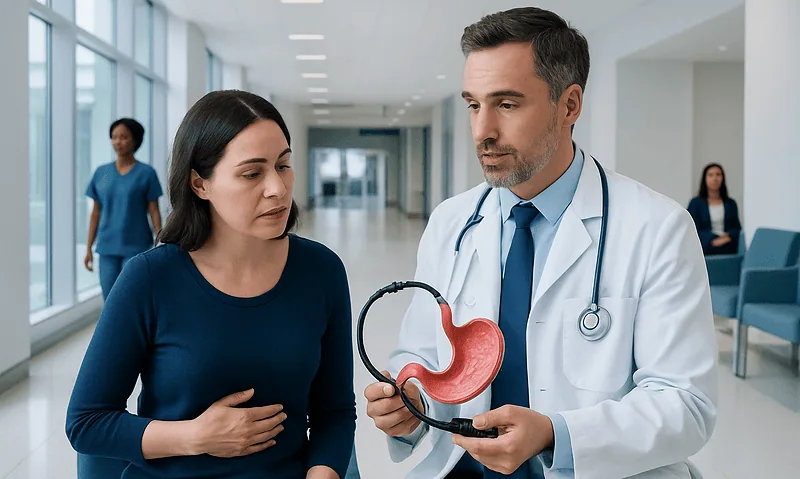
Central Line: A Complete Medical Overview

A central line provides dependable access to a large vein for medicines, fluids, nutrition, blood draws, or monitoring. Several types exist, including non-tunneled central lines, PICC lines, tunneled catheters, and implanted ports.
Key Takeaways
- A central line provides dependable access to a large vein for medicines, fluids, nutrition, blood draws, or monitoring.
- Several types exist, including non-tunneled central lines, PICC lines, tunneled catheters, and implanted ports.
- The most important risks are infection, blood clots, bleeding, and catheter blockage or movement.
- Good hand hygiene, clean dressings, and prompt attention to new symptoms are essential for safe central line care.
- Medical review is needed quickly for fever, redness, swelling, drainage, shortness of breath, or trouble flushing the line.
A central line is a thin catheter placed into a large vein so healthcare teams can give treatment, monitor the body, or draw blood more reliably than with a standard IV. It is commonly used in hospitals and for some longer-term treatments, with careful placement and daily care helping reduce complications.
Overview: what a central line is and why it is used
A central line is a thin, flexible tube called a catheter that is placed into a large vein, usually in the neck, chest, arm, or groin. The tip of the catheter sits in a larger central vein close to the heart, which allows medicines and fluids to enter the bloodstream quickly and safely. Compared with a regular intravenous (IV) line in the hand or arm, a central line can stay in place longer and can be used for treatments that smaller veins may not tolerate well.
Doctors use a central line when a person needs frequent blood tests, repeated IV medicines, chemotherapy, long-term antibiotics, intravenous nutrition, dialysis access, or close monitoring in hospital. It can also be helpful when veins are difficult to access with standard IVs. In critical care settings, central lines may be used to give medicines that support blood pressure or to measure certain pressures in the body.
Central line is a broad term rather than one single device. Common types include a non-tunneled central venous catheter for short-term hospital use, a peripherally inserted central catheter (PICC) placed through a vein in the arm, tunneled catheters for longer-term access, and implanted ports that sit under the skin. The best option depends on how long treatment is needed, what is being infused, and the person’s overall health.
Types of central lines and how they differ
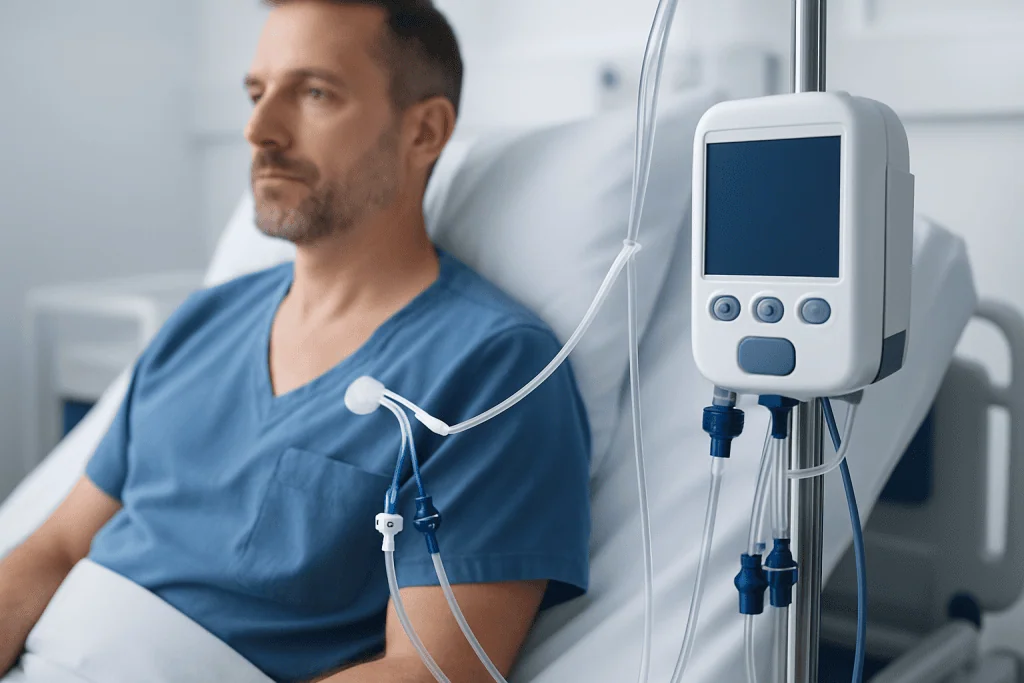
Different central lines are designed for different medical needs. A non-tunneled central venous catheter is often used in hospital for urgent or short-term treatment. It is commonly placed in the neck, chest, or groin and may have one or more channels, called lumens, so several treatments can be given at the same time.
A PICC line is inserted through a vein in the upper arm and guided until the tip reaches a central vein. It is often chosen when treatment will continue for weeks or months, such as prolonged antibiotics or some cancer care. A tunneled catheter passes under the skin before entering a vein, which can lower infection risk for long-term use. An implanted port is placed entirely under the skin and accessed with a special needle when needed, making it a practical option for intermittent long-term therapy.
Each type has advantages and trade-offs. Some are easier to place quickly, while others are better suited to home-based care or repeated treatment cycles. For example, a person receiving chemotherapy may be offered a PICC line or implanted port depending on the treatment plan, vein health, and expected duration of care.
- Short-term hospital treatment: often non-tunneled central lines
- Weeks to months of therapy: often PICC lines
- Long-term frequent access: often tunneled catheters or ports
- Specialized kidney support: dedicated access may be needed for dialysis
How a central line is placed

Central line placement is usually done by a trained doctor or specialist nurse using sterile technique. The skin is cleaned carefully, the area is numbed with local anesthetic, and ultrasound is often used to help locate the vein and improve safety. Depending on the type of line and the person’s condition, placement may happen at the bedside, in a procedure room, or in an interventional radiology setting.
Once the catheter is inserted, its position is checked. This may be done with imaging such as X-ray or ultrasound guidance, especially for lines placed in the neck or chest. The line is then secured and covered with a sterile dressing. Some people feel pressure during the procedure, but pain is usually limited because the skin is numbed beforehand.
After placement, the healthcare team confirms that the line flushes properly and can be used safely. Patients and caregivers are often taught how the line works, how to protect it, and what warning signs to watch for. In some cases, if advanced imaging guidance is needed for safe catheter placement or troubleshooting, procedures may be coordinated with interventional radiology.
Benefits, common uses, and everyday practical points
The main benefit of a central line is reliable vascular access. This means treatment can continue even when small peripheral veins are fragile, hard to find, or irritated by repeated needle sticks. It also allows delivery of medicines that need to be diluted quickly in a large volume of blood, including some antibiotics, nutrition solutions, and other specialized therapies.
Central lines can reduce the need for repeated blood draws from the arm in some situations, though not every line is used for every type of blood test. In hospital, a central line may also support urgent care by making it easier to give fluids, blood products, or medicines without delay. In some conditions involving intensive treatment, such as serious infection or organ failure, the line can be part of broader monitoring and therapy.
Living with a central line requires practical adjustments. The line and dressing need protection during bathing, the catheter should not be tugged or kinked, and supplies must be kept clean. Some people can continue many daily activities, while others may need temporary restrictions depending on the line type, where it is placed, and the underlying illness.
Risks and possible complications
Although central lines are widely used and often very helpful, they do carry risks. The most important complication is infection. Germs can enter at the skin site, through the catheter hub, or less commonly through the bloodstream from another source. A central line infection may remain local to the skin or become more serious if it spreads into the blood, which is why careful hygiene and prompt assessment of symptoms matter.
Other possible complications include bleeding, bruising, accidental puncture of nearby structures during placement, catheter blockage, and the line moving out of position. Blood clots can form in the vein around the catheter, sometimes causing swelling, discomfort, or problems with flushing the line. In chest lines, a collapsed lung is an uncommon but recognized risk during insertion.
People with serious illness, reduced immunity, or prolonged hospital stays may face higher complication risks. For example, individuals being treated for sepsis or receiving intensive therapies may need especially close line monitoring. If a bloodstream infection is suspected, doctors may investigate for bacteremia and decide whether the line should be treated, replaced, or removed.
- Redness, warmth, swelling, or drainage at the site may suggest infection
- Fever or chills without another clear cause should be assessed promptly
- Resistance when flushing may mean blockage or kinking
- New arm, neck, or chest swelling can point to a clot or line problem
Diagnosis and monitoring of central line problems
When a central line is not working properly or a complication is suspected, doctors begin with a physical examination and a review of symptoms. They ask when the problem started, whether the line flushes or draws blood normally, and whether there is fever, pain, swelling, or leakage. The appearance of the dressing and skin around the insertion site is checked closely.
Depending on the concern, testing may include blood tests, blood cultures, ultrasound to look for a clot, or imaging to confirm the catheter tip position. If infection is possible, samples may be taken both from the line and from a vein elsewhere in the body to compare results. These steps help determine whether symptoms are coming from the catheter itself or from another illness.
Monitoring continues throughout the life of the line. Dressings are changed on a schedule, the insertion site is inspected regularly, and the catheter is flushed according to clinical instructions to help prevent blockage. A line that is no longer needed is usually removed as soon as it is safe to do so, which also lowers the risk of complications.
Treatment, care, and prevention
Treatment for a central line problem depends on the cause. A blocked line may be cleared with approved medical techniques, while a malpositioned or damaged catheter may need adjustment or replacement. If a blood clot forms, doctors may recommend blood-thinning treatment in selected cases. If infection is suspected, blood cultures are usually taken, antibiotics may be started, and the line may need to be removed depending on how serious the infection is and what organism is involved.
Prevention begins with sterile placement and continues with consistent line care. Hand hygiene before touching the catheter, proper hub cleaning, routine dressing changes, and keeping the line dry are basic but very effective safety measures. Patients and caregivers should only use supplies and flushing methods exactly as instructed by their healthcare team.
At home, it helps to check the site daily in good light and report changes early. People should avoid using scissors near the tubing, pulling on the catheter, or submerging the line unless their team has specifically said it is safe. Before travel, exercise, or returning to work or school, patients should ask what precautions apply to their specific line type and treatment plan.
Near the end of treatment, the healthcare team reviews whether the central line is still needed. Removing an unnecessary line is one of the best ways to reduce future risk. Acibadem International’s multidisciplinary specialists in JCI-accredited hospitals diagnose and treat central line-related issues for international patients when advanced hospital care is needed.
When to seek medical care
Medical advice should be sought promptly if there is fever, chills, increasing pain, redness, pus, or bad-smelling drainage around the central line. These symptoms can signal infection and should not be ignored, especially in people receiving chemotherapy, intravenous nutrition, or intensive treatment.
Urgent assessment is also important if the arm, neck, face, or chest becomes swollen; if the line suddenly will not flush; if fluid leaks from the catheter; or if the line appears to have moved. Shortness of breath, chest pain, fainting, or severe bleeding are emergency symptoms and need immediate medical attention.
Even when symptoms seem minor, it is safer to contact the treating team than to attempt home fixes without guidance. Patients should avoid forcing a flush or using unapproved products on the line. Early review often prevents more serious complications and helps keep treatment on schedule.
Frequently asked questions
Is a central line the same as a regular IV?
No. A regular IV usually sits in a smaller vein near the hand or arm, while a central line extends into a larger vein closer to the heart. Central lines are used when treatment is longer, more complex, or harder to deliver through a standard IV.
How long can a central line stay in place?
The length of time depends on the type of line and the reason it was placed. Some are used for days, while PICC lines, tunneled catheters, or ports may remain for weeks to months if they are working well and remain free of complications.
Does central line placement hurt?
Most people feel pressure or brief discomfort rather than significant pain because the skin is numbed with local anesthetic. Some soreness can occur afterward for a short time, and the care team can explain how to manage it safely.
Can a person shower with a central line?
Often yes, but the line and dressing usually need to be covered and kept dry. Bathing instructions vary by catheter type, dressing, and treatment plan, so it is important to follow the healthcare team's specific advice.
What are the first signs of a central line infection?
Common warning signs include redness, warmth, tenderness, swelling, or drainage at the insertion site. Fever or chills can also occur, sometimes even before the site looks abnormal, so new symptoms should be reported promptly.
Can a central line be removed easily?
Many central lines can be removed in a straightforward medical procedure once they are no longer needed. The method depends on the type of line, how long it has been in place, and whether there are any complications such as infection or clotting.
References
- Centers for Disease Control and Prevention
- National Institutes of Health
- Infusion Nurses Society
- Society of Interventional Radiology
- Mayo Clinic
This article is for general information only and is not a substitute for professional medical advice. Please consult a qualified doctor about your individual situation.
Explore treatments in Turkey — costs, top hospitals & a free quote
JCI-accredited · board-certified surgeons · reply within 24h
Add us as a Preferred Source to see more of our trusted health content across Google Search, AI Overviews and Discover.
Check your numbers in seconds
BMI, calories, due date, blood pressure and 30+ more clinical calculators — free, instant, doctor-reviewed ranges.