

Centric Relation in Dentistry: Why Jaw Position Matters for Bite Treatment

Centric relation is a joint-based jaw position, not simply where the teeth happen to meet. Dentists use centric relation to plan bite adjustments, crowns, bridges, dentures, and complex rehabilitation.
Key Takeaways
- Centric relation is a joint-based jaw position, not simply where the teeth happen to meet.
- Dentists use centric relation to plan bite adjustments, crowns, bridges, dentures, and complex rehabilitation.
- A mismatch between jaw position and tooth contact may contribute to uneven wear, muscle strain, or bite instability in some patients.
- Assessment may include a clinical exam, bite records, models, and imaging when needed.
- Treatment depends on symptoms, tooth condition, and jaw function; not everyone needs active treatment.
Centric relation in dentistry refers to a stable, repeatable jaw joint position that helps dentists evaluate how the teeth and jaws work together. Understanding it can make bite treatment, restorations, and jaw care more precise and comfortable.
Overview: What Centric Relation Means
Centric relation in dentistry is a way of describing a stable position of the lower jaw in relation to the upper jaw, based on the jaw joints rather than on the teeth. In simple terms, it is the position dentists can use as a reliable reference when they want to understand how the bite should function. Because it is a repeatable position, it is especially useful when the natural bite is worn, shifted, or difficult to measure accurately.
This concept matters because teeth can move, wear down, break, or be restored over time, while the jaw joints and chewing muscles still need to work in harmony. If a dentist looks only at where the teeth touch without considering the joint position, treatment planning may be less precise. Centric relation helps create a clearer starting point for evaluating bite balance, comfort, and long-term function.
Centric relation is not the same as the everyday bite a person uses when closing the mouth normally. Many people close into a habitual bite pattern shaped by tooth contacts, past dental work, or muscle habits. In some individuals, that habitual bite is close to centric relation and causes no problem. In others, the difference may become relevant during restorative or bite-related treatment.
Why Jaw Position Matters for Bite Treatment
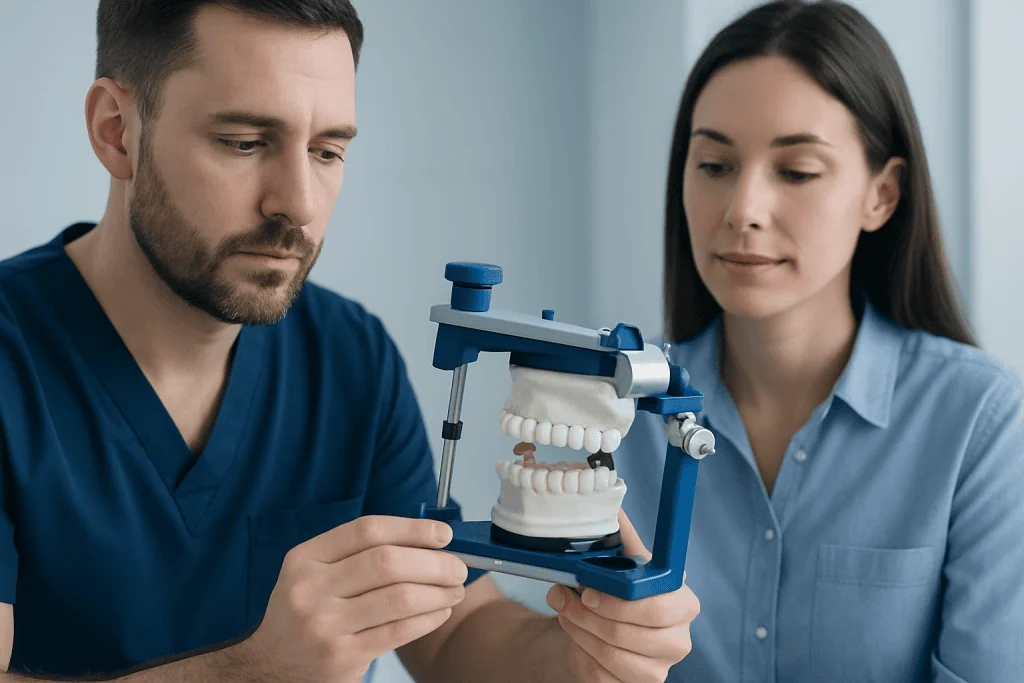
Jaw position matters because bite treatment is not only about lining up teeth; it is also about helping the teeth, muscles, and jaw joints work together smoothly. When treatment is planned from a stable reference point, it may improve the fit of restorations, reduce unwanted strain on certain teeth, and support a more even bite. This can be particularly important in patients with extensive dental wear, multiple missing teeth, or repeated breakage of dental work.
Dentists may use centric relation when planning crowns, bridges, full-mouth rehabilitation, dentures, orthodontic care, or certain forms of dental implant treatment. It can also be relevant when a patient has an unstable bite after tooth loss or after years of grinding and clenching. In these cases, restoring the bite without a stable jaw reference may increase the chance of discomfort or uneven contact.
At the same time, centric relation is not a one-size-fits-all solution and is not always the main focus of care. Many routine fillings, simple crowns, and straightforward dental treatments do not require complex bite analysis. A dentist decides how much centric relation matters based on the person’s symptoms, oral condition, and treatment goals.
Signs That Bite or Jaw Position May Need Evaluation
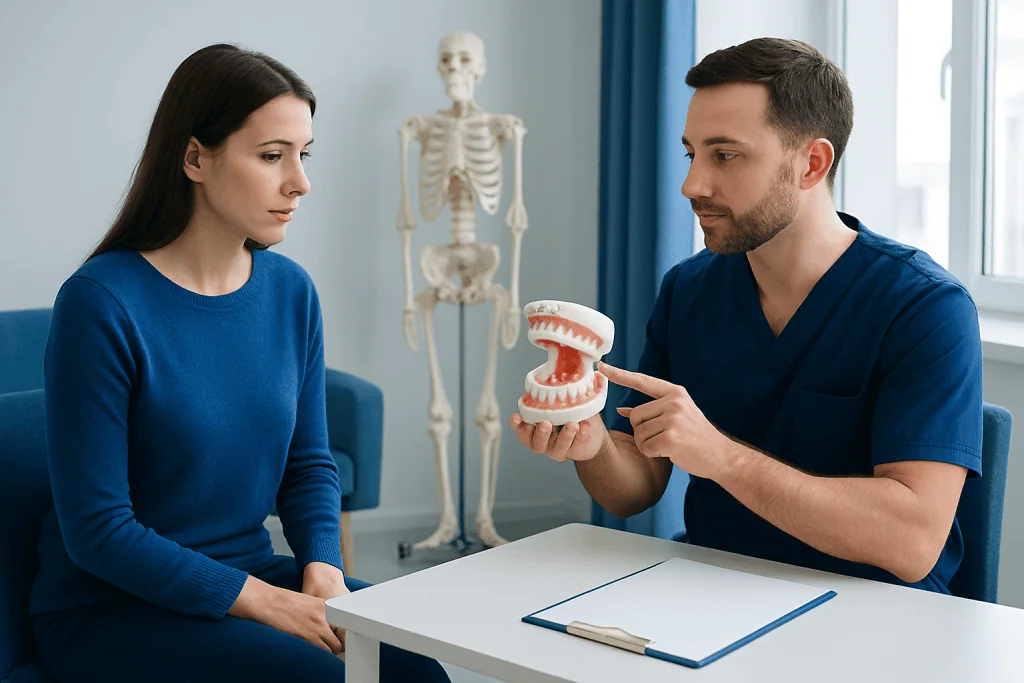
A person does not need to know whether they are “in centric relation” in everyday life. However, certain symptoms or dental findings may lead a dentist to assess jaw position more carefully. These signs do not automatically mean there is a serious problem, but they can suggest that the bite and jaw function deserve a closer look.
Possible reasons for evaluation include pain, strain, or repeated changes in the way the bite feels. Some patients describe a bite that seems uneven in the morning, difficulty finding a comfortable closing position, or frequent tenderness in the jaw muscles. Others may not feel symptoms but show patterns of tooth wear or repeated failure of restorations.
- Jaw clicking, popping, or limited opening
- Tooth wear from grinding or clenching
- Repeated chipping, cracking, or loosening of dental restorations
- Muscle fatigue around the cheeks or temples
- Shifting bite after tooth loss or extensive dental treatment
- Headaches or facial discomfort that may relate to bite strain
These issues can overlap with temporomandibular joint disorders or other dental conditions, but they can also occur for unrelated reasons. A proper dental assessment is important before linking symptoms to jaw position alone.
Causes and Risk Factors for Bite Instability
There is usually no single cause behind bite instability or a mismatch between habitual bite and a stable joint position. Often, several factors develop gradually over time. Natural tooth wear, missing teeth, previous dental work, and changes in muscle habits can all influence how the teeth come together and how the jaw closes.
Grinding and clenching, also called bruxism, are common contributors. These habits can wear tooth surfaces, overload muscles, and place stress on dental restorations. Likewise, old fillings or crowns that no longer fit the bite well may change contact patterns and encourage the jaw to close in a less balanced way. In some patients, trauma to the face or jaw can also affect comfort and function.
Other risk factors may include advanced tooth loss, drifting teeth, gum disease that affects tooth support, or developmental differences in jaw growth. A person may also need centric relation assessment before a more complex treatment such as All-on-4 dental implants or a coordinated plan involving orthodontics. The goal is not to label every bite difference as abnormal, but to identify situations where a stable reference can improve treatment planning.
How Dentists Assess Centric Relation
Assessment begins with a detailed history and oral examination. The dentist asks about symptoms such as jaw discomfort, clicking, headaches, clenching, and changes in the bite. They also look for signs like worn teeth, fractures, uneven tooth contacts, gum recession, and strain in the chewing muscles. This helps place jaw position in the context of the whole mouth, rather than treating it as an isolated finding.
To record centric relation, the dentist may gently guide the jaw into a relaxed, repeatable position and take a bite registration using special materials. They may compare this record with the patient’s habitual bite. Dental models or digital scans can then be mounted and analyzed to see how the teeth contact when the jaw is in a stable joint position.
In more complex cases, additional tools may be used, such as photographs, facebow transfer, articulated models, or imaging of the teeth and jaw joints. Imaging is not necessary for everyone, but it may help when joint disease, major asymmetry, or structural problems are suspected. If symptoms suggest a broader jaw problem, the dentist may also consider evaluation for bruxism or other bite-related conditions.
Treatment Options and When They Are Used
Treatment depends on whether the patient has symptoms, visible dental damage, or planned restorative work that requires a stable bite. Not every difference between centric relation and habitual bite needs correction. If the bite is comfortable, stable, and not causing harm, observation and routine follow-up may be enough.
When treatment is needed, options vary. A dentist may reshape a small contact area to reduce interference, replace poorly fitting restorations, or redesign crowns and bridges so they fit the bite more evenly. In people with significant wear or multiple missing teeth, a more comprehensive reconstruction may be planned from centric relation to improve function and durability. This can include dentures, implant-supported restorations, or full-mouth rehabilitation.
For some patients, a protective night guard or stabilization splint may help reduce overload from clenching and grinding while the bite is being monitored. If the teeth are malpositioned, orthodontic treatment may be part of the plan. When jaw pain or joint symptoms are present, care usually focuses on conservative management first, such as soft diet measures, self-care, stress reduction, and targeted dental guidance rather than aggressive irreversible procedures.
Near the end of a complex care pathway, coordinated planning can be important. Acibadem International’s multidisciplinary specialists in JCI-accredited hospitals evaluate and treat bite, restorative, and jaw-related dental concerns for international patients when advanced assessment is needed.
Self-care, Prevention, and Long-term Follow-up
Good daily care supports both the teeth and the bite. Brushing, flossing, regular dental checkups, and prompt treatment of cavities or broken restorations can reduce the chance that bite problems become more complicated. Replacing missing teeth in a timely way may also help prevent drifting, overloading, and changes in chewing patterns.
People who clench or grind may benefit from stress management, awareness of daytime jaw tension, and using any prescribed night guard as directed. It can help to avoid habits such as chewing ice, biting nails, or using the teeth to open packages. During painful flare-ups, softer foods and limiting wide opening may reduce muscle strain.
Long-term follow-up matters after bite-related treatment. Teeth, restorations, and muscles can change over time, so periodic review allows the dentist to adjust the plan if needed. The most successful outcomes usually come from individualized care based on comfort, function, and oral health rather than from forcing every patient into a single idealized bite pattern.
When to See a Dentist or Jaw Specialist
A person should consider professional evaluation if they have ongoing jaw pain, repeated tooth fractures, a bite that suddenly feels different, difficulty chewing, or frequent morning jaw stiffness. These symptoms often have treatable causes, and early assessment can help prevent further tooth wear or restoration failure. Sudden changes may be especially important after trauma, recent dental treatment, or new tooth loss.
It is also wise to seek advice before major restorative treatment if there is a history of grinding, jaw joint symptoms, or an unstable bite. Planning from a clear functional starting point may improve comfort and predictability. Patients do not need to diagnose centric relation themselves; a qualified dentist can determine whether it is relevant to their care.
If severe pain, inability to open the mouth, swelling, fever, or signs of infection are present, urgent dental or medical care is appropriate. These symptoms may point to problems beyond bite mechanics and should not be ignored.
Frequently asked questions
Is centric relation the same as a normal bite?
No. Centric relation is a stable jaw joint position used as a reference, while a normal or habitual bite is the way a person usually closes their teeth together. In some people these positions are very close, and in others they differ more noticeably.
Does everyone need centric relation checked?
Not necessarily. It is most useful when a dentist is planning complex restorative treatment, evaluating bite instability, or investigating jaw-related symptoms. Many routine dental procedures can be completed successfully without an extensive centric relation analysis.
Can centric relation help with jaw pain?
It can be part of the evaluation, but it is not a guaranteed solution for jaw pain. Jaw discomfort may involve muscles, joints, clenching, stress, arthritis, or other factors. A dentist uses centric relation along with the full clinical picture to guide appropriate care.
How is centric relation recorded?
The dentist usually guides the jaw gently into a repeatable position and takes a bite record with a special material. This record may be compared with digital scans, models, and the patient’s normal bite. The process is typically simple and done in the dental office.
Will treatment always change the way the teeth meet?
Not always. Some patients only need monitoring, a night guard, or replacement of a problematic restoration. Others may need more noticeable changes if they have extensive wear, missing teeth, or a bite that is contributing to damage or instability.
Can orthodontics or crowns be planned using centric relation?
Yes, especially in more complex cases. Dentists and orthodontists may use centric relation as a stable reference when planning tooth movement, crowns, bridges, implants, or full-mouth reconstruction. The goal is to support function, comfort, and long-term bite stability.
References
- American Dental Association
- National Institute of Dental and Craniofacial Research
- American Association of Oral and Maxillofacial Surgeons
- American Academy of Orofacial Pain
- World Health Organization
This article is for general information only and is not a substitute for professional medical advice. Please consult a qualified doctor about your individual situation.
Joint and spine care in Turkey — expert assessment & treatment
JCI-accredited · board-certified surgeons · reply within 24h
Add us as a Preferred Source to see more of our trusted health content across Google Search, AI Overviews and Discover.

More from the Health Library



Related Specialists

Prof. Dr. Özgür Yağmur
General Surgery
Dr. Levent Konur
Gynecology & Obstetrics
Dr. Mert Pehlivan Altın
Cardiology
Assoc. Prof. Dr. Işil Fazilet Kartaloğlu
Physical Medicine & Rehabilitation