Cerebrum: What It Is and What It Does

The cerebrum is the largest and most complex part of the brain. It helps control movement, sensation, language, memory, thinking, and emotions.
Key Takeaways
- The cerebrum is the largest and most complex part of the brain.
- It helps control movement, sensation, language, memory, thinking, and emotions.
- The cerebrum is divided into right and left hemispheres and four main lobes.
- Different areas of the cerebrum perform different tasks, but they work closely together.
- Injury or disease affecting the cerebrum can change movement, speech, behavior, memory, or awareness.
The cerebrum is the largest part of the brain and plays a central role in thinking, movement, memory, language, emotions, and sensory processing. Understanding how it works can help explain many everyday abilities as well as how certain neurological symptoms develop.
Overview of the Cerebrum
The cerebrum is the largest part of the human brain. It occupies the uppermost portion of the skull and is responsible for many of the abilities people rely on every day, including thinking, speaking, remembering, planning, feeling, and moving. When people picture the brain, they are usually thinking of the cerebrum.
This structure has two halves, called the right and left cerebral hemispheres. These hemispheres are connected by a thick bundle of nerve fibers known as the corpus callosum, which allows information to travel between both sides. Although each hemisphere has some specialized roles, the two sides usually work together in a highly coordinated way.
The outer layer of the cerebrum is called the cerebral cortex. It has a folded appearance, and these folds increase the surface area available for nerve cells. Beneath the cortex are deeper structures and white matter pathways that help brain regions communicate quickly and efficiently.
The cerebrum is essential for both higher mental functions and basic voluntary activities. It helps a person understand the world, respond to it, and express thoughts and feelings. Because it is involved in so many tasks, disorders affecting the cerebrum can produce a wide range of symptoms.
What the Cerebrum Does
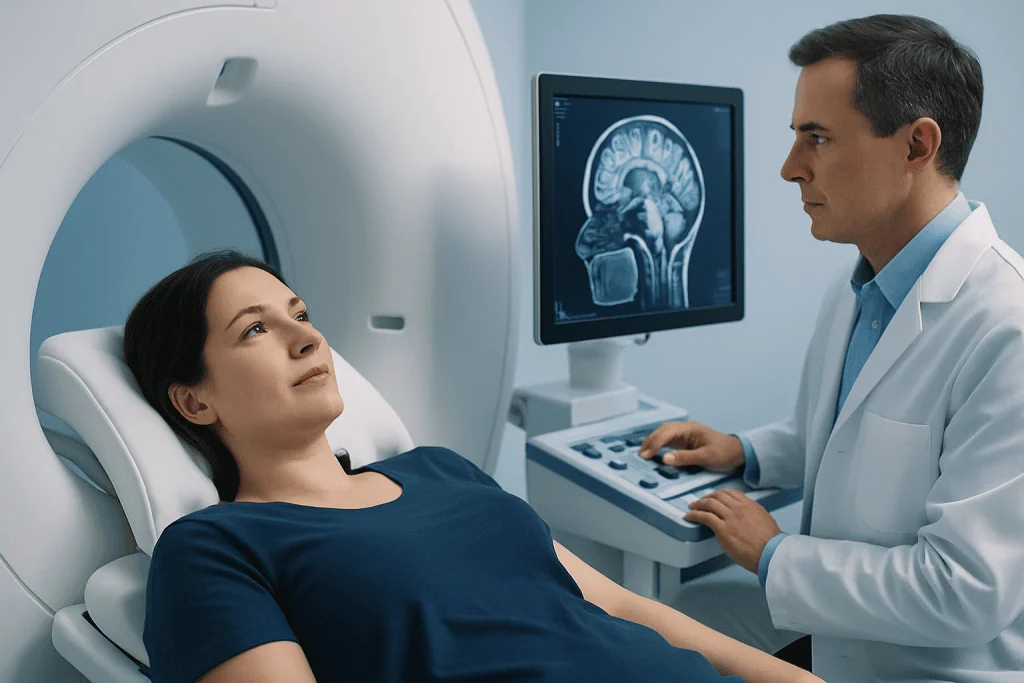
The cerebrum manages many of the brain’s most advanced functions. It helps people interpret signals from the eyes, ears, skin, nose, and tongue. It also supports attention, judgment, learning, problem-solving, and decision-making. In daily life, these functions allow a person to recognize faces, understand language, make plans, and carry out purposeful actions.
It also plays a major role in voluntary movement. When a person decides to lift a hand, walk across a room, or speak, the cerebrum helps plan and initiate those actions. At the same time, it receives feedback from the body so movements can be adjusted smoothly.
Memory and emotion are also closely linked to the cerebrum. Certain regions help store and retrieve information, while others participate in emotional responses, social behavior, and personality. This is why conditions affecting the cerebrum may influence not only physical function but also mood, behavior, and cognition.
- Thought, reasoning, and planning
- Language comprehension and speech production
- Voluntary movement
- Sensory awareness, including touch, vision, and hearing
- Memory, learning, and emotional processing
The Main Parts of the Cerebrum
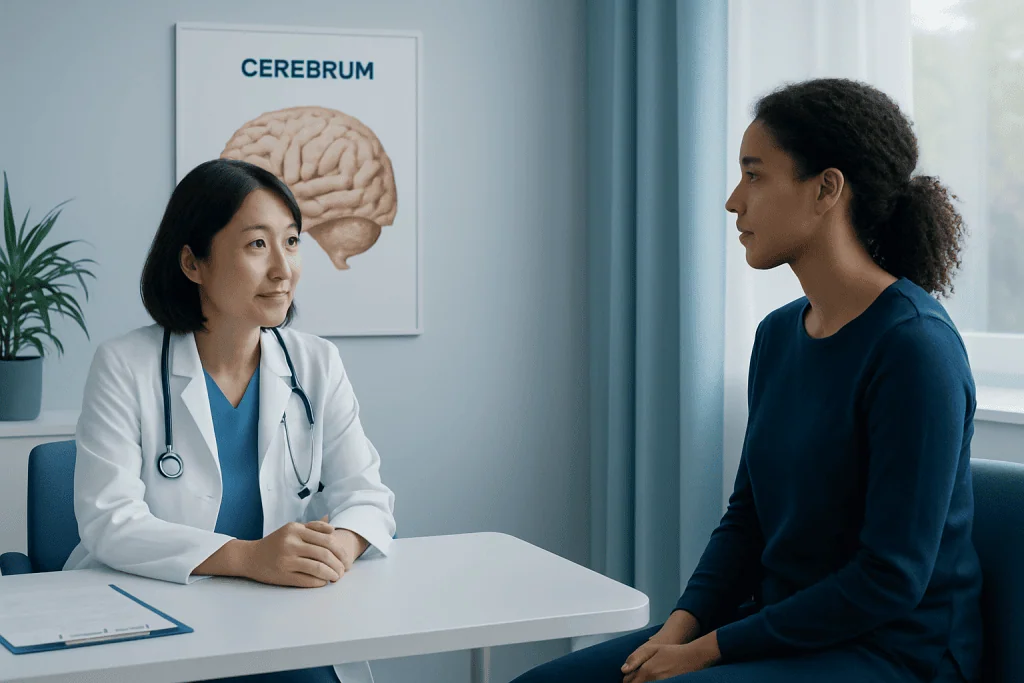
The cerebrum is divided into four main lobes on each side: frontal, parietal, temporal, and occipital. Each lobe has specialized functions, though no lobe works completely alone. Brain tasks usually depend on networks that involve several regions at once.
The frontal lobe is involved in planning, decision-making, personality, behavior, and voluntary movement. It also contains important areas for speech production in many people. The parietal lobe helps process touch, temperature, pain, body position, and spatial awareness, which allows a person to understand where the body is in relation to the environment.
The temporal lobe contributes to hearing, language comprehension, and memory. It contains structures that help process sounds and support the formation of new memories. The occipital lobe, located at the back of the brain, is mainly responsible for visual processing.
In addition to the lobes, the cerebrum includes deeper structures that support movement, emotion, motivation, and memory. Together, these regions form a complex communication network. When one area is affected, the result depends on the location and extent of the problem rather than on the cerebrum as a whole.
How the Right and Left Hemispheres Work
The right and left sides of the cerebrum have some differences in function, but they are not completely separate systems. In general, the left hemisphere is often more involved in language and analytical tasks, while the right hemisphere may contribute more to spatial awareness, facial recognition, and certain aspects of creativity. However, these patterns can vary from person to person.
Each hemisphere largely controls the opposite side of the body. This means the left side of the cerebrum helps direct movement on the right side of the body, and the right side helps direct movement on the left. The same crossing pattern also applies to some sensory pathways.
The corpus callosum is important because it allows the hemispheres to share information quickly. For example, reading aloud, navigating a room, or catching a ball requires multiple brain areas and both hemispheres to coordinate. This communication helps make behavior accurate, efficient, and meaningful.
If one hemisphere is damaged, symptoms depend on which brain functions are centered in the affected area. A person may have weakness on one side, trouble speaking, visual-spatial problems, or changes in attention and behavior. Doctors use these patterns to help identify which part of the cerebrum may be involved.
Conditions That Can Affect the Cerebrum
Many medical conditions can affect the cerebrum. These include stroke, traumatic brain injury, brain tumors, infections, epilepsy, degenerative neurological diseases, and problems with blood flow. Because the cerebrum controls so many functions, the effects of these conditions can range from mild and temporary to more significant and long-lasting.
Symptoms vary based on the location of the affected brain tissue. Problems in the frontal lobe may lead to changes in behavior, judgment, movement, or speech. Conditions involving the temporal lobe may affect memory or understanding of language. Damage in the parietal lobe may change sensation or spatial awareness, while occipital lobe problems can interfere with vision.
Some symptoms that may suggest cerebral involvement include sudden weakness, numbness, confusion, severe headache, difficulty speaking, vision changes, seizures, loss of balance, or personality changes. These symptoms do not always mean a serious condition is present, but they should be assessed promptly, especially if they begin suddenly.
Examples of related conditions include stroke, brain tumor, and seizure disorders. Depending on the situation, evaluation may involve specialists in neurology care, emergency medicine, neurosurgery, or rehabilitation.
How Doctors Evaluate Cerebral Function
Doctors assess the cerebrum by combining a medical history, physical examination, and neurological examination. They may ask about symptoms such as weakness, memory problems, headaches, speech changes, or seizures. During the examination, they check strength, sensation, reflexes, coordination, balance, language, vision, and mental status.
Imaging tests are often important when cerebral disease is suspected. A computed tomography scan or magnetic resonance imaging scan can help show bleeding, stroke, tumors, swelling, or structural changes in the brain. In some cases, additional tests may be used to assess blood vessels, electrical activity, or brain function.
For example, an electroencephalogram may be useful when seizures are suspected, while cognitive testing may help evaluate memory, attention, or problem-solving ability. Blood tests can also support diagnosis by checking for infection, inflammation, metabolic causes, or other contributing problems.
When symptoms suggest a structural problem, a person may be referred for brain MRI or further specialist evaluation. If there is concern about a mass or pressure effect in the cerebrum, consultation with teams experienced in neurosurgery may be appropriate.
Treatment and Recovery
Treatment for problems affecting the cerebrum depends on the underlying cause. There is no single treatment for the cerebrum itself, because the cerebrum is a normal brain structure rather than a disease. Instead, care is directed at conditions involving this part of the brain, such as stroke, head injury, infection, seizures, or tumors.
Some conditions require urgent treatment. For example, a stroke may need emergency medical care to restore blood flow or reduce complications. Infections may need antimicrobial treatment, seizures may require anti-seizure medicines, and tumors may be managed with surgery, radiation therapy, medication, or a combination of approaches.
Recovery can also include supportive therapies. Rehabilitation may involve physical therapy for strength and balance, occupational therapy for daily activities, and speech-language therapy for communication or swallowing difficulties. Cognitive rehabilitation may help with attention, memory, and problem-solving after brain injury or illness.
Care is often best provided by a multidisciplinary team. Near the end of the treatment journey, some patients may also need longer-term follow-up for symptom monitoring, medication review, and functional support. Acibadem International’s multidisciplinary specialists and JCI-accredited hospitals diagnose and treat conditions affecting the cerebrum for international patients when this level of coordinated care is needed.
Protecting Brain Health and When to Seek Medical Care
Although not every brain condition can be prevented, healthy habits can support cerebral health over time. Controlling blood pressure, cholesterol, and blood sugar may reduce the risk of stroke and vascular disease. Wearing seat belts, using helmets during appropriate activities, staying physically active, sleeping well, and avoiding smoking can also support overall brain function.
Mental and social activity may be helpful as well. Reading, learning new skills, staying engaged with others, and managing stress can support cognitive health. A balanced diet and regular medical checkups also contribute to the health of the brain and blood vessels.
Medical attention is especially important if symptoms appear suddenly or worsen quickly. Urgent evaluation is needed for sudden weakness, facial drooping, trouble speaking, severe sudden headache, seizures, confusion, or sudden vision loss. These may be signs of a neurological emergency.
If symptoms are mild but persistent, such as memory concerns, repeated headaches, balance problems, or changes in mood or behavior, it is still sensible to speak with a qualified doctor. Early assessment can help identify the cause and guide treatment before symptoms interfere more with daily life.
Frequently asked questions
What is the cerebrum in simple terms?
The cerebrum is the largest part of the brain. It helps a person think, move, speak, remember, feel emotions, and understand information from the senses.
What does the cerebrum control?
The cerebrum controls many higher brain functions, including voluntary movement, language, memory, learning, judgment, and sensory processing. Different areas of the cerebrum handle different tasks, but they work together closely.
What are the four lobes of the cerebrum?
The four main lobes are the frontal, parietal, temporal, and occipital lobes. Each has important roles, such as movement and planning in the frontal lobe, sensation in the parietal lobe, hearing and memory in the temporal lobe, and vision in the occipital lobe.
Can a person live with damage to the cerebrum?
Yes, many people live after injury or illness affecting the cerebrum, but the effects vary widely depending on the cause and location. Some recover well with treatment and rehabilitation, while others may have ongoing difficulties with movement, speech, memory, or behavior.
What symptoms can happen when the cerebrum is affected?
Symptoms may include weakness, numbness, speech problems, memory changes, confusion, seizures, personality changes, balance problems, or vision changes. The exact symptoms depend on which area of the cerebrum is involved.
How do doctors check if the cerebrum is working properly?
Doctors use a neurological examination to assess movement, sensation, speech, memory, coordination, and awareness. They may also recommend brain imaging or other tests if they suspect a condition affecting the cerebrum.
References
- National Institute of Neurological Disorders and Stroke
- National Institute on Aging
- MedlinePlus
- Merck Manual
- World Health Organization
This article is for general information only and is not a substitute for professional medical advice. Please consult a qualified doctor about your individual situation.
Explore treatments in Turkey — costs, top hospitals & a free quote
JCI-accredited · board-certified surgeons · reply within 24h
Add us as a Preferred Source to see more of our trusted health content across Google Search, AI Overviews and Discover.