Cervical Kyphosis Explained: Causes, Management, and When to See a Doctor
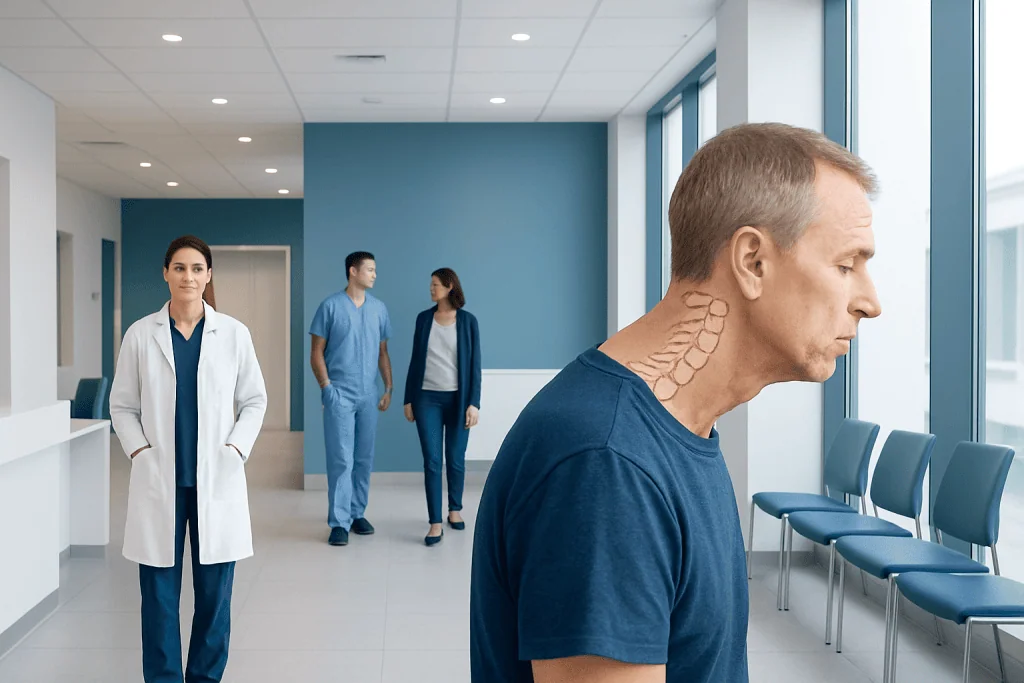
Cervical kyphosis describes an abnormal forward curve in the neck portion of the spine. Symptoms can include neck pain, stiffness, fatigue, difficulty holding the head upright, and sometimes arm or walking problems.
Key Takeaways
- Cervical kyphosis describes an abnormal forward curve in the neck portion of the spine.
- Symptoms can include neck pain, stiffness, fatigue, difficulty holding the head upright, and sometimes arm or walking problems.
- Causes include degeneration, injury, previous neck surgery, inflammatory conditions, infection, tumors, and congenital spinal differences.
- Imaging helps clinicians measure the curve, identify its cause, and check whether the spinal cord or nerves are affected.
- Treatment ranges from targeted rehabilitation and pain management to surgery when the curve is severe, progressive, unstable, or compresses neural structures.
- New weakness, loss of coordination, changes in bladder or bowel control, or symptoms after significant trauma require urgent medical assessment.
Cervical kyphosis is a change in the natural curve of the neck in which the cervical spine bends forward rather than maintaining its usual gentle backward curve. Some people have mild symptoms and can be managed without surgery, while more pronounced curvature or nerve compression needs specialist assessment.
What Is Cervical Kyphosis?
Cervical kyphosis is an abnormal forward rounding of the cervical spine, the seven vertebrae in the neck. A healthy neck normally has a gentle inward, or lordotic, curve when viewed from the side. In cervical kyphosis, that curve becomes straightened or reverses, so the neck bends forward.
The condition is not the same as a temporary slouched posture or the common “forward head posture” seen with prolonged screen use. Posture may contribute to muscle strain and discomfort, but cervical kyphosis refers to a structural alignment change that should be evaluated in the context of a person’s symptoms, spinal flexibility, and imaging findings.
Its effects vary widely. A mild, flexible curve may cause little more than stiffness or fatigue. A marked or rigid curve can alter balance of the head over the shoulders, make it difficult to look ahead, and in some cases narrow the space available for the spinal cord or nerve roots.
How Cervical Kyphosis Can Feel
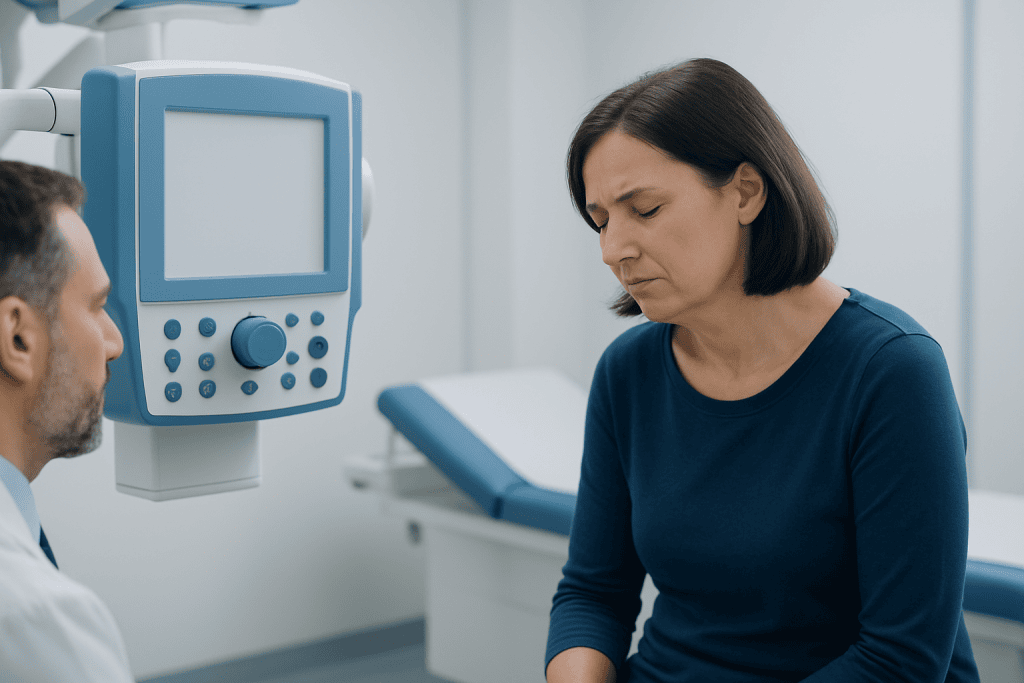
Neck pain and stiffness are common, particularly when neck muscles must work harder to keep the head level. Some people notice aching across the shoulders, headaches beginning in the neck, or increasing fatigue later in the day. A visible forward head position or reduced ability to extend the neck may also be present.
If the curve affects a nerve root, symptoms can extend into the shoulder, arm, or hand. These may include pain, tingling, numbness, or weakness. When the spinal cord is compressed, a condition called cervical myelopathy, symptoms can include reduced hand dexterity, dropping objects, unsteady walking, leg stiffness, or changes in reflexes.
Symptoms do not always match the appearance of the curve. Some people with noticeable alignment changes have few symptoms, while others experience significant pain because of associated disc, joint, or nerve problems. For this reason, an individual evaluation is more useful than judging severity from posture alone.
Why the Neck Curve Changes
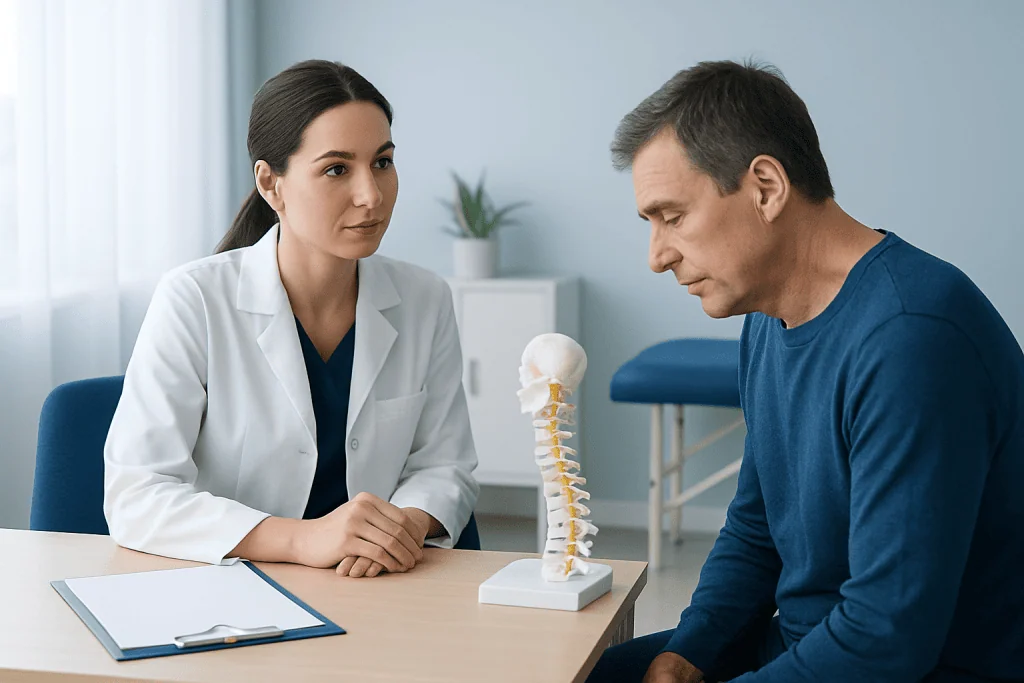
Cervical kyphosis has several possible causes. Age-related wear of discs and facet joints can reduce disc height and change alignment over time. Degenerative conditions may occur alongside cervical spinal stenosis, in which the spinal canal becomes narrowed. Injury, including fractures or ligament damage, can also disturb normal spinal alignment.
Previous neck surgery is another possible factor, especially when surgery involves removal of structures that help support the back of the cervical spine. Less commonly, inflammatory arthritis, spinal infection, tumors, metabolic bone conditions, or radiation treatment may affect the vertebrae and supporting tissues.
Some children are born with vertebral formation differences that lead to congenital cervical kyphosis. In adults, the curve may also develop because of muscle weakness, neuromuscular conditions, or long-standing poor spinal balance. Important risk factors therefore depend on the underlying cause rather than on one single lifestyle habit.
- Degenerative disc and joint changes
- Trauma, fractures, or ligament injuries
- Prior cervical spine surgery
- Inflammatory, infectious, or tumor-related spinal disease
- Congenital vertebral differences or neuromuscular conditions
Assessment and Diagnosis
A clinician begins by asking when symptoms started, whether they are changing, and whether there has been injury, surgery, infection, inflammatory disease, cancer, or neurological symptoms. The physical examination assesses neck movement, posture, muscle strength, sensation, reflexes, walking, and hand coordination.
Standing X-rays are usually used to view the overall alignment of the neck and measure the curve. Dynamic X-rays taken while bending forward and backward can show whether the deformity is flexible. CT may provide detailed information about bone anatomy, while MRI is especially helpful for evaluating discs, nerves, the spinal cord, infection, or other soft-tissue concerns.
Diagnosis focuses on more than the angle alone. Specialists consider the cause of the curvature, whether it is worsening, how well the head is balanced over the body, and whether the spinal cord or nerves are under pressure. Blood tests or additional investigations may be appropriate when infection, inflammatory disease, or another systemic cause is suspected.
Management: From Rehabilitation to Surgery
Management is individualized. For a mild, stable, and flexible cervical kyphosis without neurological compromise, clinicians may recommend activity adjustments, supervised physical therapy, and measures to relieve pain. Rehabilitation commonly aims to improve neck and shoulder muscle endurance, mobility where safe, posture awareness, and overall spinal conditioning.
Pain-relieving medicines may be considered by a doctor based on the person’s medical history and other medications. A neck brace is not routinely needed for long-term use, but may be used selectively for short periods in particular circumstances, such as after injury or surgery. Forceful neck manipulation should be avoided unless a qualified spine clinician has determined it is appropriate.
Surgery may be considered when the curve is severe, fixed, progressive, painful despite appropriate nonsurgical care, or associated with instability or spinal cord compression. The goals are to decompress affected nerves or the spinal cord when necessary, restore safer alignment where possible, and stabilize the spine. Procedures vary and may involve fusion from the front, back, or both sides of the neck. Cervical spine surgery is planned carefully after reviewing imaging, bone health, symptoms, and the individual’s overall health.
Recovery plans differ according to the cause and procedure. Follow-up typically includes wound care, gradual return to activity, rehabilitation, and imaging to monitor healing and alignment. A spine team can explain realistic goals, possible benefits, and potential risks before any intervention.
Supporting Neck Health in Daily Life
Although not every form of cervical kyphosis can be prevented, practical habits may reduce strain on the neck and support conservative treatment. Screens can be positioned near eye level, and frequent short movement breaks can help avoid staying in one position for long periods. When reading or using a phone, bringing the device up rather than repeatedly bending the neck down may be more comfortable.
A physical therapist can recommend exercises that match the person’s diagnosis. General neck strengthening exercises are not suitable for everyone, particularly after trauma, surgery, or when spinal cord compression is possible. Exercises should be stopped and reviewed if they trigger arm pain, numbness, dizziness, weakness, or worsening symptoms.
Maintaining bone health, avoiding tobacco, managing inflammatory conditions with medical guidance, and using appropriate safety measures during sports and driving can support spinal health. People should not attempt to “correct” a structural curve with aggressive stretching devices, self-traction, or unverified treatments.
When to Seek Medical Care
Medical evaluation is appropriate for persistent neck pain, a noticeable change in neck posture, worsening stiffness, or difficulty keeping the head upright. Assessment is also important when pain travels into an arm or is accompanied by numbness, tingling, or weakness. Early review can help identify treatable causes and guide safe rehabilitation.
Urgent medical care is needed after a significant neck injury, or if symptoms include new trouble walking, loss of balance, marked hand clumsiness, progressive weakness, or changes in bladder or bowel control. Fever, unexplained weight loss, severe unrelenting pain, or a history of cancer together with new neck pain should also be assessed promptly.
For international patients, Acibadem International’s multidisciplinary specialists and JCI-accredited hospitals can assess and treat cervical spine conditions using coordinated orthopedic, neurosurgical, rehabilitation, and imaging expertise. The appropriate care plan should always follow an in-person clinical assessment and review of imaging.
Frequently asked questions
Can cervical kyphosis be corrected without surgery?
Some mild or flexible cases can be managed without surgery, particularly when there is no spinal cord compression or progressive deformity. A clinician may recommend targeted physical therapy, symptom management, ergonomic changes, and regular monitoring. Structural curves caused by major bone changes or instability may not fully correct with exercise alone.
Is cervical kyphosis the same as forward head posture?
No. Forward head posture is often a postural habit in which the head sits in front of the shoulders, while cervical kyphosis is a measurable change in the alignment of the cervical spine. The two can coexist, but structural cervical kyphosis may have causes that require medical assessment.
Can cervical kyphosis cause dizziness?
Dizziness has many possible causes, including inner-ear, neurological, cardiovascular, medication-related, and neck-related conditions. Neck pain or muscle tension may coexist with dizziness, but cervical kyphosis should not automatically be assumed to be the cause. Persistent, recurrent, or severe dizziness should be evaluated by a healthcare professional.
Does cervical kyphosis get worse over time?
It can progress in some people, depending on the cause, flexibility of the curve, bone quality, and the presence of degeneration or instability. Other cases remain stable for years. Follow-up examination and imaging can help a clinician determine whether the alignment is changing.
What type of doctor treats cervical kyphosis?
Evaluation may involve an orthopedic spine surgeon, neurosurgeon, physiatrist, neurologist, or physical therapist, depending on symptoms and the suspected cause. A spine specialist is particularly important when there are neurological symptoms, prior neck surgery, a progressive deformity, or concern about spinal cord compression.
Which symptoms of cervical kyphosis are urgent?
Urgent symptoms include new or worsening arm or leg weakness, difficulty walking, loss of hand coordination, numbness that is spreading, or changes in bladder or bowel control. Neck symptoms following significant trauma also need prompt assessment. These signs can indicate spinal cord or nerve involvement and should not be managed with home exercises alone.
References
- American Academy of Orthopaedic Surgeons
- North American Spine Society
- National Institute of Arthritis and Musculoskeletal and Skin Diseases
- American Association of Neurological Surgeons
- World Health Organization
This article is for general information only and is not a substitute for professional medical advice. Please consult a qualified doctor about your individual situation.
Joint and spine care in Turkey — expert assessment & treatment
JCI-accredited · board-certified surgeons · reply within 24h
Add us as a Preferred Source to see more of our trusted health content across Google Search, AI Overviews and Discover.