Chalazion: A Complete Medical Overview

A chalazion is usually a painless eyelid lump caused by a blocked meibomian oil gland. Warm compresses and gentle eyelid care are often the first steps in treatment.
Key Takeaways
- A chalazion is usually a painless eyelid lump caused by a blocked meibomian oil gland.
- Warm compresses and gentle eyelid care are often the first steps in treatment.
- A chalazion is different from a stye, which is typically more painful and linked to an active infection.
- Medical review is important if the lump lasts for weeks, grows, affects vision, or keeps coming back.
- Persistent cases may need procedures such as drainage or other specialist treatment.
A chalazion is a small lump in the eyelid caused by blockage of an oil-producing gland. It is usually not dangerous and often settles with simple care, but persistent or recurrent cases should be assessed by a doctor to confirm the diagnosis and discuss treatment.
Overview
A chalazion is a firm swelling in the eyelid that develops when one of the tiny oil glands, called meibomian glands, becomes blocked. The trapped oil triggers local inflammation, creating a lump that may be small and barely noticeable or larger and more uncomfortable. In many people, a chalazion improves over time with simple home measures.
Although a chalazion can resemble a stye, the two are not the same. A stye is usually more tender, red, and related to an acute infection near an eyelash or gland. By contrast, a chalazion often starts after inflammation and tends to feel less painful, especially once the earliest irritation settles.
Chalazia can occur on the upper or lower eyelid and may affect one or both eyes at different times. They are common in both adults and children. Most are benign, but any eyelid lump that does not resolve, changes in appearance, or recurs in the same place should be evaluated by an eye specialist to rule out other causes.
How a Chalazion Looks and Feels
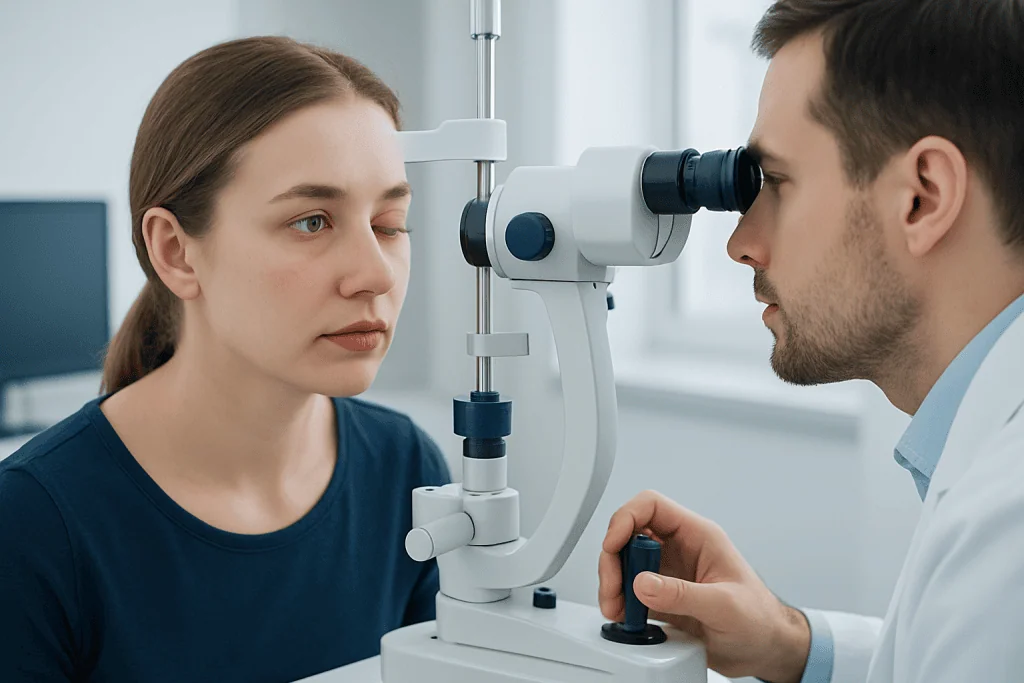
The most typical sign is a rounded lump in the eyelid. Early on, the eyelid may feel slightly tender, swollen, or heavy. Later, the lump often becomes firmer and less painful, which can make it feel more like a small bead under the skin.
Depending on its size and location, a chalazion may also cause mild watering, sensitivity to light, or irritation as it rubs against the surface of the eye. A larger lump can press on the cornea and temporarily blur vision, especially if it sits in the upper lid.
Common features include:
- A localized eyelid lump or swelling
- Mild redness or warmth early on
- Tenderness that often decreases over time
- A sensation of heaviness in the lid
- Occasional blurry vision if the lump is large
Severe pain, marked redness spreading across the eyelid, fever, or significant discharge are less typical of a simple chalazion and may suggest another problem, such as infection or a different eyelid condition.
Causes and Risk Factors

A chalazion develops when a meibomian gland becomes blocked. These glands normally release oil that helps keep tears from evaporating too quickly. When the oil thickens or cannot drain properly, it can build up inside the gland and lead to inflammation.
Several skin and eye conditions can make blockage more likely. Blepharitis, which is inflammation along the eyelid margins, is a common contributor. People with acne rosacea or oily skin may also have more frequent problems with gland blockage. In some cases, a chalazion follows a stye that has partially settled but left behind ongoing inflammation.
Risk factors can include:
- Chronic blepharitis or eyelid margin inflammation
- Rosacea or seborrheic skin conditions
- Previous chalazia
- Poor eyelid hygiene or heavy eye makeup use
- Contact lens handling without good hand hygiene
Having a risk factor does not mean a person will definitely develop a chalazion. It does, however, help explain why some people experience repeated eyelid lumps and benefit from ongoing eyelid care as part of prevention.
Diagnosis and How It Differs From a Stye
Doctors usually diagnose a chalazion by examining the eyelid and asking about symptoms and timing. In most cases, no scans or laboratory tests are needed. The appearance, location, and degree of tenderness often provide enough information to distinguish a chalazion from a stye or other eyelid issue.
A stye tends to be more acutely painful, red, and associated with infection. A chalazion is often less tender and may persist longer as a firm lump after the initial inflammation fades. Other conditions that can resemble a chalazion include cysts, benign eyelid growths, and, rarely, tumors of the eyelid. This is why a persistent, unusual, or recurrent lesion deserves specialist review.
If there is uncertainty, especially in adults with repeated lumps in the same spot, an ophthalmologist may recommend closer examination or removal for laboratory assessment. This is not because most chalazia are dangerous, but because confirming the diagnosis is an important part of safe eye care. Evaluation may also include checking for related problems such as blepharitis or dry eye.
Treatment Options
Initial treatment usually focuses on encouraging the blocked gland to drain. Warm compresses placed over the closed eyelid for several minutes, several times a day, are often recommended. Gentle lid massage after warming may help move the trapped oil, but pressure should be light and the eye should not be squeezed or poked.
Good eyelid hygiene can also help. This may include carefully cleaning the eyelid margins and avoiding eye makeup until the area settles. A person should not try to pop or pierce the lump, as this can worsen inflammation or introduce infection.
When a chalazion does not improve, becomes large, or affects vision, a doctor may suggest medical treatment. Depending on the situation, this can include anti-inflammatory medication, an injection, or a minor procedure to open and drain the lesion. If another eyelid disorder is contributing, treatment may also address that underlying issue. In specialist settings, management may involve ophthalmology evaluation and, for selected persistent cases, a minor eye surgery procedure.
Antibiotics are not routinely needed for a simple chalazion because it is usually a blockage with inflammation rather than an active bacterial infection. However, if there are signs of associated infection or significant eyelid margin disease, a doctor may prescribe medication based on the clinical picture.
Prevention and Self-care
People who are prone to chalazia may benefit from regular eyelid care even when no lump is present. Keeping the eyelid margins clean can reduce the buildup of oils and debris that contribute to gland blockage. For some individuals, consistent hygiene makes repeated episodes less likely.
Self-care steps may include washing hands before touching the eyes, removing eye makeup thoroughly, replacing old cosmetics, and following contact lens hygiene carefully. If rosacea or chronic blepharitis is present, managing those conditions can support long-term eyelid health.
Helpful prevention habits include:
- Using warm compresses occasionally if advised by a doctor
- Cleaning the eyelid margins gently
- Avoiding rubbing the eyes
- Not sharing eye makeup or eye care products
- Seeking treatment for recurring eyelid inflammation
If chalazia happen often, an eye specialist can look for the underlying reason and tailor a prevention plan. In some people, recurrent eyelid lumps are linked to ongoing gland dysfunction, dry eye, or skin conditions that need specific care.
When to Seek Medical Care
Medical advice is appropriate if an eyelid lump lasts more than a few weeks, becomes larger, or returns repeatedly. Review is also important if the swelling presses on the eye, causes blurred vision, or interferes with normal blinking. Children with persistent eyelid lumps should also be assessed, especially if the lesion seems uncomfortable or affects sight.
Prompt medical care is needed if there is strong pain, rapidly increasing redness, fever, thick discharge, or swelling that spreads beyond the small area of the lump. These features may point to infection or another condition that needs different treatment. An eye specialist can help distinguish a chalazion from problems such as conjunctivitis or deeper eyelid inflammation.
For international patients who need diagnosis or treatment, Acibadem International’s multidisciplinary specialists and JCI-accredited hospitals provide assessment and care for eye conditions, including persistent eyelid lesions. If a chalazion is recurrent or unusual, the care team may coordinate further testing and treatment through specialist eye procedures when appropriate.
Frequently asked questions
Is a chalazion the same as a stye?
No. A stye is usually an acute, painful infection near an eyelash follicle or gland, while a chalazion is more often a blocked oil gland with inflammation. A chalazion may start with some tenderness but often becomes a firmer, less painful lump over time.
Can a chalazion go away on its own?
Yes, many chalazia improve gradually with time and supportive care such as warm compresses. Some resolve completely without procedures, but persistent or recurrent lumps should be examined by a doctor.
Should a chalazion be squeezed or popped?
No. Squeezing or trying to pierce a chalazion can increase irritation, damage the eyelid, or introduce infection. It is safer to use warm compresses and seek medical advice if the lump does not improve.
How long does a chalazion usually last?
The duration varies. Some improve within a few weeks, while others take longer or remain as a firm lump until treated. If the lesion persists, enlarges, or affects vision, medical review is recommended.
Can children get chalazia?
Yes, children can develop chalazia. The condition is often managed in a similar way, but persistent lumps in children should be checked to make sure vision and eyelid function are not affected.
Why do chalazia keep coming back?
Recurring chalazia may be linked to ongoing eyelid inflammation, meibomian gland dysfunction, rosacea, or blepharitis. A doctor can look for these contributing factors and advise on long-term eyelid care to reduce recurrences.
This article is for general information only and is not a substitute for professional medical advice. Please consult a qualified doctor about your individual situation.
Chalazion in Turkey — costs, top hospitals & a free quote
JCI-accredited · board-certified surgeons · reply within 24h
Add us as a Preferred Source to see more of our trusted health content across Google Search, AI Overviews and Discover.

Ophthalmology
Comprehensive eye care from laser vision correction to retina, cornea and cataract surgery.
75 specialists in this unitMore from the Health Library

Carotene: A Complete Medical Overview

Plyometrics: An Evidence-Based Guide for Patients

Knees Knees Knees — Explained by Medical Evidence, Not Myths

Skeletal System Cool Facts: What Patients Need to Know

Allopathic Medicine: An Evidence-Based Guide for Patients