Chemical Pregnancy: A Complete Clinical Guide for Patients

A chemical pregnancy is an early miscarriage that occurs before a gestational sac is usually visible on ultrasound. It often causes a positive pregnancy test followed by vaginal bleeding and falling pregnancy hormone levels.
Key Takeaways
- A chemical pregnancy is an early miscarriage that occurs before a gestational sac is usually visible on ultrasound.
- It often causes a positive pregnancy test followed by vaginal bleeding and falling pregnancy hormone levels.
- Most chemical pregnancies happen because the embryo does not develop normally, not because of something the patient did.
- One chemical pregnancy is common and usually does not mean infertility or a long-term reproductive problem.
- Medical evaluation is important for severe pain, heavy bleeding, fainting, or repeated early pregnancy losses.
A chemical pregnancy is a very early pregnancy loss that happens shortly after implantation, often before anything can be seen on ultrasound. It commonly appears as a positive pregnancy test followed by bleeding near the time of an expected period, and in most cases it does not affect the chance of a healthy future pregnancy.
Overview: what a chemical pregnancy means
A chemical pregnancy is a very early miscarriage that occurs after a fertilized egg implants in the uterus and begins producing pregnancy hormone, but stops developing before the pregnancy can usually be seen on ultrasound. Many people first notice it as a positive home pregnancy test that is followed within days by bleeding that seems like a late or heavier menstrual period.
The term “chemical” refers to the pregnancy being identified by hormone testing rather than by ultrasound findings. This can be emotionally confusing because the pregnancy was real, even though it ended at a very early stage. For some patients, the loss is recognized only because they tested early; without an early test, it may have seemed like a delayed period.
A chemical pregnancy is not the same as an ectopic pregnancy, in which a pregnancy develops outside the uterus and can become dangerous. It is also different from a later miscarriage, when ultrasound may already show a gestational sac, yolk sac, or embryo. Understanding these differences can help patients know what to expect and when further medical evaluation is needed.
Symptoms and what patients may notice
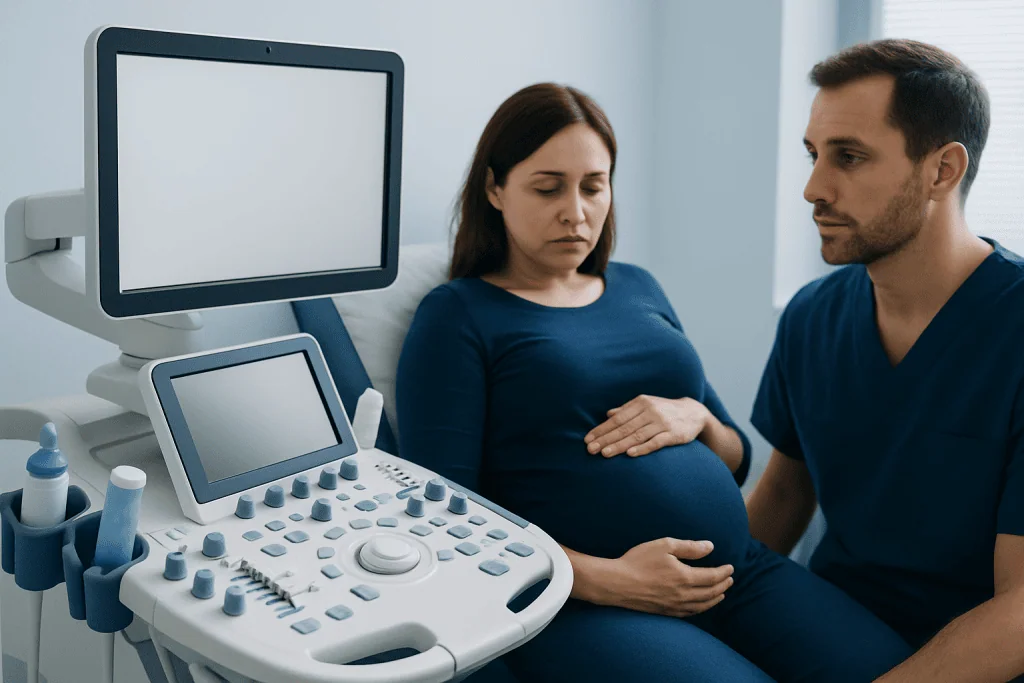
The most common sign of a chemical pregnancy is a positive pregnancy test followed by bleeding around the time of the expected period or a few days later. Some people notice that repeat home pregnancy tests become lighter over time, reflecting falling levels of human chorionic gonadotropin, or hCG.
Bleeding may be similar to a menstrual period or somewhat heavier, sometimes with small clots. Mild cramping is also common. In many cases, symptoms are physically manageable, but the emotional impact can still be significant, especially for those who were actively trying to conceive or undergoing fertility treatment.
Possible symptoms include:
- A positive home pregnancy test, often faint at first
- Vaginal bleeding soon after the positive test
- Menstrual-like cramps or lower abdominal discomfort
- A period that is later, heavier, or more painful than usual
- Pregnancy tests that become less positive over 1 to 3 days
Symptoms alone cannot confirm the cause of early bleeding. Very early normal pregnancy, miscarriage, and ectopic pregnancy can overlap at first. If pain is one-sided, severe, or associated with dizziness or fainting, prompt medical assessment is important.
Why chemical pregnancy happens: causes and risk factors

In most cases, a chemical pregnancy happens because the embryo has chromosomal abnormalities that prevent normal development. This is a common biological reason for very early pregnancy loss and usually occurs by chance. It is not caused by ordinary daily activities, exercise, work, sex, or a single stressful event.
Other factors can sometimes contribute to early pregnancy loss, although they are not present in every case. These may include hormonal problems that affect implantation or early development, structural issues in the uterus, uncontrolled thyroid disease, poorly controlled diabetes, certain clotting disorders, or increasing maternal age. Some reproductive conditions, such as endometriosis, may also be relevant in selected patients, particularly when there is a broader history of infertility or pelvic symptoms.
Chemical pregnancy can happen in spontaneous conception as well as during fertility treatment. Patients undergoing IVF treatment may detect these losses more often because hormone levels are monitored very early. Having one chemical pregnancy does not automatically indicate a fertility disorder, but repeated early losses may justify a more detailed reproductive evaluation, sometimes including assessment used in infertility treatment.
How doctors diagnose it
Diagnosis is based on the pattern of a positive pregnancy test followed by bleeding and a decline in hCG levels before a pregnancy can be visualized on ultrasound. A clinician may ask about the timing of the last menstrual period, the date of the positive test, bleeding amount, cramping, and any prior history of miscarriage, ectopic pregnancy, or fertility treatment.
Blood tests may be used to measure hCG over time. In an ongoing early pregnancy, hCG usually rises in a predictable pattern, while in a chemical pregnancy it often falls. If the pregnancy is very early, ultrasound may not show anything yet, which is why serial blood tests can be especially helpful.
The main goal of evaluation is not only to confirm early pregnancy loss but also to exclude other causes of bleeding, especially ectopic pregnancy. Depending on the symptoms and medical history, doctors may recommend pelvic examination, transvaginal ultrasound, or additional laboratory tests. If losses are recurrent, further assessment may include uterine imaging, hormone evaluation, or selected genetic and blood clotting tests.
Treatment and recovery after a chemical pregnancy
Most chemical pregnancies resolve without a procedure because the pregnancy tissue passes naturally with bleeding. Treatment is often expectant, meaning careful observation and follow-up rather than active intervention. The doctor may recommend repeating hCG levels until they return to a non-pregnant range, especially if there is any concern about ectopic pregnancy or retained tissue.
Symptom care usually includes rest as needed, hydration, and over-the-counter pain relief if a clinician says it is appropriate. Many patients recover physically within a short time, and the next menstrual period often comes within several weeks. If bleeding is unusually heavy, prolonged, or associated with fever, increasing pain, or a bad odor, medical review is needed to rule out complications.
Patients who are Rh-negative may need an injection of Rh immunoglobulin in certain circumstances, based on local practice and the doctor’s judgment. Emotional recovery also matters. Feelings can range from mild disappointment to grief, and all responses are valid. Near the end of the care journey, some patients benefit from consultation with specialists in gynecology or fertility medicine to discuss timing of future conception and whether any further testing is appropriate. Acibadem International’s multidisciplinary specialists and JCI-accredited hospitals also diagnose and treat early pregnancy loss and related reproductive health concerns for international patients.
Trying again, prevention, and self-care
After one chemical pregnancy, many people go on to have a healthy pregnancy later. There is often no specific way to prevent a single early miscarriage because many cases are caused by random chromosomal changes. Even so, general preconception health can support reproductive wellbeing and help reduce modifiable risks.
Helpful self-care steps include taking folic acid as advised by a doctor, avoiding smoking and recreational drugs, limiting alcohol when trying to conceive, and keeping chronic conditions such as thyroid disease or diabetes well controlled. Maintaining a healthy weight and reviewing medications with a clinician can also be useful before pregnancy. Patients pursuing fertility treatment should continue following their specialist’s plan closely.
When to try again depends on physical recovery, emotional readiness, and the doctor’s guidance. Some people can try to conceive again soon after the bleeding stops and hCG returns to normal, while others prefer to wait for one normal menstrual cycle. If chemical pregnancies happen repeatedly, specialist review may be recommended to look for treatable factors affecting implantation or early development.
When to seek medical care
Medical care should be sought promptly if vaginal bleeding is very heavy, such as soaking through pads quickly, or if there is severe abdominal or pelvic pain. Urgent evaluation is also important for shoulder pain, fainting, dizziness, weakness, or one-sided pelvic pain because these can be warning signs of ectopic pregnancy or significant blood loss.
Patients should also contact a doctor if they have fever, chills, foul-smelling discharge, or bleeding that continues longer than expected. Those with a history of ectopic pregnancy, tubal surgery, pelvic infection, or fertility treatment may need closer follow-up in any early pregnancy with bleeding.
Routine follow-up is a good idea after a chemical pregnancy even when symptoms are mild. It helps confirm that hCG levels are returning to normal and provides a chance to discuss emotional support, future pregnancy planning, and whether evaluation is needed for repeated losses. A qualified healthcare professional can individualize advice based on age, medical history, and fertility goals.
Frequently asked questions
Is a chemical pregnancy a real pregnancy?
Yes. A chemical pregnancy is a real pregnancy because implantation occurred and the body produced hCG, the hormone detected by pregnancy tests. The term refers to the fact that the pregnancy is identified by hormone testing before it can usually be seen on ultrasound.
How long does bleeding last with a chemical pregnancy?
Bleeding often lasts a few days, though it can vary from person to person. Some patients have bleeding similar to a normal period, while others notice a heavier flow with mild cramping. If bleeding is very heavy, prolonged, or accompanied by severe pain, medical assessment is important.
Can a chemical pregnancy affect future fertility?
Usually, no. One chemical pregnancy is common and typically does not reduce the chance of a future healthy pregnancy. However, repeated chemical pregnancies or other signs of infertility should be discussed with a gynecologist or fertility specialist.
What is the difference between a chemical pregnancy and an ectopic pregnancy?
A chemical pregnancy is an early miscarriage that occurs after implantation but before a pregnancy can usually be seen on ultrasound. An ectopic pregnancy develops outside the uterus, most often in a fallopian tube, and can become a medical emergency. Because early symptoms can overlap, doctors may use hCG testing and ultrasound to tell them apart.
How soon can someone get pregnant again after a chemical pregnancy?
Many people can conceive again soon after bleeding stops and hormone levels return to normal, but timing should be guided by a doctor. Physical recovery is often quick, yet emotional readiness is equally important. Some clinicians advise waiting until after one normal menstrual cycle, while others individualize the plan.
Does a chemical pregnancy mean IVF or fertility treatment failed permanently?
No. A chemical pregnancy during fertility treatment shows that implantation began, but the pregnancy did not continue. It can be disappointing, but it does not mean future cycles cannot succeed. The fertility team may review embryo factors, uterine factors, hormone support, and timing before the next step.
References
- American College of Obstetricians and Gynecologists
- Royal College of Obstetricians and Gynaecologists
- National Institute for Health and Care Excellence
- American Society for Reproductive Medicine
- Mayo Clinic
This article is for general information only and is not a substitute for professional medical advice. Please consult a qualified doctor about your individual situation.
Explore treatments in Turkey — costs, top hospitals & a free quote
JCI-accredited · board-certified surgeons · reply within 24h
Add us as a Preferred Source to see more of our trusted health content across Google Search, AI Overviews and Discover.