Chemotherapy for Prostate Cancer: How It Works, Results and What to Expect

Chemotherapy is usually considered for advanced, recurrent or metastatic prostate cancer rather than cancer confined to the prostate. Docetaxel is commonly used with androgen-deprivation therapy in suitable people with newly diagnosed metastatic hormone-sensitive prostate cancer.
Key Takeaways
- Chemotherapy is usually considered for advanced, recurrent or metastatic prostate cancer rather than cancer confined to the prostate.
- Docetaxel is commonly used with androgen-deprivation therapy in suitable people with newly diagnosed metastatic hormone-sensitive prostate cancer.
- For cancer that progresses despite low testosterone levels, chemotherapy may include docetaxel or cabazitaxel, depending on previous treatments and overall health.
- Treatment is delivered in cycles, with blood tests and symptom reviews used to guide timing and safety.
- Side effects are treatable and vary between individuals; fever during chemotherapy needs urgent medical advice.
- Life expectancy and treatment benefit depend strongly on cancer stage, biology, treatment response and general health.
Chemotherapy for prostate cancer is a systemic treatment that uses medicines to damage or stop the growth of cancer cells throughout the body. It is most often used for metastatic or recurrent prostate cancer, where it can help control disease, relieve cancer-related symptoms and, for selected people, improve survival.
Overview: how chemotherapy for prostate cancer works
Chemotherapy for prostate cancer uses anti-cancer medicines that circulate in the bloodstream and reach cancer cells in many parts of the body. Unlike surgery or radiation therapy, which mainly treat a defined area, chemotherapy is a systemic treatment. It may be used when cancer has spread beyond the prostate, has returned after earlier treatment, or is causing symptoms related to metastases.
Most prostate cancers depend on male hormones, especially testosterone, for growth. Hormone therapy remains central to treatment for advanced disease, but chemotherapy can add benefit in particular clinical situations. It works differently from hormone therapy by interfering with processes cancer cells need to divide and survive. The aim may be to slow growth, reduce the amount of cancer visible on scans, improve symptoms, and help people live longer.
Chemotherapy is not necessary for every person with prostate cancer. Many people with localized disease are treated with active surveillance, surgery, radiation therapy, hormone therapy, or a combination of these approaches. Treatment decisions are individualized and are best made with a urologist, medical oncologist, radiation oncologist and other relevant specialists.
Who may be a candidate for chemotherapy?
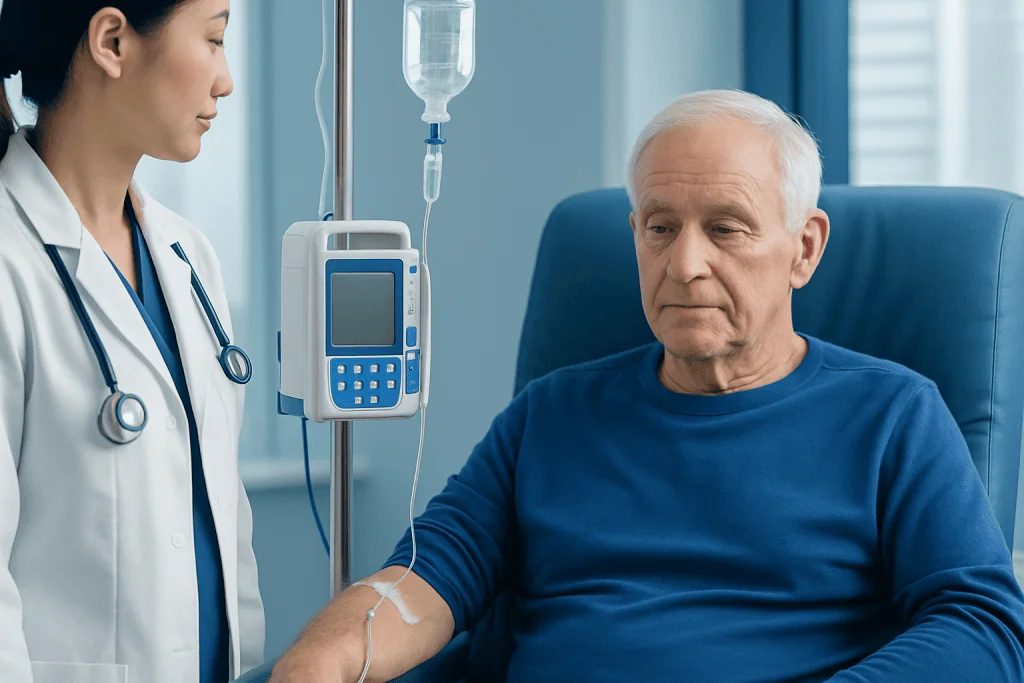
Chemotherapy is most commonly considered in metastatic prostate cancer. A person may be offered docetaxel together with androgen-deprivation therapy when metastatic hormone-sensitive prostate cancer is newly diagnosed and they are fit enough to receive it. This combination is particularly considered when disease is extensive, although the decision is based on the whole clinical picture rather than one feature alone.
It may also be used for metastatic castration-resistant prostate cancer. This means the cancer is progressing even though testosterone has been reduced to very low levels through ongoing hormone treatment. In this setting, chemotherapy can be used after, before, or alongside other systemic options, such as androgen-receptor pathway medicines, targeted treatments, radioligand therapy, or immunotherapy for selected tumors.
Before recommending treatment, the care team considers symptoms, cancer locations, prior therapies, pathology and genetic test results where appropriate, blood counts, liver function, nerve symptoms, daily activity level and personal preferences. Related treatment planning may also include prostate cancer staging and discussion of other systemic therapies.
People who are frail, have significant neuropathy, uncontrolled infection, very low blood counts, or serious organ-function problems may need a different plan, dose adjustments, or supportive care first. Not receiving chemotherapy does not mean treatment has stopped; several effective approaches may be available.
What happens during chemotherapy treatment?
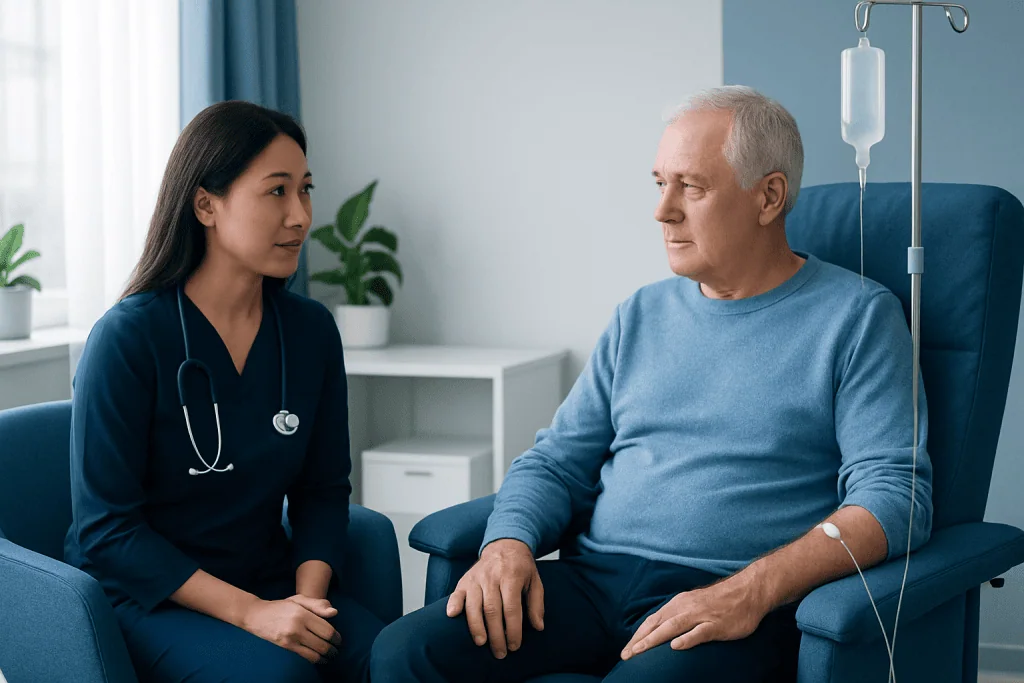
Before treatment begins, patients usually have a consultation, physical examination and baseline blood tests. Imaging may be reviewed to document where cancer is present. The oncology team discusses expected benefits, possible side effects, fertility and sexual-health concerns where relevant, medicines and supplements, and practical planning for transport, work and support at home.
For many prostate cancer regimens, chemotherapy is given intravenously at an outpatient infusion center. Medicines to reduce nausea, allergic reactions or fluid retention may be given before the chemotherapy infusion. The patient then receives the medicine through a vein or, in some cases, through a longer-term vascular access device. The infusion visit can last several hours, depending on the regimen and observation needs.
Treatment is delivered in cycles: a dose is given, followed by a planned rest period that lets normal tissues recover. A cycle is often three weeks for commonly used taxane chemotherapy, but schedules vary. Blood tests and a clinical review are generally performed before each cycle to check for low blood counts, liver changes, neuropathy and other concerns.
The team tracks response using symptoms, examination, prostate-specific antigen (PSA) trends and imaging when needed. A falling PSA can be encouraging, but it is not the only measure of benefit. Decisions to continue, pause, reduce, or change treatment are based on the complete clinical assessment.
Benefits, risks and recovery timeline
The potential benefits of chemotherapy include delaying cancer progression, reducing cancer-related pain or pressure symptoms, improving quality of life for some people, and extending survival in appropriate treatment settings. The degree of benefit differs widely. Chemotherapy does not usually cure metastatic prostate cancer, but it can be an important part of long-term disease control.
Common side effects of taxane chemotherapy can include tiredness, hair loss, nausea, appetite changes, taste changes, bowel changes, nail or skin changes, mouth soreness, muscle aches, fluid retention and numbness or tingling in the hands or feet. Chemotherapy can lower infection-fighting white blood cells and may also reduce red blood cells or platelets. Preventive medicines and supportive treatments may lower certain risks.
Recovery is usually gradual rather than immediate. Some people feel tired for several days after an infusion and more like themselves during the rest period before the next cycle; others have symptoms that build over successive cycles. Blood counts often reach their lowest point roughly one to two weeks after treatment, depending on the regimen. Most short-term effects improve after treatment ends, though nerve symptoms, fatigue and hair regrowth can take longer.
Patients should tell their care team promptly about new or worsening symptoms. A temperature of 38°C (100.4°F) or higher during chemotherapy, shaking chills, shortness of breath, chest pain, confusion, uncontrolled vomiting, severe diarrhea, unexpected bleeding, or inability to drink fluids needs urgent medical assessment.
How successful is chemo for prostate cancer?
Success depends on what chemotherapy is intended to achieve. In advanced prostate cancer, doctors usually assess success by whether treatment slows disease, reduces symptoms, shrinks or stabilizes tumors on imaging, lowers PSA in context, and helps extend life. It is not generally described as curative once prostate cancer has spread to distant organs.
Clinical trials have shown that adding docetaxel to hormone therapy can improve survival for selected people with metastatic hormone-sensitive disease. Chemotherapy can also provide meaningful control for many people with metastatic castration-resistant disease, including those whose cancer has progressed after other hormonal treatments. However, not every tumor responds in the same way, and responses may not last indefinitely.
The most appropriate measure of success is personal: whether the likely benefit outweighs the treatment burden for that individual. Regular review helps the oncology team recognize response, side effects and changing priorities early. When appropriate, treatment may be combined with pain management, bone-protecting strategies, radiation for painful metastases and supportive or palliative care.
How many rounds of chemo is normal for prostate cancer?
There is no single normal number of chemotherapy rounds for prostate cancer. A commonly used initial course of docetaxel may involve around six cycles when it is given with hormone therapy for newly diagnosed metastatic hormone-sensitive disease. In metastatic castration-resistant prostate cancer, the planned number can be different and is adjusted according to the medicine used, response, tolerance and prior treatment.
A cycle is not the same as a single day of treatment. With a three-week schedule, six cycles take about four to five months from the first infusion to the final cycle, allowing for planned intervals. Delays can happen if blood counts are low, side effects need time to settle, or an infection develops; these adjustments are common and are made to protect safety.
Some people stop earlier because the cancer progresses or side effects become too difficult, while others may receive further treatment if it remains beneficial and safe. The oncology team should explain the proposed number of cycles, what would prompt a change in plan, and which symptoms should be reported between visits.
What is the average life expectancy for people with prostate cancer?
There is no single average life expectancy that applies to everyone with prostate cancer. Prognosis varies greatly according to whether cancer is localized, regionally advanced or metastatic; how aggressive the tumor appears under the microscope; PSA level; response to treatment; age; and other health conditions. Many people with localized prostate cancer live for many years and may die from causes unrelated to the cancer.
Metastatic prostate cancer is more serious, but treatment options have expanded substantially and many people live for years with ongoing therapy and monitoring. Population survival figures can be useful for broad planning, but they cannot predict an individual outcome because they combine people with different tumor types, stages and treatments.
A doctor who knows the stage, scan findings, pathology, treatment history and overall health is best placed to discuss prognosis. It can be helpful to ask about the treatment goal, likely next steps, signs that a treatment is helping, and how symptoms and quality of life will be supported throughout care.
How long does chemo extend your life with prostate cancer?
Chemotherapy can extend life for some people with advanced prostate cancer, but the amount of added time cannot be predicted accurately for one person. In clinical studies, the survival benefit of docetaxel has varied by disease setting and patient group. Some people gain a meaningful benefit, while others may have little response or may not be able to continue treatment because of side effects.
Doctors use evidence from studies to estimate potential benefit, then tailor that discussion to the individual. They consider whether the cancer is newly metastatic or castration-resistant, how much cancer is present, whether symptoms are caused by cancer, other treatments already received, tumor biology and the person’s overall fitness.
When chemotherapy is unlikely to provide enough benefit, other cancer-directed treatments or symptom-focused care may be preferable. Supportive care is valuable at every stage and can address pain, fatigue, emotional wellbeing, nutrition, sleep and practical needs alongside cancer treatment.
When to seek medical care
Anyone with known prostate cancer should contact their care team if new symptoms develop, including persistent bone pain, increasing urinary difficulty, blood in the urine, unexplained weight loss, worsening fatigue, new weakness or numbness, or pain that is not controlled by the current plan. New severe back pain with leg weakness, numbness around the groin, or loss of bladder or bowel control requires emergency assessment because it can indicate pressure on the spinal cord.
During chemotherapy, urgent advice is needed for fever of 38°C (100.4°F) or higher, chills, signs of infection, breathlessness, chest pain, severe allergic symptoms, uncontrolled vomiting or diarrhea, sudden confusion, or unusual bruising or bleeding. Patients should not wait for the next scheduled appointment if these occur.
Regular follow-up is essential even when a person feels well. Acibadem International’s multidisciplinary specialists and JCI-accredited hospitals diagnose and treat prostate cancer for international patients, coordinating medical oncology, urology, radiation oncology and supportive services when chemotherapy is being considered.
Frequently asked questions
Is chemotherapy used for early prostate cancer?
Chemotherapy is not routinely used for prostate cancer that is limited to the prostate. Localized cancer is more often managed with active surveillance, surgery, radiation therapy, or selected hormone-based approaches. Chemotherapy is mainly used when cancer is advanced, recurrent or metastatic.
What chemotherapy drugs are used for prostate cancer?
Docetaxel is a commonly used chemotherapy medicine for advanced prostate cancer. Cabazitaxel may be an option for some people whose cancer has progressed after docetaxel. The best medicine and sequence depend on prior treatments, health status and tumor features.
Will chemotherapy make PSA go down?
Chemotherapy may lower PSA when the cancer responds, but PSA is only one part of monitoring. Doctors also assess symptoms, physical findings, blood results and imaging. A PSA change should always be interpreted by the treating oncology team.
Can a person continue hormone therapy during chemotherapy?
Yes. People with metastatic prostate cancer generally continue androgen-deprivation therapy even when chemotherapy is added. This keeps testosterone at low levels while chemotherapy targets cancer cells through a different mechanism.
Can chemotherapy side effects be prevented?
Some side effects can be reduced with preventive medicines, careful monitoring and early treatment of symptoms. Infection risk, nausea and certain allergic reactions can often be managed proactively. However, no strategy removes every risk, so prompt reporting of symptoms remains important.
What should someone do if they develop a fever during chemotherapy?
A fever during chemotherapy can be a sign of infection when white blood cell counts are low. The person should contact their oncology team urgently or follow the emergency instructions they have been given, especially with a temperature of 38°C (100.4°F) or higher. They should not self-treat a fever without seeking clinical advice.
References
- National Cancer Institute
- European Association of Urology
- American Cancer Society
- American Society of Clinical Oncology
- National Comprehensive Cancer Network
This article is for general information only and is not a substitute for professional medical advice. Please consult a qualified doctor about your individual situation.
Prostate Cancer in Turkey — costs, top hospitals & a free quote
JCI-accredited · board-certified surgeons · reply within 24h
Add us as a Preferred Source to see more of our trusted health content across Google Search, AI Overviews and Discover.

Medical Oncology Department
Medical treatment of cancer with chemotherapy, immunotherapy and targeted therapies under a multidisciplinary tumor board.
60 specialists in this unit