Child Bearing Hips — Explained by Medical Evidence, Not Myths

Visible hip width does not reliably indicate the dimensions of the bony birth canal. A vaginal birth depends on the relationship between the baby, the pelvis and the progress of labour, not on body shape alone.
Key Takeaways
- Visible hip width does not reliably indicate the dimensions of the bony birth canal.
- A vaginal birth depends on the relationship between the baby, the pelvis and the progress of labour, not on body shape alone.
- Most people do not need pelvic measurements or imaging to predict the type of birth they will have.
- Pregnancy-related pelvic discomfort is common and can often be managed with tailored support, movement and medical advice.
- Regular prenatal care helps clinicians identify concerns and plan safe, individualised care.
The phrase “child bearing hips” is a cultural expression, not a medical diagnosis or a reliable way to predict whether someone can give birth vaginally. Hip width seen from the outside does not accurately show the size or shape of the internal pelvis, and childbirth outcomes depend on many changing factors.
What Does “Child Bearing Hips” Mean?
“Child bearing hips” is a common phrase often used to describe a person with hips that look broad from the outside. It is usually intended to suggest that a wider body frame makes pregnancy or vaginal birth easier. However, this idea is not supported as a reliable medical rule. External hip width includes soft tissues, muscles and fat distribution, which do not directly show the dimensions of the pelvis through which a baby is born.
In medicine, clinicians assess childbirth based on the pregnant person’s overall health, the baby’s growth and position, the course of labour, and any pregnancy-related conditions. A person with narrow-looking hips may have an uncomplicated vaginal birth, while a person with wider-looking hips may need assistance or a caesarean birth for reasons unrelated to their body shape.
The term can also carry unhelpful assumptions about appearance, fertility or reproductive ability. A person’s hip shape does not determine whether they can become pregnant, carry a pregnancy safely or be a good candidate for vaginal delivery. Reproductive health should be considered individually and respectfully rather than judged by physical appearance.
External Hips and the Internal Pelvis Are Different
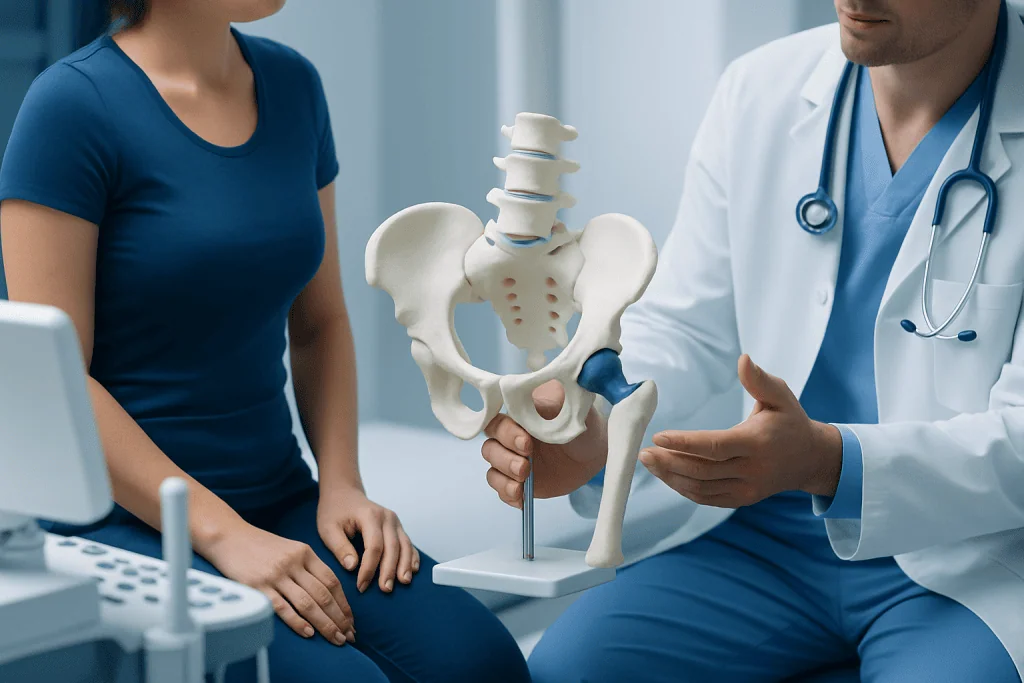
The hips seen in a mirror are mainly the outer contours of the pelvis and surrounding tissues. Their appearance is influenced by inherited body proportions, muscle mass, posture, body weight and where the body stores fat. These features can vary greatly among healthy people and do not provide a dependable estimate of the internal bony pelvis.
The internal pelvis is a ring of bones that includes the sacrum at the back, the pelvic side walls and the pubic bones at the front. During birth, the baby passes through different levels of this space. The relevant question is not whether hips appear wide, but whether the baby can move through the pelvis during labour. This depends on several dimensions and on the way the baby rotates and flexes while descending.
Pregnancy also brings normal physical adaptations. Hormonal changes can make ligaments around the pelvis more flexible, and posture changes as the uterus grows. These adaptations may contribute to a feeling of pressure or altered movement, but they do not mean that the bones visibly “open” or that a person’s outer hip width predicts birth outcomes.
What Actually Influences Vaginal Birth?
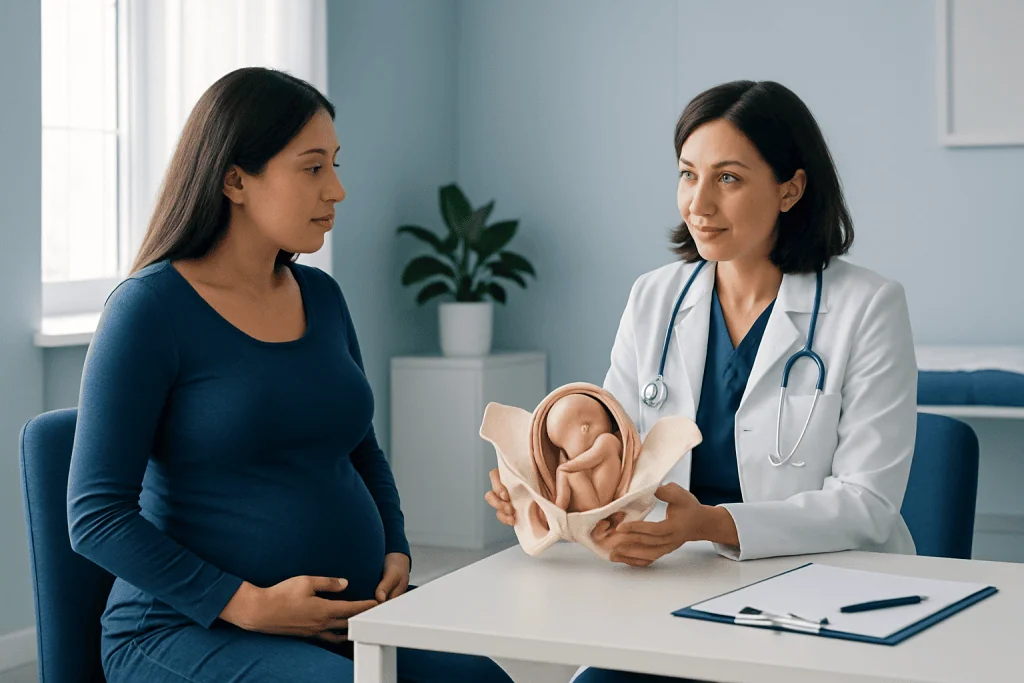
Vaginal birth is often described clinically as an interaction among the “passage,” the “passenger” and the forces of labour. The passage refers to the pelvis and soft tissues. The passenger is the baby, including its size, head position and presentation. The forces are the uterine contractions and the pregnant person’s pushing efforts during the second stage of labour.
A baby positioned head-down with the head well flexed is generally better aligned for vaginal birth than a baby positioned breech, sideways or with the head turned in a less favourable direction. Babies also commonly change position during labour. The size of the baby relative to the pelvis matters more than size alone, and estimated fetal weight before birth is not perfectly precise.
Labour patterns are important as well. Some labours progress steadily, while others slow or stop because contractions are not strong or coordinated enough, the cervix is not dilating as expected, or the baby is not descending. First births, prior births, induction of labour, epidural pain relief, maternal exhaustion and medical conditions can all affect the timing and management of labour. These factors cannot be predicted by looking at hip width.
When a vaginal birth is not progressing safely, the maternity team may recommend steps such as changing position, supporting contractions, using assisted vaginal delivery in selected situations, or performing a caesarean birth. These decisions are based on real-time clinical assessment and the wellbeing of both parent and baby.
Can Pelvic Shape Be Measured Before Labour?
Historically, clinicians sometimes classified pelvic shapes into categories and used manual measurements, known as clinical pelvimetry, to estimate the likelihood of vaginal birth. Modern obstetric care recognises important limitations in this approach. Pelvic shape varies along a spectrum, measurements may not reflect how labour will unfold, and the baby’s position can change significantly during birth.
Routine pelvic measurement or imaging to predict whether a person can deliver vaginally is generally not recommended for uncomplicated pregnancies. Research has not shown that routine pelvimetry reliably improves birth outcomes. In particular, a scan or examination before labour cannot fully reproduce the dynamic changes that occur as contractions, maternal position and fetal rotation influence descent.
Imaging or specialist assessment may sometimes be useful in specific circumstances, such as after certain pelvic fractures or surgery, with known skeletal conditions, or when a clinician needs to investigate another medical concern. In these situations, the care team considers the person’s history, examination findings and pregnancy details rather than relying on a single measurement.
Regular antenatal appointments remain the most useful way to monitor pregnancy. These visits allow clinicians to assess fetal growth, presentation later in pregnancy, blood pressure, symptoms and other factors that may influence a birth plan.
Hip and Pelvic Pain During Pregnancy
Having hip pain in pregnancy does not mean that the pelvis is too small, too large or unsuitable for childbirth. Pelvic girdle pain is relatively common in pregnancy and may be felt at the front of the pelvis, lower back, buttocks, groin or thighs. It can make walking, climbing stairs, standing on one leg, turning in bed or getting in and out of a car uncomfortable.
Symptoms may develop as pregnancy changes posture and load through the pelvis. Previous pelvic pain, prior injury, strenuous physical demands and differences in joint mobility may play a role for some people. Pelvic pain can be distressing, but it is often manageable with appropriate support and does not by itself mean that a caesarean birth will be needed.
A midwife, obstetrician, physiotherapist or other qualified clinician can assess symptoms and suggest a personalised plan. This may include activity pacing, advice on movement and sleep positions, supportive footwear, gentle strengthening exercises or a pelvic support belt when appropriate. Pain medicines should only be used according to advice from a pregnancy care professional.
Staying as comfortably active as possible is often helpful, but activities should be adjusted if they worsen pain. High-impact movement, heavy lifting and positions that cause sharp discomfort may need to be limited. Resting between activities and keeping the knees together when getting in and out of bed or a car may reduce strain for some people.
Supporting a Healthy Pregnancy and Birth Plan
There is no exercise, diet or body-shaping approach that can create “better” child bearing hips. Trying to change hip appearance is not a meaningful way to prepare for birth. Instead, people can focus on general pregnancy health, including attending prenatal appointments, eating a balanced diet, taking recommended supplements, avoiding tobacco and alcohol, and following individual guidance about physical activity.
Childbirth education can help expectant parents understand labour, comfort measures, pain relief options, possible interventions and recovery. Discussing preferences with the maternity team can be useful, while remembering that a birth plan should remain flexible. The safest approach may change if new information arises during pregnancy or labour.
Positions used in labour can be adapted for comfort and clinical needs. Walking, upright positions, side-lying, hands-and-knees and supported squatting may be options for some people, depending on the stage of labour and monitoring needs. The maternity team can help guide movement, particularly when an epidural, high-risk pregnancy or specific complication is present.
Acibadem International’s multidisciplinary obstetric, maternal-fetal medicine and neonatal specialists support international patients with individual pregnancy and birth planning in JCI-accredited hospitals. A qualified maternity professional can explain which options are appropriate for each pregnancy.
When to Seek Medical Care
People who are pregnant should contact their maternity team promptly for vaginal bleeding, leaking fluid, regular painful contractions before term, a marked reduction in fetal movement, severe or persistent abdominal pain, fever, severe headache, vision changes, sudden swelling of the face or hands, chest pain or shortness of breath. These symptoms do not always indicate a serious problem, but they need timely assessment.
Medical advice is also appropriate for hip, pelvic or back pain that is severe, persistent, follows a fall or injury, causes difficulty walking, or is accompanied by numbness, weakness, fever or problems controlling the bladder or bowel. Early support can improve comfort and help rule out less common causes of pain.
Before pregnancy, anyone with a history of major pelvic injury, hip surgery, a congenital skeletal condition or a previous complicated birth can discuss this history with an obstetrician or family doctor. Most people with these histories can receive an individual assessment and make an informed plan for pregnancy and delivery.
Frequently asked questions
Do wide hips make childbirth easier?
Not necessarily. The visible width of the hips does not reliably reflect the internal dimensions of the pelvis or predict how labour will progress. Fetal position, the baby’s size relative to the pelvis, contractions and many other factors are more relevant.
Can someone with narrow hips have a vaginal birth?
Yes. Many people with narrow-looking hips have uncomplicated vaginal births. Outer body shape is not a dependable indicator of the internal pelvis or a person’s ability to give birth vaginally.
Are child bearing hips a sign of fertility?
No. Hip shape is not a medical sign of fertility, ovulation or the ability to become pregnant. Fertility depends on many factors involving reproductive anatomy, hormones, age, health and, where relevant, sperm factors.
Will a doctor measure my pelvis during pregnancy?
Routine pelvic measurements are not usually needed in uncomplicated pregnancy because they do not accurately predict the mode of birth. A clinician may recommend a specific assessment when there is a relevant medical history or another clinical reason.
Does pelvic pain mean I will need a caesarean birth?
Usually, no. Pelvic girdle pain can be uncomfortable, but it does not automatically mean that vaginal birth is unsafe or impossible. The maternity team can assess symptoms and discuss comfort measures and delivery planning.
Can exercise widen the pelvis for childbirth?
Exercise cannot permanently widen the bony pelvis in preparation for birth. However, suitable activity may support general fitness, mobility, mood and comfort during pregnancy. A clinician or pregnancy-trained physiotherapist can advise on safe options for an individual pregnancy.
References
- American College of Obstetricians and Gynecologists
- World Health Organization
- Royal College of Obstetricians and Gynaecologists
- National Institute for Health and Care Excellence
- International Federation of Gynecology and Obstetrics
This article is for general information only and is not a substitute for professional medical advice. Please consult a qualified doctor about your individual situation.
Explore treatments in Turkey — costs, top hospitals & a free quote
JCI-accredited · board-certified surgeons · reply within 24h
Add us as a Preferred Source to see more of our trusted health content across Google Search, AI Overviews and Discover.