Child Development: An Evidence-Based Guide for Patients

Child development includes physical, cognitive, language, social, and emotional growth. Development follows a broad pattern, but the timing of milestones can vary from child to child.
Key Takeaways
- Child development includes physical, cognitive, language, social, and emotional growth.
- Development follows a broad pattern, but the timing of milestones can vary from child to child.
- A delay in one area does not always mean a serious problem, but it should be assessed if concerns persist.
- Regular checkups, responsive caregiving, sleep, nutrition, play, and hearing and vision care all support healthy development.
- Early evaluation and intervention can improve outcomes when developmental concerns are present.
Child development describes how children grow and gain skills in movement, language, learning, behavior, and social connection over time. Every child develops at an individual pace, but knowing typical patterns can help families support healthy progress and recognize when an evaluation may be useful.
Overview: what child development means
Child development is the process through which a child gains skills in movement, communication, thinking, behavior, and relationships from infancy through adolescence. It includes more than height and weight. It also reflects how the brain and body work together as children learn to interact with the world around them.
Development usually progresses in recognizable sequences, such as lifting the head before sitting, or babbling before using words. However, there is a wide range of normal. Some children walk or talk earlier than others, and temporary differences do not always indicate a medical problem.
What matters most is steady progress over time and the child’s overall pattern of learning and functioning. Pediatricians look at several developmental areas together rather than focusing on a single skill in isolation. This broader view helps distinguish normal variation from signs that may need closer attention.
For families, the goal is not to compare one child with another. It is to understand typical developmental pathways, provide a supportive environment, and seek advice when a child seems to stop gaining skills, loses abilities, or falls behind across one or more areas.
The main areas of child development
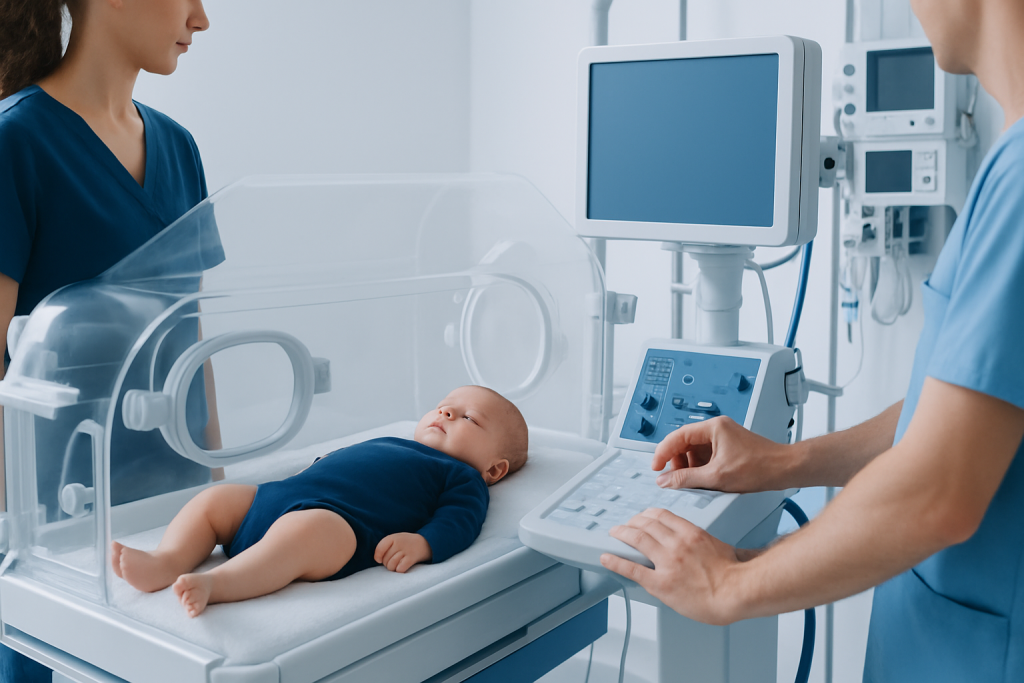
Doctors and child development specialists often describe development in several domains. Gross motor skills involve large body movements such as rolling, sitting, walking, running, and jumping. Fine motor skills involve smaller movements such as grasping objects, stacking blocks, drawing, or using utensils.
Language development includes both receptive language, which is understanding words and instructions, and expressive language, which is using sounds, gestures, and words to communicate. Cognitive development refers to problem-solving, attention, memory, and learning. Social and emotional development includes attachment, play, self-regulation, and how a child responds to other people.
These domains are connected. For example, hearing problems can affect language learning, and chronic sleep problems can influence behavior and attention. Emotional stress, limited opportunities for play, or ongoing medical issues may also affect how a child develops.
Families may notice that a child is advanced in one area and slower in another. This can still be within a typical range. Still, if delays affect everyday function or appear in several domains at the same time, a structured developmental assessment can help clarify what support is needed.
Developmental milestones: what is typical and what varies
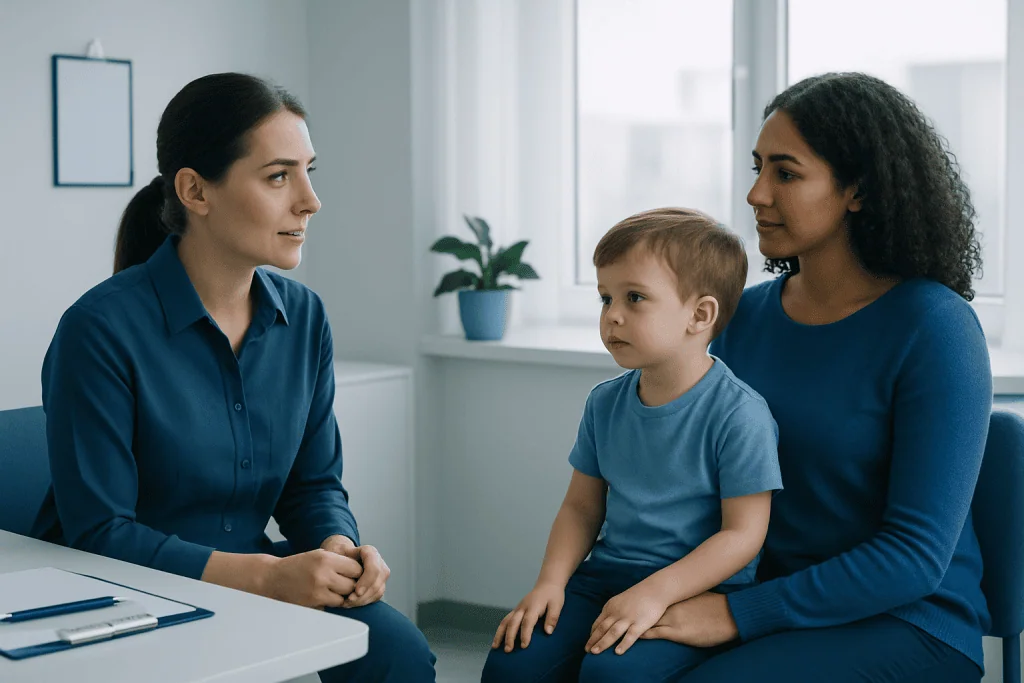
Developmental milestones are skills most children achieve within a general age range. In the first year, common milestones include smiling socially, rolling, sitting, babbling, responding to familiar voices, and beginning to stand with support. In toddlerhood, many children start walking, pointing, using words, following simple instructions, and showing interest in pretend play.
During the preschool years, children usually build longer sentences, improve coordination, take part in more complex play, and begin early problem-solving and social skills. School-age development includes increasing independence, attention, academic learning, emotional regulation, and peer relationships. Adolescents continue to develop reasoning, identity, and self-management skills.
Milestones are guides, not strict deadlines. A child may skip crawling and still walk normally, or may be physically active but slower to speak. Cultural environment, multilingual exposure, temperament, opportunities for play, and minor differences in maturation can all influence the timing of skills.
What raises concern is not simply being “late” by a small margin, but a pattern such as very limited eye contact, not responding to sounds, loss of previously learned words, inability to use one side of the body normally, or a clear gap in progress compared with expected development. In such cases, a pediatrician may suggest screening or referral to specialists.
What can affect child development
Child development is shaped by both biology and environment. Genetics influence growth, learning style, and vulnerability to some developmental conditions. Pregnancy and birth factors, including prematurity, low birth weight, infections, or lack of oxygen around birth, may also affect early development in some children.
Medical conditions can play a role. Hearing loss may delay speech, vision problems may affect learning and coordination, and chronic illnesses can influence energy, behavior, and participation in play. Neurodevelopmental conditions such as autism or attention-related difficulties can affect communication, social interaction, and daily function in different ways from child to child.
Environment matters greatly as well. Responsive caregiving, talking, reading, play, good nutrition, and safe housing support healthy development. In contrast, severe stress, neglect, exposure to toxins, inadequate sleep, or limited stimulation can interfere with learning and emotional regulation.
It is important not to assume that a developmental delay has one simple cause. Often, careful assessment is needed to identify contributing factors. Some children have temporary delays, while others benefit from longer-term support from pediatric, therapy, educational, or behavioral professionals.
How developmental concerns are evaluated
Assessment usually begins with a detailed discussion of the child’s history. A clinician may ask about pregnancy, birth, feeding, sleep, behavior, medical problems, family history, language exposure, school performance, and the age when certain skills appeared. Parents’ observations are an essential part of this process.
A physical and neurological examination helps identify signs related to muscle tone, coordination, reflexes, growth, hearing, vision, or other medical issues. Standardized developmental screening tools may be used during routine well-child visits. If concerns remain, the child may be referred for a more comprehensive evaluation.
Depending on the pattern of concern, testing may include hearing and vision assessments, speech and language evaluation, psychological or educational testing, or imaging when clinically indicated. In some cases, referral for pediatric neurology evaluation is helpful, especially when delays are global, skills are lost, or seizures or abnormal movements are suspected.
If social communication differences are present, clinicians may consider assessment for autism spectrum disorder. If a child has difficulty with movement, posture, or muscle control, input from pediatric rehabilitation specialists may support both diagnosis and function. The aim is not to label a child too quickly, but to understand strengths, needs, and the most appropriate next steps.
Support and treatment options
Treatment depends on the cause and the child’s specific needs. For many children, the most effective approach is early intervention focused on practical skills. This may include speech and language therapy, occupational therapy, physical therapy, behavioral support, or educational services tailored to the child’s developmental profile.
When an underlying medical issue is identified, treatment may improve development indirectly. Examples include managing hearing problems, correcting vision issues, treating sleep disorders, addressing nutritional deficiencies, or controlling seizures. Some children benefit from coordinated care involving pediatrics, neurology, psychology, and rehabilitation.
Family involvement is central. Parents and caregivers often receive guidance on how to encourage communication, play, motor skills, routines, and emotional regulation at home. Progress is usually best when therapy goals are carried into daily life in simple, consistent ways.
Children with more complex needs may be referred for child and adolescent mental health support or other specialist services. Near the end of the care pathway, some families also seek multidisciplinary assessment at international centers; Acibadem International’s JCI-accredited hospitals and pediatric specialists provide diagnosis and treatment planning for children with developmental concerns.
How families can support healthy child development
Healthy development is supported by everyday routines and relationships. Talking, reading, singing, and playing with a child from infancy help build language, attention, and social connection. Simple back-and-forth interaction, such as naming objects or responding to gestures and sounds, strengthens learning.
Physical activity and play are also important. Floor play for infants, outdoor activity for toddlers, and age-appropriate games for older children help motor development, balance, coordination, and confidence. Limiting passive screen time and prioritizing sleep can also improve behavior, attention, and self-regulation.
Good nutrition supports both body and brain development. Regular meals, breastfeeding when possible, iron-rich foods, and attention to feeding difficulties all matter. Routine healthcare, including vaccination, hearing checks, vision care, and growth monitoring, can help identify issues early.
Parents do not need to create a perfect environment. Warm, responsive care and consistent routines are often more important than expensive toys or highly structured activities. If concerns arise, early discussion with a pediatrician is more helpful than waiting to see whether problems disappear on their own.
- Read and talk with the child every day.
- Encourage play, movement, and social interaction.
- Protect sleep routines and balanced nutrition.
- Attend regular well-child visits and recommended screenings.
- Ask for help early if skills are not progressing.
When to seek medical care
Families should seek medical advice if a child is not meeting expected milestones, especially if the concern is clear and persistent. It is also important to seek evaluation if a child loses skills that were previously present, such as words, eye contact, walking, or self-care abilities. Regression is an important sign that should not be ignored.
Medical review is also appropriate if there are concerns about hearing, vision, unusual stiffness or floppiness, poor feeding, limited response to people, repetitive behaviors that interfere with daily life, or major difficulties at school or in social situations. Some concerns may be mild, but a clinician can help determine whether monitoring or further assessment is best.
Urgent medical care is needed if developmental concerns are accompanied by seizures, significant head injury, sudden weakness, severe lethargy, breathing difficulty, or other acute symptoms. In these situations, the priority is prompt medical assessment rather than routine developmental follow-up.
Parents often worry about overreacting, but asking questions early is appropriate. Developmental assessment is not only for severe problems. It is a practical way to understand a child’s needs and, when necessary, begin support at the stage when it can be most helpful.
Frequently asked questions
What is child development?
Child development is the process by which children gain physical, language, thinking, social, and emotional skills over time. It begins before birth and continues through adolescence, with progress shaped by biology, health, relationships, and environment.
Do all children reach milestones at the same age?
No. Milestones happen within broad age ranges, and some healthy children develop earlier or later than others. What matters most is steady progress and whether the child is learning new skills over time.
What is a developmental delay?
A developmental delay means a child is taking longer than expected to gain skills in one or more areas, such as speech, movement, learning, or social interaction. A delay can be temporary or may reflect an underlying medical or developmental condition, so assessment is useful when concerns persist.
Can bilingual children have later speech milestones?
Children exposed to more than one language may divide their words across languages, which can make vocabulary appear smaller in only one language. Bilingual exposure does not cause a language disorder, but if communication is limited in all languages, a professional evaluation may still be needed.
When should parents worry about child development?
Parents should seek advice if a child is not progressing, seems much less advanced than expected, or loses skills already learned. Concerns about hearing, vision, muscle tone, social connection, behavior, or school function also deserve medical review.
How are developmental problems treated?
Treatment depends on the cause and may include speech therapy, occupational therapy, physical therapy, educational support, or medical care for underlying conditions. Early intervention is often very effective because it focuses on building practical skills during important stages of brain development.
References
- American Academy of Pediatrics
- Centers for Disease Control and Prevention
- World Health Organization
- National Institute of Child Health and Human Development
- UNICEF
This article is for general information only and is not a substitute for professional medical advice. Please consult a qualified doctor about your individual situation.
Explore treatments in Turkey — costs, top hospitals & a free quote
JCI-accredited · board-certified surgeons · reply within 24h
Add us as a Preferred Source to see more of our trusted health content across Google Search, AI Overviews and Discover.

More from the Health Library

Histology: An Evidence-Based Guide for Patients

Fenugreek: What Patients Need to Know

Gray Matter: What Patients Need to Know

Intracranial Pressure: An Evidence-Based Guide for Patients

Presbyopia: What Patients Need to Know