Presbyopia: What Patients Need to Know

Presbyopia is the gradual loss of the eye’s ability to focus on nearby objects, usually starting after age 40. Common signs include needing to hold reading material farther away, eye strain, and difficulty seeing in dim light.
Key Takeaways
- Presbyopia is the gradual loss of the eye’s ability to focus on nearby objects, usually starting after age 40.
- Common signs include needing to hold reading material farther away, eye strain, and difficulty seeing in dim light.
- An eye exam can confirm presbyopia and check for other causes of vision changes.
- Treatment options include reading glasses, prescription lenses, contact lenses, and some laser or lens-based procedures.
- Sudden vision changes, eye pain, flashes, or loss of vision need prompt medical assessment.
Presbyopia is a common age-related change in vision that makes close-up tasks, such as reading or using a phone, harder over time. It is not a disease, and in most cases it can be managed effectively with simple vision correction or selected procedures.
Overview: what presbyopia means
Presbyopia is a normal age-related change in the eyes that reduces the ability to focus on nearby objects. Many people first notice it when reading small print becomes harder, especially in low light, or when they start holding a book or phone farther away to see clearly. Although it can feel sudden, presbyopia usually develops gradually over several years.
This change happens because the natural lens inside the eye becomes less flexible with age. When the lens cannot change shape as easily, the eye has more difficulty focusing up close. Presbyopia can affect people who have never needed glasses, as well as those who already have nearsightedness, farsightedness, or astigmatism.
Presbyopia is not the same as farsightedness, even though both can affect near vision. Farsightedness relates to the shape of the eye and may be present earlier in life, while presbyopia is mainly linked to aging. The good news is that presbyopia is very common and there are several reliable ways to manage it.
Symptoms and everyday signs
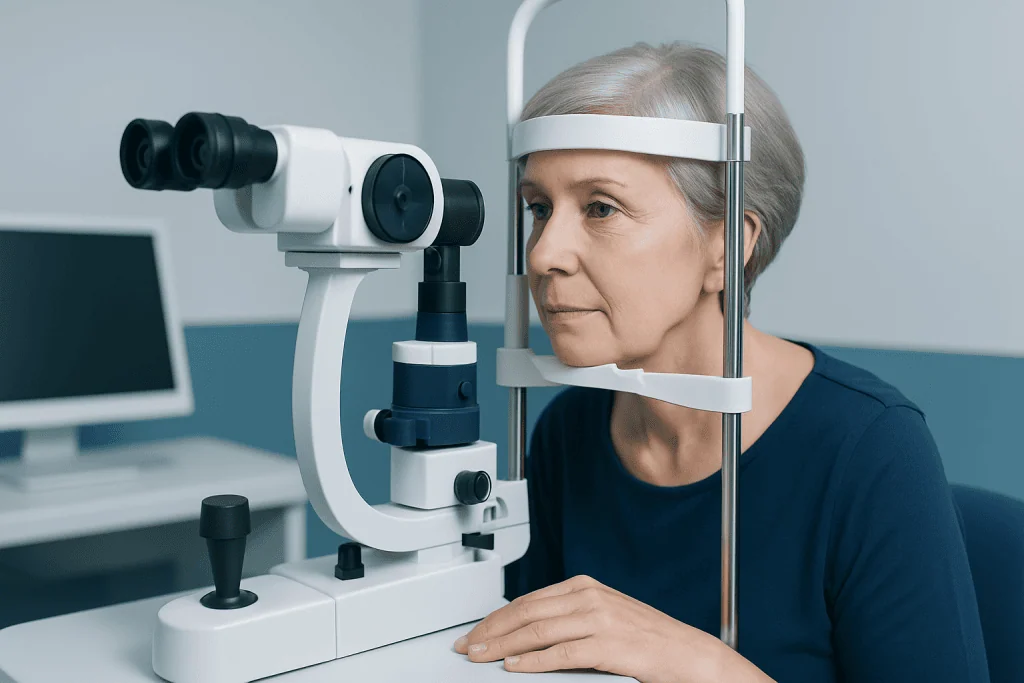
The most common symptom of presbyopia is blurry vision when looking at things up close. This may affect reading, sewing, checking labels, applying makeup, or using a smartphone. People often notice that moving an object farther from the face helps bring it into focus.
Other symptoms can include headaches, eye fatigue, and discomfort after prolonged close work. Some people feel that their eyes tire more quickly than before, particularly at the end of the day. Dim lighting may make the problem more noticeable because the eyes need to work harder to focus.
Presbyopia often develops slowly, so people may adapt without realizing it at first. Common clues include:
- Needing brighter light for reading
- Holding books, menus, or phones at arm’s length
- Blurred near vision that improves with distance
- Eye strain during computer or close-up work
- Frequent headaches after reading
These symptoms are usually manageable, but they can overlap with other eye conditions. A formal eye examination is the best way to confirm the cause.
Why presbyopia happens and who is affected

Presbyopia develops as part of the natural aging process. In a younger eye, the lens changes shape easily to focus on objects at different distances. Over time, the lens becomes firmer and less elastic, and the muscles involved in focusing may also become less effective. As a result, near focusing becomes more difficult.
Most adults begin to notice symptoms sometime after age 40, though the exact timing varies. People who do a lot of close-up work may become aware of the change earlier, while others notice it later. Presbyopia progresses gradually and may continue to change until around the mid-60s.
Certain factors can make near-vision problems seem more noticeable. These include poor lighting, prolonged screen use, eye fatigue, and preexisting refractive errors such as myopia or hyperopia. Some medications and health conditions can also affect focusing ability, so persistent or unusual symptoms should be discussed with an eye doctor rather than assumed to be only age-related.
How doctors diagnose presbyopia
Presbyopia is diagnosed during a comprehensive eye exam. The eye specialist will ask about symptoms, daily visual demands, current glasses or contact lens use, and any history of eye disease or other medical conditions. This conversation helps determine whether the symptoms fit typical presbyopia or suggest another issue.
The examination usually includes checking visual acuity at distance and near, measuring refractive error, and testing how the eyes focus. The doctor may also examine the health of the eye with special instruments and assess whether there are signs of cataracts, glaucoma, retinal problems, or dry eye that could contribute to visual complaints.
This step matters because not every case of near blur is due only to presbyopia. For example, cataracts and other age-related eye problems can affect vision in different ways. In some patients, further assessment may be needed to rule out cataracts or other conditions before choosing the most suitable treatment plan.
Treatment options for clearer near vision
Treatment for presbyopia depends on a person’s vision needs, lifestyle, eye health, and preferences. The simplest option is reading glasses, which can be bought over the counter for some people or prescribed for more precise correction. Prescription eyeglasses may be single-vision reading lenses or multifocal designs such as bifocals, trifocals, or progressive lenses.
Contact lenses are another option for some patients. These may include multifocal contact lenses or monovision correction, where one eye is adjusted more for distance and the other for near tasks. Contact lenses are not ideal for everyone, but they can work well when fitted and monitored properly by an eye care professional.
Some people also consider procedural treatment. Depending on eye structure, refractive status, and overall eye health, options may include laser eye surgery or lens-based approaches such as smart lens surgery. If presbyopia is present along with a cloudy natural lens, cataract surgery may improve vision and may also offer options to reduce dependence on glasses. A specialist can explain the expected benefits and limitations of each approach.
No single treatment is best for everyone. Some patients prefer the flexibility of glasses, while others prioritize reduced reliance on eyewear. Careful discussion is important because each option has trade-offs in convenience, cost, adaptation time, and visual quality at different distances.
Self-care, adaptation, and protecting eye health
Although presbyopia cannot be prevented completely, small adjustments can make day-to-day vision more comfortable. Better lighting is often one of the most helpful changes, especially for reading and detailed tasks. Taking regular breaks during close work may also reduce eye strain, particularly for people who spend long hours on screens.
It also helps to keep prescriptions up to date. Using old glasses can increase visual effort and headaches, even if the change seems minor. People who already wear glasses for other refractive errors may benefit from discussing whether progressive lenses or another updated prescription design would better match work and home activities.
General eye health remains important with age. Sensible habits include not smoking, managing conditions such as diabetes or high blood pressure, wearing UV-protective sunglasses outdoors, and scheduling routine eye examinations. Presbyopia itself is common and manageable, but regular exams also help detect less obvious eye disease early.
When to seek medical care
Gradual near-vision blur is typical of presbyopia, but some symptoms need quicker evaluation. A person should seek medical care if vision changes suddenly, one eye becomes much blurrier than the other, or there is a noticeable loss of side vision. Eye pain, redness, flashes of light, new floaters, double vision, or a curtain-like shadow across vision should also be assessed promptly.
Medical review is also important if reading glasses that once worked no longer help, or if headaches and eye strain become frequent. These problems may still be related to presbyopia, but they can also point to another eye condition or an outdated prescription. Early assessment can help prevent discomfort and identify issues that may need different treatment.
For international patients who need evaluation and management, Acibadem International’s multidisciplinary specialists and JCI-accredited hospitals provide diagnosis and treatment for common eye conditions, including age-related vision changes.
Frequently asked questions
Is presbyopia the same as farsightedness?
No. Presbyopia is an age-related loss of near focusing ability, while farsightedness is usually related to the shape of the eye and may be present earlier in life. A person can have one or both conditions at the same time.
At what age does presbyopia usually start?
Many people begin to notice presbyopia after age 40, although the exact timing varies. Symptoms often develop gradually and may become more noticeable over several years, especially in dim light or during prolonged reading.
Can presbyopia be prevented?
Presbyopia is a normal part of aging and cannot usually be prevented completely. However, regular eye exams, good lighting, and updated vision correction can help reduce strain and keep vision as comfortable as possible.
Will reading glasses make my eyes weaker?
No. Reading glasses do not weaken the eyes or make presbyopia progress faster. They simply compensate for the eye’s reduced ability to focus up close and can make near tasks more comfortable.
Can contact lenses help with presbyopia?
Yes, some people do well with multifocal contact lenses or monovision correction. An eye care professional can advise whether contacts are suitable based on eye health, tear quality, and visual needs.
Is surgery an option for presbyopia?
For selected patients, surgery may be an option. Laser or lens-based procedures can reduce dependence on glasses in some cases, but suitability depends on age, prescription, eye anatomy, and overall eye health.
References
- American Academy of Ophthalmology
- National Eye Institute
- American Optometric Association
- Mayo Clinic
- National Health Service
This article is for general information only and is not a substitute for professional medical advice. Please consult a qualified doctor about your individual situation.
Explore treatments in Turkey — costs, top hospitals & a free quote
JCI-accredited · board-certified surgeons · reply within 24h
Add us as a Preferred Source to see more of our trusted health content across Google Search, AI Overviews and Discover.

More from the Health Library

Related Specialists
Prof. Dr. Abdullah Büyükçelik
Medical Oncology
Assoc. Prof. Dr. Nuri Peker
Gynecology & Obstetrics
Assoc. Prof. Dr. Mehmet Sürmeli
Otorhinolaryngology
Dr. Ömer Al
Emergency Service