Childhood Eczema: Itching, Flare Triggers, and Skin Care Basics

Childhood eczema is a long-term inflammatory skin condition that often comes and goes in flares. Dry skin and itching are common, and scratching can worsen irritation and raise the risk of skin infection.
Key Takeaways
- Childhood eczema is a long-term inflammatory skin condition that often comes and goes in flares.
- Dry skin and itching are common, and scratching can worsen irritation and raise the risk of skin infection.
- Daily moisturizing and gentle bathing are central parts of eczema care.
- Common triggers include soaps, heat, sweat, rough fabrics, and infections, though triggers vary from child to child.
- A doctor may recommend medicated creams, infection treatment, or specialist care for persistent or severe eczema.
Childhood eczema is a common condition that makes the skin dry, itchy, and easily irritated. With the right skin care routine, trigger awareness, and medical support when needed, most children can have better symptom control and fewer flare-ups.
Overview of Childhood Eczema
Childhood eczema, also called atopic dermatitis, is a common skin condition in babies, children, and sometimes teenagers. It causes patches of skin to become dry, itchy, red, and inflamed. The condition is not contagious, so it cannot be passed from one child to another through touch.
Eczema is part of a long-term tendency for the skin barrier to be more sensitive and less able to hold in moisture. This makes the skin more vulnerable to dryness, irritation, and inflammation. Symptoms often come and go, with quieter periods followed by flare-ups.
In many children, eczema begins in infancy or early childhood. Some improve as they grow older, while others continue to have sensitive skin or occasional flares later in life. Even when eczema does not completely disappear, good daily skin care often helps keep symptoms under better control.
Symptoms and What Eczema Looks Like
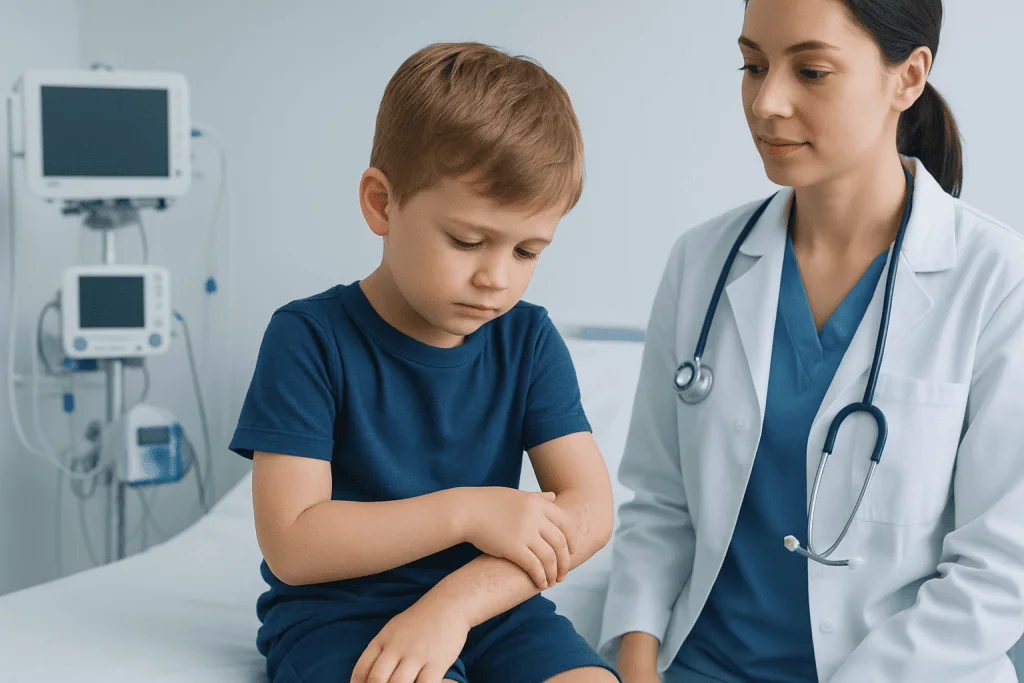
The most common symptom of childhood eczema is itching. The itch may be mild at times and intense at others, especially at night. Children may rub or scratch the skin without realizing it, which can lead to more redness, thickening, and irritation.
Eczema can look different depending on a child’s age and skin tone. In infants, it often appears on the cheeks, scalp, and outer parts of the arms and legs. In older children, it is more common in the folds of the elbows, behind the knees, around the wrists, ankles, or neck. On darker skin tones, eczema may appear brown, purple, gray, or darker than the surrounding skin rather than bright red.
Common features include:
- Dry, rough, or scaly skin
- Itchy patches
- Red, inflamed, or darker discolored areas
- Small bumps or oozing during active flares
- Cracked skin from dryness
- Thickened skin from repeated scratching
If the skin becomes very painful, crusted, warm, swollen, or starts leaking fluid, it may be infected and should be assessed by a doctor. Children with eczema can also have periods of poor sleep because itching is often worse in the evening.
Causes and Flare Triggers

Childhood eczema is caused by a combination of factors rather than one single reason. Many children have a naturally weaker skin barrier, which allows moisture to escape and irritants to enter more easily. The immune system also plays a role, leading the skin to become inflamed more readily.
Family history is important. Eczema is more common in children who have relatives with eczema, asthma, seasonal allergies, or other atopic conditions. Having one of these conditions does not guarantee a child will develop eczema, but it may increase the likelihood.
Flares are often triggered by everyday exposures. Common triggers include:
- Dry air or cold weather
- Heat, sweating, and overheating
- Harsh soaps, bubble baths, or fragranced products
- Rough or scratchy fabrics such as wool
- Saliva around the mouth in babies and toddlers
- Dust, pollen, or pet dander in some children
- Stress or poor sleep
- Skin infections or general illness
Food is sometimes blamed for eczema, but food allergy is not the main cause of most cases. In a small group of children, certain foods may worsen symptoms, especially if there are immediate reactions such as hives, vomiting, or swelling. Because unnecessary food restriction can affect growth and nutrition, families should discuss suspected food triggers with a qualified doctor rather than removing foods on their own.
How Childhood Eczema Is Diagnosed
Doctors usually diagnose childhood eczema by examining the skin and asking about symptoms, flare patterns, and family history. There is no single test that confirms eczema in most children. The appearance and location of the rash, along with long-term itching and dry skin, are often enough to make the diagnosis.
The doctor may ask when the rash started, whether it disrupts sleep, what skin products are used, and whether anything seems to trigger flares. They may also ask about asthma, allergies, or eczema in close relatives. This information helps build a full picture of the child’s skin health and related conditions.
Sometimes the doctor will consider other causes of a rash, such as contact dermatitis, fungal infection, psoriasis, scabies, or other skin problems. If needed, the child may be referred to a dermatologist or allergy specialist, especially if symptoms are severe, difficult to control, or the diagnosis is uncertain. In some cases, assessment for related conditions such as asthma may be appropriate if respiratory symptoms are also present.
Treatment Options for Symptom Control
The goal of treatment is to relieve itching, calm inflammation, restore the skin barrier, and prevent new flares. For most children, treatment combines daily skin care with medicines used during flare-ups. A doctor will tailor the plan to the child’s age, skin severity, and how often symptoms return.
Moisturizers are the foundation of eczema treatment. Thick, fragrance-free creams or ointments are usually preferred because they help lock in moisture better than thin lotions. Doctors may also prescribe anti-inflammatory treatments such as topical corticosteroids or other medicated creams to apply during active flares. When used correctly under medical guidance, these treatments can be very effective in reducing inflammation and itching.
If scratching has led to an infection, treatment may include medication for the infection. Children with severe or hard-to-control eczema may need specialist care and a broader treatment plan. In more persistent cases, doctors may evaluate the child through dermatology care and, if related triggers are suspected, may consider allergy testing as part of the overall assessment.
Parents should avoid using over-the-counter remedies or herbal products without medical advice, especially on young children. Some products can irritate sensitive skin or delay proper treatment. It is usually safest to follow a clear, simple routine recommended by a healthcare professional.
Skin Care Basics and Prevention
Daily skin care is one of the most effective ways to manage childhood eczema. Gentle habits help protect the skin barrier and reduce the chance of future flares. Even when the skin looks better, continuing regular care is important.
Helpful skin care measures include:
- Give short baths or showers with lukewarm, not hot, water
- Use mild, fragrance-free cleansers only where needed
- Pat the skin dry instead of rubbing
- Apply moisturizer generously within a few minutes after bathing
- Reapply moisturizer to dry areas during the day
- Choose soft, breathable clothing such as cotton
- Wash new clothes before wearing them
- Use fragrance-free laundry products if possible
- Keep fingernails short to reduce skin damage from scratching
It can also help to keep bedrooms cool, avoid overheating, and identify personal triggers. Some families find it useful to keep a simple symptom diary to notice patterns, such as flares after sweating, certain products, or seasonal changes. Avoiding known irritants is often more useful than making many changes at once.
If sleep is affected, soothing bedtime routines can be helpful. Moisturizing before bed, using soft sleepwear, and keeping the room comfortably cool may reduce nighttime itching. When eczema is part of a broader allergic tendency, a doctor may also advise whether further review for conditions such as allergy is needed.
When to See a Doctor
Parents should contact a doctor if a child’s eczema is not improving with regular moisturizing, if the rash is spreading, or if itching is interfering with sleep, school, or daily life. Medical advice is also important when over-the-counter skin care products do not seem to help or the family is unsure which products are suitable.
Prompt medical attention is needed if the skin looks infected. Warning signs include yellow crusting, pus, increasing pain, swelling, warmth, fever, or suddenly worsening redness. Babies and young children can become very uncomfortable quickly when eczema is severe, so it is sensible to seek help early.
Specialist care may be recommended for severe, recurrent, or complicated eczema. Acibadem International’s multidisciplinary specialists and JCI-accredited hospitals diagnose and treat skin conditions for international patients, including children who need coordinated pediatric and skin care support.
Frequently asked questions
Is childhood eczema contagious?
No. Childhood eczema is not contagious and cannot be spread through touch, sharing towels, or close contact. It is a skin barrier and inflammation problem, not an infection that passes from one person to another.
Can children outgrow eczema?
Many children improve as they get older, especially if eczema started in infancy. However, some continue to have sensitive skin or occasional flares later in childhood or adulthood. Regular skin care can still make a big difference even if eczema does not fully go away.
How often should moisturizer be used for eczema?
Moisturizer is usually most helpful when applied at least daily and often more than once a day, depending on dryness. It should be applied soon after bathing to help trap moisture in the skin. A doctor can advise which type is best for a child’s age and symptoms.
Do certain foods cause childhood eczema?
Foods are not the main cause of most childhood eczema. Some children may have food allergies that can worsen skin symptoms, but this should be assessed carefully by a doctor. Restrictive diets should not be started without professional guidance because they can affect growth and nutrition.
What makes eczema worse at night?
Nighttime itching can become more noticeable because the child is warm in bed and there are fewer distractions. Dry skin and a recent flare can also make itching feel worse. Moisturizing before sleep and keeping the bedroom cool may help reduce discomfort.
When does eczema need urgent medical attention?
Urgent review is important if the skin becomes painful, rapidly more inflamed, crusted, swollen, or starts leaking fluid, or if the child has a fever. These may be signs of infection or another complication. A doctor should assess these symptoms promptly.
References
- American Academy of Dermatology
- American Academy of Pediatrics
- National Eczema Association
- National Institute of Allergy and Infectious Diseases
- NHS
This article is for general information only and is not a substitute for professional medical advice. Please consult a qualified doctor about your individual situation.
Eczema in Turkey — costs, top hospitals & a free quote
JCI-accredited · board-certified surgeons · reply within 24h
Add us as a Preferred Source to see more of our trusted health content across Google Search, AI Overviews and Discover.

Pediatrics
Complete healthcare for infants, children and adolescents across all sub-specialties.
232 specialists in this unitMore from the Health Library



Related Specialists

Dr. Başak Kumbasar
Radiology
Prof. Dr. Süda Tekin
Infectious Diseases & Clinical Microbiology
Dr. Ömer Hersek
Internal Medicine
Prof. Dr. Vahit Emre Özden
Orthopedic Surgery & Traumatology