Childhood Epilepsy Surgery Evaluation: When Seizures Need More Than Medication

Surgery evaluation may be considered when a child continues to have seizures despite trying appropriate anti-seizure medicines. The goal is to find the seizure source, check whether it can be treated safely, and protect important functions such as speech, movement, and memory.
Key Takeaways
- Surgery evaluation may be considered when a child continues to have seizures despite trying appropriate anti-seizure medicines.
- The goal is to find the seizure source, check whether it can be treated safely, and protect important functions such as speech, movement, and memory.
- Testing often includes EEG, brain MRI, video EEG monitoring, and sometimes additional imaging or neuropsychological assessment.
- Not every child who has an evaluation will need surgery; some may benefit from dietary therapy, neuromodulation, or medication adjustments.
- Early expert assessment can help reduce the impact of frequent seizures on learning, development, safety, and daily life.
Childhood epilepsy surgery evaluation is a detailed process used when a child's seizures do not improve enough with medication. It helps specialists understand where seizures begin, whether surgery is safe, and which treatment options may offer better seizure control and quality of life.
Overview
Childhood epilepsy surgery evaluation is a careful, step-by-step assessment for children whose seizures are not controlled well enough with medicine alone. The purpose is not to rush into an operation. Instead, it is to understand the child’s epilepsy in detail and decide whether surgery, a device-based treatment, or another advanced approach could be helpful and safe.
Many children with epilepsy respond well to anti-seizure medication. However, some continue to have seizures even after trying suitable medicines at the right doses. In these situations, ongoing seizures may affect safety, sleep, learning, behavior, mood, and overall development. A specialized evaluation can help families and doctors look beyond medication and consider additional options.
The process usually involves a team that may include a pediatric neurologist, epileptologist, neurosurgeon, neuroradiologist, neuropsychologist, nurses, and rehabilitation specialists. They review seizure patterns, test results, and the child’s developmental needs together. This team approach helps ensure that treatment decisions are individualized and balanced.
Importantly, an evaluation does not automatically mean surgery will happen. Some children are found to have a clear surgical target, while others may be better candidates for treatment such as dietary therapy, implanted stimulation devices, or further medication changes. The central goal is always the same: better seizure control with the best possible quality of life.
When is surgery evaluation considered?
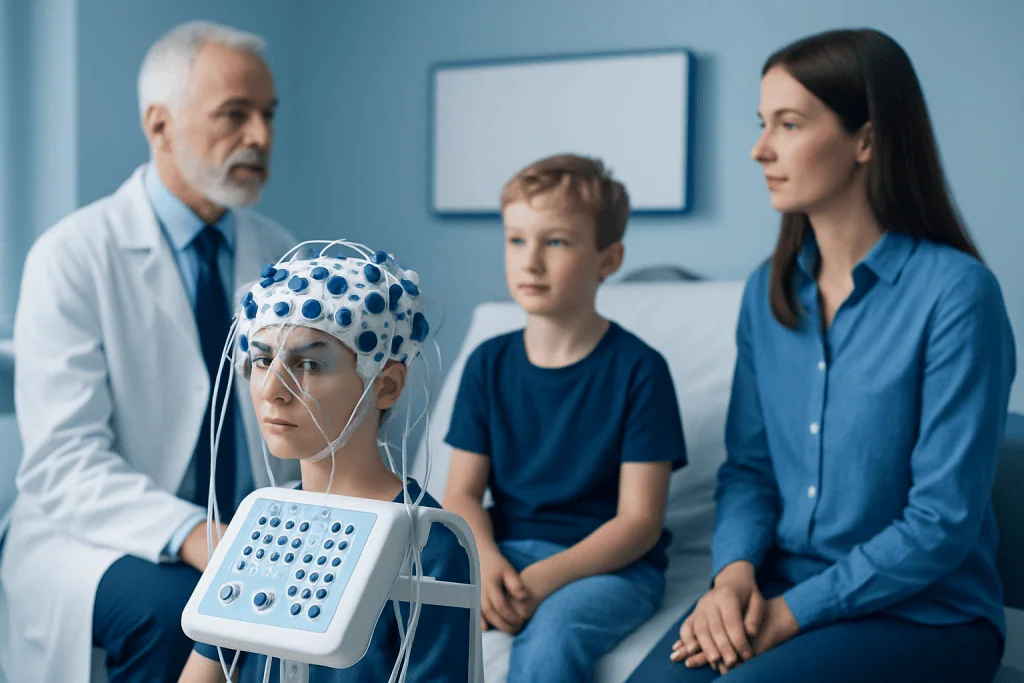
Doctors may suggest childhood epilepsy surgery evaluation when a child has drug-resistant epilepsy. This generally means seizures continue despite trials of two appropriate anti-seizure medicines, either alone or in combination. At that point, the chance that another medication alone will fully stop seizures may be lower, so it becomes reasonable to explore other treatments.
Evaluation may also be considered sooner in certain situations. For example, a child may have a brain lesion on MRI, seizures coming from one clearly defined area, or seizure types known to respond poorly to medicine. Early review can be especially important in infants and young children because frequent seizures may interfere with brain development during critical years.
Families may notice signs that seizures are affecting everyday life beyond the episodes themselves. These can include injuries, missed school, poor concentration, developmental slowing, behavioral changes, sleep disruption, and anxiety about when the next seizure may happen. These issues may prompt a referral even if the number of seizures seems modest.
Children who may need assessment often include those with:
- Seizures that continue despite well-managed medication treatment
- Focal seizures that appear to start in one part of the brain
- A structural brain change seen on MRI
- Seizures causing falls, injuries, or repeated hospital visits
- Noticeable effects on learning, language, behavior, or development
Symptoms and effects of uncontrolled seizures

Epilepsy symptoms in children can look very different from one child to another. Some children have dramatic convulsions, while others may briefly stare, stop responding, make repeated movements, or suddenly lose muscle tone. Depending on where seizures begin, they can affect awareness, movement, speech, vision, emotions, or behavior.
Seizures that keep happening over time may have effects beyond the seizure events. Recurrent episodes can interrupt school performance, memory, attention, and social participation. Younger children may show developmental regression or delays in language and motor skills. Parents may also observe irritability, fatigue, or changes in sleep.
Some seizure syndromes are linked to more widespread brain network involvement, while others begin from one more localized area. This distinction matters because children with focal epilepsy may sometimes be candidates for surgery if the seizure focus can be identified and treated safely. Evaluation helps doctors understand whether the epilepsy is localized, generalized, or mixed.
Even when symptoms seem mild, repeated seizures should be taken seriously. A child who has frequent brief episodes may still be losing valuable learning time or facing risks during bathing, climbing, sports, or sleep. Careful documentation of what happens before, during, and after seizures can be very helpful during specialist review.
Causes and risk factors
Childhood epilepsy can have many causes. In some children, seizures are related to a structural brain change, such as cortical malformation, scar tissue, stroke, tumor, or injury. In others, epilepsy may be associated with genetic conditions, metabolic disorders, infections affecting the brain, or developmental syndromes. Sometimes, no single cause is identified even after thorough testing.
Whether surgery is possible depends less on the diagnosis name alone and more on how the seizures behave and where they start. A child may be a potential surgical candidate when seizures consistently arise from one area of brain tissue that can be treated without causing major loss of function. This is why detailed mapping is so important.
Risk factors for treatment-resistant seizures can include early seizure onset, underlying structural brain abnormalities, certain epilepsy syndromes, a history of severe brain infection or injury, and ongoing abnormal findings on EEG. However, these factors do not predict the future perfectly. Every child needs individual assessment.
Specialists may also consider conditions that can resemble epilepsy or occur alongside it. These may include fainting, sleep disorders, movement disorders, migraine-related events, or developmental and behavioral conditions. Sorting out these possibilities is part of a complete pediatric epilepsy workup and helps guide the best treatment plan.
How childhood epilepsy surgery evaluation is done
The evaluation usually begins with a detailed history and examination. Doctors ask about the child’s seizure types, age at onset, triggers, previous medicines, developmental history, school performance, and family history. Videos recorded by caregivers can sometimes help the team recognize seizure patterns more clearly.
One of the most important tests is electroencephalography, or EEG, which records the brain’s electrical activity. Many children also need prolonged video EEG monitoring in the hospital. This allows specialists to compare the child’s behavior during a seizure with the EEG changes and identify where seizures begin as accurately as possible.
Brain imaging is another key part of the workup. A high-quality MRI designed for epilepsy can show subtle structural changes that may not appear on standard scans. Some children may also need additional studies such as PET, SPECT, functional MRI, magnetoencephalography, or language and memory testing. Neuropsychological assessment helps evaluate cognition, learning, and development and can show how different brain regions are functioning.
In some cases, noninvasive tests do not provide enough information. Then the team may discuss invasive monitoring, in which electrodes are placed on or within the brain for more precise seizure mapping. This step is considered carefully and only when the expected benefits outweigh the risks. Results from all tests are reviewed together to decide whether resective surgery, disconnection surgery, neuromodulation, or non-surgical treatment is the most appropriate next step.
Treatment options after evaluation
If the evaluation shows that seizures come from a well-defined brain area that can be treated safely, surgery may offer the best chance of improved seizure control. Procedures vary depending on the location and type of epilepsy. In some children, the goal is complete removal of the seizure focus. In others, the aim is to disconnect seizure pathways and reduce seizure spread.
When a localized source can be treated, the team may recommend epilepsy surgery. The expected benefits and risks depend on the child’s seizure type, the brain region involved, and the child’s developmental profile. Doctors also consider possible effects on speech, movement, memory, vision, and behavior before recommending any procedure.
Not all children are candidates for resective surgery. Some may benefit from neuromodulation, such as vagus nerve stimulation, especially when seizures come from multiple areas or surgery would carry too much functional risk. Others may be candidates for dietary therapy, including ketogenic-based approaches, or for further carefully tailored medication changes.
Supportive care remains essential regardless of the chosen treatment. Children may need rehabilitation, educational support, psychology services, sleep management, and regular neurologic follow-up. Families should ask about realistic goals, which may include complete seizure freedom, fewer seizures, shorter seizures, less severe seizures, or improved alertness and participation in daily life.
Prevention, self-care, and preparing as a family
There is no guaranteed way to prevent epilepsy itself in every child, but good seizure care can reduce complications and improve daily life. Families are often encouraged to give medicines exactly as prescribed, keep regular sleep routines, avoid known triggers when possible, and attend follow-up appointments consistently. Keeping a seizure diary can help track frequency, duration, warning signs, and recovery afterward.
Home and school safety planning is also important. Caregivers, teachers, and other adults should know what the child’s seizures look like and what first aid is needed. Simple practical measures, such as supervised bathing, helmet use when appropriate, and caution around heights or open water, can lower the risk of injury.
Preparing for an epilepsy surgery evaluation can feel overwhelming, but organization can help. Families may bring prior EEG and MRI reports, lists of current and past medicines, growth and developmental information, school concerns, and videos of events if available. Writing down questions in advance can make appointments more productive and reassuring.
Emotional support matters too. Parents may feel hopeful, worried, or uncertain all at once, and older children may have their own questions about tests or treatment. Clear communication from the care team helps families understand options at each step. Near the end of this process, some families choose evaluation at centers such as Acibadem International, where multidisciplinary specialists in JCI-accredited hospitals diagnose and treat complex pediatric epilepsy for international patients.
When to see a doctor
A child should see a doctor promptly for any suspected seizure, especially a first seizure, repeated unexplained episodes, or events associated with injury, blue lips, breathing difficulty, or prolonged confusion afterward. Ongoing follow-up is important for any child with diagnosed epilepsy, even if seizures seem brief or infrequent.
Families should ask about childhood epilepsy surgery evaluation if seizures continue despite appropriate medication treatment, if side effects from medicines are becoming difficult, or if seizures are affecting learning and development. Referral to a pediatric epilepsy center does not commit the family to surgery. It simply opens the door to a more specialized review.
Urgent medical attention is needed if a seizure lasts longer than the rescue plan recommends, if seizures repeat without recovery between them, if the child is injured, or if breathing does not return to normal. Families should follow the child’s emergency seizure action plan and local emergency guidance.
It is also reasonable to seek specialist input when parents feel something is being missed. Persistent staring spells, sudden falls, episodes during sleep, or unexplained developmental regression deserve careful evaluation. Early assessment can make a meaningful difference in treatment choices and long-term well-being.
Frequently asked questions
What does childhood epilepsy surgery evaluation mean?
It is a detailed assessment used to find out whether a child with difficult-to-control seizures may benefit from surgery or another advanced treatment. The process looks at where seizures start, how they affect the child, and whether treatment can be done safely.
When should a child be referred for epilepsy surgery evaluation?
Referral is often considered when seizures continue after trials of two appropriate anti-seizure medicines. It may also be recommended earlier if imaging shows a clear brain lesion or if seizures are strongly affecting development, learning, or safety.
Does an evaluation mean the child will definitely need surgery?
No. Many children who undergo evaluation do not go on to have surgery. The purpose is to understand all treatment options, which may include medication changes, dietary therapy, stimulation devices, surgery, or continued monitoring.
What tests are commonly included in the evaluation?
Common tests include EEG, prolonged video EEG monitoring, and a high-quality brain MRI designed for epilepsy assessment. Some children also need PET or SPECT scans, neuropsychological testing, language or memory mapping, or invasive monitoring for more precise localization.
Is epilepsy surgery safe for children?
Any brain procedure has risks, so safety is assessed very carefully before surgery is recommended. The team weighs the risks of the procedure against the risks of ongoing seizures and focuses on protecting important functions such as movement, speech, memory, and vision.
Can surgery cure epilepsy in children?
Some children become seizure-free after surgery, while others have fewer or less severe seizures. The outcome depends on the cause of epilepsy, whether the seizure source can be clearly identified, and whether it can be treated safely.
How can parents help during the evaluation process?
Parents can help by keeping a seizure diary, bringing prior test results, and sharing videos of events when safe to record. They can also ask questions about goals, risks, school support, and what each recommended test is expected to show.
References
- World Health Organization
- International League Against Epilepsy
- American Epilepsy Society
- National Institute of Neurological Disorders and Stroke
- American Academy of Neurology
This article is for general information only and is not a substitute for professional medical advice. Please consult a qualified doctor about your individual situation.
Epilepsy in Turkey — costs, top hospitals & a free quote
JCI-accredited · board-certified surgeons · reply within 24h
Add us as a Preferred Source to see more of our trusted health content across Google Search, AI Overviews and Discover.

Neurology
Diagnosis and treatment of disorders of the brain, spinal cord, nerves and muscles.
51 specialists in this unit