Childhood Rashes: Signs That Need Medical Assessment

Many childhood rashes are caused by common viral infections or skin irritation and improve with supportive care. A rash should be assessed alongside other symptoms, especially fever, itching, pain, breathing changes, and the child’s general behavior.
Key Takeaways
- Many childhood rashes are caused by common viral infections or skin irritation and improve with supportive care.
- A rash should be assessed alongside other symptoms, especially fever, itching, pain, breathing changes, and the child’s general behavior.
- Purple or red spots that do not fade when pressed, breathing difficulty, facial swelling, or severe illness require urgent medical care.
- New medicines, foods, soaps, detergents, and close contact with infectious illnesses can provide helpful clues about a rash’s cause.
- Avoid using prescription creams, antibiotics, or antihistamines unless advised by a qualified healthcare professional.
Childhood rashes can result from infections, skin irritation, allergies, heat, or long-term inflammatory skin conditions. Most are mild, but the rash’s appearance, timing, associated symptoms, and how the child seems overall help determine whether medical care is needed.
Overview: what childhood rashes can mean
Childhood rashes are common and are often caused by mild viral illnesses, heat, sensitive skin, or contact with an irritant. However, a rash accompanied by breathing difficulty, swelling of the lips or face, a child who is unusually sleepy or very unwell, or purple spots that do not fade under pressure needs urgent medical assessment.
A rash is a change in the skin’s color, texture, or appearance. It may look like flat red areas, small raised bumps, blisters, dry scaly patches, hives, or tiny spots. Some rashes itch, hurt, or feel warm, while others cause little discomfort. The same illness may produce a different-looking rash in different children, particularly across different skin tones.
Although parents and caregivers may understandably look for a name for a rash, the most useful first step is usually to consider the whole picture. A clinician will ask when it started, whether it is spreading, whether the child has fever or cold symptoms, what the rash feels like, and whether there have been recent exposures to illness, new products, foods, medicines, or insect bites.
How to describe a child’s rash
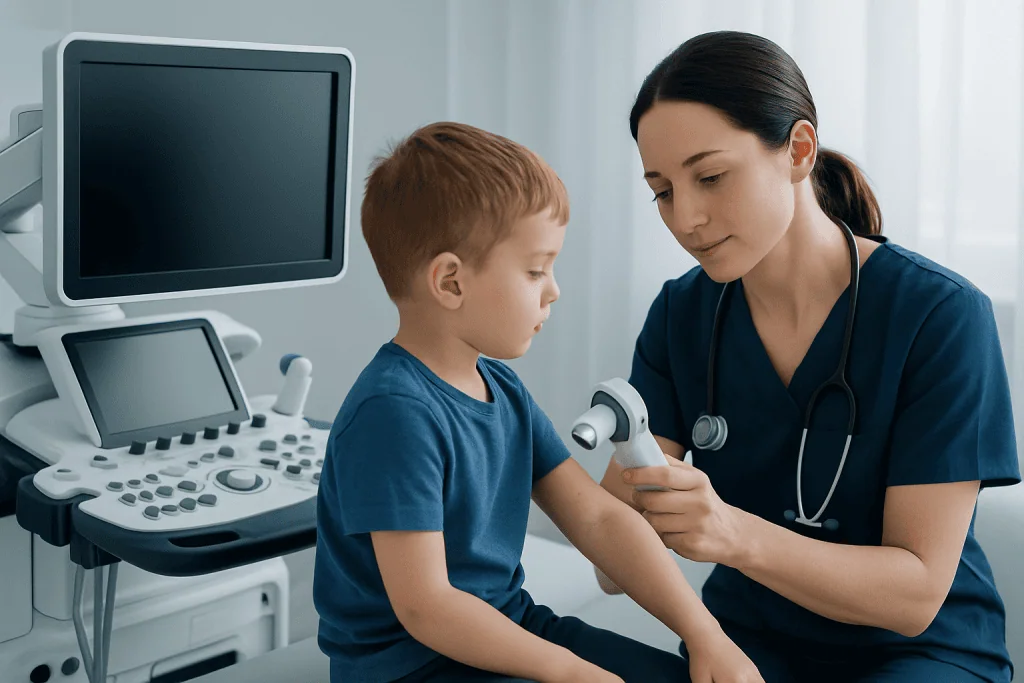
Caregivers do not need to identify a rash at home, but clear observations can help a healthcare professional assess it. It can be useful to note the child’s age, when the rash first appeared, the first body area affected, how quickly it changed, and whether it is itchy, painful, blistered, crusted, or peeling. Taking well-lit photographs over time may also be helpful, especially if the rash comes and goes.
The distribution of the rash can provide clues. For example, rashes limited to areas under diapers, clothing, jewelry, or adhesive plasters may be related to moisture or contact irritation. A rash that starts on the face or trunk and spreads elsewhere may occur with a viral infection. Rash involving the palms, soles, mouth, or skin folds can have several possible causes and should be evaluated in the context of other symptoms.
One simple observation sometimes used by clinicians is whether red or purple spots fade when gentle pressure is applied with a clear glass. Spots that remain red, brown-red, or purple may be described as non-blanching. This finding does not establish a diagnosis on its own, but a child with a new non-blanching rash who is feverish or unwell should receive urgent medical assessment.
- Note fever, sore throat, cough, runny nose, vomiting, diarrhea, or mouth sores.
- Record recent medicines, including antibiotics, over-the-counter products, and supplements.
- Consider recent new foods, skin products, detergents, pets, travel, insect bites, or sick contacts.
- Observe whether the child is drinking, urinating, playing, and responding normally for their age.
Common causes of childhood rashes
Viral infections are among the most frequent causes of rash in children. A child may develop a rash during or after cold-like symptoms, fever, sore throat, or stomach upset. Examples include hand, foot, and mouth disease, roseola, chickenpox in unvaccinated or incompletely vaccinated children, and nonspecific viral rashes. These infections often improve with rest, fluids, and symptom relief, but individual guidance depends on the child’s age, symptoms, and medical history.
Inflammatory skin conditions are also common. Eczema, also called atopic dermatitis, often causes dry, itchy, sensitive patches that may flare and settle over time. Contact dermatitis occurs when the skin reacts to an irritant or allergen, such as fragranced products, certain metals, plants, or ingredients in skin care products. Heat rash can appear as small red or clear bumps when sweat ducts become blocked in warm, humid conditions.
Hives are raised, itchy welts that may change location within hours. They can occur with viral infections and do not always indicate a food allergy. However, hives that begin soon after a food, medicine, or insect sting, particularly if accompanied by swelling, wheezing, repeated vomiting, dizziness, or breathing problems, may indicate a serious allergic reaction and require emergency help.
Bacterial infections may also affect the skin. Impetigo can cause honey-colored crusts, often around the nose or mouth, while cellulitis can produce a painful, warm, expanding area of redness. Fungal infections, such as ringworm, may cause round, scaly patches. These conditions can need targeted treatment, so a clinician should assess a suspected infection rather than relying on home diagnosis.
What can trigger or increase the chance of a rash
Children’s skin is more easily irritated than adult skin, especially in infancy and early childhood. Friction, drooling, saliva around the mouth, wet diapers, frequent handwashing, sweating, and rough fabrics can weaken the skin barrier. Fragrance-containing soaps, bubble baths, wipes, detergents, and lotions may trigger irritation in children with sensitive skin.
Exposure to infections is another important factor. Children in nursery, school, sports groups, and households with siblings have regular contact with common viruses. A rash may appear after exposure even when the source of infection is not obvious. Vaccination reduces the risk of several infections that can cause significant rashes, but vaccinated children can still develop many other common viral illnesses.
Some rashes develop after starting a medicine. A medicine-related rash can range from mild to severe, and timing matters: it may begin during treatment or, in some situations, after the medicine has been stopped. Parents and caregivers should contact the prescribing clinician promptly if a rash develops after a new medication. They should seek urgent care if the rash includes blistering, skin peeling, mouth or eye sores, facial swelling, breathing difficulty, or the child appears ill.
Family history of eczema, asthma, hay fever, or allergies may make certain skin conditions more likely, but it does not confirm the cause of a particular rash. Food allergy is only one possible explanation for rash symptoms. Restrictive diets should not be started without medical advice, especially in young children, because unnecessary avoidance can affect nutrition.
How doctors assess and diagnose childhood rashes
Most childhood rashes are diagnosed through a careful medical history and skin examination. The clinician will assess the rash’s pattern, color, texture, location, and whether it fades with pressure. They will also examine the mouth, eyes, throat, ears, lymph nodes, and other body systems when appropriate, and check the child’s temperature, hydration, alertness, and breathing.
Tests are not needed for every rash. When the cause is uncertain or infection is suspected, a clinician may consider a throat swab, skin swab, blood test, urine test, or other investigations based on the child’s symptoms. Allergy testing is generally most useful when there is a convincing, repeatable pattern of symptoms after a particular exposure; it is not routinely needed for every episode of hives or eczema.
It is important not to rely only on online images. Similar-looking rashes can have different causes, and skin conditions can look different depending on the child’s natural skin tone. A clinician can also distinguish between a rash that is uncomfortable but safe to monitor and one that needs prompt treatment or further investigation.
Parents should tell the clinician about all medicines and topical products used, including herbal products and creams borrowed from another family member. If possible, they should bring photographs showing the rash at its most noticeable, since some rashes change quickly or fade before the appointment.
Comfort measures and safe skin care at home
For a child who is otherwise well and has a mild rash, gentle skin care can reduce discomfort while awaiting advice or recovery. Keep the child comfortably cool, offer regular fluids, use loose soft clothing, and avoid fragranced products on irritated skin. Short lukewarm baths may be soothing; rubbing the skin dry can worsen irritation, so gentle patting is preferable.
A plain, fragrance-free moisturizer may help dry skin and eczema-prone areas. It is generally best to apply it regularly, especially after bathing, and to avoid introducing multiple new products at once. For diaper-area irritation, frequent diaper changes, gentle cleaning, and allowing the area to dry can help. A protective barrier product may be appropriate, but persistent, severe, or spreading diaper rash should be assessed.
Itching can lead to scratching and skin damage. Keeping nails short and clean, using soft cotton clothing, and distracting younger children may help. A healthcare professional can advise whether medication for itching is suitable for the child’s age and symptoms. Prescription steroid creams, antifungal products, antibiotics, and medicated ointments should be used only as directed, since the wrong treatment can irritate the skin or delay correct diagnosis.
Children should generally stay home from school or childcare only when they are too unwell to take part, have a condition for which exclusion is recommended, or have been advised to do so by a clinician or local public health guidance. Good hand hygiene and avoiding the sharing of towels, cups, and personal items can reduce the spread of some infections.
When to seek medical care
Urgent emergency care is needed if a child has a rash with trouble breathing, wheezing, swelling of the lips, tongue, or face, faintness, or rapidly worsening widespread hives. Emergency assessment is also important for a child with a rash who is difficult to wake, confused, having a seizure, has a stiff neck, severe headache, persistent vomiting, signs of severe dehydration, or looks seriously unwell.
Parents should seek urgent medical advice for a feverish child with red or purple spots that do not fade when pressed, especially if the child is lethargic, irritable, in pain, or deteriorating. Babies younger than 3 months with a temperature of 38°C or higher need prompt medical evaluation, whether or not they have a rash. Blistering or peeling skin, painful sores in the mouth or eyes, or a rash after starting a new medicine also warrants prompt assessment.
A non-urgent appointment is appropriate when a rash persists, repeatedly returns, spreads, becomes painful, develops crusting or discharge, interferes with sleep, or is associated with ongoing fever or other symptoms. Medical advice is also sensible if caregivers are unsure of the cause or are concerned about a child’s behavior, fluid intake, or comfort.
Acibadem International’s multidisciplinary specialists and JCI-accredited hospitals can assess skin symptoms and related childhood conditions for international patients. A timely evaluation can help identify the cause, address discomfort safely, and provide clear guidance on monitoring and follow-up.
Frequently asked questions
Are childhood rashes usually serious?
Most childhood rashes are mild and caused by viral infections, heat, irritation, or eczema. The child’s general condition is often more important than the rash alone. A child who is breathing comfortably, drinking, alert, and improving is less likely to have a serious cause, but persistent concerns should still be discussed with a clinician.
How can parents tell if a rash is an allergy?
A rash may be related to allergy if hives or swelling appear soon after exposure to a particular food, medicine, insect sting, or other trigger. However, hives frequently occur during viral illnesses and do not automatically mean a child has a food allergy. Breathing problems, facial swelling, dizziness, or repeated vomiting with hives need emergency care.
Should a child with a rash be kept away from school or childcare?
This depends on the cause of the rash and how the child feels. Many noninfectious rashes, such as eczema or mild contact irritation, do not require exclusion. If an infectious illness is suspected, caregivers should follow advice from their clinician, school or childcare setting, and local public health guidance.
What does a rash that does not fade when pressed mean?
A non-fading rash consists of spots that remain red, brown-red, or purple when gentle pressure is applied. It can occur for different reasons, but in a child with fever or signs of illness it needs urgent medical assessment. Caregivers should not delay seeking help while repeatedly checking the rash.
Can teething cause a rash?
Teething itself does not usually cause a widespread body rash or a significant fever. Drooling can irritate skin around the mouth, chin, neck, or chest and cause a local rash. A child with a widespread rash, fever, or other symptoms should be assessed for another cause.
When should a rash after antibiotics be checked?
Any new rash after starting an antibiotic should be reported to the prescribing clinician, who can advise whether the medicine should be continued or changed. Urgent care is needed for hives with swelling or breathing symptoms, or for blistering, peeling skin, painful mouth or eye sores, or a child who appears unwell. Do not give another dose or restart the medicine without professional advice if a serious reaction is suspected.
This article is for general information only and is not a substitute for professional medical advice. Please consult a qualified doctor about your individual situation.
Explore treatments in Turkey — costs, top hospitals & a free quote
JCI-accredited · board-certified surgeons · reply within 24h
Add us as a Preferred Source to see more of our trusted health content across Google Search, AI Overviews and Discover.

Dermatology Specialists at Acibadem


More from the Health Library

Pain at Clitoris Explained: Common Triggers and Red Flags

What Happens When U Get a Stroke? Causes, Explanations, and Next Steps

How to Sit with Hemorrhoids? Causes, Explanations, and Next Steps

How Long Do Dreams Last? A Doctor-Reviewed Answer

How Many Calories Is in Vodka Shot? Here Is What the Evidence Says