Children’s Vision Screening: How It Works, Results and What to Expect
Vision screening can identify possible refractive errors, eye misalignment and reduced vision before a child describes symptoms. A failed screening means further assessment is recommended; it does not by itself confirm an eye condition.
Key Takeaways
- Vision screening can identify possible refractive errors, eye misalignment and reduced vision before a child describes symptoms.
- A failed screening means further assessment is recommended; it does not by itself confirm an eye condition.
- Screenings are age-appropriate and may use pictures, matching symbols, letter charts or automated devices.
- School screenings are useful access points but do not replace a comprehensive eye examination.
- Early evaluation is important because some childhood vision problems respond best while the visual system is still developing.
Children's vision screening is a quick check of sight, eye alignment and other visual functions that can identify possible concerns early. A screening result is not a diagnosis, but it helps determine whether a full examination with an eye-care professional is needed.
Overview: What Is Children's Vision Screening?
Children’s vision screening is a brief, age-appropriate assessment used to identify children who may have difficulty seeing clearly, using both eyes together or keeping their eyes aligned. It can be performed in a pediatric clinic, family practice, school, community setting or eye-care clinic. Its purpose is to identify children who may benefit from a comprehensive eye examination, rather than to diagnose a specific condition.
Many vision concerns in childhood are not obvious. A child may not know that their view is blurred, may assume everyone sees similarly, or may compensate by sitting close to objects, turning the head or relying more on one eye. Screening can therefore help detect possible refractive errors, such as short-sightedness or long-sightedness, as well as eye misalignment and reduced vision in one eye.
The assessment is usually painless, noninvasive and brief. The exact test depends on the child’s age, developmental stage, cooperation and the setting. A normal screen is reassuring, but parents and caregivers should still arrange an eye assessment if they notice ongoing visual symptoms or have concerns about eye appearance or development.
Who Should Have Vision Screening and When?
Vision should be assessed repeatedly throughout childhood because visual needs and risks change as a child grows. Newborn and infant care includes observation of the eyes, pupils and red reflex. As children become able to focus, follow targets, match symbols or name pictures, screening can assess visual acuity and eye alignment more directly.
The American Academy of Pediatrics recommends regular assessment of eye health and vision as part of preventive care. Instrument-based screening, which uses specialized devices to estimate refractive error and alignment risk factors, can be particularly helpful for young children who cannot yet reliably read or match an eye chart. Conventional visual-acuity testing is generally used once a child can participate consistently.
Children may need earlier or more frequent evaluation if they were born prematurely, have developmental differences, have a family history of childhood eye conditions, or have conditions that can affect vision. A child with a known eye concern should follow the schedule advised by an ophthalmologist or optometrist.
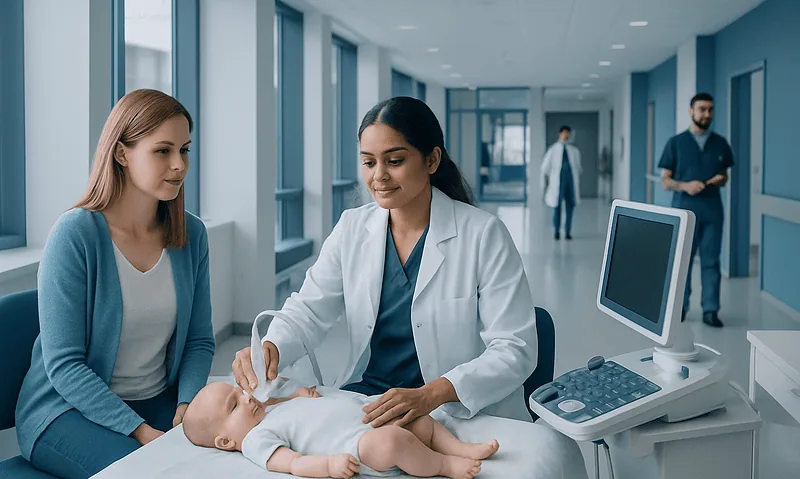
- Infants: eye appearance, red reflex and ability to fix and follow may be assessed during routine care.
- Preschool children: instrument-based testing or picture and matching charts may be used.
- School-age children: distance visual-acuity testing and periodic checks are commonly used.
- Any age: symptoms, parental concern or an abnormal screen should prompt timely professional assessment.
How Children's Vision Screening Works: Step by Step
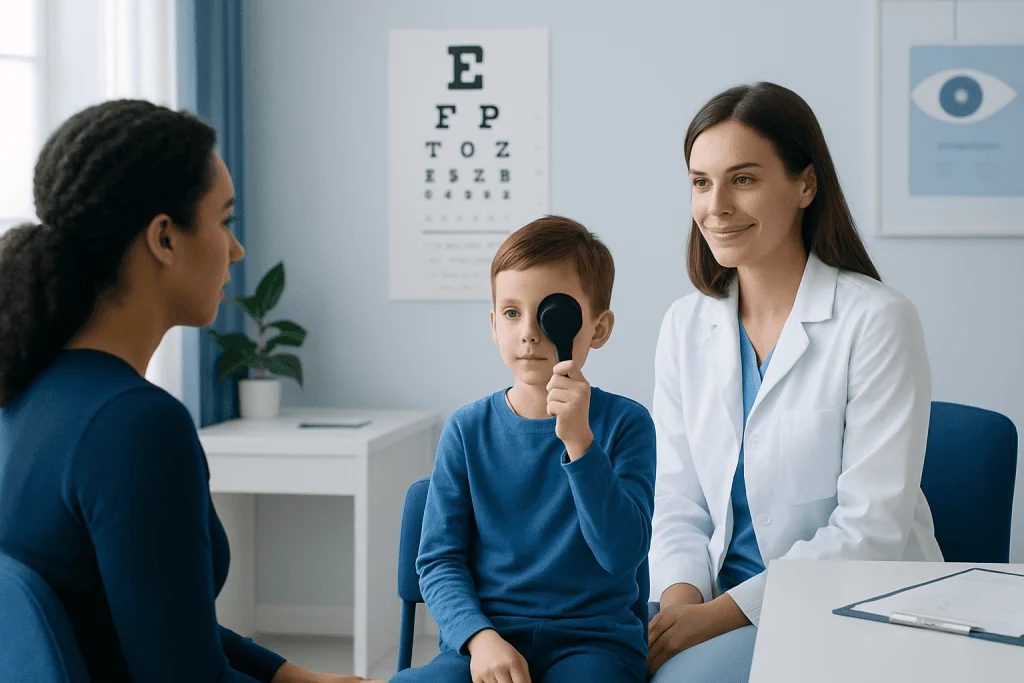
Before testing begins, the screener may ask about previous eye examinations, glasses or contact lenses, family history and any concerns from parents, teachers or the child. Children who use glasses should generally wear them for the screening unless the examiner gives different instructions. The process is adapted to make the child comfortable and to obtain the most reliable result possible.
For visual-acuity testing, the child looks at symbols, pictures, letters or matching shapes at a set distance. Each eye is usually tested separately by covering the other eye, followed by testing both eyes together. Testing one eye at a time is important because a child with reduced vision in one eye can sometimes perform well when both eyes are open.
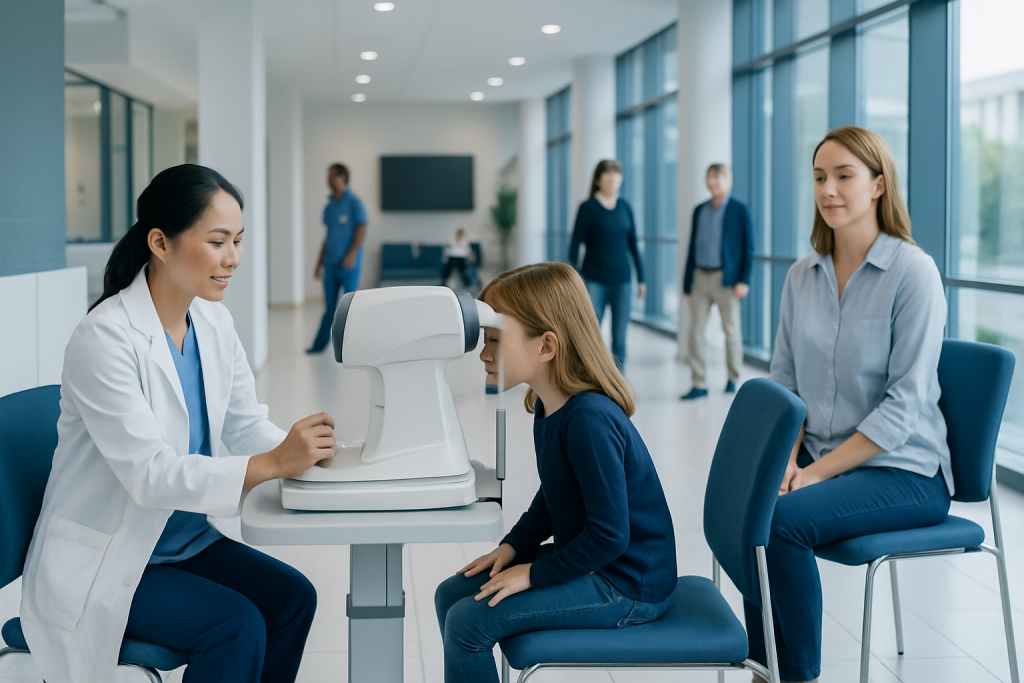
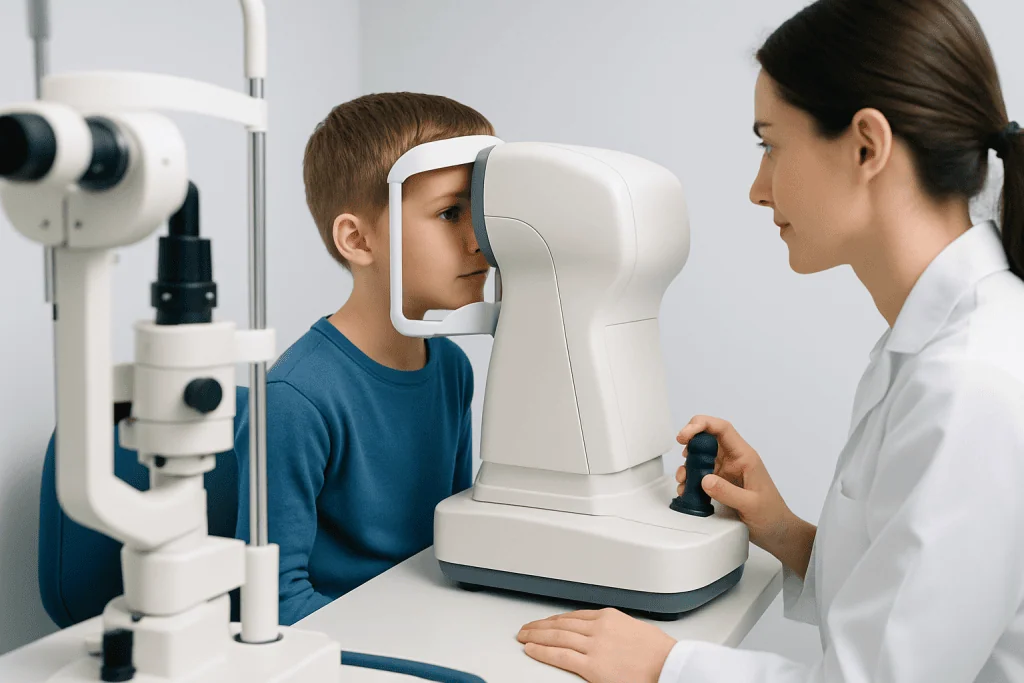
An examiner may also observe how the eyes move and align, whether the pupils react to light, and whether there are visible concerns such as a drooping eyelid. In younger children, a handheld or tabletop photoscreening device may analyze light reflections from the eyes to identify risk factors for refractive error, eye misalignment or unequal focusing between the eyes.
There is no recovery period after a vision screen. Children can return immediately to school, play and usual activities. If the result is inconclusive because of tiredness, shyness, limited cooperation or technical factors, the screening may be repeated or a comprehensive eye examination may be recommended.
What Results Mean and What Is a Failed Vision Screening Score?
A pass result means the child met the screening criteria used for their age and the type of test. It does not guarantee that every possible eye condition is absent, particularly if symptoms emerge later. A referral result, sometimes called a failed screen, means the child did not meet the expected threshold, had a concerning device result, or could not complete the test reliably.
There is no single failed vision screening score for every child. Referral thresholds vary by age, the chart or device used, local protocols and whether one eye performs differently from the other. In general, a child may be referred if visual acuity is below the expected range for their age, if there is a significant difference between the two eyes, or if a photoscreener detects a risk factor that needs confirmation.
A failed screen does not mean a child will need glasses or has permanent vision loss. It indicates that screening alone cannot rule out an important issue and that a full assessment is the appropriate next step. During a comprehensive examination, an eye-care professional can measure vision more precisely, check eye health and alignment, and determine whether treatment is needed.
The benefits of screening include early identification and referral, especially for conditions that may affect visual development. The main limitation is that screenings can occasionally produce false-positive or false-negative results. For this reason, symptoms and family concerns remain important even after a pass result.
My 2-Year-Old Failed a Vision Test. What Should I Do?
Parents should arrange a comprehensive eye examination with a pediatric ophthalmologist or another qualified eye-care professional experienced in examining young children. A failed test at age 2 is relatively common because toddlers may find testing difficult, but it should not be dismissed. The follow-up examination can clarify whether the result reflects limited cooperation, a focusing difference, eye misalignment or another concern.
It is helpful to bring the screening report, if available, along with information about pregnancy or birth history, family eye history and any observed behaviors. Examples include frequent eye rubbing, squinting, closing one eye, head tilting, sitting unusually close to screens or objects, or eyes that appear to drift. Parents should not try to self-test vision at home or wait for a later school screening if a referral has been recommended.
Depending on the findings, the clinician may recommend observation, glasses, follow-up testing or treatment for a specific condition. If reduced vision is found in one eye because the brain is favoring the other eye, prompt treatment can support visual development. This concern is often discussed in relation to amblyopia, sometimes called lazy eye.
How Accurate Are School Vision Screenings?
School vision screenings are valuable public-health checks that can identify children who may otherwise not receive an eye assessment. They are designed to find possible vision difficulties efficiently, often using a standardized distance chart. They can be especially useful for detecting reduced distance vision that may affect reading from a board, classroom participation and sports.
However, a school screening is not the same as a full eye examination. Accuracy can be affected by the child’s attention, fatigue, understanding of instructions, testing distance, lighting, chart design and the screening method. A child may pass a basic distance test yet still have problems with eye coordination, focusing, eye health or near vision that require professional assessment.
A referral from a school should be followed up rather than treated as a diagnosis. Similarly, a child who passes should still be assessed by an eye-care professional if caregivers or teachers notice symptoms, if there is a family history of significant childhood eye disease, or if the child has developmental or medical risk factors. Regular preventive care remains important alongside school-based screening.
What Are the AAP Guidelines for Vision Screening in Children?
The American Academy of Pediatrics supports age-appropriate eye and vision assessment during routine preventive visits, beginning in infancy. Early assessments include checking the appearance of the eyes, red reflex and pupil responses, as well as discussing observations from parents and caregivers. As development allows, clinicians assess visual behavior, eye alignment and visual acuity.
For children who are not yet able to complete a standard chart test, the AAP supports instrument-based screening when available. Photoscreening and similar technologies can detect risk factors for amblyopia and refractive errors in young children. As children mature, recognition or matching charts are used to measure visual acuity more directly.
Specific schedules, techniques and referral criteria may differ among health systems and are updated as professional guidance evolves. Parents should ask their child’s pediatric clinician when screening is due and whether an eye examination is advisable based on the child’s individual history. A recommendation for referral should be completed even if the child seems to see well at home.
When to Seek Medical Care
Parents and caregivers should arrange an eye assessment promptly after a failed or inconclusive vision screening. They should also seek professional advice if a child frequently squints, closes or covers one eye, tilts the head, sits very close to books or screens, loses their place while reading, complains of headaches with visual tasks, or has difficulty recognizing distant objects.
An urgent medical assessment is appropriate for a sudden change in vision, eye pain, a red eye with light sensitivity, a new drooping eyelid, an eye injury, persistent white or unusual reflection in the pupil, or a new constant eye turn. These signs have different possible causes and should be assessed without delay rather than waiting for the next routine screening.
Following referral, a comprehensive pediatric eye examination may include more detailed visual-acuity testing, eye alignment measurements and an assessment of how each eye focuses. The clinician may use eye drops to temporarily widen the pupils and accurately measure refractive error. Acibadem International’s multidisciplinary specialists and JCI-accredited hospitals can diagnose and treat childhood eye concerns for international patients.
Frequently asked questions
Is children's vision screening painful?
No. Most screenings involve looking at pictures, letters or lights, or briefly using a camera-like device. The child may need to cover one eye at a time, but the procedure does not involve needles or discomfort.
Does a failed vision screening mean my child needs glasses?
Not necessarily. A failed result means a comprehensive eye examination is needed to identify the reason for the result. Some children need glasses, while others may have a temporary testing difficulty or another issue requiring different follow-up.
Can a child pass a vision screening but still have an eye problem?
Yes. Screening tests are helpful but cannot detect every eye or vision condition. An eye-care assessment is still appropriate if a child has symptoms, concerning behaviors or risk factors, even after a pass result.
How soon should follow-up happen after a failed screening?
Parents should arrange follow-up as soon as reasonably possible, particularly for infants, toddlers and preschool-aged children. Early assessment can be important because some vision problems are most responsive to treatment during childhood visual development.
What should parents bring to a pediatric eye examination?
Bring the screening report, if one was provided, and any current glasses. It is also useful to share family eye history, birth history, medical conditions, medications and examples of visual behaviors noticed at home or school.
Are vision screenings only needed if a child has symptoms?
No. Many children with vision difficulties do not report symptoms or may adapt to the problem. Routine screening helps identify concerns before they interfere with learning, daily activities or visual development.
References
- American Academy of Pediatrics
- American Academy of Ophthalmology
- American Association for Pediatric Ophthalmology and Strabismus
- Centers for Disease Control and Prevention
- World Health Organization
This article is for general information only and is not a substitute for professional medical advice. Please consult a qualified doctor about your individual situation.
Explore treatments in Turkey — costs, top hospitals & a free quote
JCI-accredited · board-certified surgeons · reply within 24h
Add us as a Preferred Source to see more of our trusted health content across Google Search, AI Overviews and Discover.