Circumflex Artery — Explained by Medical Evidence, Not Myths

The circumflex artery is a branch of the left coronary artery that supplies part of the heart muscle. A narrowing or blockage in the circumflex artery can reduce blood flow and may cause angina or a heart attack.
Key Takeaways
- The circumflex artery is a branch of the left coronary artery that supplies part of the heart muscle.
- A narrowing or blockage in the circumflex artery can reduce blood flow and may cause angina or a heart attack.
- Diagnosis often involves an ECG, blood tests, echocardiography, stress testing, or coronary angiography.
- Treatment depends on severity and may include lifestyle changes, medicines, stenting, or bypass surgery.
- Urgent medical care is needed for new, severe, or persistent chest pain, especially with shortness of breath, sweating, or nausea.
The circumflex artery is one of the main blood vessels that helps feed oxygen-rich blood to the heart muscle. Understanding where it is, what it does, and what can affect it can help patients make sense of test results, chest pain symptoms, and treatment decisions.
Overview: What the circumflex artery is
The circumflex artery, usually called the left circumflex artery or LCx, is one of the main arteries that supply blood to the heart muscle. It branches from the left main coronary artery and curves around the left side and back of the heart in a groove between the upper and lower chambers. Its job is to deliver oxygen and nutrients so the heart can keep pumping effectively.
In many people, the circumflex artery supplies blood to the side and back portions of the left ventricle and sometimes part of the left atrium. In some hearts, it also provides blood to areas that help coordinate the heartbeat. The exact pattern varies from person to person, which is why doctors interpret scans and angiograms in the context of individual anatomy.
The circumflex artery becomes most important medically when it narrows or becomes blocked because of coronary artery disease. Reduced blood flow may lead to chest discomfort, shortness of breath, or damage to the heart muscle. However, not every finding on a scan means immediate danger, and many circumflex artery problems can be managed effectively when recognized early.
How the circumflex artery fits into heart blood supply
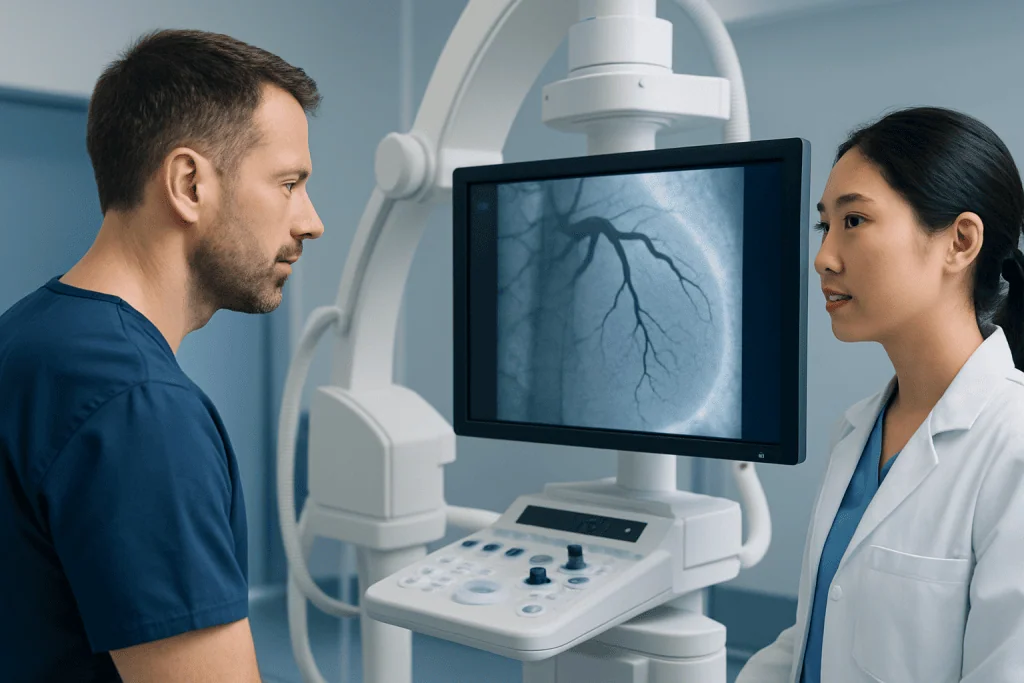
The heart is supplied by two main coronary arteries: the right coronary artery and the left coronary artery. The left coronary artery typically divides into the left anterior descending artery and the circumflex artery. Together, these vessels create a network that nourishes different regions of the heart.
The circumflex artery often gives off smaller branches called obtuse marginal branches, which supply the outer wall of the left ventricle. In some people, the circumflex artery is especially important because it supplies a larger portion of the heart. This variation is called coronary dominance, and it can influence symptoms, test findings, and treatment planning.
Because of this anatomical variability, a circumflex artery blockage can sometimes be harder to detect than a blockage in other coronary arteries. Symptoms may be subtle, and ECG changes are not always obvious. For that reason, doctors often combine symptoms, blood tests, imaging, and sometimes coronary angiography to understand whether blood flow is reduced.
What can go wrong: narrowing, blockage, and reduced flow

The most common problem affecting the circumflex artery is atherosclerosis, the gradual buildup of fatty plaques in the artery wall. Over time, these plaques can narrow the vessel and restrict blood flow, especially during exertion or stress when the heart needs more oxygen. If a plaque suddenly ruptures and a clot forms, the artery may become abruptly blocked.
A reduced blood supply through the circumflex artery can cause myocardial ischemia, which means part of the heart muscle is not getting enough oxygen. This may lead to stable angina, unstable angina, or a heart attack. In some people, poor blood flow may contribute to reduced heart pumping strength or certain rhythm problems, depending on which heart region is affected.
Other, less common issues include congenital variations, coronary artery spasm, embolism, or injury related to procedures. Some patients are told they have coronary artery disease involving the circumflex artery, while others may hear terms such as “non-obstructive disease” or “mild plaque.” These findings are interpreted based on symptoms, the degree of narrowing, and whether the heart muscle is under strain.
Symptoms and warning signs
A circumflex artery problem may cause no symptoms at first, especially if the narrowing develops gradually. When symptoms do occur, the most common is chest discomfort. People may describe it as pressure, heaviness, tightness, burning, or pain in the center or left side of the chest. It may also spread to the arm, shoulder, back, jaw, or upper abdomen.
Other symptoms can include shortness of breath, fatigue with activity, sweating, nausea, lightheadedness, or a reduced ability to exercise. Some people, particularly older adults, women, and patients with diabetes, may have less typical symptoms. Instead of clear chest pain, they may notice breathlessness, unusual tiredness, indigestion-like discomfort, or a general sense that something is wrong.
If the circumflex artery becomes suddenly blocked, symptoms may appear abruptly and persist rather than improving with rest. In this setting, a heart attack is a concern. That is why new, intense, or prolonged symptoms should never be ignored, even if they seem mild at first.
- Chest pressure or pain with activity or emotional stress
- Shortness of breath
- Pain spreading to the arm, jaw, shoulder, or back
- Nausea, sweating, or dizziness
- Unusual fatigue or decreased exercise tolerance
Causes and risk factors
The main cause of circumflex artery disease is atherosclerosis. This process is linked to inflammation, cholesterol buildup, and injury to the artery lining over many years. Plaques can remain stable for long periods or become unstable and trigger an acute coronary event.
Several risk factors increase the chance of developing coronary narrowing in the circumflex artery or elsewhere in the heart. Some cannot be changed, such as older age, male sex, and family history of early heart disease. Others are modifiable and form the basis of prevention and treatment plans.
Important risk factors include:
- High blood pressure
- High LDL cholesterol or other lipid abnormalities
- Diabetes or insulin resistance
- Smoking or tobacco exposure
- Overweight and obesity
- Physical inactivity
- A diet high in saturated fats, trans fats, salt, or ultra-processed foods
- Chronic kidney disease, sleep apnea, or persistent stress
Managing these factors can lower the risk of future narrowing, heart attack, and complications. Even when plaque is already present, healthy changes and appropriate treatment can improve outcomes and quality of life.
How doctors diagnose circumflex artery problems
Diagnosis starts with a careful review of symptoms, medical history, risk factors, and a physical examination. If chest pain or a heart attack is suspected, doctors often begin with an electrocardiogram and blood tests that look for heart muscle injury. These early tests help determine whether urgent treatment is needed.
Additional tests may be used to assess the heart’s structure, function, and blood flow. These can include echocardiography, exercise or imaging-based stress tests, coronary CT angiography, and invasive coronary angiography. The best choice depends on the patient’s symptoms, overall health, and how likely significant coronary disease is.
The circumflex artery can sometimes be involved in forms of heart attack that are less obvious on an ECG than blockages in other arteries. Because of that, doctors may rely on a combination of repeated ECGs, cardiac enzyme testing, and imaging. In some cases, cardiac catheterization provides the clearest answer and also creates a pathway to immediate treatment if needed.
Diagnosis is not only about finding a blockage. Doctors also want to know how severe it is, whether it reduces blood flow enough to explain symptoms, and whether there is damage to heart muscle. This broader picture guides whether treatment should focus on medicines alone or whether a procedure is likely to help.
Treatment options and long-term management
Treatment depends on the severity of narrowing, the presence of symptoms, and whether there is an acute event such as a heart attack. Many patients are treated with a combination of lifestyle measures and medications that reduce the heart’s workload, improve blood flow, and lower the risk of clotting or plaque progression. Common medication groups may include antiplatelet drugs, cholesterol-lowering therapies, blood pressure medicines, and anti-anginal medications, depending on individual needs.
If the circumflex artery has a significant blockage and symptoms continue or the heart muscle is at risk, a procedure may be recommended. One option is coronary stent placement, usually performed during angiography to reopen the narrowed segment. In patients with more extensive disease, diabetes, complex anatomy, or multiple blocked arteries, coronary artery bypass grafting may offer the best long-term result.
After treatment, follow-up care is essential. Recovery does not end when symptoms improve or a procedure is completed. Cardiac rehabilitation, regular checkups, medicine adherence, and risk-factor control all help protect heart function and reduce the chance of another event.
Near the end of the care pathway, some international patients may seek coordinated evaluation at centers with cardiology, imaging, and cardiac surgery expertise. Acibadem International’s multidisciplinary specialists and JCI-accredited hospitals diagnose and treat heart conditions for international patients when advanced assessment or treatment planning is needed.
Prevention, self-care, and when to seek medical care
Prevention focuses on protecting the coronary arteries before symptoms begin and slowing disease if plaque is already present. Helpful steps include not smoking, staying physically active within a doctor’s guidance, eating a heart-healthy diet, maintaining a healthy weight, sleeping well, and controlling blood pressure, cholesterol, and blood sugar. For people who have already been diagnosed with coronary disease, taking prescribed medicines consistently is just as important as lifestyle change.
Self-care also means paying attention to symptom patterns. Chest discomfort that predictably appears with exertion and improves with rest still deserves medical evaluation, even if it seems mild. New symptoms, worsening exercise tolerance, or more frequent angina can suggest that the blood supply has changed and that treatment needs to be reviewed.
Medical care should be sought urgently for chest pain, pressure, or tightness that is severe, lasts more than a few minutes, returns repeatedly, or occurs at rest. Emergency assessment is also important if symptoms come with shortness of breath, sweating, nausea, fainting, or pain spreading to the arm, jaw, or back. Prompt treatment can reduce heart damage and improve recovery.
Even without an emergency, it is sensible to arrange a medical visit if there are risk factors for heart disease, a strong family history, or unexplained symptoms such as breathlessness or unusual fatigue. Early evaluation can clarify whether the circumflex artery or another heart problem may be involved and can guide safe next steps.
Frequently asked questions
What does the circumflex artery do?
The circumflex artery supplies oxygen-rich blood to part of the heart muscle, especially the side and sometimes the back of the left ventricle. It is a branch of the left coronary artery and plays an important role in keeping the heart working normally.
Is a circumflex artery blockage serious?
It can be serious because a blockage may reduce blood flow to the heart muscle and lead to angina or a heart attack. The level of risk depends on how severe the blockage is, how much heart muscle it affects, and whether symptoms are stable or sudden.
Can circumflex artery disease cause a heart attack?
Yes. If a plaque in the circumflex artery ruptures and a blood clot forms, the artery can become blocked and cause a heart attack. This may present with chest pain, shortness of breath, sweating, nausea, or unusual fatigue.
How is a circumflex artery problem diagnosed?
Doctors use symptoms, physical examination, ECG findings, blood tests, and heart imaging to look for reduced blood flow or heart muscle injury. In some cases, coronary angiography is used to see the artery directly and measure the severity of narrowing.
Does every circumflex artery narrowing need a stent?
No. Some narrowings can be managed with medicines and lifestyle changes if symptoms are controlled and blood flow is adequate. A stent or surgery is usually considered when narrowing is significant, symptoms persist, or the heart muscle is at risk.
What symptoms mean someone should get emergency help?
Emergency help is needed for chest pain or pressure that is severe, persistent, or occurs at rest, especially if it comes with shortness of breath, sweating, nausea, dizziness, or pain spreading to the arm, jaw, or back. It is safer to seek urgent evaluation than to wait and see if symptoms pass.
References
- American Heart Association
- National Heart, Lung, and Blood Institute
- European Society of Cardiology
- Mayo Clinic
- Centers for Disease Control and Prevention
This article is for general information only and is not a substitute for professional medical advice. Please consult a qualified doctor about your individual situation.
Explore treatments in Turkey — costs, top hospitals & a free quote
JCI-accredited · board-certified surgeons · reply within 24h
Add us as a Preferred Source to see more of our trusted health content across Google Search, AI Overviews and Discover.

More from the Health Library

Rejecting a Piercing: What Patients Need to Know

Foot Tendons: A Complete Medical Overview

Brovana: A Complete Medical Overview

Formication — Explained by Medical Evidence, Not Myths

Lhermitte’s Sign: An Evidence-Based Guide for Patients