Clinical Neurophysiology Explained: How EEG, EMG, and Related Tests Guide Diagnosis
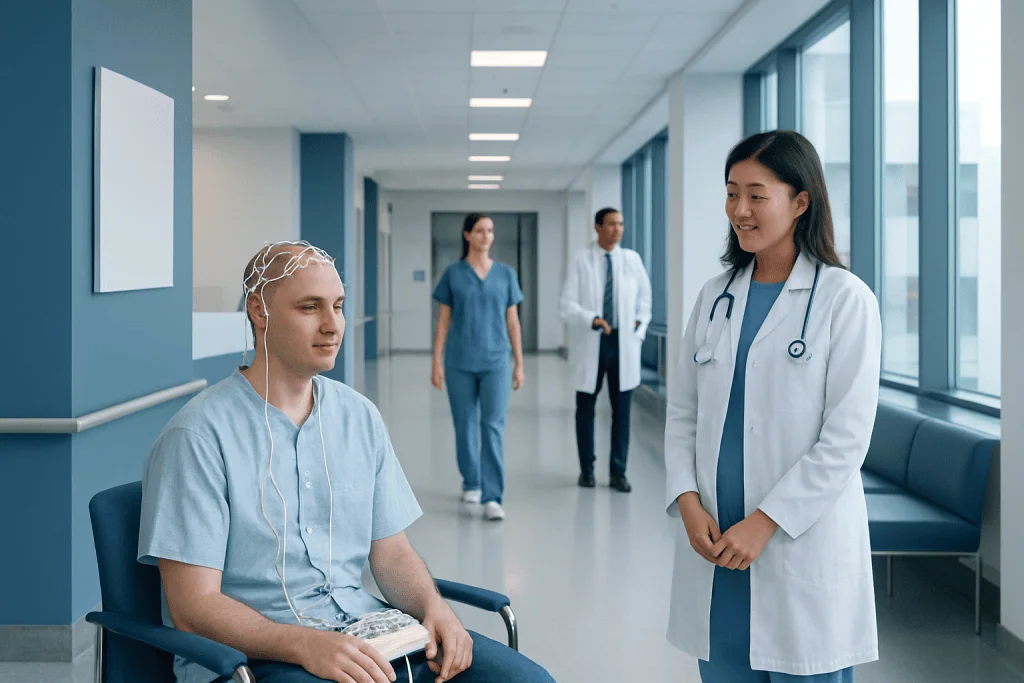
Clinical neurophysiology includes tests such as EEG, EMG, nerve conduction studies, evoked potentials, and sleep-related recordings. These tests measure how the brain, spinal pathways, nerves, and muscles are functioning rather than showing structure alone.
Key Takeaways
- Clinical neurophysiology includes tests such as EEG, EMG, nerve conduction studies, evoked potentials, and sleep-related recordings.
- These tests measure how the brain, spinal pathways, nerves, and muscles are functioning rather than showing structure alone.
- Most neurophysiology tests are outpatient procedures and are generally safe, with only mild temporary discomfort in some cases.
- Results are interpreted alongside the person’s symptoms, physical examination, and imaging or laboratory findings.
- Good preparation, such as following instructions about hair products, medications, sleep, or caffeine, can improve test quality.
Clinical neurophysiology uses specialized tests to measure the electrical activity of the brain, nerves, muscles, and related pathways. These tests help doctors understand symptoms such as seizures, weakness, numbness, sleep problems, or unexplained episodes and guide the next steps in diagnosis and treatment.
Overview: What Clinical Neurophysiology Means
Clinical neurophysiology is a medical field that studies how the nervous system works in real time. It focuses on the electrical signals produced by the brain, spinal cord pathways, peripheral nerves, muscles, and sensory systems. By recording and analyzing these signals, specialists can detect patterns that may explain a person’s symptoms and help narrow down a diagnosis.
Unlike scans such as MRI or CT, which mainly show structure, neurophysiology tests show function. This difference is important. A scan may look normal even when the timing or strength of nerve signals is abnormal. In other situations, imaging and neurophysiology complement each other, giving doctors a fuller picture of both anatomy and function.
Clinical neurophysiology is commonly used when a person has seizures, episodes of loss of awareness, weakness, muscle twitching, numbness, tingling, balance problems, visual symptoms, or sleep-related concerns. It may also help monitor known neurological conditions and guide treatment decisions over time.
Common Tests: EEG, EMG, and Related Studies
Several different tests fall under clinical neurophysiology. Each one is designed to answer a specific question about the nervous system. The most suitable test depends on the person’s symptoms, examination findings, and the condition the doctor is considering.
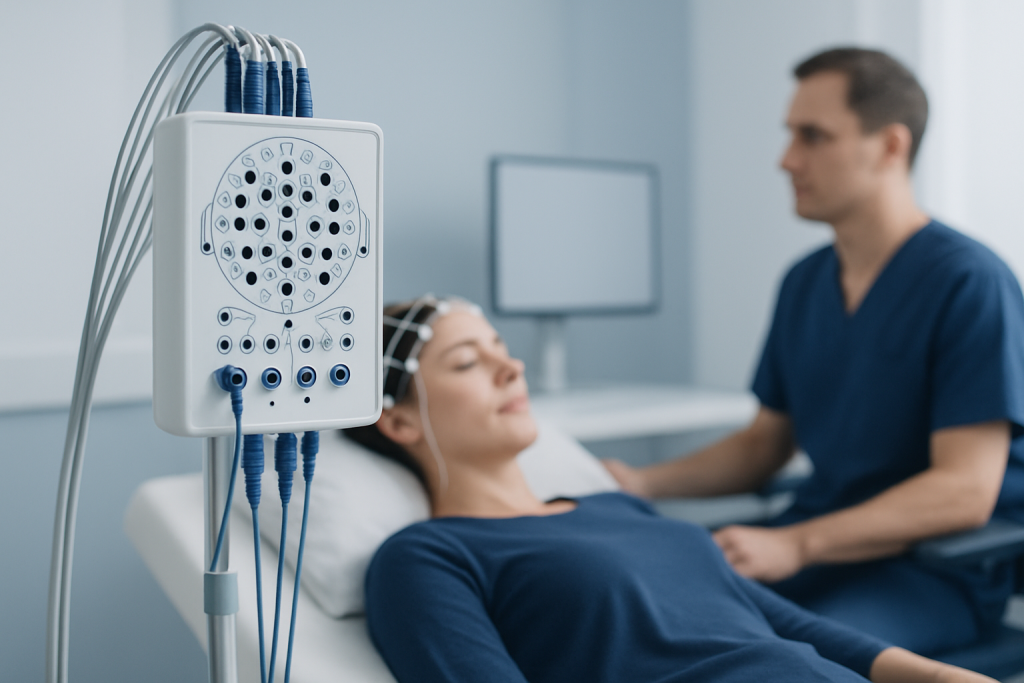
An electroencephalogram, or EEG, records the brain’s electrical activity through small sensors placed on the scalp. It is often used to assess seizures, fainting-like episodes, confusion, unusual movements, or changes in awareness. An EEG can also help evaluate sleep-related events and some types of encephalopathy.
Electromyography, or EMG, and nerve conduction studies assess muscles and peripheral nerves. In a nerve conduction study, small electrical impulses are used to measure how quickly and effectively nerves carry signals. During EMG, a fine needle electrode records electrical activity within selected muscles. These tests can help evaluate nerve compression, peripheral neuropathy, muscle disease, and disorders affecting the communication between nerves and muscles.
Other neurophysiology tests include evoked potentials, which measure how the brain responds to visual, auditory, or sensory stimulation, and sleep studies that may include brain wave monitoring, breathing assessment, heart rhythm, oxygen levels, and leg movement recordings. In some cases, doctors may recommend a more focused EEG evaluation, EMG testing, or a formal sleep study depending on the main concern.
What Symptoms or Conditions These Tests Help Evaluate

Clinical neurophysiology can support the evaluation of many neurological symptoms. EEG is especially useful when there are suspected seizures, episodes of staring, sudden confusion, unusual sensations, or unexplained loss of consciousness. It can be part of the assessment for suspected epilepsy and may also help distinguish some non-epileptic events from seizure-related activity.
EMG and nerve conduction studies are often requested for weakness, muscle cramps, twitching, numbness, burning sensations, tingling, or pain radiating into the arms or legs. They may help detect nerve entrapment problems such as carpal tunnel syndrome, generalized nerve damage, radiculopathy linked to the spine, or primary muscle disorders.
Evoked potentials may be used when there are concerns about the visual pathways, hearing pathways, or sensory tracts. Sleep-related neurophysiology may be considered for snoring, suspected sleep apnea, unusual movements during sleep, daytime sleepiness, or episodes that occur mainly at night. In children and adults, the choice of test is individualized, and not every symptom requires every study.
These tests are most helpful when interpreted in context. A neurophysiology result rarely stands alone. Doctors combine it with the medical history, physical examination, blood tests, and sometimes imaging such as MRI to decide whether findings point toward one condition, several possible conditions, or a need for further follow-up.
How to Prepare and What to Expect During Testing
Preparation varies depending on the test. For EEG, people are often asked to arrive with clean, dry hair and avoid gels, sprays, or oils because these can interfere with scalp electrodes. For some EEG studies, especially those looking for subtle seizure activity, a doctor may request reduced sleep the night before. Medication instructions should always be followed exactly as given by the treating team.
For nerve conduction studies and EMG, it is usually helpful to avoid heavy lotions or creams on the skin on the day of testing. Comfortable clothing that allows easy access to the arms or legs can make the visit easier. Patients should tell the clinician about bleeding disorders, pacemakers or implanted devices, pregnancy, or medicines such as blood thinners, as this information may affect planning.
During an EEG, scalp electrodes are attached with paste or adhesive, and the person lies or sits quietly while brain activity is recorded. They may be asked to open and close their eyes, breathe deeply for a short time, or look at flashing lights. The test is painless, although the paste may feel messy and some people may feel tired if sleep deprivation was part of the preparation.
During nerve conduction studies, brief electrical pulses are delivered to the skin to activate nerves, which can feel unusual or mildly uncomfortable. During EMG, a fine needle is placed into selected muscles to record activity at rest and during movement. The procedure is generally well tolerated, though some muscles may feel sore for a short time afterward.
How Doctors Interpret Results
Neurophysiology results are interpreted by trained specialists who look for specific patterns. In EEG, they assess the background rhythm, symmetry, reactivity, and whether there are epileptiform discharges or other abnormalities. Importantly, an EEG can be normal even in a person who has seizures, so a normal result does not always rule out a seizure disorder.
In nerve conduction studies, doctors review the speed, amplitude, and latency of nerve responses. These measurements can suggest whether a problem is affecting the nerve covering, the nerve fibers themselves, or a localized segment such as a compressed nerve at the wrist or elbow. EMG adds information about how muscles behave and whether weakness may come from the muscle, the peripheral nerve, or the motor pathways supplying them.
Evoked potentials and sleep studies are also pattern-based tests. Delayed responses may indicate slowed signal transmission in certain pathways, while sleep recordings can show interruptions in breathing, abnormal movements, or electrical changes during sleep. The final report connects these findings to the patient’s symptoms rather than simply labeling a tracing as normal or abnormal.
Because test interpretation depends on the full clinical picture, patients often discuss the results with the doctor who ordered the study rather than relying on the raw report alone. This conversation helps explain what the findings mean, whether further testing is needed, and what treatment or monitoring may be appropriate next.
Benefits, Limitations, and Safety
The main benefit of clinical neurophysiology is that it provides direct functional information. It can identify electrical or signal-conduction problems that may not be visible on imaging. It can also help localize where a problem may be occurring, such as in the brain, a nerve root, a peripheral nerve, the neuromuscular junction, or the muscle itself.
At the same time, these tests have limitations. Results can be normal between episodes, particularly if symptoms are intermittent. Some abnormalities are nonspecific, meaning they suggest dysfunction but do not point to a single exact diagnosis. Technical quality, timing, and the person’s cooperation can also affect what the test shows.
Most neurophysiology tests are considered safe. EEG does not send electricity into the brain; it only records activity from the scalp. Nerve conduction studies use controlled surface stimulation, and EMG involves sterile fine needles. Short-term discomfort, temporary soreness, or mild skin irritation can happen, but serious complications are uncommon when testing is performed by trained professionals.
For many people, understanding these points is reassuring. Neurophysiology tests are tools that help clarify a diagnosis, not a sign that the condition is necessarily severe. A careful explanation before and after the study often reduces anxiety and helps patients know what to expect.
After the Test and Possible Next Steps
After an EEG, most people can return to normal activities unless they were specifically told otherwise. If sleep deprivation was used, rest may be recommended. Hair may need washing to remove the electrode paste. After EMG, any mild muscle soreness usually settles on its own within a short time.
The next steps depend on the findings and the original concern. Some people may need treatment, while others may simply need observation, repeat testing, or correlation with imaging and laboratory results. In seizure evaluation, doctors may consider medication, longer-term EEG monitoring, or further imaging. In nerve and muscle disorders, they may recommend rehabilitation, medication review, metabolic testing, or specialist referral.
It is helpful for patients to ask what the test did and did not show. Questions such as whether the findings explain the symptoms, whether more tests are needed, and what warning signs to watch for can make follow-up clearer. Good communication helps turn technical results into practical care decisions.
For international patients seeking coordinated neurological assessment, Acibadem International’s multidisciplinary specialists and JCI-accredited hospitals evaluate symptoms and use neurophysiology testing as part of diagnosis and treatment planning when appropriate.
When to See a Doctor
A doctor should assess symptoms such as unexplained loss of consciousness, suspected seizures, new or progressive weakness, significant numbness, persistent tingling, repeated falls, severe muscle wasting, or unusual episodes during sleep. These symptoms do not always indicate a serious condition, but they deserve professional evaluation, especially if they are new, recurring, or worsening.
Urgent medical attention is especially important if symptoms begin suddenly, are accompanied by trouble speaking, facial drooping, severe headache, chest pain, breathing difficulty, or confusion that does not improve. Emergency care is also needed after a prolonged seizure, repeated seizures without recovery, or a first seizure associated with injury or prolonged reduced awareness.
People with chronic symptoms should still seek review if daily activities are becoming harder or if earlier treatment is no longer helping. Neurophysiology testing is not needed for everyone, but a qualified doctor can decide whether it may clarify the cause and support a more targeted treatment plan.
Frequently asked questions
Is clinical neurophysiology the same as brain imaging?
No. Brain imaging such as MRI or CT mainly shows structure, while clinical neurophysiology tests show how the nervous system is functioning electrically. Doctors often use both together because they answer different but complementary questions.
Does an EEG hurt?
An EEG is usually painless because the electrodes only record activity from the scalp. The paste or adhesive may feel slightly uncomfortable or messy, but the test itself does not typically cause pain.
Are EMG and nerve conduction studies painful?
These tests can cause brief discomfort, but many people tolerate them well. Nerve conduction studies use small electrical pulses on the skin, and EMG uses a fine needle in selected muscles, which may leave temporary mild soreness afterward.
Can a normal EEG or EMG still happen if symptoms are real?
Yes. Some neurological symptoms are intermittent, and a test may be normal between episodes or early in the course of a condition. That is why doctors interpret results together with symptoms, examination findings, and other investigations.
How long do neurophysiology tests take?
The length depends on the type of study. A routine EEG may take less than an hour, while EMG and nerve conduction studies vary based on how many nerves and muscles are tested. More specialized monitoring, such as prolonged EEG or overnight sleep studies, can take much longer.
Should medications be stopped before testing?
Medications should only be changed if the doctor specifically advises it. Some medicines can affect results, but stopping them without guidance may be unsafe. Patients should bring an up-to-date medication list to the appointment.
References
- International Federation of Clinical Neurophysiology
- American Clinical Neurophysiology Society
- National Institute of Neurological Disorders and Stroke
- National Institute for Health and Care Excellence
- Mayo Clinic
This article is for general information only and is not a substitute for professional medical advice. Please consult a qualified doctor about your individual situation.
Clinical Neurophysiology in Turkey — costs, top hospitals & a free quote
JCI-accredited · board-certified surgeons · reply within 24h
Add us as a Preferred Source to see more of our trusted health content across Google Search, AI Overviews and Discover.

Neurology
Diagnosis and treatment of disorders of the brain, spinal cord, nerves and muscles.
51 specialists in this unitMore from the Health Library



Related Specialists

Dr. Bülent Erdoğan
Emergency Service
Prof. Dr. Harzem Özger
Orthopedic Surgery & Traumatology
Dt. Salev Zeyrek
Oral & Dental Health
Prof. Dr. Alp Demireller
Otorhinolaryngology