Clinical Neurophysiology for Peripheral Neuropathy: How Nerve Damage Is Diagnosed

Peripheral neuropathy can cause numbness, tingling, burning pain, weakness, or balance problems. Clinical neurophysiology mainly uses nerve conduction studies and electromyography to assess nerve and muscle function.
Key Takeaways
- Peripheral neuropathy can cause numbness, tingling, burning pain, weakness, or balance problems.
- Clinical neurophysiology mainly uses nerve conduction studies and electromyography to assess nerve and muscle function.
- These tests help show whether damage affects sensory nerves, motor nerves, or both, and whether the problem is mild or more advanced.
- Results are interpreted alongside medical history, physical examination, blood tests, and sometimes imaging or biopsy.
- Early diagnosis can help identify treatable causes such as diabetes, vitamin deficiencies, medication effects, or nerve compression.
Clinical neurophysiology for peripheral neuropathy helps doctors evaluate how well nerves and muscles are working. By combining symptoms, examination, and tests such as nerve conduction studies and electromyography, it can confirm nerve damage and guide treatment.
Overview
Peripheral neuropathy is a broad term for damage to the nerves outside the brain and spinal cord. These peripheral nerves carry sensation from the skin, control muscle movement, and regulate certain automatic body functions such as sweating, blood pressure, and digestion. When they are injured or diseased, a person may notice numbness, tingling, pain, weakness, or reduced coordination.
Clinical neurophysiology is a medical field that measures how nerves and muscles work. In people with suspected peripheral neuropathy, it is especially helpful because symptoms alone do not always show which nerves are affected or how severe the problem is. The tests provide objective information that can support a diagnosis and narrow down possible causes.
The most common clinical neurophysiology tests for peripheral neuropathy are nerve conduction studies and electromyography, often called EMG. Together, these tests can show whether the problem mainly involves the nerve covering called myelin, the nerve fiber itself called the axon, the muscle, or the junction between nerve and muscle. This distinction matters because different patterns point toward different underlying conditions.
Doctors usually do not rely on test results in isolation. Instead, they combine them with the patient’s medical history, physical examination, blood tests, and sometimes additional assessments. This step-by-step approach helps build a clear picture of the condition and supports a more personalized treatment plan.
Symptoms That May Suggest Peripheral Neuropathy
Peripheral neuropathy can begin gradually and may first affect the feet or hands. Many people describe a pins-and-needles feeling, burning discomfort, reduced sensation, or a feeling that socks or gloves are bunched up when they are not. Symptoms often start in the longest nerves first, so they may move upward from the toes over time.
Some people develop muscle-related symptoms rather than sensory changes. These can include weakness, hand clumsiness, foot drop, muscle cramps, or trouble climbing stairs and getting up from a chair. If the nerves involved in balance and position sense are affected, walking may feel unsteady, especially in the dark or on uneven ground.
Autonomic nerve involvement can cause a different group of symptoms. A person may notice dizziness on standing, changes in sweating, constipation, urinary difficulties, sexual dysfunction, or changes in skin temperature and color. These symptoms can be subtle, and they may not always be immediately linked to nerve disease.
Because symptoms can overlap with other neurological or musculoskeletal conditions, formal evaluation is important. Clinical neurophysiology helps distinguish peripheral neuropathy from other problems such as nerve root compression, muscle disease, or disorders that affect the spinal cord or brain.
Common Causes and Risk Factors

Peripheral neuropathy has many possible causes. Diabetes is one of the most common, but it is not the only one. Other causes include vitamin deficiencies, thyroid disease, kidney disease, autoimmune conditions, infections, inherited nerve disorders, alcohol misuse, exposure to toxins, and side effects from some medications, including certain chemotherapy drugs.
Nerves can also be affected by compression or entrapment. For example, a person may have a focal neuropathy such as carpal tunnel syndrome, while others develop a more widespread polyneuropathy that affects multiple nerves in a length-dependent pattern. Clinical neurophysiology helps separate these patterns because treatment and follow-up are different.
Risk factors depend on the underlying cause, but older age, longstanding diabetes, poor glucose control, heavy alcohol use, nutritional problems, and a family history of neuropathy may increase the chance of nerve damage. In some cases, symptoms appear after an infection or as part of an inflammatory nerve condition that may need urgent attention.
Even after careful testing, some cases are labeled idiopathic, meaning no clear cause is found. This can be frustrating, but it does not mean the symptoms are not real. It simply means the available evidence has not yet identified the trigger, and continued follow-up may still be useful.
How Clinical Neurophysiology Diagnoses Nerve Damage
The evaluation usually starts with a detailed discussion of symptoms, medical conditions, medications, family history, and the timing of symptom onset. The doctor then performs a neurological examination to assess strength, reflexes, sensation, coordination, and walking pattern. This helps identify whether the problem is likely to be in the peripheral nerves and which tests are most appropriate.
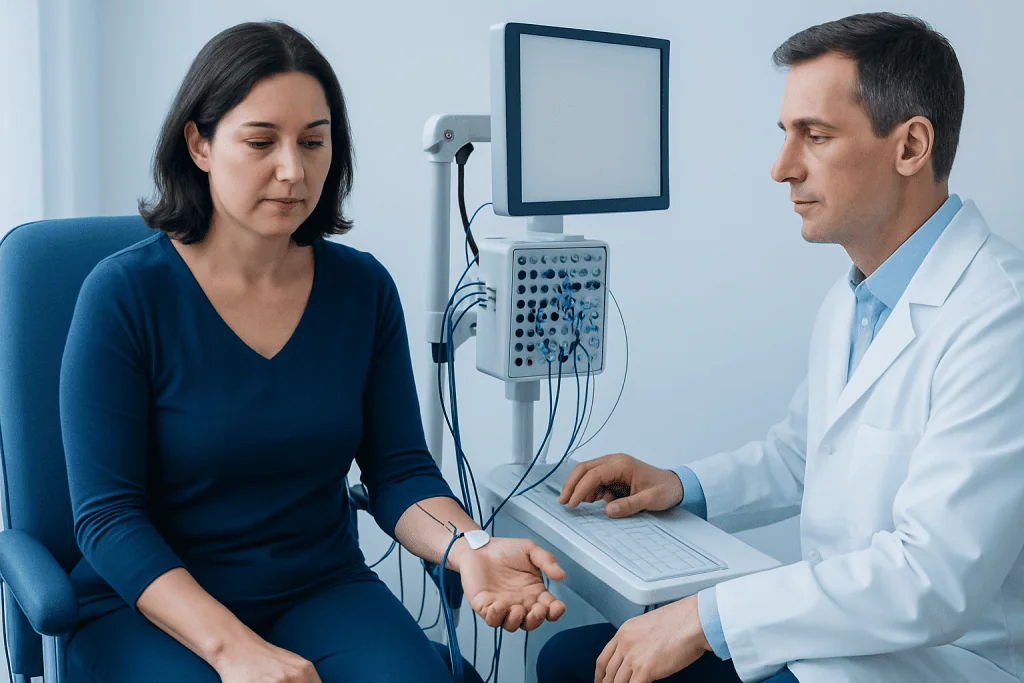
Nerve conduction studies measure how quickly and effectively electrical signals travel along a nerve. Small surface electrodes are placed on the skin, and brief electrical impulses are delivered to stimulate the nerve. The test records the speed, size, and timing of the nerve response. Slower conduction may suggest myelin damage, while smaller response amplitudes may point more toward axonal loss.
EMG involves placing a very thin needle electrode into selected muscles to record their electrical activity at rest and during gentle contraction. Although it can cause temporary discomfort, it is usually well tolerated. EMG helps show whether weakness or abnormal sensations are related to nerve injury, muscle disease, or a problem affecting the motor unit. When combined with nerve conduction studies, it gives a fuller picture of neuromuscular function.
In some situations, doctors may also use additional neurophysiological tests such as repetitive nerve stimulation, autonomic testing, or evoked responses. These are chosen according to the pattern of symptoms. Clinical neurophysiology is also helpful for distinguishing peripheral neuropathy from carpal tunnel syndrome or from nerve root irritation associated with spine conditions, where lumbar disc herniation surgery may be relevant in selected patients.
What the Test Results Can Show
Clinical neurophysiology does more than confirm that a nerve problem exists. It can help classify the neuropathy by showing whether the damage is mainly sensory, motor, or mixed, and whether it affects one nerve, several individual nerves, or many nerves in a symmetrical pattern. This classification gives important clues about the likely cause.
The test findings can also suggest whether the process is demyelinating or axonal. Demyelinating neuropathies mainly affect the insulating layer around the nerve, often leading to slowed conduction. Axonal neuropathies mainly damage the nerve fibers themselves and may lead to reduced signal size. Some disorders show features of both. Understanding the pattern helps guide the next steps in investigation and management.
Another important role is estimating severity and distribution. Mild cases may show subtle abnormalities, while more advanced cases can reveal widespread changes. The results may explain why a person has pain without major weakness, or weakness with relatively limited sensory loss. They may also help monitor whether the condition is stable, progressing, or responding to treatment.
It is also important to know the limits of testing. Some small fiber neuropathies can cause burning pain or altered temperature sensation even when routine nerve conduction studies are normal, because these tests mainly assess larger nerve fibers. In such cases, doctors may rely on symptoms, examination, blood work, autonomic testing, or specialized skin biopsy to make the diagnosis.
Other Tests That May Be Needed
Because peripheral neuropathy is a sign rather than a single disease, additional testing is often needed to find the cause. Blood tests may check glucose levels, vitamin B12, thyroid function, kidney and liver function, inflammatory markers, and immune-related or protein abnormalities. The choice depends on the person’s age, medical history, and examination findings.
Imaging is not required for every patient, but it can be useful when symptoms suggest a structural cause. For example, if weakness or pain follows a nerve root pattern, spine imaging may help look for compression. In selected situations, targeted treatment such as microdiscectomy or spinal fusion may be considered if a compressive spine disorder is confirmed and conservative treatment is not enough.
Sometimes ultrasound or MRI is used to assess a specific nerve, especially in focal entrapment neuropathies. Genetic testing may be recommended when symptoms began early in life or there is a strong family history. Nerve biopsy is now less common, but it may be considered in particular inflammatory or vasculitic neuropathies when tissue confirmation could change treatment.
All of these tools complement, rather than replace, clinical neurophysiology. The aim is to understand not only that nerve damage is present, but also why it developed and what can be done next. A careful and structured work-up often provides reassurance as well as direction.
Treatment Options and Self-Care
Treatment depends on the cause, severity, and symptoms. When possible, the most effective approach is to treat the underlying problem, such as improving diabetes management, correcting a vitamin deficiency, adjusting a medication, or treating an autoimmune condition. In some cases, relieving pressure on a compressed nerve can improve symptoms and help prevent further damage.
Symptom management is also important. Doctors may recommend medicines for nerve pain, physical therapy to maintain strength and mobility, occupational therapy for hand function and daily activities, and balance training to reduce falls. Foot care is especially important when sensation is reduced, because injuries may go unnoticed and heal slowly.
Self-care can support recovery and comfort. Helpful steps may include limiting alcohol, eating a balanced diet, staying physically active within personal limits, checking the feet regularly, and wearing well-fitting shoes. People with numbness should take extra care around heat sources and sharp objects because reduced sensation increases the risk of accidental injury.
If a person needs specialist evaluation, a multidisciplinary team can be helpful. Near the end of the diagnostic journey, some patients also benefit from coordinated care for related conditions such as herniated disc when symptoms overlap. Acibadem International’s multidisciplinary specialists and JCI-accredited hospitals diagnose and treat peripheral nerve and spine-related conditions for international patients.
When to See a Doctor
A person should arrange medical evaluation if numbness, tingling, burning pain, or weakness persists, worsens, or begins to interfere with walking, hand use, sleep, or daily activities. Early assessment is especially helpful because some causes of neuropathy are treatable, and delaying care may allow avoidable nerve damage to progress.
Prompt medical attention is important if symptoms appear suddenly, spread quickly, or are accompanied by significant weakness, trouble walking, bowel or bladder changes, severe back or neck pain, or breathing difficulty. These features may suggest a more urgent nerve or spine disorder that needs rapid assessment.
Follow-up also matters after testing. A normal or mildly abnormal study does not always end the investigation, particularly if symptoms continue or change. Doctors may repeat testing later, expand the laboratory work-up, or look for small fiber or autonomic involvement if routine studies do not fully explain the person’s symptoms.
Most importantly, patients should feel comfortable asking what the tests showed, what remains uncertain, and what the next steps are. A clear explanation can reduce anxiety and make it easier to take part in treatment decisions and self-care.
Frequently asked questions
What is clinical neurophysiology for peripheral neuropathy?
It is the use of specialized tests to measure how well nerves and muscles are working in someone with suspected nerve damage. The main tests are nerve conduction studies and electromyography, which help confirm neuropathy and show its pattern and severity.
Are nerve conduction studies and EMG the same test?
They are related but different. Nerve conduction studies evaluate how electrical signals travel through nerves, while EMG checks the electrical activity of muscles using a thin needle electrode. Doctors often perform them together because they provide complementary information.
How painful are neuropathy tests?
Most people find the tests uncomfortable rather than severely painful. Nerve conduction studies feel like brief electrical pulses, and EMG may cause short-lived discomfort when the needle is inserted into the muscle. The sensation usually stops quickly after each part of the test.
Can a person have peripheral neuropathy even if test results are normal?
Yes, this is possible, especially with small fiber neuropathy. Routine nerve conduction studies mainly assess larger nerve fibers, so some patients with burning pain or temperature-sensation changes may need other tests or clinical assessment to confirm the diagnosis.
What conditions can mimic peripheral neuropathy?
Several conditions can cause similar symptoms, including nerve root compression, muscle disorders, spinal cord disease, poor circulation, and focal entrapment neuropathies such as carpal tunnel syndrome. This is one reason clinical neurophysiology is useful, because it helps distinguish among these possibilities.
How should someone prepare for a nerve conduction study or EMG?
In general, the person should arrive with clean skin and avoid lotions or oils on the day of the test because they can interfere with electrode contact. It is also important to tell the doctor about blood thinners, implanted medical devices, or bleeding disorders, as these details may affect planning.
References
- National Institute of Neurological Disorders and Stroke
- National Institute of Diabetes and Digestive and Kidney Diseases
- American Association of Neuromuscular & Electrodiagnostic Medicine
- National Health Service
- Mayo Clinic
This article is for general information only and is not a substitute for professional medical advice. Please consult a qualified doctor about your individual situation.
Clinical Neurophysiology in Turkey — costs, top hospitals & a free quote
JCI-accredited · board-certified surgeons · reply within 24h
Add us as a Preferred Source to see more of our trusted health content across Google Search, AI Overviews and Discover.
Check your numbers in seconds
BMI, calories, due date, blood pressure and 30+ more clinical calculators — free, instant, doctor-reviewed ranges.

Neurology
Diagnosis and treatment of disorders of the brain, spinal cord, nerves and muscles.
51 specialists in this unit