Clinical Neuropsychology: How It Supports Diagnosis and Care

Clinical neuropsychology studies how brain health affects thinking, behavior, and everyday functioning. Neuropsychological assessment can help clarify symptoms such as memory loss, attention problems, language changes, or slowed thinking.
Key Takeaways
- Clinical neuropsychology studies how brain health affects thinking, behavior, and everyday functioning.
- Neuropsychological assessment can help clarify symptoms such as memory loss, attention problems, language changes, or slowed thinking.
- Testing does not usually diagnose a condition on its own; it adds detailed information that supports medical diagnosis and treatment planning.
- Results can guide rehabilitation, school or workplace supports, and family care strategies.
- Assessments are tailored to the person’s age, symptoms, language, education, and medical history.
Clinical neuropsychology is a specialty that evaluates how brain function affects thinking, memory, attention, emotions, and behavior. It supports diagnosis and care by helping doctors understand cognitive strengths and difficulties, guide treatment plans, and track changes over time.
Overview
Clinical neuropsychology is a branch of healthcare that looks at the relationship between the brain and behavior. It focuses on how medical, neurological, or developmental conditions may affect abilities such as memory, attention, language, problem-solving, mood regulation, and day-to-day independence. A clinical neuropsychologist uses interviews, standardized tests, and careful interpretation to build a detailed picture of cognitive functioning.
This specialty can be helpful for people of many ages. Children may be evaluated for learning, attention, or developmental concerns. Adults may need assessment after a concussion, stroke, brain tumor, epilepsy, or a period of unexplained memory change. Older adults may be assessed when there is concern about age-related cognitive decline or disorders that affect memory and thinking.
Clinical neuropsychology does not replace neurology, psychiatry, or general medical care. Instead, it works alongside them. A neuropsychological assessment adds depth by showing which skills are working well, which are affected, and how these patterns fit with the person’s symptoms and medical history.
What Clinical Neuropsychology Evaluates
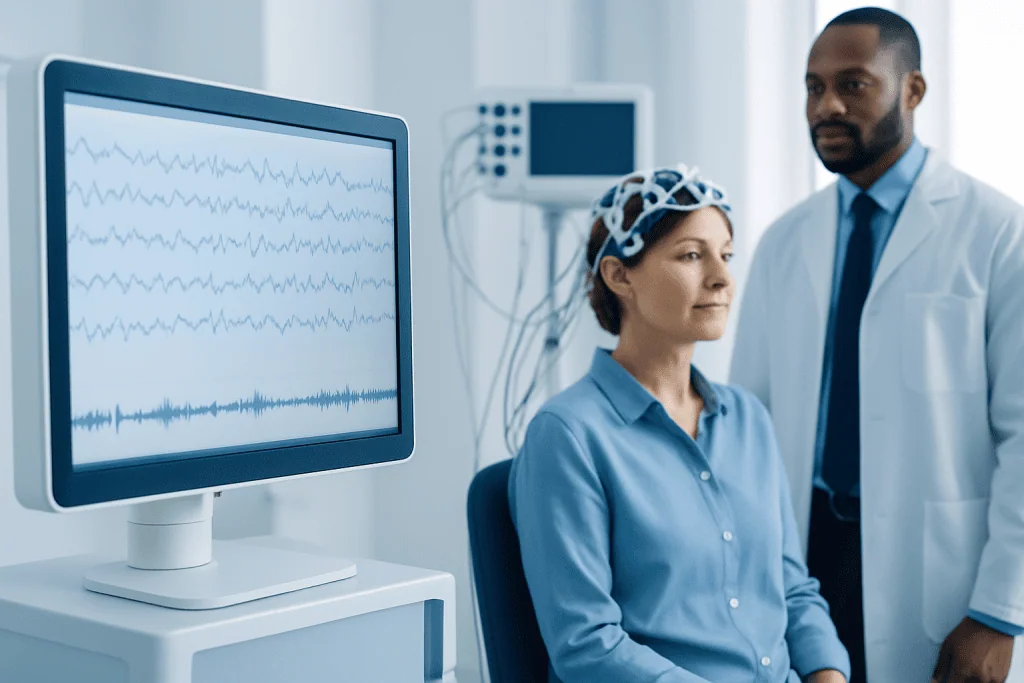
A neuropsychological evaluation looks at multiple areas of thinking and behavior rather than a single symptom. The goal is to understand strengths and challenges in a structured and reliable way. This can help explain why a person is having difficulty at home, in school, at work, or in social situations.
Common areas assessed include memory, attention, language, visual-spatial skills, processing speed, executive functions, and emotional functioning. Executive functions are the higher-level skills that help with planning, organizing, flexible thinking, and self-monitoring. Depending on the reason for referral, the assessment may also explore academic abilities, motor coordination, social understanding, or fatigue.
- Attention and concentration
- Learning and memory
- Language and communication
- Planning, organization, and problem-solving
- Visual-spatial perception
- Processing speed
- Mood, anxiety, and behavior
- Daily functioning and independence
Because thinking and emotions influence each other, the evaluation often considers mental health as well as brain-based factors. For example, depression, anxiety, sleep problems, pain, and stress can affect concentration and memory. Looking at the full picture helps the care team avoid oversimplifying symptoms.
When It May Be Recommended

Doctors may recommend clinical neuropsychology when there are concerns about changes in cognition, behavior, or functioning that need more detailed explanation. The assessment can help distinguish between different possible causes of symptoms, measure the impact of a known medical condition, or establish a baseline before treatment.
Common reasons for referral include head injury, stroke, epilepsy, brain infections, multiple sclerosis, brain tumors, developmental disorders, learning difficulties, and possible dementia. It may also be used when symptoms are subtle but persistent, such as problems with focus, mental fatigue, or word-finding. In some cases, it helps clarify whether difficulties are more likely related to neurological disease, emotional distress, medication effects, or a combination of factors.
Neuropsychological assessment is also useful in rehabilitation and long-term care planning. It can support decisions about returning to work or school, driving, living independently, and the types of therapy or accommodations that may be most helpful. For example, a person recovering from stroke may benefit from cognitive rehabilitation strategies tailored to the specific pattern of changes identified during testing.
How Neuropsychological Assessment Works
The process usually begins with a detailed clinical interview. The neuropsychologist asks about current symptoms, medical history, medications, education, work, language background, and daily functioning. Family members or caregivers may also provide helpful observations, especially if the person has memory difficulties or changes in behavior that they do not fully notice themselves.
Testing is then selected to match the referral question. Some evaluations are brief and focused, while others are more comprehensive. Tasks may involve remembering words or stories, solving puzzles, naming objects, drawing shapes, reading, writing, or responding to questions under time limits. These are standardized tests, which means results are compared with expected performance for people of a similar age and background.
Preparation is usually straightforward. People are often advised to get a good night’s sleep, eat normally unless told otherwise, bring glasses or hearing aids if needed, and take usual medications unless a doctor gives different instructions. The setting is designed to be calm and structured, and breaks can often be provided when fatigue is a concern.
The results are interpreted in context. A score alone is not enough to explain a person’s difficulties. The neuropsychologist considers the pattern of findings, medical records, imaging, laboratory results, emotional health, and real-life concerns. This is what allows clinical neuropsychology to support diagnosis and individualized care rather than simply labeling a problem.
How It Supports Diagnosis and Treatment Planning
One of the main strengths of clinical neuropsychology is that it helps turn symptoms into a clearer clinical picture. For example, forgetfulness may stem from poor attention, anxiety, sleep disturbance, depression, medication side effects, a neurological disorder, or more than one of these at the same time. A detailed cognitive profile can help the medical team understand which explanation is most consistent with the findings.
Neuropsychological results can contribute to the assessment of conditions such as Alzheimer’s disease and dementia, attention-deficit disorders, learning disorders, epilepsy-related cognitive changes, or the after-effects of traumatic brain injury. They may also be used before and after procedures to monitor change over time. In some settings, testing supports planning for brain tumor treatment or recovery after stroke rehabilitation.
Just as importantly, the results guide practical treatment decisions. Recommendations may include cognitive rehabilitation, psychotherapy, speech and language therapy, occupational therapy, educational supports, workplace adjustments, or caregiver strategies. When the assessment identifies preserved strengths, these can be used to build more effective coping plans.
Follow-up testing may be recommended in some cases. Reassessment can show whether symptoms are improving, stable, or progressing, and whether treatment approaches should be adjusted. This can be especially valuable in rehabilitation, chronic neurological conditions, and situations where families need support planning for future care.
What Patients and Families Can Expect From the Results
After testing, the neuropsychologist usually prepares a written report and discusses the findings in clear language. The report often explains the reason for referral, the methods used, the person’s performance across different cognitive areas, and the main clinical conclusions. It may also include practical recommendations for home, school, work, or therapy.
For patients and families, one of the most helpful parts of the process is understanding that symptoms often follow a pattern. Knowing which abilities are strong and which are vulnerable can reduce uncertainty and help families respond more effectively. It can also help patients feel validated when difficulties that are hard to describe are clearly identified and explained.
Recommendations are usually individualized. Some people benefit from memory aids, structured routines, written reminders, reduced distraction, shorter tasks, or fatigue management strategies. Others may need school accommodations, counseling, or a referral for neurorehabilitation. These recommendations are most useful when they are specific, realistic, and suited to the person’s daily life.
Limitations, Self-care, and When to Seek Further Help
Clinical neuropsychology is highly informative, but it has limits. Testing cannot by itself reveal every cause of symptoms, and results can be influenced by pain, tiredness, language differences, low mood, sleep loss, or unfamiliarity with testing situations. This is why assessment works best as part of broader medical care rather than in isolation.
Self-care can support cognitive health before and after evaluation. Helpful habits include regular sleep, physical activity suited to the person’s health, balanced nutrition, social engagement, medication review with a doctor, and treatment of hearing, vision, mood, or sleep problems when present. Using calendars, reminder apps, written notes, and consistent routines may also reduce daily stress.
Medical advice should be sought if there is new or worsening memory loss, confusion, personality change, difficulty speaking, unexplained decline in school or work performance, or problems managing daily tasks safely. Urgent care is important for sudden symptoms such as weakness, facial droop, severe confusion, new seizures, or abrupt speech problems, as these may signal a medical emergency.
In multidisciplinary centers, clinical neuropsychology often works closely with neurology, psychiatry, rehabilitation, and imaging services. Acibadem International’s multidisciplinary specialists and JCI-accredited hospitals diagnose and treat neurological and cognitive conditions for international patients, with neuropsychological assessment forming part of coordinated care when appropriate.
Frequently asked questions
What is the difference between clinical neuropsychology and neurology?
Neurology is a medical specialty that diagnoses and treats disorders of the brain, spinal cord, and nerves. Clinical neuropsychology focuses on how these conditions affect thinking, behavior, emotion, and daily functioning. The two specialties often work together to provide a fuller understanding of symptoms.
Does a neuropsychological assessment diagnose dementia?
A neuropsychological assessment can strongly support the evaluation of dementia, but it is usually not the only part of diagnosis. Doctors also consider medical history, physical examination, brain imaging, and laboratory tests. Testing helps show whether the pattern of cognitive changes fits a neurodegenerative condition or another cause.
How long does neuropsychological testing take?
The length varies depending on the purpose of the evaluation. Some assessments are brief, while comprehensive testing may take several hours and sometimes be split across more than one session. The neuropsychologist chooses the testing plan based on the symptoms and clinical questions.
Do patients need to prepare for a clinical neuropsychology appointment?
Preparation is usually simple. It helps to sleep as well as possible, eat normally unless told otherwise, bring glasses or hearing aids, and have a list of medications and medical records if available. Patients should follow their doctor’s instructions about medicines and ask in advance if they are unsure.
Can anxiety or depression affect test results?
Yes, mood and stress can influence attention, memory, and processing speed. That does not make the results useless; in fact, identifying the effect of emotional factors is an important part of interpretation. Neuropsychologists consider mental health together with medical and neurological information.
Is clinical neuropsychology helpful after a concussion or stroke?
Yes, it can be very helpful in both situations. Testing may identify subtle problems with concentration, memory, speed, or planning that affect school, work, or recovery. The results can guide rehabilitation, return-to-activity decisions, and practical coping strategies.
References
- American Psychological Association
- National Institute of Neurological Disorders and Stroke
- World Health Organization
- Alzheimer's Association
- Centers for Disease Control and Prevention
This article is for general information only and is not a substitute for professional medical advice. Please consult a qualified doctor about your individual situation.
Neuropsychology in Turkey — costs, top hospitals & a free quote
JCI-accredited · board-certified surgeons · reply within 24h
Add us as a Preferred Source to see more of our trusted health content across Google Search, AI Overviews and Discover.