

Clubfoot Baby Treatment: How It Works, Results and What to Expect
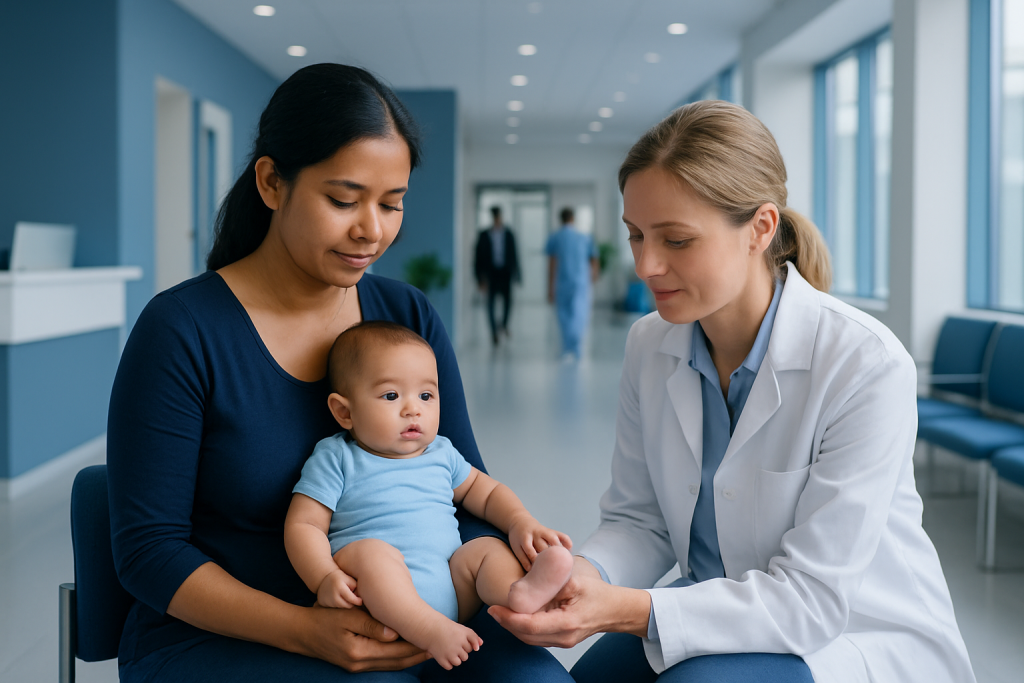
The Ponseti method is the standard first-line treatment for most babies born with clubfoot. Treatment commonly involves weekly casts, a minor Achilles tendon procedure, and a foot-abduction brace.
Key Takeaways
- The Ponseti method is the standard first-line treatment for most babies born with clubfoot.
- Treatment commonly involves weekly casts, a minor Achilles tendon procedure, and a foot-abduction brace.
- Consistent brace use is essential because clubfoot can return during early childhood.
- Most children with successfully treated clubfoot walk, run and play normally.
- Clubfoot is more common in boys than girls and may affect one or both feet.
- Early review by a pediatric orthopedic specialist supports the best correction and follow-up plan.
Clubfoot baby treatment most often begins soon after birth with the Ponseti method: a series of gentle manipulations and casts, followed by bracing. With timely specialist care and consistent brace use, most children develop comfortable, functional feet and can take part in usual activities.
Clubfoot baby treatment: an overview
Clubfoot baby treatment is designed to gradually guide a baby’s foot into a more typical position while it is still flexible. The most widely used approach is called the Ponseti method. It combines gentle stretching and positioning, a sequence of plaster casts, and later a brace that helps maintain the correction as the child grows.
Clubfoot, also called congenital talipes equinovarus, is present at birth. The foot may point downward and inward, with the sole facing inward or upward. It is not caused by anything a parent did during pregnancy. Although the appearance can be worrying at first, early care by a pediatric orthopedic team is highly effective for most babies.
Treatment is usually started in the first weeks of life, once the baby is medically stable. The plan is individualized according to whether one or both feet are involved, how stiff the foot is, and whether clubfoot occurs on its own or alongside another health condition.
How the Ponseti method works
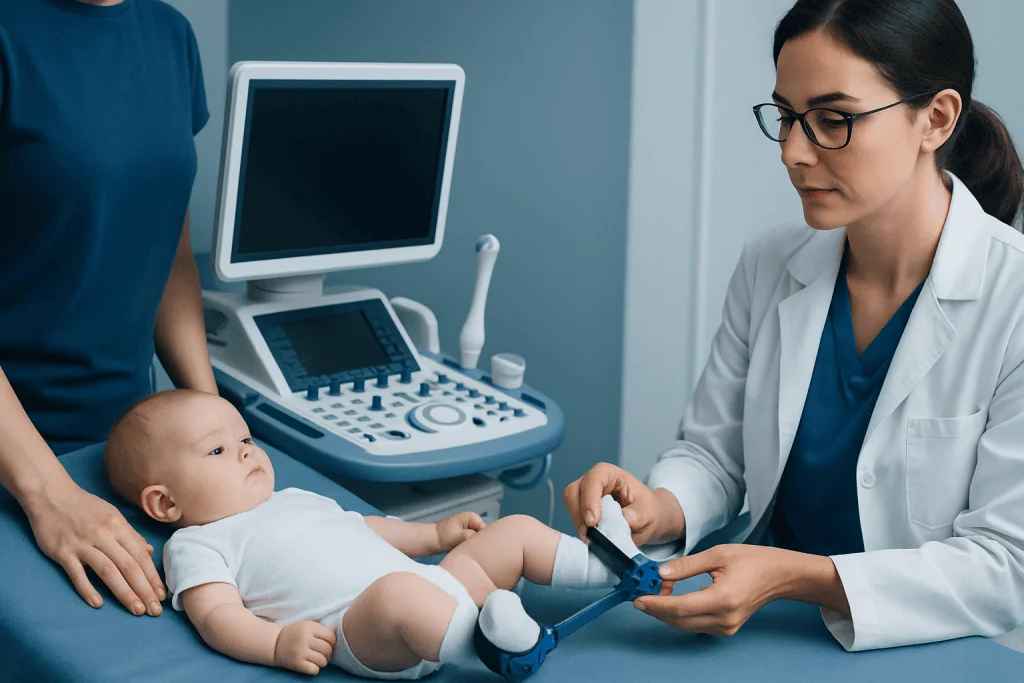
The Ponseti method corrects clubfoot in stages rather than attempting to force the foot into position at one time. At each visit, the specialist gently moves the foot toward a corrected position. A long-leg cast is then applied from the toes to the upper thigh to hold that progress until the next appointment.
Most babies need several casts, often changed weekly. The number varies because every foot responds differently. Early casts focus on correcting the inward turn and arch; the final stage addresses the downward-pointing position at the ankle.
Many babies need a brief procedure called an Achilles tenotomy near the end of casting. The tight Achilles tendon at the back of the ankle is released through a very small incision so the heel can move into the correct position. It is commonly performed with local anesthesia or another age-appropriate pain-control plan, depending on the clinical setting. A final cast is usually worn while the tendon heals.
After casting, a foot-abduction brace is the most important part of preventing recurrence. The brace consists of special shoes attached to a bar, positioned to keep the feet turned outward. Parents receive practical teaching on fitting the brace, checking the skin, and following the wearing schedule provided by the treating team.
Candidacy and the step-by-step treatment journey
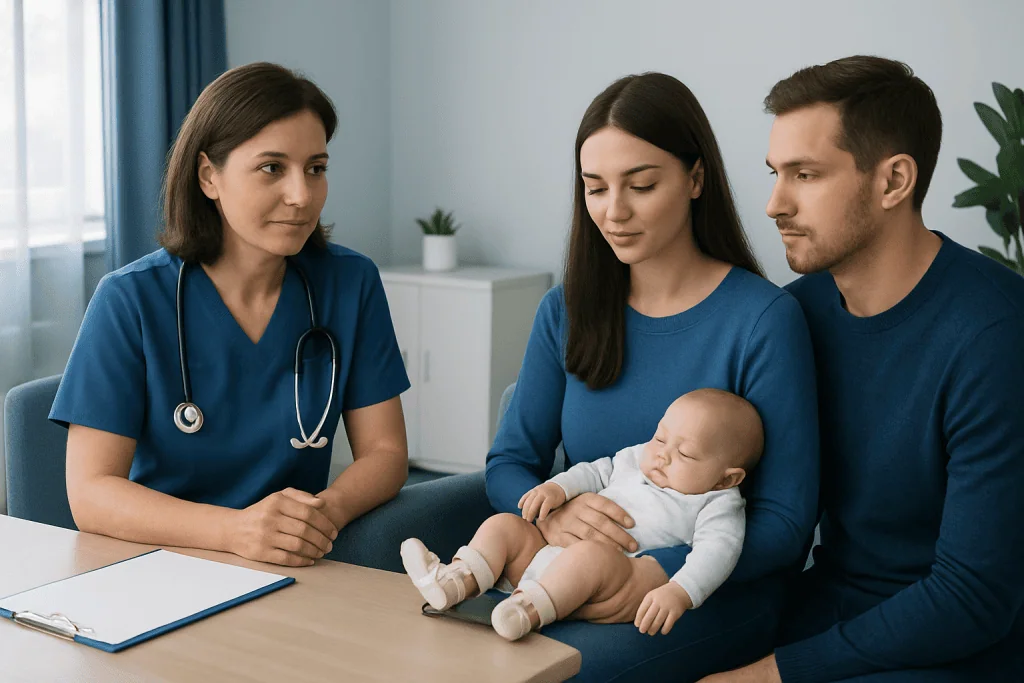
Most newborns with idiopathic clubfoot, meaning clubfoot that occurs by itself, are candidates for Ponseti treatment. Babies with clubfoot related to neuromuscular, genetic, or skeletal conditions can also benefit, but their feet may be stiffer and may require a modified approach, longer care, or additional procedures.
A pediatric orthopedic assessment includes an examination of the feet, legs, hips and spine, as well as a review of pregnancy and family history. Imaging is not routinely required for a straightforward clubfoot diagnosis, because the condition is usually diagnosed by physical examination. Further tests may be recommended if the clinician identifies findings that suggest another condition.
The usual treatment steps are:
- Initial assessment and explanation of the casting and brace plan.
- Gentle manipulation and application of a new cast approximately once a week.
- Achilles tenotomy when needed to correct remaining ankle tightness.
- A final healing cast, often worn for several weeks.
- Transition to a foot-abduction brace, with regular follow-up through early childhood.
Parents should attend every scheduled cast and follow-up visit. They should also tell the team promptly if a cast becomes wet, cracked, tight, slips down, causes swelling, or if the baby’s toes look unusually pale, blue, cold, or swollen.
Recovery timeline, benefits and possible risks
Babies generally adapt quickly to casts and can feed, sleep and be held normally with support. Families may need time to become comfortable with bathing, clothing and positioning, but the care team can offer practical guidance. After the final cast is removed, the foot may look different in skin color or shape temporarily, and the calf on the affected side may remain smaller than the other calf.
During the brace phase, babies commonly wear the brace for most of the day and night at first. Over time, the schedule usually changes to sleep and nap use. Exact timing and duration vary, but bracing often continues for several years because the tendency for the foot to turn inward again is strongest in early childhood.
The main benefits of treatment are a plantigrade foot that can rest flat on the ground, improved alignment, and the best possible chance of comfortable walking and activity. The most important long-term risk is relapse, particularly when bracing is stopped early or worn inconsistently. Relapse can often be managed with renewed casting, bracing, physical therapy guidance, or selected procedures when necessary.
Other possible concerns include skin irritation or pressure sores from a cast or brace, cast slippage, and temporary fussiness. Serious complications are uncommon when treatment is performed and monitored by experienced clinicians. Parents should never adjust a cast themselves or stop the brace plan without discussing it with the specialist.
How successful is clubfoot treatment?
Clubfoot treatment is highly successful for most babies when it starts early, is guided by an experienced pediatric orthopedic team, and includes careful adherence to bracing. The Ponseti method has become the preferred first-line approach internationally because it usually corrects the foot without major reconstructive surgery.
Success is not only about how the foot looks. The goals include a flexible, comfortable foot that fits into ordinary shoes, supports independent walking, and allows participation in play and sport. Follow-up remains important because growth can reveal recurrent tightness or inward turning even after an initially good correction.
Children with more complex clubfoot, or clubfoot associated with other conditions, may have a less predictable course and may need additional treatment. Regular review helps the team respond early if correction begins to be lost.
Is clubfoot 100% curable?
Clubfoot is usually very treatable, but it is not accurate to promise a 100% cure for every child. The underlying tendency of the foot to turn inward can remain during growth, which is why bracing and long-term follow-up are central parts of treatment rather than optional aftercare.
Many children achieve excellent function and do not need major surgery. However, some may experience relapse, residual stiffness, differences in foot or calf size, or a need for further casting or a procedure later in childhood. Early treatment and consistent brace use offer the strongest protection against recurrence.
Even when additional treatment is required, the aim remains the same: a comfortable, well-aligned foot that supports daily movement. Families should discuss their child’s individual outlook with the pediatric orthopedic specialist, especially if the clubfoot is complex or associated with another diagnosis.
Which gender is more commonly affected by clubfoot?
Clubfoot is more commonly diagnosed in boys than in girls. It can affect one foot or both feet, and bilateral clubfoot means that both feet are involved. The reason for the sex difference is not fully understood.
Researchers believe that clubfoot results from a combination of genetic and environmental influences during fetal development. Having a family history of clubfoot can increase the likelihood, but many babies with clubfoot have no known family history. Clubfoot may sometimes be identified on a prenatal ultrasound, allowing parents to arrange specialist advice before birth.
A prenatal finding does not change the principle of care: correction generally begins after delivery, once the baby has been assessed. Families can ask the care team what to bring to the first appointment and how soon casting is likely to start.
Do babies with clubfoot take longer to walk?
Babies with successfully treated clubfoot usually learn to stand and walk around the expected developmental period. Some may walk a little later than peers, especially while adapting to casts or braces, but clubfoot treatment itself does not usually prevent a child from becoming independently mobile.
Parents should continue to offer age-appropriate floor play, tummy time when suitable, and opportunities to move freely when the child is not required to wear the brace. The treating team can explain any positioning precautions and may recommend physiotherapy if there are concerns about movement, strength, or development.
Once walking begins, the child should be monitored for persistent toe-walking, limping, pain, recurrent inward turning of the foot, or difficulty fitting shoes. These signs do not always mean that treatment has failed, but they should be assessed by the orthopedic team.
When to seek medical care
Parents should arrange medical assessment promptly if a newborn’s foot appears persistently turned inward or downward, if the foot cannot be gently positioned normally, or if clubfoot was suspected during pregnancy. Early evaluation provides time to plan care and usually allows treatment to begin at the most effective stage.
During casting or bracing, urgent advice is needed if toes become blue, pale, very swollen, cold, or difficult to move; if the baby seems unusually distressed; or if a cast slips, breaks, becomes wet, or has a strong odor. These changes can indicate pressure or circulation concerns that need timely review.
After correction, families should contact the specialist if the foot begins turning inward again, the heel no longer rests flat, the brace no longer fits, or the child develops pain or a change in walking. Acibadem International’s multidisciplinary specialists and JCI-accredited hospitals provide assessment and treatment for international patients with clubfoot and other pediatric orthopedic needs.
Frequently asked questions
When should clubfoot treatment begin?
Treatment commonly begins within the first few weeks after birth, when the baby is stable and the foot tissues are especially flexible. A pediatric orthopedic specialist can advise on the most appropriate timing for the individual baby. Starting early is helpful, but a child can still be assessed and treated if diagnosis occurs later.
Does clubfoot treatment hurt a baby?
The foot is gently manipulated during casting, and babies may be unsettled by handling or the unfamiliar cast. The team uses careful techniques intended to avoid forceful correction. If an Achilles tenotomy is needed, the clinician will explain the pain-control and anesthesia approach used for the baby.
How long does a baby wear casts for clubfoot?
Casts are commonly changed weekly over several weeks, although the total number depends on how stiff the foot is and how it responds. A final cast is typically worn after an Achilles tenotomy if that procedure is needed. The treating specialist can give a more personalized timeline after assessment.
Why is the clubfoot brace needed after casting?
Casting corrects the foot position, but it does not remove the tendency for the foot to turn inward again during growth. The brace holds the feet in the corrected position and substantially reduces the chance of relapse when worn as prescribed. Follow-up visits help ensure that the brace fits properly and remains appropriate as the child grows.
Will a child with clubfoot be able to play sports?
Most children whose clubfoot has been successfully treated can run, play and participate in sports. The affected foot or calf may remain somewhat smaller, and some children have mild stiffness, but this often does not limit everyday activity. The orthopedic team can advise if specific symptoms or activity concerns develop.
Can clubfoot come back after treatment?
Yes, clubfoot can relapse, particularly during the early growing years. Consistent use of the prescribed brace is one of the most important ways to lower this risk. If recurrence is identified early, it can often be treated effectively with measures such as repeat casting and updated bracing.
References
- American Academy of Orthopaedic Surgeons
- Ponseti International Association
- National Health Service
- OrthoInfo – American Academy of Orthopaedic Surgeons
- Centers for Disease Control and Prevention
This article is for general information only and is not a substitute for professional medical advice. Please consult a qualified doctor about your individual situation.
Clubfoot in Turkey — costs, top hospitals & a free quote
JCI-accredited · board-certified surgeons · reply within 24h
Add us as a Preferred Source to see more of our trusted health content across Google Search, AI Overviews and Discover.

Orthopedics & Spine
Care for bones, joints and the musculoskeletal system, including joint replacement, sports injuries and trauma.
125 specialists in this unitMore from the Health Library



Related Specialists
Dr. Kamran Alıyev
Thoracic Surgery
Dr. Melike Erdener Çalışkan
Anesthesiology
Dr. Münür Selçuk Kendir
Aesthetic Plastic & Reconstructive Surgery
Dt. Bilge Baş
Oral & Dental Health