Complex Partial Seizure Disorder Treatment: How It Works, Results and What to Expect

Complex partial seizures are now usually termed focal impaired awareness seizures because they begin in one area of the brain and affect awareness. Anti-seizure medicines are the usual first treatment and may control seizures well when taken consistently.
Key Takeaways
- Complex partial seizures are now usually termed focal impaired awareness seizures because they begin in one area of the brain and affect awareness.
- Anti-seizure medicines are the usual first treatment and may control seizures well when taken consistently.
- Ongoing seizures despite appropriate medicines should prompt assessment at a specialist epilepsy center for surgery or neuromodulation options.
- A seizure diary, adequate sleep, medication adherence and safety planning can support medical treatment.
- A seizure lasting 5 minutes or longer, repeated seizures without recovery, or breathing difficulty requires emergency medical care.
Complex partial seizure disorder treatment, now more commonly called treatment for focal impaired awareness seizures, aims to prevent seizures while protecting daily functioning and quality of life. Most people begin with anti-seizure medication, while specialist assessment can identify whether surgery, a device-based treatment or other approaches may help when seizures continue.
Overview: how complex partial seizure disorder treatment works
Complex partial seizure disorder is an older term for focal impaired awareness seizures. These seizures start in a specific part of the brain and can temporarily alter awareness, behavior or memory. Treatment is individualized and focuses on reducing or stopping seizures, minimizing treatment side effects and helping the person remain safe and active in daily life.
For most adults, complex partial seizure disorder treatment starts with an anti-seizure medicine selected according to seizure type, medical history, other medicines and personal circumstances. If seizures continue after carefully chosen medicines have not worked, an epilepsy team may consider further testing for a procedure, surgery or an implanted device. The best plan is based on where seizures begin, how they affect the person and whether the seizure source can be treated safely.
Epilepsy care is usually ongoing. Regular follow-up helps the clinician review seizure control, side effects, sleep, mood, pregnancy planning where relevant, and safety at home, work and while traveling. People should not stop an anti-seizure medicine suddenly unless a clinician directs them to do so, as abrupt withdrawal can trigger seizures.
What are the signs and symptoms of complex partial seizures in adults?
Complex partial seizures in adults may begin with an aura, which is a focal aware seizure that can serve as a warning. A person may notice an unusual smell or taste, a rising sensation in the stomach, sudden fear, déjà vu, tingling, dizziness or a brief visual change. Not everyone has an aura, and the experience can vary from one person to another.
During a focal impaired awareness seizure, the person may stare, stop responding appropriately or seem confused. They may perform repeated automatic movements, called automatisms, such as lip smacking, swallowing, picking at clothing, rubbing the hands or walking without purpose. Speech may become unclear, and the person may not remember the episode afterward.
Afterward, there may be fatigue, headache, confusion, trouble speaking or a need to sleep. Recovery can take minutes to longer depending on the individual and the seizure. These symptoms can overlap with other conditions, including fainting, migraine, sleep disorders and panic attacks, so medical evaluation is important for an accurate diagnosis.
What are the symptoms of prolonged complex partial seizures?

A focal impaired awareness seizure often lasts from seconds to a few minutes. A prolonged seizure may involve confusion, reduced responsiveness, repetitive behavior or inability to communicate that continues longer than expected. Some people have several seizures close together and do not return to their usual awareness between episodes.
Prolonged focal seizures can sometimes develop into focal status epilepticus, a condition that needs urgent medical assessment. Warning signs include a seizure lasting 5 minutes or longer, repeated events without full recovery, new weakness, breathing problems, injury, or a seizure pattern that is clearly different from the person’s usual episodes.
Family members and bystanders should stay calm, time the seizure, move dangerous objects away and place the person on their side if they are lying down and it is safe to do so. They should not restrain the person or put anything in their mouth. An individualized seizure action plan may include rescue medicine prescribed by the treating clinician for certain prolonged or clustered seizures.
Diagnosis and candidacy for advanced treatment
Diagnosis begins with a detailed description of the episodes from the person and, when possible, someone who has observed them. A neurologist may ask about warning symptoms, awareness during the event, movements, recovery, medications, sleep, alcohol or substance use, prior head injury and family history. A seizure diary or smartphone video recorded safely by a witness can provide useful information.
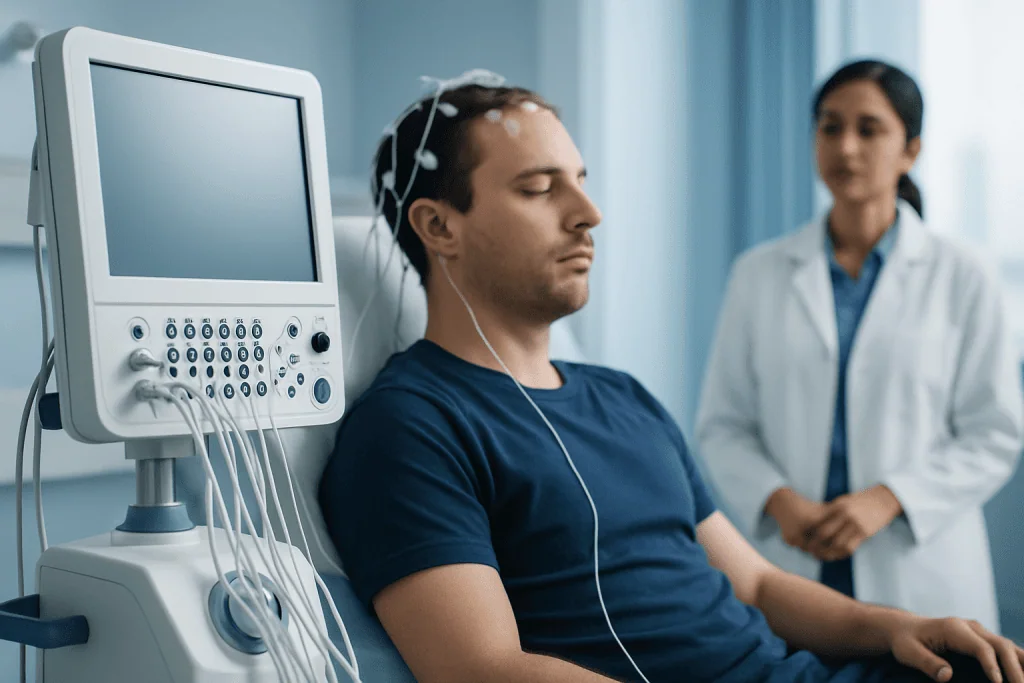
Tests may include an electroencephalogram (EEG) to look for unusual electrical activity and brain imaging, typically MRI, to identify a structural cause such as scar tissue, a developmental difference, prior injury or, less commonly, a lesion. Blood tests may help identify metabolic or medication-related factors. Sometimes prolonged video-EEG monitoring is needed to record a typical event and confirm where it begins.
Advanced treatment evaluation is generally considered when seizures continue despite trials of two suitable and tolerated anti-seizure medicines. The assessment is not limited to surgery; it also reviews whether the diagnosis is correct, whether medicines can be optimized and whether a device-based therapy may be suitable. Neuropsychological testing and specialized imaging may be included when surgery is being considered.
How is simple partial epilepsy treated?
Simple partial epilepsy is an older term for focal aware seizures. In these seizures, the person remains aware, although they may experience symptoms such as unusual sensations, jerking in one area of the body, speech difficulty, emotional changes or sensory disturbances. Treatment principles are similar to those for focal impaired awareness seizures: the aim is to control seizures while limiting unwanted effects.
Anti-seizure medication is usually the first-line treatment. A neurologist selects and adjusts treatment gradually, taking account of age, kidney and liver health, possible interactions, mood symptoms and reproductive plans. Some people achieve good seizure control with one medicine, while others may need a different medicine or a combination under specialist supervision.
If focal aware seizures persist despite appropriate medicine trials, further assessment may identify an underlying cause or a potential procedural option. This may include evaluation for epilepsy surgery, which is designed to treat the brain area responsible for seizures when it can be identified and addressed without causing unacceptable loss of function.
Treatment options: medicines, procedures and multidisciplinary care
Anti-seizure medicines reduce the tendency of brain cells to produce abnormal electrical activity. They do not cure every cause of epilepsy, but they can greatly reduce seizure frequency or stop seizures for many people. Taking medication at the same time each day, attending follow-up appointments and reporting side effects promptly help make treatment safer and more effective.
When medication does not provide adequate control, a specialist epilepsy team may discuss procedural treatment. The process typically includes detailed video-EEG monitoring, high-resolution brain imaging and assessments of memory, language and other functions. If testing shows that seizures arise from a well-defined area that can be treated safely, surgery may remove or disconnect that area. Other options include neurostimulation devices that send electrical signals to help reduce seizures, or dietary therapy in selected cases.
Potential benefits of successful advanced treatment include fewer seizures, improved independence and reduced seizure-related injury risk. Risks depend on the chosen approach and may include infection, bleeding, changes in memory, mood, speech or movement, as well as the possibility that seizures continue. A multidisciplinary discussion should explain expected benefits, uncertainties and alternatives before a decision is made.
Acibadem International’s multidisciplinary neurology and neurosurgery specialists, supported by JCI-accredited hospitals, evaluate and treat epilepsy for international patients when advanced assessment is appropriate.
Recovery, self-care and everyday safety
Recovery from a medication adjustment is usually monitored over weeks to months, as seizure frequency and side effects are reviewed. Recovery after an epilepsy procedure depends on the intervention. Following a diagnostic admission, people often return home shortly afterward, while brain surgery requires hospital recovery and a gradual return to normal activities over the following weeks or longer. The clinical team provides individualized guidance about work, exercise, wound care and follow-up testing.
A seizure diary can document the date, duration, possible triggers, symptoms, recovery and missed medication doses. Common factors that may lower the seizure threshold include missed medicines, insufficient sleep, heavy alcohol use, recreational drugs, illness and emotional stress. Avoiding known personal triggers may reduce seizure risk, although triggers do not replace medical treatment.
Safety planning is practical rather than restrictive. Depending on local laws and medical advice, seizure control may affect driving eligibility. Showering rather than bathing alone, using caution around heights and open flames, and telling trusted people how to respond to a seizure can reduce risk. People should discuss sports, swimming, pregnancy, contraception and travel plans with their epilepsy clinician.
When to seek medical care
Anyone who has a first suspected seizure should arrange prompt medical evaluation. Assessment is also important when episodes of staring, confusion, memory gaps, unexplained injuries or unusual sensations recur, even if they are brief. Early diagnosis can help distinguish seizures from other conditions and guide appropriate care.
Emergency care is needed if a seizure lasts 5 minutes or more, seizures repeat without the person returning to their usual state, or there is trouble breathing, blue coloration, serious injury, pregnancy, diabetes, a seizure in water or a first seizure. Emergency services should also be contacted if the person remains unusually confused or does not recover as expected.
People with diagnosed epilepsy should contact their clinician when seizures increase, change in pattern, occur after a medication change or cause troubling side effects. A written seizure action plan can help the person and their support network know when to use prescribed rescue medicine and when to seek urgent help.
Frequently asked questions
Are complex partial seizures curable?
Some people become seizure-free with medication, and others may become seizure-free after successful surgery when seizures arise from an area that can be treated safely. However, epilepsy is not always curable, and some people need long-term treatment. A specialist can explain the likely outlook based on seizure cause, test results and response to medication.
What is the first treatment for complex partial seizures?
An anti-seizure medicine is usually the first treatment. The medication is chosen individually, and the clinician monitors seizure control and side effects over time. Regular use is important because missed doses can increase seizure risk.
When is epilepsy surgery considered?
Epilepsy surgery may be considered when focal seizures continue despite trials of two appropriate anti-seizure medicines. It requires a detailed evaluation to identify where seizures start and to assess whether treatment can be performed safely. Surgery is not suitable for everyone, but referral for evaluation can clarify the available options.
Can stress cause complex partial seizures?
Stress may contribute to seizures in some people, often alongside sleep disruption or missed medication. It is not usually the underlying cause of epilepsy. Stress-management strategies can be useful, but they should complement rather than replace prescribed treatment.
What should someone do during a complex partial seizure?
Stay with the person, speak calmly, guide them away from hazards if possible and time the event. Do not restrain them or put anything in their mouth. Seek emergency help if the seizure lasts 5 minutes or longer, repeats without recovery, or involves breathing problems, injury or other emergency warning signs.
Can a person drive after complex partial seizures?
Driving rules differ by country and often depend on how long a person has been seizure-free and whether awareness is affected. People should stop driving after a seizure until they have discussed the situation with their treating clinician and understand local legal requirements. Honest reporting protects both the individual and others on the road.
References
- International League Against Epilepsy
- National Institute of Neurological Disorders and Stroke
- Epilepsy Foundation
- National Health Service
- Mayo Clinic
This article is for general information only and is not a substitute for professional medical advice. Please consult a qualified doctor about your individual situation.
Explore treatments in Turkey — costs, top hospitals & a free quote
JCI-accredited · board-certified surgeons · reply within 24h
Add us as a Preferred Source to see more of our trusted health content across Google Search, AI Overviews and Discover.