Condom for Period Sex Explained: Causes, Management, and When to See a Doctor

A condom for period sex can lower STI and pregnancy risk, but it does not eliminate either risk completely. Pregnancy is less likely during menstruation, yet it is still possible, especially with short cycles or early ovulation.
Key Takeaways
- A condom for period sex can lower STI and pregnancy risk, but it does not eliminate either risk completely.
- Pregnancy is less likely during menstruation, yet it is still possible, especially with short cycles or early ovulation.
- Condoms also make cleanup easier and may help some couples feel more comfortable during period sex.
- New or severe pain, unusually heavy bleeding, foul-smelling discharge, or fever should be assessed by a doctor.
- If latex causes irritation, non-latex condoms and extra lubrication may improve comfort.
Using a condom for period sex is generally a safe way to reduce exposure to menstrual blood, lower the chance of sexually transmitted infections, and provide some pregnancy protection. It is still important to use condoms correctly, understand their limits, and know when bleeding, pain, or discharge may need medical evaluation.
Overview: Is a Condom for Period Sex a Good Idea?
A condom for period sex is usually a practical and recommended option. It helps create a barrier between partners, which can reduce contact with menstrual blood, lower the spread of sexually transmitted infections (STIs), and provide contraception if pregnancy prevention is needed. For many people, it also makes period sex feel cleaner and easier to manage.
Menstruation does not automatically make sex unsafe. If both partners are comfortable, sex during a period can be a normal part of intimacy. Some people even notice benefits such as less pelvic tension, improved mood, or temporary relief from menstrual cramps because orgasm may relax pelvic muscles.
Still, period sex has a few important considerations. Blood can affect comfort, friction may be different than usual, and STI transmission can still occur. A condom remains useful even during menstruation because infections are not prevented simply by having sex on a period.
Using a condom is especially sensible if partners are not in a mutually monogamous relationship, if either partner’s STI status is unknown, or if pregnancy prevention matters. If sex is painful or bleeding seems unusual, a medical assessment may be appropriate, particularly if symptoms suggest problems such as endometriosis or another gynecologic condition.
How Period Sex Changes Risk
One common misunderstanding is that pregnancy cannot happen during menstruation. In reality, pregnancy is less likely during a period, but it is not impossible. Sperm can survive in the reproductive tract for several days, so if ovulation happens soon after bleeding ends, conception may still occur.
This is more relevant for people with shorter menstrual cycles, irregular cycles, or bleeding that is mistaken for a period. For example, some mid-cycle or breakthrough bleeding may look similar to menstruation. Because cycle timing varies from person to person, relying on bleeding alone is not a dependable birth control method.
STI risk also remains important during period sex. Infections such as HIV, hepatitis B, chlamydia, gonorrhea, and others can be transmitted through sexual contact and body fluids. Menstrual blood may increase exposure to infected fluids, which is one reason barrier protection is recommended.
For that reason, a condom should be viewed as part of safer sex rather than a special measure only for menstruation. If there is any concern about infections, testing and timely treatment may be needed. In some situations, doctors may also evaluate related problems such as vaginal infections if discharge, itching, odor, or irritation is present.
Benefits and Limits of Using a Condom During Menstruation
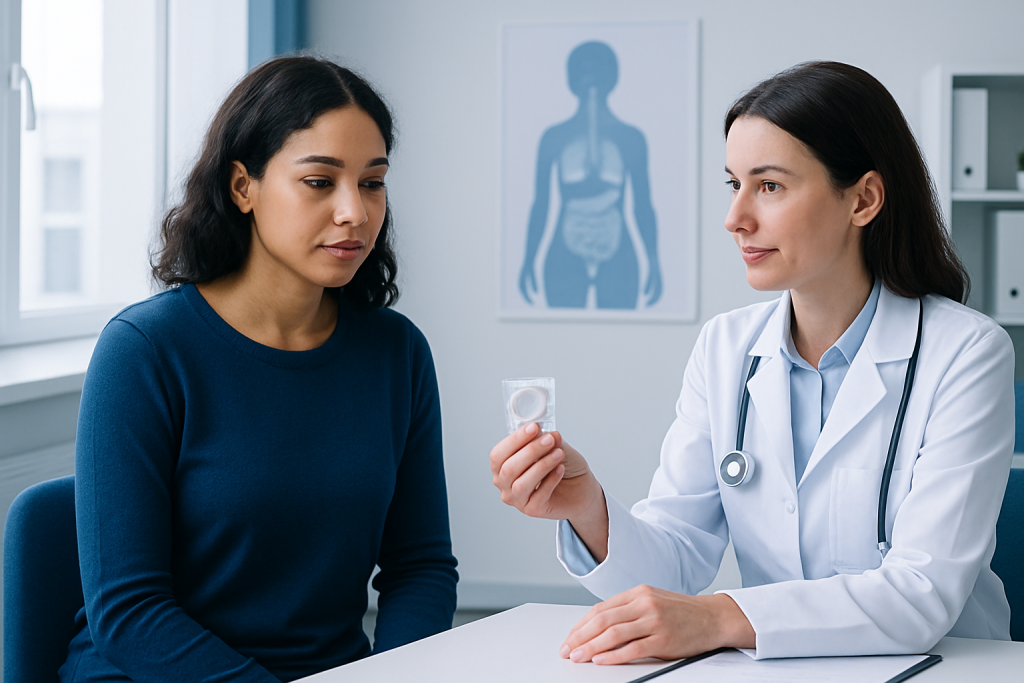
The main benefits of using a condom for period sex are protection, cleanliness, and convenience. A condom helps catch semen and reduces direct contact with menstrual blood, which many people find reassuring. It may also make it easier to transition to cleanup after intercourse.
Another benefit is that condoms are easy to access and do not require advance procedures or hormonal medication. They can be used alongside another contraceptive method, which may improve pregnancy prevention. For people who are sensitive to menstrual changes, adding a water-based or silicone-based lubricant may improve comfort and reduce friction.
However, condoms have limits. They do not cover all genital skin, so some infections spread by skin-to-skin contact can still pass between partners. A condom also works only if it is used correctly from start to finish, remains intact, and does not slip off.
If discomfort, pelvic pain, or pain with penetration is common, the issue may not be the period itself. Problems such as inflammation, infection, pelvic floor tension, or structural gynecologic conditions can contribute. In selected cases, evaluation and treatment may involve approaches used in gynecology care to identify the cause and guide management.
Practical Tips for Safer and More Comfortable Period Sex
Comfort during period sex often improves with a few simple steps. A new condom should be used every time, and it should be put on before genital contact begins. Checking the expiration date, opening the package carefully, and using enough lubrication can help reduce breakage.
Many people prefer sex on lighter flow days, though this is entirely personal. Placing a dark towel on the bed, keeping tissues nearby, or having sex in the shower may help some couples feel more at ease. Open communication about preferences, pain, and boundaries is also important.
If vaginal dryness or friction occurs, extra lubricant can help even during menstruation. Oil-based products should not be used with latex condoms because they can weaken the material. People with latex sensitivity may prefer non-latex condoms made from alternative materials.
- Use a fresh condom for each act of vaginal, anal, or oral sex.
- Apply the condom before any genital contact.
- Consider additional lubricant to reduce friction.
- Change condoms if switching between types of sex.
- Wash hands and clean sex toys before and after use.
If a person repeatedly has painful sex, severe cramps with intercourse, or bleeding that seems out of proportion, a doctor may look for menstrual or pelvic disorders. Depending on symptoms, testing or imaging may be used, including services such as ultrasound when clinically appropriate.
When Symptoms Suggest More Than a Normal Period
Menstrual blood during sex is not unusual, but some patterns deserve attention. Bleeding that is unexpectedly heavy, occurs between periods, happens after sex repeatedly, or continues longer than usual may point to an underlying issue rather than ordinary menstruation. The same is true if bleeding starts after menopause.
Pain is another clue. Mild cramping can happen, but significant pelvic pain, deep pain with penetration, or pain that interferes with daily life should not be ignored. These symptoms may be linked to conditions such as endometriosis, fibroids, cervical irritation, infections, or other reproductive health concerns.
Changes in discharge can also matter. A foul odor, green or yellow discharge, itching, burning, sores, or fever can suggest infection. In that setting, sex should be avoided until a clinician has assessed the symptoms and, if needed, testing and treatment are completed.
For persistent or unexplained symptoms, evaluation may include a pelvic exam, laboratory testing, and sometimes procedures such as colposcopy if the cervix needs closer examination. The goal is not to assume the worst, but to identify treatable causes and support long-term reproductive health.
How Doctors Evaluate Bleeding, Pain, or Infection Concerns
If a person seeks medical care related to period sex, the assessment usually begins with a discussion of symptoms. A doctor may ask about cycle regularity, flow, pain, contraception, STI exposure, discharge, and whether bleeding happens only during menstruation or at other times too. This history often provides important clues.
A physical or pelvic exam may be recommended depending on the symptoms. Clinicians may check for tenderness, cervical changes, lesions, or signs of infection. In many cases, common tests include a pregnancy test, STI testing, and swabs to look for vaginal or cervical infections.
Imaging or specialist evaluation may be needed if symptoms are ongoing or severe. Ultrasound can help assess the uterus and ovaries, while additional investigations may be used for fibroids, cysts, polyps, or suspected endometriosis. Treatment is based on the cause rather than on the presence of period sex itself.
Care is individualized. For international patients who need evaluation, Acibadem International’s multidisciplinary specialists and JCI-accredited hospitals diagnose and treat gynecologic conditions with patient-centered care. The focus is on understanding symptoms clearly and choosing the most appropriate next step.
When to Seek Medical Care
Medical advice should be sought if period sex is followed by severe pain, sudden heavy bleeding, fainting, fever, or signs of infection. Urgent care is also important if a condom breaks and there is concern about STI exposure or unintended pregnancy, since time-sensitive preventive options may be available.
A routine doctor’s appointment is appropriate for repeated bleeding after sex, worsening cramps, persistent pelvic pain, irregular periods, unusual discharge, or new discomfort with intercourse. These symptoms often have treatable causes, but they should not be dismissed simply because they happen around menstruation.
People should also speak with a clinician if they are unsure which type of contraception or STI protection is best for them. A healthcare professional can explain condom use, testing, vaccination where appropriate, and other strategies for safer sex.
In general, a condom for period sex is a helpful tool, but it is not a substitute for medical evaluation when symptoms are new, persistent, or concerning. Prompt care can provide reassurance, identify manageable causes, and support sexual and reproductive wellbeing.
Frequently asked questions
Can someone get pregnant from sex during a period even if a condom is used?
Pregnancy is less likely during menstruation, but it is still possible. A condom lowers the chance of pregnancy when used correctly, though no condom is 100% effective. If a condom breaks or slips, a doctor or pharmacist can advise on emergency contraception if appropriate.
Does a condom fully protect against STIs during period sex?
A condom significantly reduces the risk of many STIs, including those spread through semen, vaginal fluids, and blood. However, it does not remove all risk because some infections spread through skin-to-skin contact in areas the condom does not cover. Correct use from the start of sexual contact is important.
Is period sex unhealthy or unsafe?
For most people, period sex is not inherently unhealthy if both partners are comfortable and there are no concerning symptoms. It becomes less safe when there is unprotected sex, possible STI exposure, severe pain, or unusual bleeding. Using a condom and communicating clearly can make it safer and more comfortable.
Why might sex during a period feel painful?
Pain can happen for simple reasons such as increased sensitivity, dryness, or muscle tension. It can also be related to conditions like infection, endometriosis, fibroids, or pelvic floor dysfunction. If pain is strong, recurring, or worsening, a medical evaluation is a good idea.
What type of condom is best for period sex?
The best condom is one that fits properly, is used consistently, and is made of a material the person tolerates well. Latex condoms are common, while non-latex options can help if latex causes irritation. Extra lubricant may improve comfort, especially if friction is an issue.
Should a doctor be seen for bleeding after sex if it happens during a period?
Not always, because some bleeding may simply be menstrual flow. However, repeated bleeding after sex, very heavy bleeding, or bleeding paired with pain, odor, discharge, or fever should be checked by a doctor. These symptoms can point to treatable gynecologic or infectious causes.
References
- World Health Organization
- Centers for Disease Control and Prevention
- American College of Obstetricians and Gynecologists
- Office on Women's Health
- National Health Service
This article is for general information only and is not a substitute for professional medical advice. Please consult a qualified doctor about your individual situation.
Explore treatments in Turkey — costs, top hospitals & a free quote
JCI-accredited · board-certified surgeons · reply within 24h
Add us as a Preferred Source to see more of our trusted health content across Google Search, AI Overviews and Discover.
Check your numbers in seconds
BMI, calories, due date, blood pressure and 30+ more clinical calculators — free, instant, doctor-reviewed ranges.