Contact Lenses: An Evidence-Based Guide for Patients

Contact lenses should be fitted and monitored by an eye care professional. Daily cleaning, correct storage, and timely replacement are essential for safe wear.
Key Takeaways
- Contact lenses should be fitted and monitored by an eye care professional.
- Daily cleaning, correct storage, and timely replacement are essential for safe wear.
- Sleeping, swimming, or showering in lenses can increase the risk of eye infection.
- Pain, redness, light sensitivity, or blurred vision while wearing lenses needs prompt medical advice.
- The best lens type depends on eye shape, tear film, prescription, lifestyle, and any eye conditions.
Contact lenses are medical devices worn on the eye to correct vision or, in some cases, protect the cornea. They can work very well when properly fitted, cleaned, and replaced on schedule, but poor lens habits can raise the risk of eye irritation, infection, and corneal damage.
Overview: what contact lenses are and how they help
Contact lenses are thin, curved medical devices that sit on the tear film covering the front of the eye. They are commonly used to correct nearsightedness, farsightedness, astigmatism, and age-related difficulty focusing up close. Some specialized lenses can also help protect the eye surface or improve vision in people with irregular corneas.
For many people, contact lenses offer a wider field of view than glasses and do not fog up or interfere with sports and other daily activities. However, they are not simply a cosmetic product. Because they rest directly on the eye, they must be chosen carefully, used as directed, and checked regularly to help maintain eye comfort and reduce the risk of complications.
A well-fitted lens should feel comfortable after a short adjustment period and provide stable vision. A poor fit, the wrong material, or incorrect wearing habits can lead to dryness, irritation, allergic reactions, and more serious problems such as inflammation or corneal infection. This is why a professional eye exam is important even for people who have worn lenses before.
Types of contact lenses and who may use them
There are several types of contact lenses, and each has advantages for certain eyes and lifestyles. Soft lenses are the most commonly prescribed. They are flexible, generally easy to adapt to, and available as daily disposable, biweekly, or monthly replacement lenses. Rigid gas permeable lenses are smaller and firmer; they may provide sharper vision for some prescriptions and can be useful in irregular corneas, but they often require a longer adaptation period.
Specialized lenses include toric lenses for astigmatism, multifocal lenses for near and distance vision, and scleral lenses that vault over the cornea and rest on the white of the eye. Scleral lenses may be recommended for severe dryness, corneal irregularity, or conditions such as keratoconus. Therapeutic bandage lenses can also be used temporarily to protect the eye surface while it heals.
The best choice depends on more than the glasses prescription alone. An eye specialist considers the shape of the cornea, the health of the eyelids, tear quality, work environment, screen time, sports, allergy history, and any eye disease. People with diabetes, dry eye, recurrent infections, or previous eye surgery may still be candidates for contact lenses, but they often need closer assessment and follow-up.
- Daily disposable lenses: convenient and lower maintenance
- Reusable soft lenses: cost-effective for some users but require careful cleaning
- Rigid gas permeable lenses: durable and often precise for certain prescriptions
- Scleral lenses: helpful for complex corneal or ocular surface problems
How fitting and prescription differ from glasses

A contact lens prescription is different from a glasses prescription. In addition to vision power, it includes details such as base curve, diameter, lens material, replacement schedule, and sometimes the exact brand. These features matter because the lens must match the eye closely enough to move properly, allow oxygen to reach the cornea, and stay comfortable throughout the day.
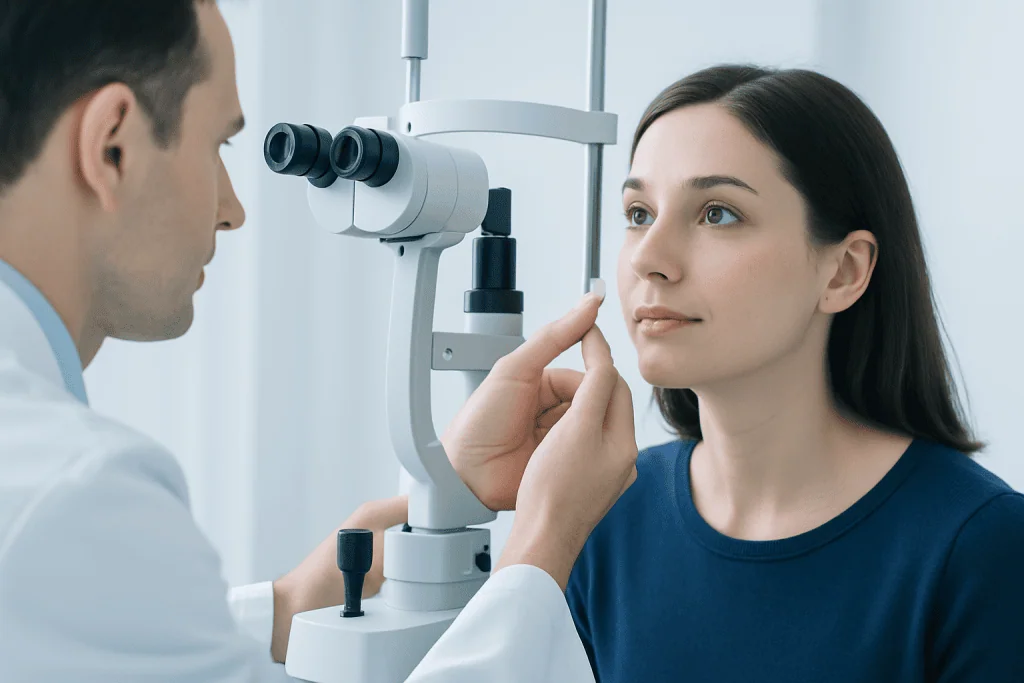
During a fitting, the clinician measures vision and examines the front of the eye, eyelids, and tear film. They may assess corneal curvature and the amount of astigmatism, then place trial lenses on the eyes to check comfort, movement, and visual quality. Follow-up visits help confirm that the lenses continue to fit well after the eyes have had time to adapt.
Buying lenses without a proper eye examination can lead to avoidable problems. A lens that seems acceptable at first may fit too tightly or too loosely, dry out quickly, or reduce oxygen to the cornea. For people considering alternatives to daily lens wear, an eye specialist may also discuss options such as laser eye surgery when appropriate.
Safe use, hygiene, and daily care
Safe contact lens use depends largely on routine habits. Hands should be washed and dried before touching lenses or the eyes. Reusable lenses should be cleaned and stored exactly as instructed, using fresh disinfecting solution each time. Lens cases also need regular cleaning, air drying, and replacement because they can collect microbes even when they look clean.
One of the most important safety rules is to follow the prescribed wearing and replacement schedule. Wearing lenses longer than advised, especially overnight, increases the risk of eye irritation and infection. Even lenses approved for extended wear can cause problems in some people, so any overnight use should be discussed with an eye care professional.
Water exposure is another common issue. Contact lenses should generally be removed before swimming, showering, or using a hot tub because water can carry microorganisms that may stick to the lens and infect the cornea. Makeup, creams, and sprays can also affect comfort, so many clinicians advise inserting lenses before makeup and removing them before makeup removal.
- Do not top off old solution with new solution
- Do not share contact lenses or lens cases
- Do not rinse lenses or cases with tap water
- Replace lenses and cases on schedule, even if they still look fine
- Remove lenses if the eyes become painful, very red, or suddenly blurry
Common problems, side effects, and warning signs
Mild dryness or awareness of a new lens may occur during the adjustment period, but persistent discomfort is not considered normal. Some people experience dryness late in the day, fluctuating vision during long hours of screen use, or sensitivity related to allergies. In many cases, changing the lens material, wear time, replacement schedule, or cleaning solution can improve comfort.
More significant complications can include giant papillary conjunctivitis, corneal abrasions, corneal swelling from low oxygen, and contact lens-related dry eye. The most urgent concern is microbial keratitis, an infection of the cornea that can threaten vision if not treated promptly. Risks rise with overnight wear, poor hygiene, smoking, water exposure, and using lenses beyond their replacement date.
Warning signs that should never be ignored include increasing redness, pain, light sensitivity, discharge, sudden blurred vision, or the feeling that something is stuck in the eye. These symptoms may reflect infection, inflammation, or injury and need prompt professional evaluation. People with recurrent irritation may also need assessment for underlying problems such as dry eye.
Diagnosis and treatment of contact lens-related problems
If contact lenses are causing symptoms, an eye doctor usually asks about wearing schedule, cleaning habits, solution type, and any recent water exposure or overnight use. The eye is then examined with magnification to check the cornea, conjunctiva, eyelids, and tear film. In some cases, the doctor applies dye to reveal scratches or damaged areas on the eye surface.
Treatment depends on the cause. The first step is often to stop wearing the lenses until the eye has been assessed and recovered. Mild irritation may improve with rest from lenses and changes in lens type or care routine. Dryness can sometimes be managed with preservative-free lubricating drops and by treating eyelid inflammation or allergy if present.
When an infection or a corneal ulcer is suspected, urgent treatment is needed. This may include medicated eye drops and close follow-up to protect vision. In severe cases with significant corneal disease, specialist care may be required, and treatment options can range from advanced ocular surface management to procedures such as cornea transplant for selected patients. If cataracts are affecting vision more than refractive error alone, some people may be better served by cataract surgery rather than changing lens prescriptions repeatedly.
Prevention, self-care, and long-term eye health
Most contact lens complications are preventable with consistent habits and regular check-ups. Even when vision feels stable, routine eye appointments help detect early signs of dryness, poor lens fit, corneal stress, or allergy. These visits are also a chance to review whether the current lens type still matches the person’s work, hobbies, age, and eye health.
Comfort can often be improved by reducing long periods of unbroken screen use, blinking more consciously, staying hydrated, and using lubrication recommended by an eye professional. People who travel frequently or have busy schedules may find daily disposable lenses easier to manage because they reduce handling and eliminate the need for storage between uses.
Long-term lens wear does not necessarily harm the eyes when lenses are properly fitted and worn responsibly. The key is to avoid normalizing discomfort. If lenses are often dry, cloudy, or uncomfortable, the solution may be a simple change in material or care system, or it may point to a condition that needs treatment. Near the end of care planning, some patients may also seek help from centers such as Acibadem International, where multidisciplinary specialists in JCI-accredited hospitals diagnose and treat eye conditions for international patients.
When to seek medical care
Medical advice is recommended if contact lenses are consistently uncomfortable, if vision seems less clear than usual, or if the eyes look red after lens wear. Ongoing dryness, headaches during focusing, or a lens that frequently shifts out of place can signal a fitting issue or an underlying eye problem that deserves assessment.
Prompt or urgent evaluation is important if there is moderate to severe pain, sudden blurred vision, marked redness, sensitivity to light, discharge, or a white spot on the cornea. Lenses should be removed unless a clinician has advised otherwise, and they should not be worn again until the eye has been examined. Early treatment helps lower the chance of long-term complications and supports safer future lens wear.
Frequently asked questions
Are contact lenses safe for most people?
Yes. Contact lenses are generally safe when they are professionally fitted and used exactly as directed. The main risks usually come from poor hygiene, sleeping in lenses when not advised, or wearing them longer than recommended.
Can someone wear contact lenses every day?
Many people can wear contact lenses daily, but the ideal number of hours varies from person to person. Eye dryness, allergy symptoms, screen time, and the lens material all affect comfort and safety, so a clinician should guide the schedule.
Is it okay to sleep in contact lenses?
In general, sleeping in contact lenses raises the risk of eye infection and corneal irritation. Even if a specific lens is approved for extended wear, overnight use should only happen under professional advice and with careful follow-up.
Why do contact lenses become uncomfortable by the end of the day?
Late-day discomfort can happen because of dryness, reduced blinking during screen use, lens deposits, allergies, or a lens that is not fitting well. Sometimes a different material, replacement schedule, or treatment for dry eye or eyelid inflammation can help.
Can contact lenses make dry eye worse?
They can in some people, especially if the tear film is already unstable or the lenses are worn too long. An eye doctor may recommend a different lens type, shorter wear time, lubrication, or treatment for the underlying dry eye.
Should contact lenses be worn while swimming or showering?
This is generally not recommended. Water can expose lenses to microorganisms and increase the risk of serious corneal infection, so lenses are best removed before swimming, showering, or using hot tubs.
References
- American Academy of Ophthalmology
- Centers for Disease Control and Prevention
- National Eye Institute
- American Optometric Association
- World Health Organization
This article is for general information only and is not a substitute for professional medical advice. Please consult a qualified doctor about your individual situation.
Contact Lenses in Turkey — costs, top hospitals & a free quote
JCI-accredited · board-certified surgeons · reply within 24h
Add us as a Preferred Source to see more of our trusted health content across Google Search, AI Overviews and Discover.

Ophthalmology
Comprehensive eye care from laser vision correction to retina, cornea and cataract surgery.
75 specialists in this unit