Cool Sculpting: Procedure, Recovery and Results
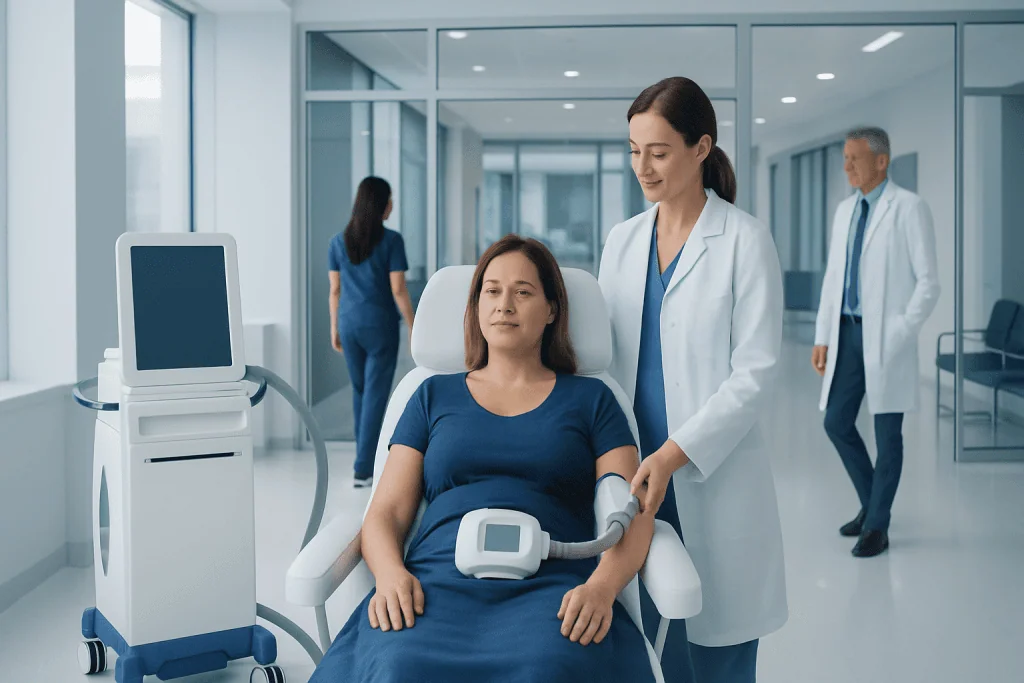
Cool Sculpting is a brand name commonly used for cryolipolysis, a controlled-cooling body-contouring procedure. It may reduce localized, pinchable fat but is not a treatment for obesity and does not replace healthy habits.
Key Takeaways
- Cool Sculpting is a brand name commonly used for cryolipolysis, a controlled-cooling body-contouring procedure.
- It may reduce localized, pinchable fat but is not a treatment for obesity and does not replace healthy habits.
- Most people return to usual activities quickly, although temporary numbness, redness, bruising, swelling, or tenderness can occur.
- Changes appear gradually, often over weeks to months, and some people need more than one treatment session or area.
- A qualified clinician should assess suitability, especially for people with cold-sensitive conditions, hernias, or certain skin concerns.
Cool Sculpting, also called cryolipolysis, is a non-surgical body-contouring procedure that uses controlled cooling to reduce visible fat in selected areas. It is designed for localized fat bulges rather than obesity or major weight loss, and results develop gradually as the body clears treated fat cells.
Cool Sculpting at a glance
Cool Sculpting is a non-surgical body-contouring treatment that applies controlled cooling to a targeted area of fat. The medical term for this approach is cryolipolysis. It is intended to reduce small, visible fat bulges that may remain despite stable weight, regular activity, and balanced eating.
During treatment, an applicator draws or rests against the chosen area and cools the fat beneath the skin. Fat cells are more sensitive to cold than surrounding tissues under carefully controlled conditions. Over time, the body processes and removes some of the affected fat cells through its normal pathways.
Cool Sculpting is not a weight-loss method, treatment for obesity, or substitute for nutrition, movement, and medical weight management when these are needed. People considering body contouring for larger-volume fat reduction may wish to discuss liposuction or other appropriate options with a qualified clinician.
What areas can be treated and who may benefit
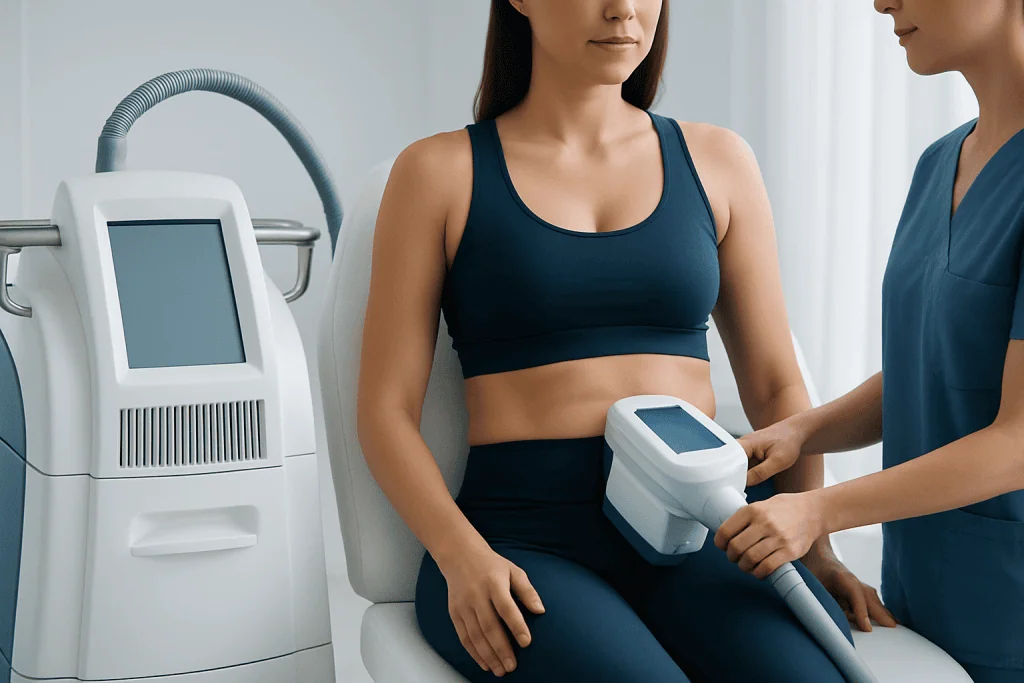
Depending on the device and applicator available, cryolipolysis may be used for localized fat beneath the chin, along the jawline, abdomen, flanks, upper arms, thighs, back, or beneath the buttocks. The best area is one with a clearly defined, pinchable layer of fat rather than loose skin alone.
Suitable candidates are generally adults who are near a weight that is stable for them and want a modest reduction in one or more specific areas. Good skin elasticity can help the treated area settle smoothly after fat reduction. A consultation should include discussion of the person’s goals, medical history, skin quality, and whether the concern is fat, skin laxity, muscle shape, or a combination.
Cool Sculpting may be less suitable for people seeking dramatic body-size changes, those with significant loose skin, or people whose weight is changing rapidly. It is also important to have realistic expectations: the treatment can improve contour in a localized area, but it cannot create the same result as surgical reshaping in every situation.
How the procedure works
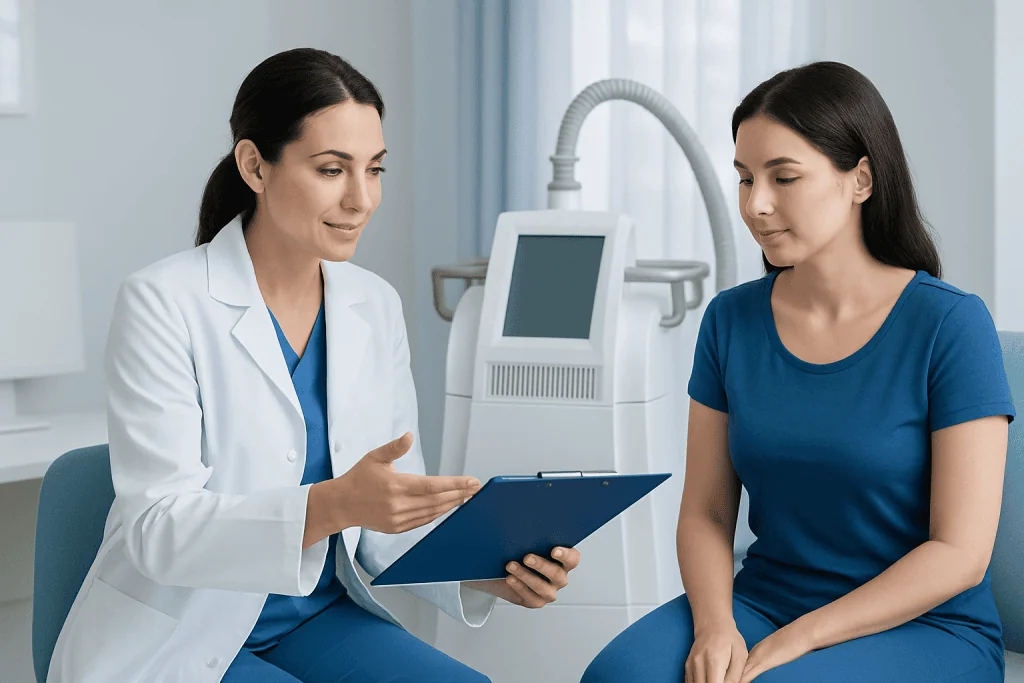
Before treatment, the clinician marks the planned area, takes measurements or photographs when appropriate, and selects an applicator. A protective gel pad or similar barrier is placed on the skin. The applicator uses suction, cooling panels, or both, depending on the body area and equipment.
At the start, there may be a strong cold sensation, pressure, pulling, or tingling. These sensations commonly lessen as the area becomes numb. A session may involve one or more applicator placements, and the length depends on the device, treatment area, and individualized plan.
Once the applicator is removed, the treated tissue may look firm, raised, red, or temporarily pale. The clinician may massage the area in some treatment protocols. Most people are able to leave after the appointment and resume ordinary daily activities, unless their clinician gives different advice.
Although it is non-surgical, cryolipolysis is still a medical aesthetic procedure. It should be performed by appropriately trained healthcare professionals using approved equipment, with clear discussion of expected benefits, limitations, and possible side effects.
Recovery, aftercare and possible side effects
Recovery after Cool Sculpting is usually brief. Many people return to work, walking, driving, and usual routines on the same day. There is generally no need for incisions, anesthesia, compression garments, or a planned period away from normal activities.
Temporary effects in the treated area can include redness, swelling, bruising, tenderness, cramping, firmness, itching, tingling, numbness, or altered skin sensation. These usually improve over days to weeks, although numbness or sensitivity changes can last longer in some people. Gentle activity and comfortable clothing may help during the early recovery period.
It is sensible to follow the clinic’s aftercare instructions, maintain normal hydration and balanced meals, and avoid assuming that a special diet, massage, or detox program is needed to make the procedure work. Stable weight supports the longevity of contour changes because remaining fat cells can still enlarge with weight gain.
Rare complications can occur. One recognized complication is paradoxical adipose hyperplasia, in which the treated fat area gradually becomes larger and firmer rather than smaller. It is uncommon but may require assessment and, in some cases, surgical correction. Persistent or worsening symptoms should be reviewed by the treating clinician.
When results appear and how long they last
Cool Sculpting results are gradual, not immediate. The body needs time to clear affected fat cells, so early changes may become noticeable after several weeks. The full visible effect is commonly assessed over the following months, based on the treated area and the individual’s response.
The degree of change varies. It depends on the amount and distribution of fat, the selected applicator, the number of treatment cycles, skin elasticity, and personal healing response. Some people are satisfied after one session in an area, while others choose an additional session after reassessment.
Fat cells reduced by cryolipolysis are removed from the treated area and do not simply regrow. However, the body retains other fat cells, and these can increase in size if overall weight increases. Maintaining regular physical activity, nutritious eating patterns, adequate sleep, and weight stability helps preserve the achieved contour.
Photographs and measurements taken before treatment and at follow-up can offer a more reliable comparison than day-to-day mirror checks. A clinician can explain a realistic timeline and whether an additional treatment is likely to be useful.
Safety, medical screening and alternatives
A medical consultation is essential before Cool Sculpting. The clinician should ask about previous procedures in the area, scars, hernias, implanted devices, skin conditions, medications, pregnancy status, and any history of unusual reactions to cold.
People with conditions triggered by cold, including cryoglobulinemia, cold agglutinin disease, or paroxysmal cold hemoglobinuria, should not undergo cryolipolysis. The procedure may also need to be avoided or postponed over an active rash, infection, open wound, or suspected hernia. Individual assessment is important for anyone with reduced skin sensation or complex medical conditions.
Alternatives depend on the goal. Lifestyle-based weight management may be most useful where there is generalized weight gain. Surgical contouring, such as liposuction, may be considered for people wanting a different degree of fat removal. When loose skin is the main concern, procedures focused on skin tightening or surgical removal may be more appropriate than fat freezing.
For international patients, Acibadem International’s multidisciplinary specialists and JCI-accredited hospitals can assess body-contouring concerns and discuss suitable treatment options. A consultation should prioritize safety, informed decision-making, and an approach matched to the person’s health and goals.
When to seek medical care
People should contact their treating clinic promptly if they develop severe pain, extensive blistering, marked skin color change, signs of infection such as increasing redness with warmth or discharge, or symptoms that are worsening rather than settling. Urgent medical assessment is appropriate for severe or rapidly progressing symptoms after any procedure.
A review is also advisable if numbness, pain, swelling, or a firm lump persists beyond the expected recovery period, or if the treated area enlarges gradually over the weeks or months after treatment. These symptoms do not always indicate a serious problem, but they deserve professional evaluation.
Before scheduling Cool Sculpting, anyone who is pregnant, has a known cold-related blood disorder, has a hernia near the intended treatment area, or is unsure whether a lump is fat should speak with a doctor. Assessment can help ensure that a medical condition is not mistaken for a cosmetic concern.
Frequently asked questions
Is Cool Sculpting painful?
Most people feel intense cold, pressure, pulling, tingling, or stinging when the applicator is first placed. The area commonly becomes numb within several minutes. After treatment, temporary tenderness, cramping, itching, or altered sensation may occur.
How long does Cool Sculpting recovery take?
There is usually little or no downtime, and many people resume routine activities the same day. Redness, bruising, swelling, sensitivity, or numbness can continue for days or weeks. Recovery experiences differ by treatment area and individual response.
Does Cool Sculpting help with weight loss?
No. Cool Sculpting is intended for localized body contouring and is not a weight-loss treatment. It does not address the health causes or risks associated with obesity, and it works best when weight is already relatively stable.
Are Cool Sculpting results permanent?
The fat cells affected by treatment are gradually removed and do not return in the same way. However, untreated and remaining fat cells can become larger with weight gain. Maintaining a stable weight helps preserve the visible contour result.
How soon will Cool Sculpting results be visible?
Some people begin noticing change after several weeks, but results develop gradually over the following months. The exact timing depends on the area treated and the body’s response. A follow-up appointment helps assess the outcome and discuss whether further treatment is appropriate.
Who should not have Cool Sculpting?
Cryolipolysis is not appropriate for people with certain cold-sensitive conditions, including cryoglobulinemia, cold agglutinin disease, and paroxysmal cold hemoglobinuria. It may also be unsuitable over areas with active skin infection, open wounds, or suspected hernia. A clinician should review medical history before treatment.
References
- U.S. Food and Drug Administration
- American Society of Plastic Surgeons
- American Academy of Dermatology Association
- Mayo Clinic
This article is for general information only and is not a substitute for professional medical advice. Please consult a qualified doctor about your individual situation.
Medical weight-loss options in Turkey — costs & eligibility
JCI-accredited · board-certified surgeons · reply within 24h
Add us as a Preferred Source to see more of our trusted health content across Google Search, AI Overviews and Discover.