Corneal Arcus Treatment: How It Works, Results and What to Expect

Corneal arcus is a lipid deposit at the outer edge of the cornea, often seen as a gray-white ring. There is usually no eye procedure needed because corneal arcus does not normally damage the cornea or impair sight.
Key Takeaways
- Corneal arcus is a lipid deposit at the outer edge of the cornea, often seen as a gray-white ring.
- There is usually no eye procedure needed because corneal arcus does not normally damage the cornea or impair sight.
- In younger adults, or when the finding is new or pronounced, blood lipid testing and cardiovascular risk assessment may be important.
- Managing high cholesterol can protect heart and blood vessel health, but it may not remove an established corneal ring.
- Sudden eye pain, redness, vision change, or light sensitivity is not typical of corneal arcus and needs prompt eye assessment.
Corneal arcus treatment usually means assessing and managing any underlying cholesterol or cardiovascular risk rather than treating the visible ring itself. The gray, white, or bluish ring around the cornea is typically harmless to vision and commonly becomes more noticeable with age.
Overview: What Corneal Arcus Treatment Involves
Corneal arcus treatment is usually focused on identifying and managing possible underlying lipid abnormalities, especially high cholesterol, rather than removing the ring from the eye. Corneal arcus appears as a gray, white, or pale blue ring near the outer edge of the cornea, the clear front surface of the eye. It is caused by lipid deposits in the peripheral cornea and does not usually affect central vision.
In older adults, the finding is often called arcus senilis and can be a normal age-related change. In younger adults, particularly when it develops before about age 45 to 50, it may be associated with elevated cholesterol, inherited lipid disorders, or other cardiovascular risk factors. An eye examination and a general medical review help determine whether any further evaluation is appropriate.
There is no routinely recommended laser, surgery, or eye drop that safely removes corneal arcus for cosmetic reasons. The most useful approach is to protect overall health by addressing confirmed lipid or cardiovascular risks with a clinician.
How Corneal Arcus Develops and Who May Need Assessment
Lipids are fats carried in the bloodstream, including cholesterol and triglycerides. Over time, lipids can pass from small blood vessels at the edge of the cornea into corneal tissue, producing the characteristic ring. A clear zone may remain between the ring and the colored part of the eye, called the iris.
Age is the most common reason for corneal arcus. However, a clinician may look more closely for high cholesterol when the ring occurs in a younger person, is present in both eyes, or there is a personal or family history of early heart disease, stroke, very high cholesterol, or tendon lumps caused by cholesterol deposits.
Risk factors that may contribute to abnormal blood lipids include inherited conditions, diabetes, hypothyroidism, kidney disease, certain medicines, smoking, a diet high in saturated or trans fats, and low physical activity. Corneal arcus itself is not harmful, but it can be a useful visible prompt to review broader health risks.
- People with corneal arcus at a younger age may benefit from a lipid profile and cardiovascular risk review.
- People with a strong family history of premature cardiovascular disease should discuss screening even if they feel well.
- Older adults may still benefit from routine cholesterol checks based on their individual health needs.
Will the Corneal Arcus Ever Go Away?

Established corneal arcus usually does not fully go away, even when cholesterol levels improve. The ring represents deposits that have accumulated in the cornea over time, and lowering blood lipids does not reliably reverse them. Its appearance may remain stable for years or become more noticeable gradually with age.
This does not mean treatment is unsuccessful. When high cholesterol or another risk factor is identified, treatment is intended to lower the risk of heart attack, stroke, and other vascular disease. These health benefits are important even if the visible corneal ring does not change.
It is important not to use unproven eye drops, supplements, or home remedies marketed to dissolve the ring. Products placed in or near the eyes can cause irritation, allergy, infection, or injury. An ophthalmologist can confirm whether the ring is corneal arcus or another condition requiring different care.
Does Corneal Arcus Mean I Have High Cholesterol?
Corneal arcus does not always mean a person has high cholesterol. It is common in later life and may occur despite normal blood lipid levels. However, when it appears in a younger adult, it can be associated with elevated cholesterol or an inherited disorder of lipid metabolism, so testing is often recommended.
A clinician may request a blood lipid profile that measures total cholesterol, low-density lipoprotein cholesterol, high-density lipoprotein cholesterol, and triglycerides. They may also consider blood pressure, blood sugar, smoking history, family history, age, and other factors when assessing cardiovascular risk.
If testing identifies high cholesterol, the care plan may include nutrition changes, regular physical activity, weight management where appropriate, smoking cessation support, and cholesterol-lowering medication when clinically indicated. Treatment choices should be individualized, particularly for people with diabetes, kidney disease, pregnancy considerations, or a family history suggestive of inherited high cholesterol.
Is There a Cure for Arcus Senilis?
There is no specific cure that removes arcus senilis from the cornea. In most older adults, it is a benign age-related finding that does not require eye treatment. It does not usually cause pain, redness, blurred vision, or damage to the eye.
The practical goal is to distinguish age-related arcus from corneal arcus that may signal an underlying lipid disorder. An ophthalmologist or optometrist can examine the eye, while a primary care clinician, cardiologist, or endocrinologist can evaluate cholesterol and related health risks if needed.
For people found to have an underlying condition, treating that condition is the appropriate form of care. This may include long-term monitoring and a personalized prevention plan. It is helpful to view corneal arcus as a potential sign to investigate, not as an eye disease that must be removed.
What to Expect at an Eye and Health Assessment
There is generally no corneal arcus removal procedure. The assessment begins with a history of when the ring was first noticed, whether it has changed, any visual symptoms, medication use, and family history of high cholesterol or early cardiovascular disease. The clinician will also ask about conditions that can influence lipid levels.
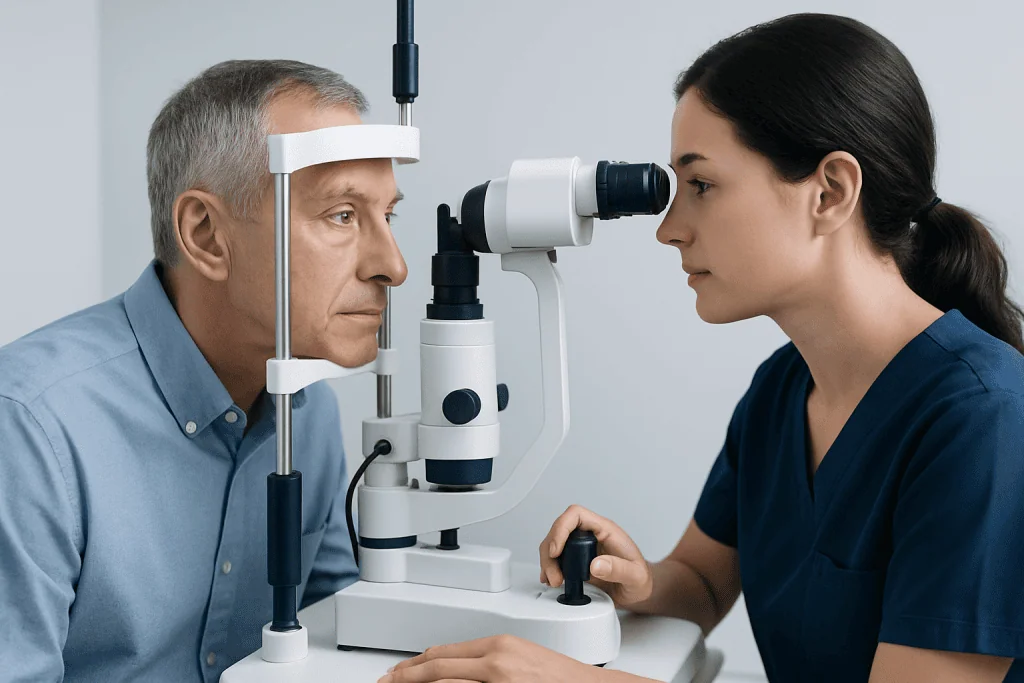
During an eye examination, the specialist looks at the cornea using magnification and a slit lamp. This painless examination helps confirm the diagnosis and rule out other causes of corneal clouding or rings. Vision testing, eye pressure measurement, and pupil examination may be performed when clinically appropriate.
If the appearance or age of onset raises concern, blood tests may be arranged through a primary care clinician or relevant specialist. The next steps depend on the results. Lifestyle advice alone may be suitable for some people, while others may need further cardiovascular assessment or prescribed lipid-lowering treatment.
Acibadem International’s multidisciplinary specialists and JCI-accredited hospitals can support eye assessment and coordinated evaluation of cholesterol and cardiovascular health for international patients.
How Do You Know Your Cornea Is Healing?
Corneal arcus is not usually an injury or active inflammation, so the cornea is not expected to “heal” by clearing the ring. In this condition, a stable ring without pain, redness, discharge, light sensitivity, or vision loss is generally reassuring. The ring may remain visible even when a person’s overall health markers improve.
Signs of corneal healing are more relevant after an eye injury, infection, surgery, or contact lens-related problem. Depending on the cause, improvement may include less pain, less redness, reduced tearing, better comfort in light, and clearer vision. Only an eye professional can confirm corneal healing because some problems are not visible without examination.
New discomfort or visual symptoms should not be attributed to corneal arcus without an assessment. A person who has eye symptoms should arrange timely care, especially if they wear contact lenses or have recently had eye trauma or surgery.
When to Seek Medical Care
Routine medical review is sensible when corneal arcus is first noticed, particularly in a person under about 45 to 50 years old or in someone with a family history of high cholesterol or premature heart and vascular disease. A non-urgent appointment with an eye care professional or primary care clinician can confirm the finding and guide appropriate blood testing.
Urgent eye assessment is needed for pain, marked redness, sudden blurred or reduced vision, significant light sensitivity, injury, chemical exposure, or a feeling that something is stuck in the eye. These features are not typical of corneal arcus and may indicate a different eye condition that needs prompt treatment.
Regular preventive care remains valuable even when the ring is age-related. Monitoring cholesterol, blood pressure, blood sugar, diet, physical activity, and smoking status can help clinicians identify modifiable cardiovascular risks early.
Frequently asked questions
What is the best corneal arcus treatment?
The best approach is usually to confirm the diagnosis and check for underlying high cholesterol or cardiovascular risk factors when appropriate. Corneal arcus itself generally does not need eye treatment because it does not normally affect vision. If blood lipids are elevated, treatment is directed at improving long-term heart and blood vessel health.
Can eye drops remove corneal arcus?
No approved eye drops are known to remove corneal arcus safely or reliably. The ring consists of lipid deposits within the outer cornea, not a surface film that can be washed away. A person should avoid unproven products and discuss any eye treatment with an ophthalmologist.
Will lowering cholesterol make corneal arcus disappear?
Lowering cholesterol is important when levels are high, but it may not make an existing corneal arcus disappear. The main benefit is reducing the risk of cardiovascular complications over time. The ring may remain visible despite successful cholesterol management.
Is corneal arcus dangerous?
Corneal arcus is usually not dangerous to the eye and does not commonly affect sight. Its importance depends partly on age and overall health, as earlier-onset corneal arcus can be associated with high cholesterol. A clinician can advise whether blood tests or additional assessment are needed.
Can corneal arcus occur in one eye?
Corneal arcus commonly develops in both eyes. A ring, clouding, or opacity affecting one eye only should be evaluated by an eye professional because other eye conditions can have a similar appearance. Examination is the safest way to establish the cause.
What lifestyle changes may help if corneal arcus is linked to high cholesterol?
A clinician may recommend a heart-healthy eating pattern, regular physical activity, avoiding tobacco, and maintaining a weight that supports overall health. The right plan depends on a person's health conditions, test results, and family history. Some people also need prescribed medication to manage cholesterol effectively.
References
- American Academy of Ophthalmology
- National Heart, Lung, and Blood Institute
- American Heart Association
- Mayo Clinic
This article is for general information only and is not a substitute for professional medical advice. Please consult a qualified doctor about your individual situation.
Heart care in Turkey — expert evaluation and treatment
JCI-accredited · board-certified surgeons · reply within 24h
Add us as a Preferred Source to see more of our trusted health content across Google Search, AI Overviews and Discover.
Check your numbers in seconds
BMI, calories, due date, blood pressure and 30+ more clinical calculators — free, instant, doctor-reviewed ranges.

More from the Health Library



Related Specialists

Prof. Dr. Hakan Ağır
Aesthetic Plastic & Reconstructive Surgery
Dr. Yalçın Varnalı
Otorhinolaryngology
Assoc. Prof. Dr. Nurcan Kızılcık
Anesthesiology
Esra Er
Physical Medicine & Rehabilitation