Corpus Luteum Cyst — Explained by Medical Evidence, Not Myths

A corpus luteum cyst usually forms after ovulation and is often part of a normal menstrual cycle. Many corpus luteum cysts cause no symptoms and resolve without treatment over several weeks or months.
Key Takeaways
- A corpus luteum cyst usually forms after ovulation and is often part of a normal menstrual cycle.
- Many corpus luteum cysts cause no symptoms and resolve without treatment over several weeks or months.
- Pelvic pain, bloating, delayed periods, or pain during sex can occur, especially if the cyst becomes larger or bleeds.
- Ultrasound is the main test used to confirm the diagnosis and rule out other causes of pelvic pain.
- Urgent medical care is needed for sudden severe pelvic pain, fainting, heavy bleeding, or signs of ovarian torsion.
A corpus luteum cyst is a fluid-filled sac that forms in the ovary after ovulation, when the normal hormone-producing structure called the corpus luteum fills with fluid or blood. Most are harmless and temporary, but some can cause pelvic pain, delayed periods, or sudden symptoms if they bleed, rupture, or twist the ovary.
What is a corpus luteum cyst?
A corpus luteum cyst is a type of functional ovarian cyst. It develops after an egg is released during ovulation, when the follicle that held the egg changes into a temporary hormone-producing structure called the corpus luteum. If this structure seals off and fills with fluid or blood instead of breaking down as usual, it can form a cyst.
In many cases, a corpus luteum cyst is not dangerous and does not mean there is cancer or permanent damage to the ovary. It is one of the common reasons a cyst may be seen on pelvic ultrasound in people of reproductive age. Because it is linked to the normal menstrual cycle, it often disappears on its own without any procedure.
The main reason this cyst gets attention is that it can sometimes cause symptoms or be confused with other pelvic conditions. A larger cyst may stretch the ovary and cause discomfort. If bleeding occurs inside the cyst, it may be described as a hemorrhagic corpus luteum cyst. Rarely, a cyst can rupture or contribute to ovarian torsion, which is when the ovary twists and blood flow is reduced.
How it forms during the menstrual cycle

Understanding the corpus luteum cyst is easier with a quick look at the menstrual cycle. Early in the cycle, a small sac called a follicle grows in the ovary and matures an egg. At ovulation, the follicle releases the egg. The remaining tissue then becomes the corpus luteum, which normally produces progesterone to support the second half of the cycle and, if pregnancy occurs, early pregnancy.
Usually, the corpus luteum shrinks if pregnancy does not happen. Sometimes, however, the opening where the egg was released closes and fluid collects inside. In other cases, small blood vessels in the corpus luteum bleed into it. This can create a cyst that may be simple or blood-filled.
Because of this hormonal timing, a corpus luteum cyst is different from many other ovarian cysts. It is not the same as polycystic ovary syndrome, and it is not the same as growths such as other ovarian cysts that may arise from different tissues or mechanisms. The distinction matters because management often depends on the type of cyst, the person’s age, symptoms, and ultrasound findings.
Symptoms and possible complications
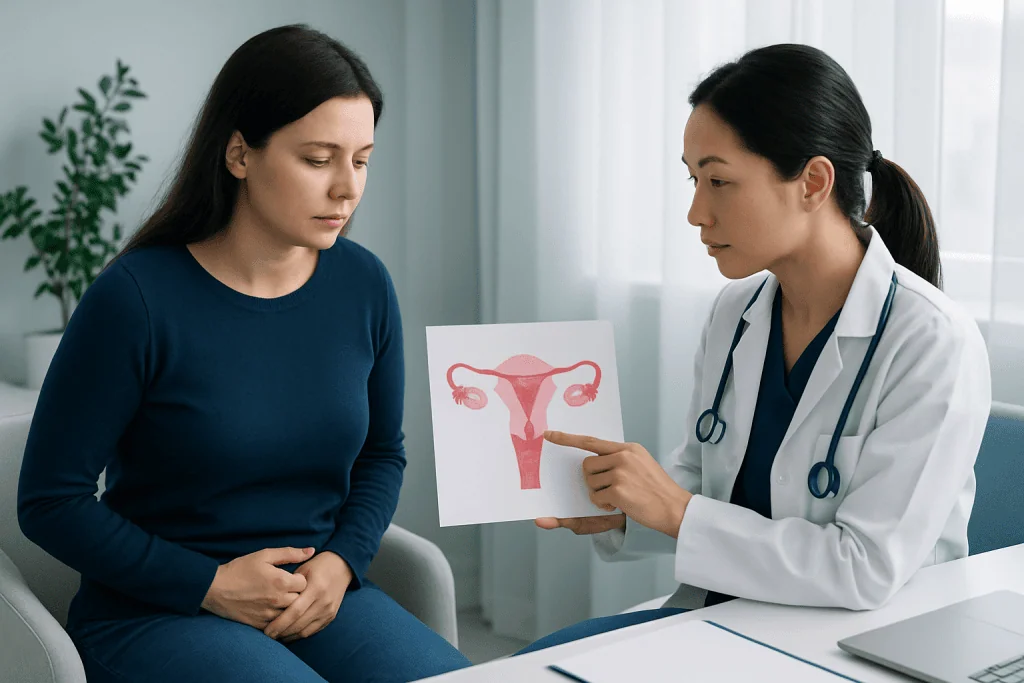
Many people with a corpus luteum cyst have no symptoms at all. The cyst may be found incidentally during an ultrasound done for another reason. When symptoms do occur, they often include one-sided pelvic pain, a feeling of pressure or fullness in the lower abdomen, mild bloating, or discomfort during sex. Some people notice a delayed period or light vaginal spotting.
A hemorrhagic corpus luteum cyst can cause more noticeable pain if blood collects quickly inside the cyst. Pain may be steady or sudden, and it may happen in the middle or second half of the menstrual cycle. The pain can sometimes resemble appendicitis, ectopic pregnancy, or other urgent gynecologic problems, so proper evaluation is important.
Complications are uncommon, but they can happen. A cyst may rupture and cause sudden pelvic pain, sometimes with internal bleeding. A larger cyst can also increase the risk of ovarian torsion, which may cause severe pain, nausea, and vomiting. Torsion is a medical emergency because the ovary needs prompt treatment to protect blood supply. Doctors may also consider related conditions such as endometriosis or pregnancy-related causes when symptoms are not typical.
- Common symptoms: one-sided pelvic pain, fullness, bloating, spotting
- Less common but important: sudden severe pain, dizziness, fainting, nausea, vomiting
- Possible complications: bleeding into the cyst, rupture, ovarian torsion
Causes and risk factors
A corpus luteum cyst is not usually caused by something a person did or did not do. It arises from a variation in the normal ovulation process. That means it is most often seen in people who are still having menstrual cycles. It is less common after menopause because ovulation no longer occurs regularly.
Some factors may make functional cysts more likely to be noticed or to form. These include hormonal fluctuations, fertility treatments that stimulate ovulation, and medications that influence the menstrual cycle. Pregnancy can also be associated with persistence of the corpus luteum in early weeks, since it continues to make hormones until the placenta takes over.
Not every pelvic cyst is a corpus luteum cyst, so doctors also think about age, menstrual history, family history, and imaging features. A painful cyst in a reproductive-age patient may still need evaluation to exclude ectopic pregnancy, infection, or another ovarian problem. In selected cases, care may involve gynecology specialists, imaging, and sometimes laparoscopy if the diagnosis remains uncertain or complications are suspected.
How doctors diagnose it
Diagnosis usually begins with a medical history and pelvic examination. A doctor will ask about the timing of pain, menstrual changes, pregnancy possibility, and any symptoms such as dizziness, vomiting, or abnormal bleeding. These details help estimate whether the cyst is likely functional and whether urgent conditions need to be ruled out.
Pelvic ultrasound, often transvaginal ultrasound, is the main imaging test used to identify a corpus luteum cyst. Ultrasound can show the size of the cyst, whether it contains simple fluid or blood, and whether there are features that suggest a functional cyst rather than a more complex mass. If pain is severe, imaging also helps look for signs of rupture, bleeding, or torsion.
Pregnancy testing is commonly done because early pregnancy and ectopic pregnancy can cause similar symptoms. Blood tests may be used if there is concern about bleeding, infection, or anemia. In some cases, follow-up ultrasound after one or more cycles is recommended to confirm that the cyst is shrinking. If the findings are not typical, a gynecologist may consider additional imaging or further evaluation.
Treatment options and what recovery usually looks like
Treatment depends on symptoms, cyst size, ultrasound appearance, and whether complications are suspected. For a small or moderate corpus luteum cyst with mild symptoms and reassuring imaging, watchful waiting is often the best approach. Many cysts resolve naturally over time, and a doctor may recommend repeat ultrasound to make sure the cyst is getting smaller.
Pain can often be managed with rest and appropriate over-the-counter pain relief if a doctor says it is safe. Hormonal contraception may be considered in some cases to reduce future ovulation and help prevent new functional cysts, although it does not instantly remove a cyst that is already present. If a cyst ruptures but bleeding is limited and the person is stable, close monitoring may still be enough.
Surgery is considered when there is severe pain, heavy internal bleeding, persistent growth, uncertain diagnosis, or ovarian torsion. Whenever possible, surgeons aim to preserve healthy ovarian tissue. Depending on the situation, treatment may include ovarian cyst surgery or emergency gynecological emergency care. Near the end of the care pathway, people with ongoing pelvic symptoms may also be assessed for related gynecologic problems such as endometriosis treatment if the clinical picture suggests it.
Self-care, prevention, and follow-up
There is no guaranteed way to prevent a corpus luteum cyst because it is tied to ovulation, a normal biological process. Still, paying attention to cycle patterns can be helpful. Tracking pelvic pain, bleeding changes, and the timing of symptoms may make it easier for a doctor to recognize whether the cyst is likely functional or whether another condition should be investigated.
Self-care focuses on comfort and observation rather than home cures. Gentle activity, hydration, and a heating pad may help relieve mild cramping, but persistent or worsening pain should not be ignored. People should avoid assuming that all pelvic pain is caused by a known cyst, especially if symptoms suddenly change.
Follow-up matters because many cysts are diagnosed with imaging and then monitored. A repeat ultrasound may be advised after several weeks to confirm that the cyst has resolved. If it does not shrink, if symptoms continue, or if the imaging appearance is atypical, the doctor may recommend further testing. Acibadem International’s multidisciplinary specialists in JCI-accredited hospitals diagnose and treat ovarian cyst conditions for international patients when specialist gynecologic evaluation is needed.
When to seek medical care
Prompt medical care is important for sudden or severe symptoms. A person should seek urgent help for intense one-sided pelvic pain, fainting, marked dizziness, shoulder pain, heavy vaginal bleeding, or pain with nausea and vomiting. These symptoms can suggest rupture with significant bleeding, ectopic pregnancy, or ovarian torsion.
Non-urgent medical review is also appropriate when pelvic pain keeps returning, periods become irregular, intercourse is painful, or bloating does not improve. It is especially important to see a doctor if symptoms are new after menopause or if there is a positive pregnancy test. These situations do not always mean something serious is happening, but they do deserve professional assessment.
People who have been told they have a corpus luteum cyst should follow the plan given by their clinician and attend recommended imaging follow-up. Asking clear questions about the cyst’s size, expected course, and warning signs can make the situation feel more manageable and help guide safe next steps.
Frequently asked questions
Is a corpus luteum cyst the same as a regular ovarian cyst?
A corpus luteum cyst is one specific type of ovarian cyst. It forms after ovulation from the normal structure that produces hormones during the second half of the cycle. Many other ovarian cysts come from different tissues and may be managed differently.
Can a corpus luteum cyst go away on its own?
Yes. Many corpus luteum cysts resolve without treatment over the course of several weeks or a few menstrual cycles. Doctors often recommend follow-up ultrasound to confirm that the cyst is shrinking or has disappeared.
Can a corpus luteum cyst cause a delayed period or spotting?
It can. Because the corpus luteum is involved in hormone production, a cyst in this structure may sometimes affect the timing of bleeding or cause light spotting. However, missed or abnormal periods can also happen for many other reasons, including pregnancy.
Is a corpus luteum cyst dangerous during pregnancy?
Not usually. In early pregnancy, the corpus luteum normally helps support the pregnancy by producing hormones, and a cyst in this area is often monitored rather than treated. Doctors evaluate it more closely if there is significant pain, bleeding, or concern for rupture or torsion.
What does a ruptured corpus luteum cyst feel like?
A rupture often causes sudden pelvic pain, usually on one side, and the pain may range from mild to severe. Some people also feel dizzy, weak, or nauseated if bleeding is more significant. These symptoms should be assessed promptly by a doctor.
Does a corpus luteum cyst affect fertility?
A single corpus luteum cyst usually does not cause long-term fertility problems. Since it forms as part of ovulation, it often reflects that ovulation has occurred. Fertility concerns depend more on the broader reproductive history and whether other conditions are present.
This article is for general information only and is not a substitute for professional medical advice. Please consult a qualified doctor about your individual situation.
IVF & fertility treatment in Turkey — success rates and costs
JCI-accredited · board-certified surgeons · reply within 24h
Add us as a Preferred Source to see more of our trusted health content across Google Search, AI Overviews and Discover.
Check your numbers in seconds
BMI, calories, due date, blood pressure and 30+ more clinical calculators — free, instant, doctor-reviewed ranges.

More from the Health Library

Protease Inhibitors: A Complete Medical Overview

Solid White Albacore Tuna: What Patients Need to Know

Occluded: Symptoms, Causes, and Treatment — Complete Patient Guide

Garcinia Cambogia: An Evidence-Based Guide for Patients

Prophylaxis Dental: What Patients Need to Know