

Crepitus Knee Treatment: How It Works, Results and What to Expect

Knee crepitus describes crackling, clicking, popping or grinding felt or heard during knee movement. Painless crepitus usually does not require treatment, although a clinical review may be useful if it is new or concerning.
Key Takeaways
- Knee crepitus describes crackling, clicking, popping or grinding felt or heard during knee movement.
- Painless crepitus usually does not require treatment, although a clinical review may be useful if it is new or concerning.
- Exercise-based rehabilitation, activity adjustments and treatment of an underlying knee condition are common approaches for painful crepitus.
- A knee sleeve may provide comfort or a feeling of support, but it does not correct every cause of crepitus.
- Sudden swelling, inability to bear weight, knee locking, redness or fever needs prompt medical assessment.
Crepitus knee treatment is guided by symptoms and the underlying cause rather than the sound alone. Painless popping or grinding is common and often harmless, while crepitus with pain, swelling, locking or instability should be assessed by a qualified clinician.
Crepitus Knee Treatment: How It Works
Crepitus is the medical term for a crackling, clicking, popping or grinding sensation that may be heard or felt when the knee bends, straightens, squats or climbs stairs. Crepitus knee treatment is not a single procedure. It is a plan based on whether the noise is painless, whether the knee is functioning normally, and whether an underlying condition such as osteoarthritis, kneecap tracking problems, a cartilage injury or inflammation is present.
In many people, especially when there is no pain or swelling, knee sounds are a normal part of movement. Tendons and ligaments can move over bony areas, tiny gas bubbles in joint fluid can shift, and the surfaces within the joint can create noise. These sounds do not automatically mean that the joint is being damaged.
When crepitus occurs with symptoms, treatment aims to reduce pain, restore comfortable movement, improve knee strength and address the cause. A clinician may recommend targeted exercises, physiotherapy, changes to demanding activities, weight management where appropriate, pain-relief strategies or, less commonly, injections or surgery. Knee osteoarthritis is one common cause of persistent painful grinding in adults, but a careful assessment is needed before assuming this is the explanation.
What Can Cause Knee Crepitus?
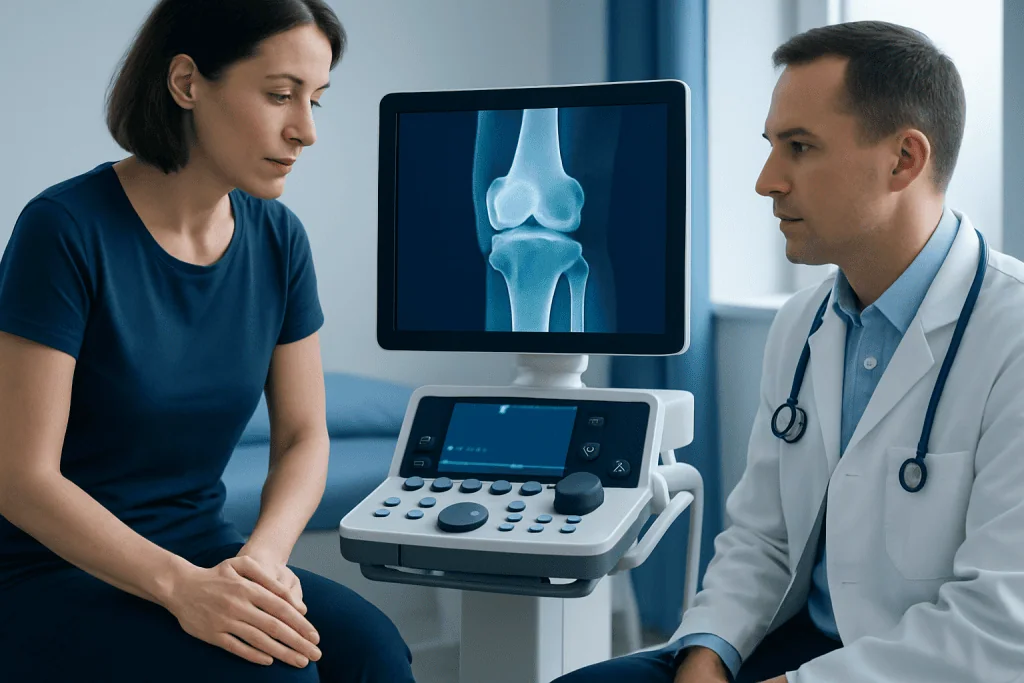
The knee is a complex joint involving bone, cartilage, menisci, ligaments, tendons and the kneecap. Crepitus can occur when any of these structures moves or when the joint surfaces do not glide smoothly. It may start gradually with age and activity, or appear after a twist, impact or period of reduced activity.
Common explanations include normal joint sounds, changes in the cartilage behind the kneecap, patellofemoral pain, osteoarthritis, muscle weakness or altered movement patterns. Previous knee injury or surgery can also change joint mechanics. Less commonly, a meniscal tear, loose body in the joint, inflammatory arthritis or infection may contribute, particularly when symptoms are sudden or severe.
Risk factors for painful knee symptoms include prior knee injury, repetitive high-impact loading, weak thigh or hip muscles, reduced flexibility, excess body weight, some work demands and increasing age. Risk factors do not confirm a diagnosis; they simply help a clinician decide which possibilities to consider.
- Painless sounds during normal movement are often benign.
- Pain with stairs, squats or prolonged sitting may suggest kneecap-related irritation.
- Persistent stiffness, aching and reduced function may occur with osteoarthritis.
- Locking, giving way or sudden swelling after injury may indicate a problem that needs assessment.
Assessment and Candidacy for Crepitus Knee Treatment

People are candidates for treatment when knee crepitus is painful, limits daily activities, follows an injury, or occurs with swelling, stiffness, weakness, instability or reduced range of motion. The main goal is not always to eliminate every sound. For many people, the more meaningful result is moving with less pain and greater confidence.
A clinician will usually ask when the crepitus began, which movements bring it on, whether there was an injury, and whether there are symptoms such as locking, catching or warmth. Examination may include checking walking pattern, knee alignment, swelling, range of motion, kneecap movement, muscle strength and ligament stability.
Imaging is not always needed for painless knee noises. X-rays may help identify arthritis or bone changes when symptoms persist. Magnetic resonance imaging may be considered after significant injury or when a meniscal, cartilage or ligament problem is suspected and the result is likely to change management. Blood tests may be used if inflammatory arthritis or infection is a concern.
People considering an invasive procedure should first have a clear diagnosis and a discussion of expected benefits, limitations and alternatives. Arthroscopy is not routinely used simply to treat noisy knees or uncomplicated degenerative arthritis; it is reserved for selected situations, such as certain injuries or mechanical blockage, after orthopedic assessment.
Step-by-Step: What Conservative Treatment Usually Involves
Most crepitus knee treatment begins with a non-surgical plan. First, the clinician identifies movements that reliably provoke symptoms and checks for activity demands that may be overloading the joint. This does not usually mean stopping all exercise. Instead, activities may be modified temporarily while the knee becomes stronger and more comfortable.
Second, a physiotherapist may design a progressive program for the thigh, hip and core muscles. Strengthening these areas can improve knee control during walking, stair climbing and squatting. Mobility work, balance training and gradual return to preferred activities may also be included. Physical therapy and rehabilitation can be especially useful when pain, weakness or altered movement patterns are contributing.
Third, clinicians may discuss practical symptom management. This can include pacing activities, using ice after a flare when it is comfortable, choosing lower-impact exercise during recovery, and discussing suitable pain-relief medicines with a doctor or pharmacist. For some knee conditions, an injection may be considered as part of a broader rehabilitation plan, but it is not a cure for every type of crepitus.
If a structural injury is confirmed and symptoms do not improve with appropriate conservative care, an orthopedic specialist may discuss procedural options. The precise procedure, preparation and recovery depend entirely on the diagnosis; there is no standard operation for knee crepitus alone.
Recovery Timeline, Benefits and Possible Risks
Recovery from a non-surgical program is gradual. Some people notice improved comfort and control within several weeks, while strength and activity tolerance often continue to build over a few months. Consistency matters: exercises usually need to be progressed at an appropriate pace rather than performed intensely for a short period.
Expected benefits may include less pain, better function, stronger muscles, improved confidence on stairs and a return to more comfortable daily movement. The sound itself may remain even when the knee feels better. This is not necessarily a sign that treatment has failed.
Exercise can cause temporary muscle soreness, particularly when starting a new program. Pain that becomes sharp, causes swelling, leads to limping, or lasts beyond a reasonable recovery period should be discussed with the treating clinician. Braces, sleeves, medicines and injections also have limitations and possible side effects, so they should be selected with professional guidance.
Surgery has procedure-specific risks, including infection, bleeding, blood clots, stiffness, persistent pain and incomplete symptom relief. An orthopedic surgeon will explain individual risks before recommending an operation. Acibadem International’s multidisciplinary specialists and JCI-accredited hospitals can assess knee symptoms and coordinate orthopedic, imaging and rehabilitation care for international patients.
Will My Knee Crepitus Go Away?
Knee crepitus may lessen, remain unchanged or become less noticeable over time. When it is caused by normal joint movement and there is no pain or swelling, it may not need to go away because it is not harmful. Trying to eliminate every click or pop is usually less important than maintaining comfortable function.
If crepitus is linked to muscle weakness, kneecap mechanics or a temporary increase in activity, a tailored strengthening and movement program may reduce symptoms and sometimes the noise. When cartilage wear is present, the grinding sensation may persist, but treatment can still improve pain, strength and daily mobility.
It is sensible to seek an assessment if the sound is new after an injury, becomes painful, or is accompanied by swelling or loss of movement. A diagnosis helps set realistic expectations and avoids unnecessary treatment.
Is Knee Crepitus Serious?
Knee crepitus is often not serious, particularly when it is painless and the knee moves normally. Many healthy people experience occasional clicking or popping, and the sound alone does not diagnose arthritis or prove that cartilage is wearing away.
It becomes more clinically important when it is paired with persistent pain, swelling, warmth, stiffness, instability, loss of motion or difficulty carrying out normal activities. A sudden pop at the time of an injury followed by swelling or inability to continue activity also deserves medical evaluation.
Urgent assessment is appropriate if the knee is very hot, red and swollen; if fever or feeling unwell occurs; if the knee is visibly deformed; or if a person cannot bear weight after an injury. These symptoms can point to conditions that should not be managed with self-care alone.
Will a Knee Sleeve Help With Crepitus?
A knee sleeve may help some people feel warmer, more supported or more confident during activity. For mild symptoms, this can make exercise or walking more comfortable. However, a sleeve does not repair cartilage, correct all kneecap movement issues, or treat a significant knee injury.
The benefit is individual and often modest. A well-fitting sleeve should not cause numbness, skin irritation, color change in the foot or increased pain. It should be viewed as a supportive tool alongside strengthening, appropriate activity progression and diagnosis of any ongoing symptoms.
A clinician or physiotherapist can advise whether a simple sleeve, a more structured brace or no brace is most appropriate. People with circulation problems, reduced sensation or skin wounds should ask a healthcare professional before using compression products.
Frequently asked questions
Can crepitus go away with exercise?
Exercise can reduce painful crepitus when weak muscles, poor movement control or kneecap-related symptoms are contributing. Strengthening the thigh and hip muscles, improving balance and progressing activity gradually may improve knee comfort and function. The sounds may remain even when symptoms improve, especially if there are longer-term cartilage changes.
Should people stop exercising if their knee clicks or grinds?
Painless clicking or grinding does not usually require stopping exercise. It is often reasonable to continue with good technique and gradual progression. Exercise should be modified and medical advice sought if it causes sharp pain, swelling, locking, instability or worsening symptoms.
What exercises are usually helpful for knee crepitus?
The most suitable exercises depend on the cause, but programs often include controlled strengthening for the quadriceps, hip muscles and core, as well as flexibility and balance work. Low-impact activities such as cycling, swimming or walking may be easier to tolerate for some people. A physiotherapist can tailor movements and load to the individual knee.
Does knee crepitus mean arthritis is getting worse?
Not necessarily. Crepitus can occur in people without arthritis, and the sound alone cannot show whether arthritis is present or progressing. Symptoms such as persistent pain, stiffness, swelling and reduced function provide more useful reasons to seek an assessment.
Are injections used for crepitus knee treatment?
Injections may be considered for selected causes of knee pain, often when other treatments have not provided enough relief. They are not a universal treatment for knee sounds and should be part of an individualized plan that includes exercise-based care where appropriate. A clinician can explain potential benefits, limitations and risks for a specific diagnosis.
When should someone see a doctor about knee crepitus?
A medical review is recommended when crepitus is painful, persistent, worsening, or associated with swelling, stiffness, giving way, locking or reduced movement. Prompt assessment is important after a significant injury, inability to bear weight, major swelling, fever, redness or warmth around the knee. Early evaluation can help identify the cause and guide appropriate treatment.
References
- American Academy of Orthopaedic Surgeons
- American College of Rheumatology
- National Institute of Arthritis and Musculoskeletal and Skin Diseases
- National Institute for Health and Care Excellence
This article is for general information only and is not a substitute for professional medical advice. Please consult a qualified doctor about your individual situation.
Joint and spine care in Turkey — expert assessment & treatment
JCI-accredited · board-certified surgeons · reply within 24h
Add us as a Preferred Source to see more of our trusted health content across Google Search, AI Overviews and Discover.

More from the Health Library


Related Specialists

Dr. Özlem Özkalaycı
Anesthesiology
Assoc. Prof. Dr. Adnan Batman (m)
Endocrinology
Prof. Dr. Orhan Demircan
General Surgery
Dr. Mustafa Mert Okumuş (m)
Aesthetic Plastic & Reconstructive Surgery