Cutaneous Lupus: A Complete Medical Overview

Cutaneous lupus mainly affects the skin and often worsens with sunlight or ultraviolet exposure. Common forms include acute, subacute, and chronic cutaneous lupus, including discoid lupus.
Key Takeaways
- Cutaneous lupus mainly affects the skin and often worsens with sunlight or ultraviolet exposure.
- Common forms include acute, subacute, and chronic cutaneous lupus, including discoid lupus.
- Diagnosis usually combines a skin examination, medical history, blood tests, and sometimes a skin biopsy.
- Treatment may include strict sun protection, medicated creams, and systemic medicines when needed.
- Early care can help reduce flares, prevent scarring, and identify any signs of systemic lupus.
Cutaneous lupus is a type of lupus that primarily affects the skin, most often causing rashes, color changes, scaling, or scarring in sun-exposed areas. It is not the same as systemic lupus in every case, but careful diagnosis is important because some people have skin-only disease while others may also have internal organ involvement.
Overview: what cutaneous lupus is
Cutaneous lupus is an autoimmune condition in which the immune system mistakenly targets the skin, leading to inflammation and visible skin changes. The term covers several patterns of lupus-related skin disease, including acute cutaneous lupus, subacute cutaneous lupus, and chronic cutaneous lupus. Some forms heal without marks, while others may leave long-term color changes or scars.
A key point for patients is that cutaneous lupus does not automatically mean severe internal disease. In some people, the condition is limited to the skin. In others, skin findings occur alongside systemic lupus erythematosus, a broader autoimmune illness that can affect joints, kidneys, blood cells, or other organs. Because of this overlap, doctors often assess both the skin and overall health at the same time.
Symptoms often appear on areas exposed to the sun, such as the face, scalp, ears, neck, chest, and arms. Ultraviolet light is a common trigger, and skin changes may develop soon after sun exposure or become more noticeable over time. Many patients also notice that rashes flare during periods of stress, illness, or hormonal changes.
Although cutaneous lupus can be persistent, it is treatable. A dermatologist or rheumatologist can help confirm the type, reduce inflammation, protect the skin, and monitor for signs of wider autoimmune disease. In many cases, a combination of daily skin protection and medical treatment helps improve comfort and appearance while lowering the risk of lasting damage.
How cutaneous lupus appears on the skin
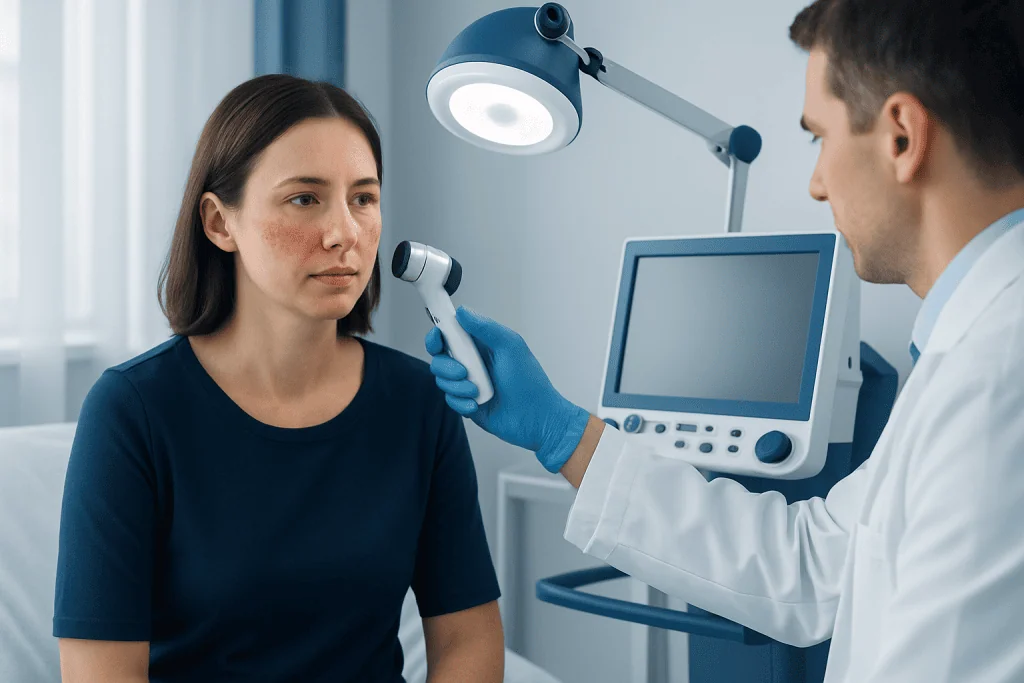
The appearance of cutaneous lupus varies by subtype. Acute cutaneous lupus often causes a red rash across the cheeks and bridge of the nose, sometimes called a butterfly rash. This pattern may appear after sun exposure and usually does not scar, though it can be associated with active systemic lupus.
Subacute cutaneous lupus commonly causes red, ring-shaped or scaly patches on the arms, shoulders, upper back, or chest. These lesions usually develop on sun-exposed skin and tend to be very photosensitive. They may heal without deep scars but can leave areas of lighter or darker pigmentation.
Chronic cutaneous lupus, especially discoid lupus, often causes thick, scaly, well-defined plaques. These can occur on the face, scalp, ears, and other areas. Over time, discoid lupus may lead to permanent scarring, skin thinning, pigment changes, or hair loss if the scalp is involved. Patients looking for broader information about lupus may find it helpful to understand that skin disease can be one part of a larger autoimmune picture, but not always.
- Red or violet patches or plaques
- Scaling or crusting
- Sun sensitivity
- Burning, itching, or tenderness
- Light or dark marks after a flare
- Scalp lesions with hair loss
Causes and risk factors

The exact cause of cutaneous lupus is not fully understood, but it is believed to result from a mix of genetic susceptibility, immune system dysregulation, and environmental triggers. In autoimmune disease, the immune system reacts inappropriately and causes inflammation in healthy tissue. In cutaneous lupus, that inflammation is focused on the skin.
Sunlight is one of the most important triggers. Ultraviolet A and B light can provoke or worsen lesions, even after relatively short exposure in sensitive individuals. Some indoor light sources and tanning beds may also contribute. Because reactions can be delayed, a person may not immediately connect a new rash with recent sun exposure.
Other possible risk factors include female sex, a personal or family history of autoimmune disease, smoking, certain medications, and hormonal influences. Some drug-induced cases resemble subacute cutaneous lupus and may improve when the responsible medicine is stopped under medical guidance. Smoking is especially important because it may worsen disease activity and reduce response to treatment.
Stress and infections do not directly cause cutaneous lupus, but they may trigger flares in some people. The condition is not contagious and cannot be spread through contact. Understanding personal triggers is often part of long-term management, since avoiding them can reduce the frequency and intensity of skin symptoms.
Diagnosis and how doctors tell it apart from other rashes
Diagnosis starts with a detailed skin examination and a review of symptoms, medical history, and trigger patterns. A doctor will ask when the rash began, whether it worsens in sunlight, whether it leaves scars, and whether there are other symptoms such as joint pain, mouth ulcers, chest discomfort, or unusual fatigue. These details help distinguish cutaneous lupus from eczema, psoriasis, rosacea, fungal infections, and other inflammatory skin conditions.
A skin biopsy is often one of the most useful tests. During a biopsy, a small sample of skin is removed and examined under a microscope to look for changes typical of lupus. In some cases, additional special staining is used to support the diagnosis. Blood tests may also be ordered to look for autoantibodies and signs of inflammation or organ involvement, but blood tests alone cannot confirm every case of skin-limited lupus.
Because some patients with skin lupus may have or later develop systemic lupus, doctors may also perform a broader autoimmune evaluation. This can include urine testing, complete blood counts, kidney function tests, and screening for related symptoms. If there are concerns about wider disease, a referral to a rheumatologist is common, especially when findings overlap with rheumatologic conditions.
Accurate diagnosis matters because treatment depends on the subtype and severity of disease. Early diagnosis can also help prevent avoidable scarring, especially in discoid lupus affecting the scalp or face. Patients should avoid self-diagnosing persistent facial or sun-sensitive rashes, since several skin disorders can look similar at first.
Treatment options for cutaneous lupus
Treatment aims to calm inflammation, relieve symptoms, prevent new lesions, and reduce the chance of scarring or long-term pigment changes. The right plan depends on the subtype, the size and location of lesions, the degree of photosensitivity, and whether there is evidence of systemic disease. Many patients need more than one approach at the same time.
Topical treatment is commonly used for mild or localized disease. This may include prescription corticosteroid creams or ointments and other anti-inflammatory topical medicines, especially for areas where long-term steroid use is less suitable. For thicker lesions, doctors sometimes use injections directly into the skin. If scalp lesions are causing hair loss or facial plaques are leaving marks, prompt treatment is especially important.
When disease is widespread, recurrent, or resistant to creams alone, systemic treatment may be recommended. Options can include antimalarial medicines and other immune-modulating therapies selected by a specialist. Some patients may also benefit from coordinated dermatology care and, when lupus extends beyond the skin, specialist rheumatology evaluation and treatment.
Supportive skin care also matters. Gentle cleansing, fragrance-free moisturizers, and strict sun protection can improve comfort and reduce irritation. In more complex cases, international patients may seek multidisciplinary assessment; Acibadem International’s specialists, working in JCI-accredited hospitals, diagnose and treat autoimmune and skin conditions with coordinated care when needed.
Prevention and self-care in daily life
Sun protection is one of the most effective ways to prevent flares. This includes using a broad-spectrum sunscreen with a high SPF every day, reapplying it as directed, and wearing protective clothing, wide-brimmed hats, and sunglasses. Seeking shade and avoiding peak sunlight hours can further lower exposure. Patients should remember that UV light can pass through clouds and glass to some extent.
Smoking cessation is another important step. Smoking may increase disease activity, make skin lesions harder to control, and reduce the effectiveness of treatment. For patients who smoke, discussing practical stop-smoking support with a healthcare professional can be part of lupus care.
Daily skin habits should be gentle and consistent. Harsh scrubs, strong exfoliants, or fragranced products may worsen irritated skin. It often helps to use mild cleansers, moisturize regularly, and avoid picking or scratching lesions. If scalp involvement is present, early medical review is important because ongoing inflammation may result in permanent hair loss in some cases.
Keeping a symptom diary may help identify personal triggers such as sun exposure, certain medications, illness, or stress. Self-care does not replace medical treatment, but it can make treatment more effective. When rashes are persistent or cause cosmetic distress, some patients also benefit from expert support through dermatology and cosmetology services to help manage skin changes and recovery.
When to seek medical care
A person should seek medical care if a rash is persistent, repeatedly triggered by sunlight, appears on the scalp, or leaves scars or color changes. New facial rashes, unexplained scaling plaques, and hair loss patches should be assessed rather than treated only with over-the-counter products. Early evaluation can help protect the skin and reduce the risk of lasting marks.
Prompt medical attention is also important if skin symptoms are accompanied by signs that could suggest systemic lupus or another autoimmune disease. These may include joint swelling, chest pain, shortness of breath, mouth ulcers, unusual fatigue, fever, or swelling in the legs. While these symptoms do not always mean internal organ disease, they deserve a professional assessment.
Anyone with a previous diagnosis of cutaneous lupus should contact a doctor if treatment no longer seems effective, lesions are spreading, or side effects from medication develop. Pregnant patients or those planning pregnancy should also review their diagnosis and treatment plan with their care team, since some lupus-related conditions and medications need closer monitoring.
Regular follow-up can be helpful even when symptoms improve. Doctors may monitor for recurrence, review sun-protection habits, and check for any changes that suggest a broader autoimmune condition. Ongoing care is especially valuable for patients with recurrent flares, scarring disease, or laboratory abnormalities.
Frequently asked questions
Is cutaneous lupus the same as systemic lupus?
No. Cutaneous lupus mainly affects the skin, while systemic lupus can affect internal organs as well as the skin. Some people have skin-only disease, but others may have both, so medical evaluation is important.
What does a cutaneous lupus rash look like?
It can look different depending on the type. Some people develop a butterfly-shaped facial rash, while others have scaly plaques, ring-shaped lesions, pigment changes, or scalp patches that can lead to hair loss.
Can cutaneous lupus go away?
Symptoms can improve significantly with treatment and trigger avoidance, especially good sun protection. However, the condition may flare and settle over time, so ongoing management is often needed.
Does cutaneous lupus always scar?
No. Some forms, such as acute cutaneous lupus, usually do not scar. Chronic forms, especially discoid lupus, are more likely to leave scars, color changes, or permanent hair loss if not treated early.
How is cutaneous lupus diagnosed?
Doctors usually diagnose it through a skin examination, medical history, and often a skin biopsy. Blood tests may also be used to check for autoimmune markers and signs of systemic involvement.
What triggers cutaneous lupus flare-ups?
Sun exposure is one of the most common triggers. Smoking, certain medications, infections, and stress may also contribute to flares in some patients.
This article is for general information only and is not a substitute for professional medical advice. Please consult a qualified doctor about your individual situation.
Lupus in Turkey — costs, top hospitals & a free quote
JCI-accredited · board-certified surgeons · reply within 24h
Add us as a Preferred Source to see more of our trusted health content across Google Search, AI Overviews and Discover.

More from the Health Library

Fluoride Mouthwash — Explained by Medical Evidence, Not Myths

Deductive — Explained by Medical Evidence, Not Myths

Infected Tongue Bar: An Evidence-Based Guide for Patients

Carnitine: A Complete Medical Overview

Testicles: A Complete Medical Overview