Infected Tongue Bar: An Evidence-Based Guide for Patients

Some swelling and tenderness are expected after a new tongue piercing, but symptoms should gradually improve rather than worsen. Increasing pain, spreading redness, pus-like discharge, fever, or swollen neck glands may indicate infection.
Key Takeaways
- Some swelling and tenderness are expected after a new tongue piercing, but symptoms should gradually improve rather than worsen.
- Increasing pain, spreading redness, pus-like discharge, fever, or swollen neck glands may indicate infection.
- Tongue swelling can become urgent if it affects breathing, swallowing, speech, or the ability to handle saliva.
- Keeping the jewelry in place is often safer until a clinician assesses the area, unless it is embedding or causing airway concerns.
- Professional assessment may include an oral examination, cleaning advice, drainage of an abscess, or antibiotics when clinically needed.
An infected tongue bar can cause increasing pain, redness, warmth, swelling, discharge, or an unpleasant taste after a tongue piercing. Mild irritation is common during healing, but worsening symptoms or any difficulty breathing, swallowing, or speaking requires urgent medical care.
Overview: What Is an Infected Tongue Bar?
An infected tongue bar is a tongue piercing with signs that bacteria have caused inflammation beyond the normal healing response. A newly pierced tongue commonly feels sore and swollen for several days, and it may produce a small amount of pale, odorless healing fluid. Infection becomes more likely when pain, swelling, redness, or discharge is increasing rather than settling over time.
The mouth naturally contains many bacteria, so any oral piercing creates an opening through which infection can develop. In most cases, timely assessment and appropriate care lead to improvement. However, the tongue has a rich blood supply and lies close to the airway, so significant swelling should never be ignored.
Not every uncomfortable piercing is infected. Friction from an incorrectly sized bar, accidental biting, irritation from smoking, or sensitivity to jewelry material can produce soreness and redness without a bacterial infection. A dentist, oral and maxillofacial specialist, or doctor can help distinguish these possibilities.
How Normal Healing Differs From Infection

During the early healing period, mild to moderate swelling, tenderness, bruising, and temporary changes in speech or eating are common. These symptoms are usually most noticeable in the first few days and then gradually improve. A thin, light-colored crust or fluid around the piercing may be dried lymph fluid, which is part of normal wound healing and is not necessarily pus.
Possible signs of infection include worsening throbbing pain, increasing redness or heat around the piercing channels, thick yellow or green discharge, a persistent bad taste, or a foul odor. The tongue may become increasingly firm, swollen, or difficult to move. Some people also develop fever, chills, fatigue, or tender lymph nodes under the jaw or in the neck.
Mechanical problems can look similar to infection. For example, a bar that is too short may press into swelling and begin to embed in the tongue, while a loose or damaged bar may rub the tissue. Allergic or irritant reactions may cause burning, itching, or a rash-like change around the piercing. These concerns also warrant professional advice because ongoing trauma can delay healing and increase infection risk.
- Expected healing: discomfort and swelling that steadily lessen.
- Concerning change: symptoms that become more painful, more swollen, or more widespread after initial improvement.
- Urgent concern: trouble breathing, swallowing saliva, opening the mouth, or speaking clearly because of swelling.
Why Tongue Bar Infections Happen
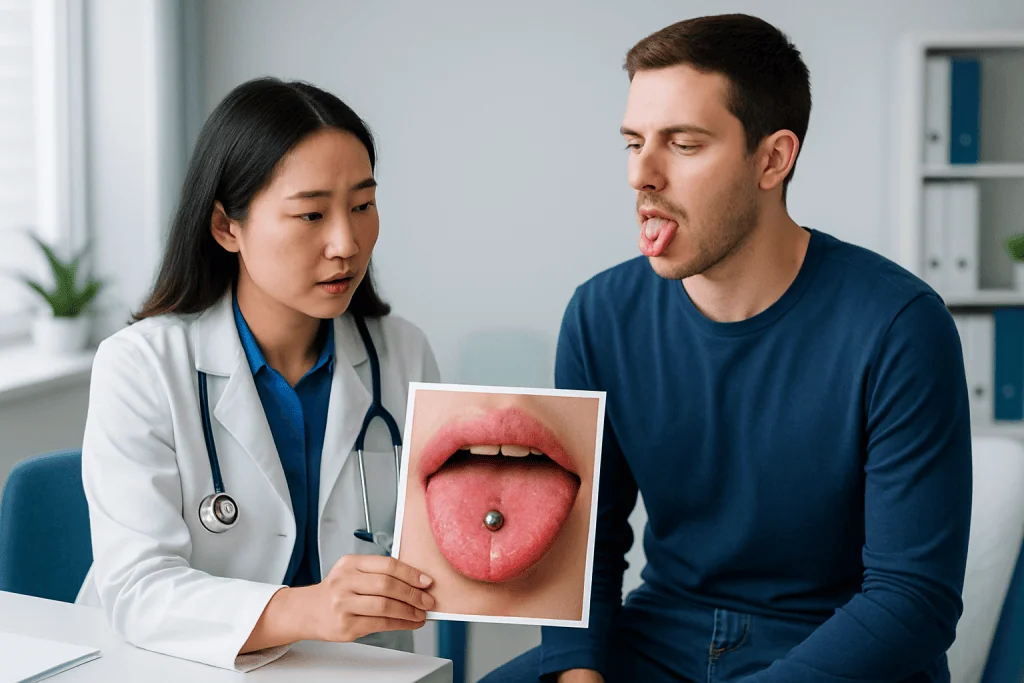
Infections can occur when bacteria enter the piercing channel during or after the procedure. Risk may be higher when the piercing was performed without appropriate sterile technique, when hands or objects touch the jewelry frequently, or when aftercare is inconsistent. Food debris and plaque can also collect around the bar, particularly if oral hygiene is difficult because of tenderness.
Smoking or vaping, alcohol use, and repeated oral contact with the jewelry can irritate healing tissue. Kissing, oral sex, sharing drinks or utensils, and placing unclean objects in the mouth may expose a fresh piercing to additional microbes. These behaviors do not guarantee infection, but avoiding them during the initial healing period can reduce avoidable irritation and contamination.
People with diabetes that is not well controlled, immune system suppression, gum disease, or a history of poor wound healing may need extra caution and individualized guidance before or after oral piercing. Dental problems such as untreated decay or gum infection can also affect oral health. A clinician may assess these factors when symptoms persist or recur.
How an Infected Tongue Bar Is Diagnosed
Diagnosis is usually based on a clinical examination. A healthcare professional will ask when the piercing was placed, how symptoms have changed, what aftercare has been used, and whether there has been fever, difficulty swallowing, or recent trauma. They will examine the tongue, the piercing entry and exit sites, the floor of the mouth, teeth and gums, and nearby lymph nodes.
The clinician will also check whether the jewelry is too tight, embedded, loose, or causing injury. In many straightforward cases, laboratory tests are not needed. If there is substantial discharge, recurrent infection, severe illness, or poor response to initial treatment, a sample may occasionally be sent for testing to help guide antibiotic choices.
Imaging is not routine for a minor localized infection. It may be considered if a clinician suspects a deeper collection of pus, infection extending into tissues of the mouth or neck, or another complication. Symptoms involving the throat, jaw, neck, or airway require particularly careful assessment.
Treatment Options and Safe Home Care
Treatment depends on the severity and cause of symptoms. A clinician may recommend improved oral hygiene, gentle saline rinsing, adjustment or replacement of unsuitable jewelry by an experienced professional, and follow-up to ensure that swelling is resolving. If a bacterial infection is confirmed or strongly suspected, prescription antibiotics may be needed. An abscess, which is a pocket of pus, may require drainage by an appropriate specialist.
It is generally best not to remove a tongue bar independently when infection is suspected unless a medical professional advises it or the jewelry is causing an immediate safety concern. Removing jewelry can allow the surface opening to close while infection remains deeper in the tissue. If the bar is tight, embedding, or interfering with breathing or swallowing, urgent assessment is important.
Until assessed, a person can support comfort by drinking water, choosing cool and soft foods, avoiding spicy or acidic foods, and avoiding alcohol, smoking, and vaping. Gentle rinsing with sterile saline or a mild alcohol-free mouth rinse may be useful, but harsh products such as hydrogen peroxide or strong alcohol-based rinses can irritate healing tissue. Pain relief should only be taken as directed on the product label or by a healthcare professional.
Home remedies should not replace medical evaluation for worsening symptoms. Do not squeeze the piercing, attempt to drain it, use leftover antibiotics, or apply creams and ointments inside the mouth. These measures may irritate the tissue, delay effective treatment, or mask a progressing infection.
Preventing Problems With a Tongue Piercing
Prevention begins with choosing a reputable piercing professional who uses sterile single-use equipment and discusses appropriate jewelry materials and sizing. Initial jewelry needs enough length to accommodate expected swelling, but it should be reviewed once swelling settles. A professional downsize can reduce rubbing against teeth and gums and lower the chance of accidental biting.
Consistent oral care is important. Brushing teeth gently with a soft toothbrush, cleaning the mouth as advised, washing hands before touching the area, and keeping jewelry clean can reduce bacterial buildup. The bar should not be rotated, played with, or removed repeatedly while the piercing channel is healing.
A tongue bar can also contribute to chipped teeth, gum recession, and damage to dental restorations over time, even without infection. Regular dental checkups can identify early signs of irritation or injury. Anyone who develops repeated swelling, sores, or dental trauma may wish to discuss whether retaining the piercing is appropriate for their oral health.
When to Seek Medical Care
Same-day medical or dental assessment is advisable for worsening pain or swelling, pus-like discharge, fever, persistent bleeding, a bad taste with increasing tenderness, or jewelry that appears to be sinking into the tongue. Care is also appropriate if symptoms do not begin to improve with careful hygiene or if there is uncertainty about whether the piercing is infected.
Emergency care is needed for difficulty breathing, noisy breathing, inability to swallow saliva, rapidly enlarging tongue or neck swelling, severe trouble opening the mouth, confusion, or feeling faint. These symptoms can signal significant swelling or a deeper infection and should be treated as urgent, even if the piercing itself appears small.
Acibadem International’s multidisciplinary specialists and JCI-accredited hospitals can assess oral infections and related complications for international patients. Prompt evaluation is especially important when symptoms are progressing, when a person has a condition affecting immunity, or when the piercing is associated with dental or throat symptoms.
Frequently asked questions
How do I know if my tongue bar is infected or just healing?
Normal healing discomfort and swelling should gradually improve over the first days after piercing. Infection is more likely if pain, redness, heat, swelling, or discharge becomes worse, especially with fever, a foul taste, or swollen neck glands. A dentist or doctor can assess uncertain symptoms.
Can an infected tongue piercing heal without antibiotics?
Some mild irritation may improve once the source of friction or poor hygiene is corrected, but a true bacterial infection may need prescription treatment. Antibiotics are not appropriate for every sore piercing and should only be prescribed after clinical assessment. Worsening symptoms should not be managed with leftover antibiotics.
Should a tongue bar be removed if it is infected?
It is usually best not to remove the jewelry without professional advice, because the surface may close while infection remains within the tissue. However, a bar that is embedding, too tight, or causing breathing or swallowing problems needs urgent assessment. A clinician can decide whether removal or replacement is safest.
How long does tongue piercing swelling last?
Swelling is often most noticeable during the first several days and should then gradually decrease. Healing time varies, and minor tenderness can continue while the piercing channel matures. Swelling that increases after initially improving, or that affects swallowing or breathing, should be assessed promptly.
Can salt-water rinses treat an infected tongue bar?
Gentle saline rinsing may help keep the mouth clean and soothe minor irritation, but it cannot reliably treat a significant infection. Strong homemade mixtures, alcohol-based products, and harsh antiseptics may irritate oral tissue. Medical care is needed for signs of infection or worsening swelling.
What should I avoid with a new or irritated tongue piercing?
Avoid smoking, vaping, alcohol, spicy foods, rough foods, and playing with the jewelry, as these can irritate the area. It is also sensible to avoid sharing drinks or utensils and to limit activities that introduce bacteria into the mouth while the piercing heals. Follow the aftercare guidance provided by a qualified piercing professional and healthcare clinician.
References
- American Dental Association
- Mayo Clinic
- National Health Service
- Cleveland Clinic
- Association of Professional Piercers
This article is for general information only and is not a substitute for professional medical advice. Please consult a qualified doctor about your individual situation.
Explore treatments in Turkey — costs, top hospitals & a free quote
JCI-accredited · board-certified surgeons · reply within 24h
Add us as a Preferred Source to see more of our trusted health content across Google Search, AI Overviews and Discover.