CyberKnife Radiosurgery: Precision Radiation Without an Incision

CyberKnife is not a surgical knife; it is a robotic radiation system used for stereotactic radiosurgery and stereotactic body radiation therapy. Treatment is usually outpatient and does not typically require an incision, general anesthesia, or a hospital stay.
Key Takeaways
- CyberKnife is not a surgical knife; it is a robotic radiation system used for stereotactic radiosurgery and stereotactic body radiation therapy.
- Treatment is usually outpatient and does not typically require an incision, general anesthesia, or a hospital stay.
- It may be used for selected tumors and lesions in the brain, spine, lung, prostate, liver, pancreas, and other areas, depending on individual factors.
- A detailed planning process using imaging helps the care team shape radiation to the target and protect nearby organs.
- Side effects vary by treatment area and dose, so each patient should discuss expected benefits and risks with a radiation oncologist.
CyberKnife radiosurgery is a noninvasive form of highly focused radiation therapy that can treat selected tumors and other lesions without an incision. It uses robotic guidance and real-time imaging to deliver radiation precisely while limiting exposure to nearby healthy tissue.
Overview
CyberKnife radiosurgery is a type of precision radiation treatment that delivers highly focused beams of radiation to a tumor or abnormal tissue. Despite its name, CyberKnife does not involve a knife, incision, or surgical opening. It is a noninvasive technology that uses a robotic arm, advanced imaging, and computer-guided planning to aim radiation from many angles.
The treatment is part of a broader field called stereotactic radiosurgery, often shortened to SRS when used in the brain, and stereotactic body radiation therapy, or SBRT, when used elsewhere in the body. These approaches are designed to deliver a high dose of radiation to a defined target while reducing the dose to nearby healthy tissue. For some patients, treatment can be completed in one session; for others, it is divided into several sessions to improve safety and comfort.
CyberKnife may be considered for certain cancerous tumors, noncancerous tumors, and selected vascular or nerve-related conditions. Whether it is appropriate depends on the diagnosis, size and location of the lesion, previous treatments, overall health, and treatment goals. The decision is usually made by a multidisciplinary team that may include radiation oncologists, neurosurgeons, medical oncologists, radiologists, and other specialists.
How CyberKnife Radiosurgery Works
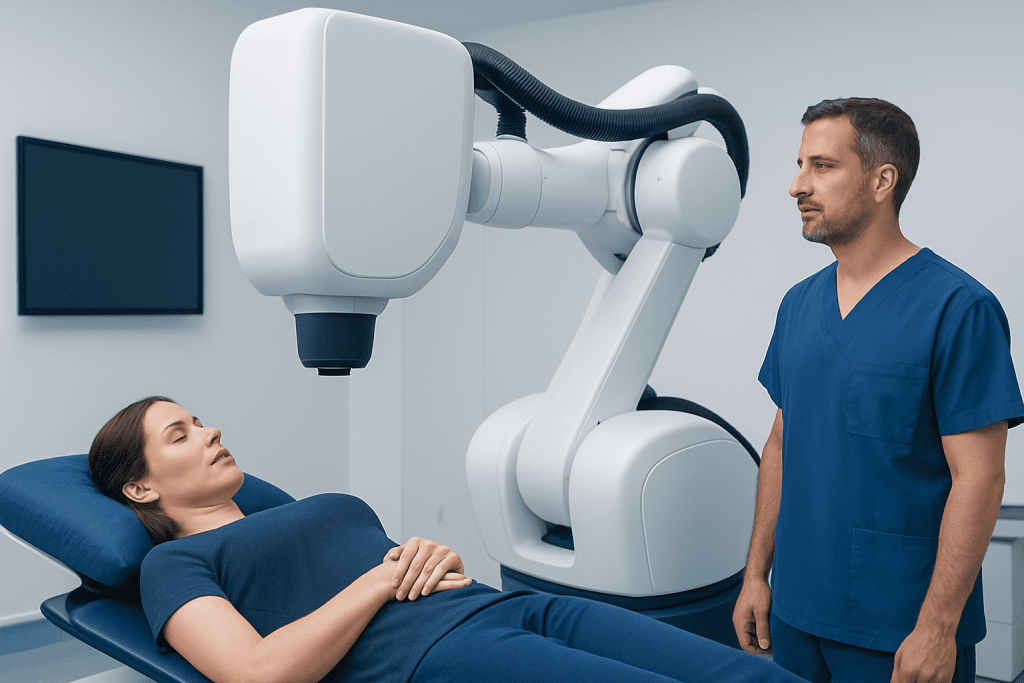
CyberKnife combines a compact radiation delivery device with a robotic arm that can move around the patient. Instead of sending radiation from only one or two directions, the system can deliver many small beams from different angles. Each individual beam is relatively limited, but together they concentrate the intended dose at the target.
A key feature of CyberKnife radiosurgery is image guidance during treatment. The system uses imaging information to confirm the position of the target and to make adjustments if small movements occur. This is particularly useful because internal organs and tumors can shift slightly with breathing, digestion, or normal body movement.
For some treatment areas, small markers called fiducials may be placed in or near the tumor before planning. These markers help the system track the target. In other cases, CyberKnife can use bone structures or specialized imaging to guide treatment without fiducials. The care team chooses the safest and most accurate tracking method for each patient.
Conditions That May Be Treated

CyberKnife radiosurgery can be used for selected conditions in the brain and body. In the brain, it may be considered for certain benign or malignant tumors, small metastases, acoustic neuromas, meningiomas, pituitary adenomas, arteriovenous malformations, and some cases of trigeminal neuralgia. Suitability depends on factors such as size, location, symptoms, and the relationship of the lesion to important nerves and blood vessels.
Outside the brain, CyberKnife may be used for selected tumors in areas such as the spine, lung, prostate, liver, pancreas, kidney, and other sites. It may also be considered for tumors that are difficult to reach with surgery or for patients who are not good candidates for an operation. In some cancer care plans, it is used together with surgery, chemotherapy, immunotherapy, hormone therapy, or conventional radiation therapy.
Common situations where a doctor may discuss CyberKnife include:
- Small or well-defined tumors that require precise targeting.
- Tumors close to sensitive organs where limiting radiation exposure is important.
- Patients who need a noninvasive option due to age, medical conditions, or personal preference.
- Recurrent tumors that require careful evaluation because of prior treatment.
CyberKnife is not the best option for every tumor or every patient. Large, widespread, or rapidly progressing disease may require a different approach. A personalized assessment is essential before choosing this treatment.
Benefits and Limitations
The main advantage of CyberKnife radiosurgery is precision. By shaping the radiation dose closely to the target, the technology aims to treat abnormal tissue while reducing unnecessary exposure to surrounding healthy structures. This can be especially helpful in areas where important organs, nerves, or blood vessels are nearby.
Another benefit is that treatment is usually noninvasive and performed as an outpatient procedure. Most patients do not need general anesthesia, a surgical incision, or a long recovery period. Many people return home the same day and resume light daily activities soon afterward, depending on how they feel and what area was treated.
However, CyberKnife has important limitations. Radiation does not remove a tumor immediately; instead, it damages the DNA of targeted cells, and the response may occur gradually over weeks or months. Some benign tumors may stop growing rather than disappear. Follow-up imaging is often needed to monitor the effect of treatment over time.
Risks also depend on the treatment site and the structures nearby. Swelling, inflammation, or delayed tissue changes can occur, and these may require monitoring or medical treatment. For this reason, the planning process carefully balances the intended benefit with the safest possible dose to normal tissue.
Planning and the Treatment Experience
Before CyberKnife treatment, the patient usually has a consultation with a radiation oncologist and may meet other specialists involved in care. The team reviews medical history, prior treatments, imaging studies, pathology results when available, and current symptoms. Additional scans such as CT, MRI, or PET may be requested to define the target accurately.
Treatment planning is highly individualized. The patient is positioned in a comfortable and reproducible way, sometimes using a custom mask, body mold, or other support device to help maintain the same position. The planning images are then used to map the target and nearby organs. Medical physicists and physicians work together to calculate beam angles, dose distribution, and safety limits.
During the session, the patient lies on a treatment table while the robotic arm moves around the body. The machine does not touch the patient. The care team monitors the session from nearby, and communication is available throughout. Treatment is painless, although lying still for a period of time can be tiring for some people.
The number and length of sessions vary according to the diagnosis and treatment plan. Some patients receive a single session, while others receive several sessions over consecutive or separated days. The doctor will explain the schedule and any preparation steps, such as medication instructions, fasting requirements if needed, or arrangements for transportation.
Possible Side Effects and Recovery
Many patients tolerate CyberKnife radiosurgery well, but side effects are possible and depend strongly on the area treated, dose, number of sessions, and individual health. Some people feel tired after treatment. Others may notice temporary skin redness, mild swelling, headache, nausea, urinary or bowel changes, cough, or discomfort in the treated area. These effects are usually discussed in advance so the patient knows what to expect.
When the brain or spine is treated, swelling around the target may cause symptoms such as headache, dizziness, weakness, or changes in sensation, depending on location. When abdominal or pelvic areas are treated, temporary digestive or urinary symptoms may occur. Lung treatment can sometimes cause cough or inflammation. The care team may recommend medications or follow-up visits to manage symptoms and reduce complications.
Late effects can occur months or even years after radiation, although not every patient experiences them. These may include tissue scarring, changes in organ function, or radiation-related injury in sensitive areas. Careful planning, dose constraints, and follow-up imaging are used to reduce these risks as much as possible.
Recovery is generally shorter than after open surgery, but patients should still follow medical instructions. Rest, hydration, balanced nutrition, and reporting new or worsening symptoms are important. Patients should not assume that feeling well means follow-up is unnecessary, because imaging is often needed to evaluate the long-term response.
When to Talk to a Doctor
A patient may wish to ask about CyberKnife radiosurgery if they have been diagnosed with a tumor or lesion that is small, well-defined, difficult to access surgically, or located near sensitive structures. It may also be worth discussing if surgery carries higher risk due to other medical conditions. A radiation oncologist can explain whether CyberKnife, another type of radiation therapy, surgery, medication-based treatment, active surveillance, or a combination approach is most appropriate.
Patients should seek prompt medical advice if they develop new neurological symptoms, worsening pain, unexplained weight loss, seizures, weakness, severe headaches, breathing difficulties, or other concerning changes. People already receiving cancer care should inform their oncology team about any new symptoms, even if they seem mild, because early evaluation can help guide safe treatment decisions.
Helpful questions to ask the doctor include: What is the goal of treatment? How many sessions are expected? What side effects are most likely for this location? How will the response be monitored? Are there alternatives, and how do their benefits and risks compare? Clear communication helps patients make informed decisions that match their diagnosis and personal priorities.
Acibadem International provides evaluation and treatment for selected conditions using multidisciplinary specialists and JCI-accredited hospitals for international patients. As with any advanced therapy, the best plan begins with a careful review of medical records, imaging, and individual treatment goals by qualified physicians.
Frequently asked questions
Is CyberKnife radiosurgery actually surgery?
No. CyberKnife radiosurgery is a form of radiation therapy, not an operation with a surgical incision. The term radiosurgery describes the high precision of the treatment rather than a physical surgery.
Does CyberKnife treatment hurt?
The radiation itself is painless, and the machine does not cut or touch the body. Some patients may feel discomfort from lying still during the session, especially if they have pain or mobility issues. The care team can help with positioning and comfort measures.
How soon will a tumor shrink after CyberKnife?
The response is often gradual. Some tumors shrink over weeks or months, while others may stop growing and remain stable on imaging. Follow-up scans are important because the benefit of treatment may not be visible immediately.
Can CyberKnife replace surgery?
For some patients, CyberKnife may be an alternative to surgery, especially when a lesion is small, well-defined, or difficult to reach safely. For others, surgery or another treatment may be more appropriate. The decision depends on diagnosis, location, symptoms, overall health, and treatment goals.
How many CyberKnife sessions are needed?
Some conditions can be treated in one session, while others require several sessions. The number depends on the tumor type, size, location, nearby organs, and the total dose needed. The radiation oncologist explains the schedule during treatment planning.
Are there risks from CyberKnife radiation?
Yes, all radiation treatments have potential risks. Side effects vary by treatment area and may include fatigue, swelling, irritation, or organ-specific symptoms. Careful planning and follow-up are used to reduce risks and manage any side effects that occur.
References
- American Society for Radiation Oncology
- National Cancer Institute
- Mayo Clinic
- Radiological Society of North America
- European Society for Radiotherapy and Oncology
This article is for general information only and is not a substitute for professional medical advice. Please consult a qualified doctor about your individual situation.
CyberKnife in Turkey — costs, top hospitals & a free quote
JCI-accredited · board-certified surgeons · reply within 24h
Add us as a Preferred Source to see more of our trusted health content across Google Search, AI Overviews and Discover.

Medical Oncology Department
Medical treatment of cancer with chemotherapy, immunotherapy and targeted therapies under a multidisciplinary tumor board.
60 specialists in this unitMore from the Health Library



Related Specialists

Prof. Dr. Emel Güngör
Dermatology
Asst. Prof. Dr. Mehmet Karaarslan
Internal Medicine
Asst. Prof. Dr. Müjde Arapoğlu
Pediatrics
Prof. Dr. K. Latif Abbasoğlu
Pediatric Surgery