Cystoscopy Definition: An Evidence-Based Patient Guide

Cystoscopy lets a urologist directly examine the urethra and bladder using a slender instrument called a cystoscope. It may be recommended for blood in the urine, repeated urinary infections, persistent urinary symptoms, bladder concerns, or follow-up after treatment.
Key Takeaways
- Cystoscopy lets a urologist directly examine the urethra and bladder using a slender instrument called a cystoscope.
- It may be recommended for blood in the urine, repeated urinary infections, persistent urinary symptoms, bladder concerns, or follow-up after treatment.
- Flexible cystoscopy is often performed with local anesthetic gel; rigid cystoscopy may require sedation, regional anesthesia, or general anesthesia.
- Temporary burning with urination, mild bleeding, and urinary urgency can occur afterward, but fever or inability to pass urine needs prompt medical advice.
- Preparation, anesthesia, recovery time, and follow-up needs depend on the reason for the procedure and whether treatment or a biopsy is performed.
A cystoscopy is a diagnostic procedure in which a urologist passes a narrow, lighted camera through the urethra to view the bladder. It can help explain urinary symptoms, monitor certain conditions, collect tissue samples, and sometimes provide treatment during the same procedure.
Overview: What Is the Medical Definition of a Cystoscopy?
Cystoscopy definition: cystoscopy is a medical procedure that allows a urologist to look directly inside the urethra and bladder using a cystoscope, a thin tube fitted with a light and camera or viewing lens. The cystoscope enters through the natural urinary opening, so no external incision is usually needed.
The procedure gives information that urine tests and imaging scans may not provide. It can show inflammation, stones, narrowing of the urethra, an enlarged prostate affecting urine flow, unusual tissue, or other changes in the bladder lining. A cystoscopy may also allow the clinician to take a small tissue sample, remove a small stone, treat selected abnormalities, or place a stent when appropriate.
This cystoscopy patient information guide describes general expectations, but the individual plan depends on the reason for the test, anatomy, medical history, and type of cystoscope used. A urologist can explain what the examination is intended to answer and whether a diagnostic or therapeutic procedure is planned.
How Cystoscopy Works and Who May Need It
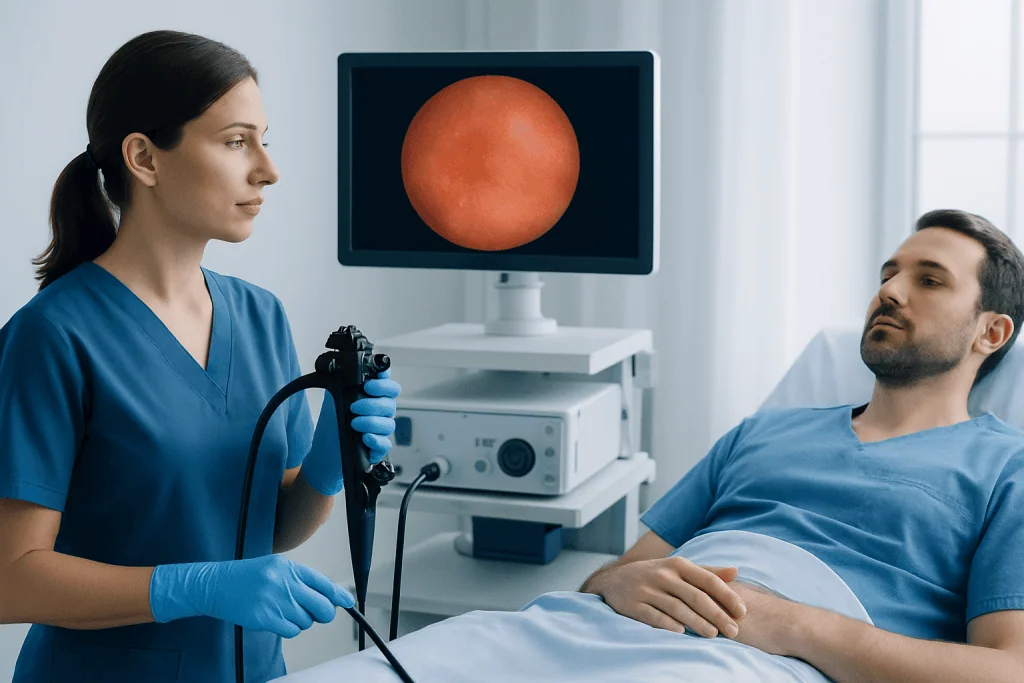
There are two main types of cystoscope. A flexible cystoscope bends easily and is commonly used for an office-based examination of the bladder and urethra. A rigid cystoscope is straight and may be used when the clinician needs to pass instruments through it for biopsies or treatments. The choice is based on the clinical goal rather than patient preference alone.
When is cystoscopy recommended? A clinician may recommend it to investigate visible or microscopic blood in the urine, repeated urinary tract infections, ongoing burning or difficulty passing urine, urinary urgency, unexplained pelvic discomfort, or an abnormal result on imaging or urine testing. It may also be used to assess a suspected urethral narrowing, bladder stone, or bladder growth, and to monitor people after treatment for certain bladder conditions.
Cystoscopy is not always the first test for urinary symptoms. A clinician may first use medical history, examination, urinalysis, urine culture, blood tests, ultrasound, or other imaging. Direct visualization is considered when those steps do not fully explain the problem or when the bladder lining needs closer assessment.
Patients should tell their care team about pregnancy, bleeding disorders, allergies, heart or lung conditions, implanted devices, prior urinary procedures, and all medicines and supplements. In particular, blood-thinning medicine should only be stopped or changed under the direction of the prescribing clinician and procedural team.
What Happens During a Cystoscopy?

Preparation varies. For a simple flexible cystoscopy, people can often eat and drink normally unless given different instructions. For a procedure involving sedation or general anesthesia, fasting instructions are usually provided. A urine sample may be checked before the procedure, because an active urinary infection may need treatment first.
During the examination, the person changes into a gown and lies on an examination or procedure table. The genital area is cleaned, and anesthetic gel is placed in the urethra to reduce discomfort and lubricate the passage. With sedation or anesthesia, monitoring is used and the anesthesia team explains what to expect.
The urologist gently advances the cystoscope through the urethra into the bladder. Sterile fluid is introduced to open the bladder slightly and improve visibility. The clinician examines the urethra, prostate area in men, bladder neck, bladder walls, and openings where the ureters enter the bladder. Images may be recorded, and a biopsy or minor treatment may be performed if previously planned or clinically necessary.
A straightforward flexible examination may take only several minutes, while a rigid cystoscopy with biopsy or treatment can take longer. If sedation or general anesthesia is used, the patient remains in recovery until alert and medically ready to leave. The care team provides individualized cystoscopy patient instructions before discharge.
What Is the Most Painful Part of a Cystoscopy?
What is the most painful part of a cystoscopy? Experiences vary, but many people describe the initial passage of the scope through the urethra and the feeling of bladder filling as the most uncomfortable parts. Local anesthetic gel and a slow, gentle technique are used to reduce discomfort during flexible cystoscopy.
People may feel pressure, a brief burning sensation, or a strong urge to urinate as fluid fills the bladder. These sensations are usually temporary. If pain is significant during the procedure, the patient should tell the clinician promptly; the team can pause, explain what is happening, and consider whether additional comfort measures or a different anesthesia plan is needed.
Discomfort may be more likely when there is inflammation, infection, a urethral stricture, anxiety, or a need for a more extensive procedure. Discussing previous painful procedures, trauma history, or worries about pain before the appointment helps the team plan compassionate, appropriate care.
Afterward, mild burning when urinating and temporary bladder urgency are common. Symptoms should gradually improve over a short period. The treating team should be contacted if discomfort becomes severe, persists, or is accompanied by concerning symptoms such as fever.
Do Men Get Hard During a Cystoscopy?
Do men get hard during a cystoscopy? An erection is not an expected part of cystoscopy, and most men do not experience one. The procedure is clinical, performed with privacy measures, and uses lubrication and anesthetic gel rather than sexual stimulation.
Occasionally, involuntary physical responses can occur during medical procedures involving the genital or urinary area. If this happens, it is a normal bodily reflex and not something a patient needs to feel embarrassed about. Healthcare professionals handle such situations respectfully and routinely.
Men may instead notice pressure or discomfort as the scope passes through the urethra and near the prostate. The urologist should be informed about pain, a history of urethral surgery or narrowing, or concerns about the procedure, so that care can be adapted as safely as possible.
Benefits, Risks and Recovery Timeline
The main benefit of cystoscopy is that it provides a direct view of the lower urinary tract. This can support an accurate diagnosis, clarify the source of bleeding or symptoms, and help guide treatment. In some cases, the ability to take a biopsy or perform a minor intervention during the same procedure can avoid a separate examination.
Most people return home the same day. After a simple flexible cystoscopy, mild burning, pink-tinged urine, or increased urinary frequency may occur for one to two days. Drinking fluids if medically appropriate may help flush the bladder. People who receive sedation or general anesthesia generally need an adult to take them home and should avoid driving, alcohol, and important decisions for the period advised by their care team.
Possible complications are uncommon but include urinary tract infection, more substantial bleeding, temporary difficulty urinating, and injury to the urethra or bladder. The risk may be higher if treatment, stone removal, dilation, or biopsy is performed. The clinician will discuss specific risks and expected recovery before consent is given.
Pathology results from a biopsy are not usually available immediately. The urology team explains when results are expected and how follow-up will occur. Depending on findings, further evaluation may relate to conditions such as bladder cancer or other urinary tract concerns.
When to Seek Medical Care After Cystoscopy
It is important to follow the discharge plan provided by the urology team. Mild symptoms that improve are generally expected, but patients should contact the clinic if burning, bleeding, pain, or urinary urgency is not settling as advised. They should not assume that persistent symptoms are simply part of recovery.
Prompt medical advice is needed for fever, chills, worsening lower abdominal or flank pain, heavy bleeding or blood clots in the urine, nausea or vomiting that prevents drinking fluids, or an inability to urinate. These symptoms may indicate infection, urinary retention, or another complication that needs assessment.
Before the procedure, urgent evaluation is also appropriate for visible blood in the urine with clots, severe pain, fever with urinary symptoms, or inability to pass urine. These symptoms have several possible causes and should be assessed by a qualified clinician rather than managed solely with home measures.
For patients seeking specialist assessment, Acibadem International’s multidisciplinary specialists and JCI-accredited hospitals provide evaluation and treatment for urinary tract conditions for international patients. A urologist can determine whether cystoscopy, imaging, laboratory testing, or another approach is most suitable.
Frequently asked questions
Is cystoscopy a surgery?
Cystoscopy is commonly an outpatient diagnostic procedure rather than major surgery. However, when a biopsy, stone removal, tumor treatment, urethral dilation, or another intervention is performed through a rigid cystoscope, it may be considered an operative procedure and may require anesthesia.
How should someone prepare for a cystoscopy?
Preparation depends on the type of cystoscopy and whether anesthesia is planned. The care team may ask for a urine test, give instructions about food and drink, and review medicines, especially anticoagulants, diabetes medicines, and supplements. Patients should follow their own clinic’s instructions rather than making medication changes independently.
Can a cystoscopy detect bladder cancer?
Cystoscopy can identify areas in the bladder that look abnormal and may be used to take a biopsy. A biopsy examined by a pathology laboratory is generally needed to confirm whether cancer cells are present and to provide more detailed information.
How long does it take to recover from a cystoscopy?
After a simple flexible cystoscopy, many people resume usual light activities the same day or the following day, depending on how they feel. Mild urinary burning, urgency, or a small amount of blood in the urine can last briefly. Recovery may take longer after a biopsy, treatment, or anesthesia.
Will a person be awake during cystoscopy?
Many flexible cystoscopies are done while the person is awake using local anesthetic gel in the urethra. Some rigid cystoscopies and procedures involving treatment are performed with sedation, spinal anesthesia, or general anesthesia. The choice depends on the procedure and the person’s health needs.
Can cystoscopy cause a urinary tract infection?
A urinary tract infection is an uncommon possible complication because an instrument is passed into the urinary tract. Clinicians use sterile technique to lower this risk. Fever, chills, worsening burning, cloudy urine, or feeling unwell after the procedure should be reported promptly.
References
- American Urological Association
- National Institute of Diabetes and Digestive and Kidney Diseases
- Mayo Clinic
- NHS
- Urology Care Foundation
This article is for general information only and is not a substitute for professional medical advice. Please consult a qualified doctor about your individual situation.
Cystoscopy in Turkey — costs, top hospitals & a free quote
JCI-accredited · board-certified surgeons · reply within 24h
Add us as a Preferred Source to see more of our trusted health content across Google Search, AI Overviews and Discover.

Urology
Treatment of the urinary system and male reproductive health, including robotic and laser procedures.
60 specialists in this unit