Dark Spots on Legs: An Evidence-Based Guide for Patients

Many dark spots on the legs are post-inflammatory hyperpigmentation, meaning pigment remains after the skin has healed. Sun exposure can deepen existing marks and make them fade more slowly.
Key Takeaways
- Many dark spots on the legs are post-inflammatory hyperpigmentation, meaning pigment remains after the skin has healed.
- Sun exposure can deepen existing marks and make them fade more slowly.
- Leg swelling, varicose veins, poor circulation, diabetes, medicines, and skin inflammation can contribute to discoloration in some people.
- A new spot that grows, changes shape or color, bleeds, forms a sore, or does not heal should be examined by a clinician.
- Treatment depends on the cause; avoiding irritation and protecting skin from ultraviolet light are useful first steps for many pigment marks.
Dark spots on legs commonly develop after inflammation, insect bites, shaving irritation, acne-like folliculitis, bruising, or sun exposure. Most are not dangerous, but the appearance, timing, associated symptoms, and whether a spot changes can help determine when medical review is important.
Overview: what dark spots on legs can mean
Dark spots on legs are areas of skin that look brown, gray, purple, red-brown, or nearly black compared with the surrounding skin. They may be flat or raised, appear as a single mark or multiple patches, and develop gradually or suddenly. In many cases, they are harmless pigment changes that remain after a bite, rash, ingrown hair, cut, bruise, or other minor skin inflammation.
However, darkening on the legs is not always simply a cosmetic concern. Changes in the skin can occasionally be linked to vein problems, reduced circulation, medication reactions, infections, inflammatory skin conditions, or, less commonly, skin cancer. The most useful clues are how long the marks have been present, whether they are changing, and whether symptoms such as itch, pain, swelling, warmth, ulcers, or bleeding occur.
Skin tone affects how discoloration appears. On lighter skin, a healing area may look pink, red, or brown; on deeper skin tones, it may look dark brown, gray, purple, or black. A healthcare professional can assess the pattern in the context of a person’s overall health and skin type.
Common patterns and accompanying symptoms
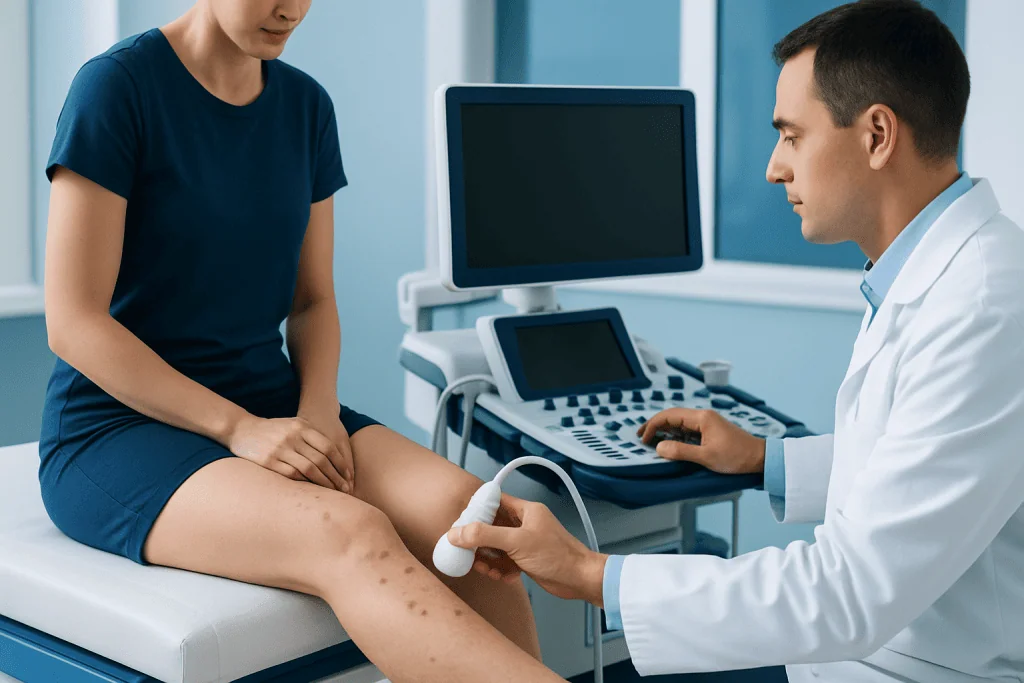
Post-inflammatory hyperpigmentation is a common explanation for brown or dark marks after the original skin problem has settled. It may follow mosquito bites, eczema, psoriasis, scratching, shaving bumps, folliculitis, acne on the legs, contact dermatitis, or a healing wound. These marks are usually flat and may slowly fade over months, although they can last longer in people with more melanin-rich skin.
Small, round brown spots that become more common with age and sun exposure may be sun-related lentigines, sometimes called age spots. Bruises can also leave temporary brown, yellow, purple, or green discoloration as blood products break down beneath the skin. Pinpoint red-purple or brownish dots, called petechiae or purpura, can occur after minor trauma but should be assessed promptly if they are new, widespread, unexplained, or accompanied by feeling unwell.
Darkening around the ankles or lower legs together with swelling, itch, visible veins, heaviness, or a history of leg ulcers can suggest venous insufficiency. In this situation, blood and fluid do not return efficiently through the veins, and iron-containing pigment may deposit in the skin. This is different from a simple mark after a bite and deserves clinical assessment.
- Flat, stable marks after irritation: often post-inflammatory pigmentation.
- Darkness with leg swelling or ankle itch: may be associated with vein disease.
- Painful, warm, red or rapidly spreading areas: may indicate infection or inflammation.
- A changing, irregular, bleeding, or non-healing lesion: needs timely evaluation for skin cancer and other causes.
Why dark spots develop: causes and risk factors

Melanin is the pigment that gives skin its color. When skin is inflamed or injured, pigment-producing cells can become more active, leaving a darker area after the original problem resolves. Picking, rubbing, scratching, close shaving, waxing, or repeated friction from clothing can prolong inflammation and increase the likelihood of lingering marks.
Ultraviolet exposure can darken pigment changes and slow their fading. Legs are often exposed during warmer months, outdoor activities, or travel, and even incidental sun exposure can affect healing marks. Some medicines can also cause pigmentation changes or make the skin more sensitive to sunlight. A person should not stop a prescribed medicine because of a skin change without speaking with the prescriber.
Blood vessel and circulation conditions are particularly relevant when discoloration is concentrated on the lower legs. Chronic venous insufficiency, varicose veins, previous blood clots, reduced mobility, obesity, and pregnancy can increase the risk of venous-related skin changes. Diabetes may raise the risk of wounds and infections that leave marks or heal slowly. A clinician may also consider allergic reactions, autoimmune conditions, bleeding disorders, and other causes based on the individual history and examination.
How clinicians assess dark spots on the legs
Diagnosis starts with a focused history. A clinician may ask when the spots appeared, whether they began after an injury or rash, whether they itch or hurt, and whether there has been leg swelling, fever, new medicines, sun exposure, or a personal or family history of skin cancer. It is helpful to mention medical conditions such as diabetes, circulation problems, eczema, and blood-clotting disorders.
During the examination, the clinician assesses color, borders, size, texture, distribution, and signs of inflammation. They may check leg pulses, swelling, temperature, varicose veins, and the condition of the feet and lower legs. A dermatoscope, a handheld magnifying device with light, can help examine pigmented lesions more closely.
Not everyone needs tests. Depending on the findings, testing may include blood tests, a skin swab for suspected infection, ultrasound of the leg veins, or a skin biopsy. A biopsy involves removing a small sample for laboratory examination and may be recommended when a lesion is suspicious, unexplained, persistent, or changing. This approach helps ensure treatment is directed at the cause rather than at the color alone.
Treatment options depend on the underlying cause
For post-inflammatory hyperpigmentation, the first priority is controlling the trigger. This may involve treating eczema, reducing shaving-related folliculitis, managing bites without scratching, or avoiding an irritant product. Pigment often fades gradually once new inflammation is prevented, but improvement can take time. A clinician may recommend topical treatments suited to the diagnosis and skin type; stronger pigment-reducing products should be used under medical guidance because irritation can worsen discoloration.
Daily sun protection is an important part of managing dark marks. Broad-spectrum sunscreen on exposed legs, protective clothing, and seeking shade when practical can help reduce further darkening. Gentle skin care, regular moisturising, and avoiding abrasive scrubs or unregulated bleaching products can help protect the skin barrier. Products marketed as rapid lighteners may contain ingredients that are unsafe or unsuitable for prolonged use.
When the cause is venous disease, treatment may include leg elevation, exercise where appropriate, weight management, and clinician-advised compression therapy. Compression is not suitable for everyone, particularly people with significant arterial circulation problems, so it should be selected with professional advice. Specialist assessment may be needed for persistent symptoms, ulcers, or significant varicose veins.
A dermatologist may discuss procedures such as chemical peels, laser-based treatments, or other approaches for selected stable pigment concerns. These options are not right for every person and can occasionally cause irritation or further pigment change, especially if the underlying condition is still active. Any treatment plan should be individualized after diagnosis.
Prevention and practical skin-care habits
Not every dark spot can be prevented, but reducing avoidable skin inflammation can lower the risk of persistent marks. Use a fragrance-free moisturiser if the skin is dry or prone to eczema, avoid picking at bites or ingrown hairs, and choose shaving methods that minimize friction. A clean, sharp razor, lubrication, and shaving in the direction of hair growth may reduce razor bumps for some people.
Use sun protection consistently on exposed skin, particularly where existing discoloration is present. People who work or exercise outdoors may benefit from lightweight covering clothing as well as sunscreen. If a new skin-care product causes burning, rash, or marked itching, it is sensible to stop using it and seek advice if symptoms do not settle.
For lower-leg swelling, regular movement, avoiding long periods of sitting or standing when possible, and raising the legs during rest may be helpful for some people. New or ongoing swelling should not be self-diagnosed. A clinician can identify whether there is a vein, heart, kidney, medication-related, or other explanation and advise on safe next steps.
When to seek medical care
Arrange a medical appointment for a new dark spot that does not have a clear cause, persists, enlarges, becomes raised, changes in color or border, develops several colors, or looks noticeably different from other marks on the body. Medical review is also appropriate for dark marks associated with repeated swelling, visible veins, itch around the ankles, wounds that heal slowly, or recurrent skin infections.
Seek urgent medical advice for a leg that suddenly becomes swollen, painful, warm, or red, especially if symptoms affect one leg more than the other. Prompt care is also important for unexplained widespread purple spots, a rapidly spreading rash, fever with skin redness, a black or painful wound, or a lesion that bleeds or will not heal.
At Acibadem International, multidisciplinary specialists in JCI-accredited hospitals can assess skin changes and related vascular or medical conditions for international patients. A timely evaluation can clarify whether a mark is a benign pigment change, a treatable skin disorder, or a sign that further investigation is needed.
Frequently asked questions
Are dark spots on legs usually harmless?
Many are harmless and occur after inflammation, injury, insect bites, shaving bumps, or sun exposure. Even so, a new or changing mark should be checked, particularly if it is irregular, painful, bleeding, or non-healing. A clinician can distinguish common pigmentation from conditions that need treatment.
Why do dark spots stay after mosquito bites or shaving?
Bites and shaving irritation can trigger inflammation in the skin. After the inflammation improves, extra melanin may remain in the area, causing post-inflammatory hyperpigmentation. Scratching or repeated irritation can make the discoloration darker and longer-lasting.
How long do dark spots on legs take to fade?
The timing varies with the cause, skin tone, depth of pigmentation, and ongoing sun exposure or irritation. Superficial marks may gradually improve over several months, while deeper or repeatedly irritated areas can take longer. Treating the underlying trigger and protecting the area from sun can support fading.
Can poor circulation cause dark spots on the legs?
Vein problems can cause reddish-brown discoloration, often around the ankles and lower legs, especially when swelling, heaviness, itch, or varicose veins are also present. This can happen when blood and fluid collect in the lower legs over time. A medical assessment is important because management differs from treatment for ordinary pigment marks.
Should dark spots on legs be exfoliated?
Harsh exfoliation, scrubbing, and picking can irritate the skin and may worsen dark marks. Gentle cleansing, moisturising, and avoiding friction are generally safer approaches. A dermatologist can advise whether any exfoliating ingredient is appropriate for a particular skin concern.
What changes in a dark spot should be checked quickly?
Seek medical review for a spot that is growing, becoming asymmetrical, developing uneven borders or multiple colors, bleeding, crusting, hurting, or not healing. Urgent assessment is also needed for sudden one-sided leg swelling, warmth, or pain. These symptoms do not always indicate a serious condition, but they should not be ignored.
References
- American Academy of Dermatology
- National Health Service
- Mayo Clinic
- Centers for Disease Control and Prevention
- World Health Organization
This article is for general information only and is not a substitute for professional medical advice. Please consult a qualified doctor about your individual situation.
Hair transplant in Turkey — costs, graft counts & a free assessment
JCI-accredited · board-certified surgeons · reply within 24h
Add us as a Preferred Source to see more of our trusted health content across Google Search, AI Overviews and Discover.